
 English


50 Most Iconic Old Paintings That Withstood the Test of Time
From Botticelli to Picasso, some artworks transcend changing tastes and political upheavals to imprint into humanity’s visual memories. These images often courted controversy initially before maturing into commonplace. Their emotional resonance and aesthetic innovation compel us to look backward even as arts evolve unpredictably onwards.
In curating 50 most iconic old paintings that withstood the test of time, patterns emerge around how certain paintings overlooked artistic conventions to channel wider cultural pivots and then reverberate through eras. Rather than aim for an impossible “best” hierarchy that would reflect subjective preferences, this article aspires to unpack why these particular works stick in our minds.
Some forged new stylistic terrain while others exposed subversive themes. Most share mysterious perpetuity – their enigmatic visual power sparking perpetual reinterpretation. Join me to explore the fascinating genesis and lasting intrigue around these paintings.
1. Mona Lisa

Image by from
Leonardo da Vinci’s Mona Lisa is one of the most mystifying and iconic paintings in art history. This portrait was commissioned by a wealthy Florentine silk merchant. The painting depicts Giocondo’s wife, Lisa Gherardini, sitting on a balcony against an imaginary landscape. Da Vinci employed his mastery of sfumato, a painting technique that produces soft, blurred outlines, to create an ethereal, enigmatic quality in Lisa’s facial expression.
This has led to centuries of speculation about her thoughts and inner emotions. In addition to Lisa’s cryptic smile, the Mona Lisa revolutionized Renaissance portraiture through its realistic three-quarter profile view of the subject. The timeless appeal of the Mona Lisa ensures its lasting fame as a pinnacle of High Renaissance art.
Practical Information
Year: 1503-1506
Style: Renaissance
Commissioned by: Francesco del Giocondo
2. The Last Supper

Image by from
The Last Supper, is among Leonardo da Vinci’s most renowned works. This mural masterpiece encapsulates a pivotal moment in the Gospel, depicting Jesus’ last meal with his disciples before his crucifixion. Commissioned by Duke of Milan, da Vinci completed the painting for the refectory of the Convent of Santa Maria delle Grazie in Milan.
Meticulously capturing the varied reactions of the disciples at the news of Jesus’ imminent betrayal, da Vinci utilized his mastery of perspective, figural composition, and emotional expression to create a powerfully dramatic Biblical scene.
The mural’s unmatched details, from the textured roof tiles to the brilliant silver vegetation in the background, exemplify da Vinci’s technical skill as a High Renaissance master. Centuries later, The Last Supper remains one of the world’s most poignant and iconic depictions of this pivotal Gospel event.
Practical Information
Year: 1495-1498
Style: High Renaissance
Commissioned by: Ludovico Sforza
3. The Creation of Adam
Gracefully adorning the ceiling of the Vatican’s Sistine Chapel, Michelangelo’s The Creation of Adam brings the Genesis narrative of humanity’s divine origins to breathtaking life. As part of Michelangelo’s expansive Sistine Ceiling fresco commissions, The Creation of Adam depicts the pivotal instance when God gifts Adam with the spark of life.
Michelangelo brings vigorous energy and anatomical precision to this scene, exemplifying his mastery as both a sculptor and painter during the High Renaissance era. The iconic image of God and Adam’s outstretched hands has become the quintessential symbol of mankind’s divine creation. More than a magnificent fresco, the painting stands as a transcendent masterpiece blending Renaissance humanism and the timeless wonder of Biblical genesis.
Practical Information
Year: 1508-1512
Style: High Renaissance
Commissioned by: The Sistine Chapel
4. The Kiss
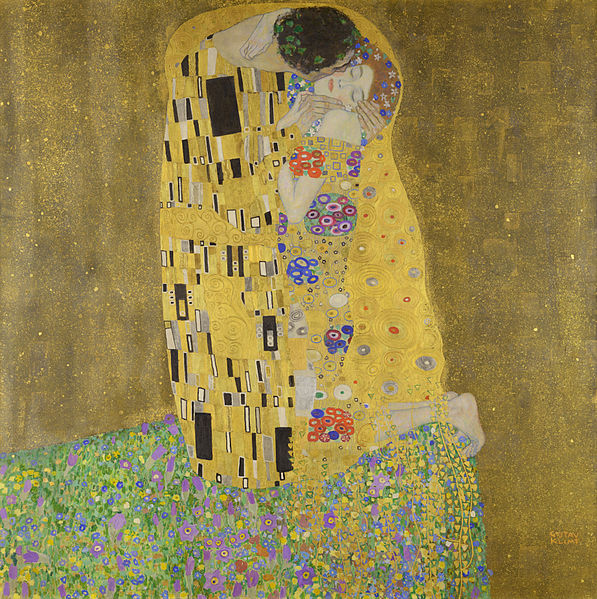
, Public domain, via Wikimedia Commons
Gustav Klimt’s The Kiss, is a striking depiction of intimate love rooted in the artist’s Austrian Symbolism style. Commissioned by Ferdinand Bloch-Bauer, a wealthy Viennese industrialist, it is among Klimt’s most renowned works. The painting portrays the artist locked in an embrace with fashion muse Emilie Louise Floge – who was also reputedly his lover. The Kiss spotlights Klimt’s signature use of lavish gold leaf, mosaic-like patterns, and iconography, notably the almond shapes relating to the human womb.
At once decorative and textual, the work balances elegance against raw sensuality. Its graceful composition and emotive subject matter resonate with Klimt’s talents at synthesizing opulence, emotion, and eroticism on canvas. The Kiss remains a crown jewel of the Austrian Secession movement that dared to challenge artistic traditions – while pioneering styles that evoke myth and desire.
Practical Information
Year: 1907-1908
Style: Symbolism
Commissioned by: Ferdinand Bloch-Bauer
5. The Scream

, , via Wikimedia Commons
Among the most impactful works of modern art is Edvard Munch‘s iconic painting The Scream, rendered in the artist’s expressive style, this painting encapsulates the pervasive anxiety and anguish of the modern era. Set against a blood-red sky, “The Scream’s” contorted central figure cries out in overwhelming dread, angst reflected in its fiery surroundings. As an exemplar of modern alienation, the highly personal work draws from a moment of terror Munch himself experienced while walking at sunset.
The strange screeching colors, undulating lines, and saturated emotions created a painting that powerfully elicited broader psychological unrest. Displaying little concern for realism or convention, the work pioneered the Expressionist movement to come. The painting stands as an indictment of societal unease, rendered in an electrifying style that signals the early rumblings of existential turmoil emerging in the 20th-century psyche.
Practical Information
Year: 1893
Style: Expressionism
6. The Starry Night

, , via Wikimedia Commons
Created by Vincent van Gogh during his stay at an asylum in Saint-Rémy, The Starry Night features the Dutch post-Impressionist’s signature style through its striking colors, emphatic brushwork, and undulating forms. The night landscape depicts the view from van Gogh’s room – the Saint-Rémy monastery cloister surrounded by the Alpilles mountains.
The painting’s dramatic swirls and luminous stars embody the transcendent power of nature. Van Gogh once wrote that night’s astonishing skies rendered “the only things which spiritually awake and enfold us.” The vivid morphing colors and shapes produce a visionary quality evoking the restless artist’s connection to the natural realm’s mystical beauty.
Practical Information
Year: 1889
Style: Post-Impressionism
7. The Persistence of Memory
This iconic surrealist painting by Salvador Dali features melting pocket watches in a dreamlike landscape. The bizarre and unexpected combination of objects depicts the “madeliness” of time and calls into question our perception of reality. Dali created the small oil painting to explore new iconography and his interests in the distortion of time and space, symbolic death, and unconscious thoughts. With its striking and memorable imagery, The Persistence of Memory has become one of the most recognizable works of surrealism and modern art.
Practical Information
Year: 1931
Art Style: Surrealism
8. Girl with a Pearl Earring
This 1665 Johannes Vermeer oil painting is of a young woman wearing an exotic turban and large pearl earring. The subject is portrayed in a compelling close-up view, turning her head as if interrupted in a private moment. Vermeer masterfully uses light and shade to create a sense of intimacy and mystery. The model’s enigmatic gaze, realistic details, and lack of background context give a timeless, psychological intensity to the work. Often called the “Mona Lisa of the North”, Girl with a Pearl Earring exemplifies Vermeer’s mastery of color, light, and composition.
Practical Information
Year: 1665
Art Style: Baroque
9. The Birth of Venus

, Public domain, via Wikimedia Commons
This iconic painting by Sandro Botticelli depicts the goddess Venus arriving on land on a seashell. Beautifully rendered in tempera on canvas, the nude goddess stands tall against a windswept backdrop, modestly attempting to cover herself as she steps onto the shore. Exemplifying the ethereal style of Early Renaissance painting, The Birth of Venus is a masterpiece of visual harmony and proportion. Botticelli was inspired by descriptions by ancient writers to create this enduring celebration of beauty and classical themes.
Practical Information
Year: 1486
Art Style: Early Renaissance
Commissioned by: Lorenzo di Pierfrancesco de’ Medici
10. American Gothic

, Public domain, via Wikimedia Commons
This 1930 oil painting shows a stern-looking couple standing front of a house with a Gothic window. The man holds a pitchfork, giving him an agricultural appearance, while the woman sports an apron and prim colonial housewife attire. Their rigid poses and unsmiling expressions give off an air of rigidity and conservatism.
Painted by Grant Wood during the Great Depression, American Gothic has become an enduring symbol of rural American life and values, as well as a source of parody and subversive reinterpretations. The inspiration came from a cottage Wood saw in Iowa with a Gothic window, leading him to model the couple after his sister and their dentist. Despite its drab appearance, the painting is an incisive study of America’s provincial character.
Practical Information
Year: 1930
Art Style: American Regionalism, Realism
11. The Night Watch
Rembrandt van Rijn dynamic painting a militia group preparing to move out under the direction of their captain . Applying his masterful use of light and shade, Rembrandt put the captain prominently in the spotlight while the rest of figures emerge out of darkness, conveying a scene full of movement and narrative tension. Unlike traditional formal group portraits of the time, the active poses and expansive composition give The Night Watch a remarkable realism and spontaneity.
At nearly 12 feet tall, the epic painting revolutionized military portrait traditions with its dramatic Baroque style and almost cinematic lighting effects. Originally titled “Officers and Men of the Company of District II under the Command of Captain Frans Banning Cocq”, its more popular name derives from a layer of varnish adding an unintended darkened tone over two centuries.
Practical Information
Year: 1642
Art Style: Baroque, Dutch Golden Age
Commissioned by: Captain Banning Cocq
12. Impression, Sunrise
This Claude Monet landscape painting gave rise to the Impressionist movement when critics mocked its loose brushwork and elementary style. The oil painting captures the Le Havre harbor at sunrise, with a fiery red sun smeared across the foggy horizon. The orange and blue shorthand style prioritizes the overall visual effect over detail. Visible thick brush strokes give the water, sky and sailing vessels an atmosphere weightier than the scene itself.
Though initially criticized for looking unfinished, Monet’s spontaneous technique helped liberate painting from strict academic standards. Impression, Sunrise inspired scores of artists to adopt brighter hues, candid poses, everyday subjects and more textured surfaces —defining features of Impressionism.
Practical Information
Year: 1872
Art Style: Impressionism
13. The Great Wave off Kanagawa

, Public domain, via Wikimedia Commons
Hokusai’s woodblock print depicts an enormous wave threatening to devour three boats off the coast of Kanagawa in Japan. With its curved, foam-tipped wave against a sky filled with swirling clouds, it captures both the power and terror of the sea. The stark contrast between the tiny boats and the giant wave expresses the insignificance yet resilience of humanity against nature’s forces.
The Great Wave encapsulates Ukiyo-e style with its simple lines, lack of perspective, and decorative elements. It emerged when Edo period Japan cut off contact with the outside world. The image continues to impact pop culture and art across the globe.
Practical Information
Year: 1829-1833
Style: Ukiyo-e woodblock print
Commission: None, part of Thirty-six Views of Mount Fuji series
14. The Garden of Earthly Delights

, Public domain, via Wikimedia Commons
This triptych by Early Netherlandish painter Hieronymus Bosch depicts the Garden of Eden on the left panel transitioning into darker, fantastical imagery culminating in a nightmarish Hellscape. It teems with surreal, vivid illustrations of humanity’s pleasures and pain. Scholars see it as a didactic warning against succumbing to the temptations of flesh and vice.
Its scenes also reflect larger questions about morality and faith amidst late 15th-century religious turmoil in the Low Countries. The work’s commissioned purpose remains uncertain, yet its monumental scope and bizarre inventiveness made it iconic. Centuries later, its symbolic potency still ignites artistic imagination and inquiries into human nature.
Practical Information
Year: 1490-1500
Style: Northern Renaissance
Commission: Possibly for Engelbrecht II of Nassau
15. Composition VIII
As a seminal abstract painting, Composition VIII exemplifies Wassily Kandinsky’s drive to use color and form to evoke emotion and emancipate art from depicting the material world. Without recognizable figures or objects, the interplay between fiery hues, geometric shapes, and fluid lines pulls the viewer into an abstract realm where vision is felt and the inner resounds outward.
Kandinsky associated his compositions with the music of Schoenberg and saw abstract art as deeply spiritual. Created months after the Russian Revolution, it signals a radical break from past conventions amidst post-war uncertainty in search of new meaning. Composition VIII remains a pivotal, pioneering piece that opened creative possibilities for pure abstraction in 20th-century art.
Practical Information
Year: 1923
Style: Abstract
16. Las Meninas

, Public domain, via Wikimedia Commons
Housed in the Museo del Prado, Diego Velazquez‘s Baroque masterpiece portrays young Margarita Teresa of Spain with attending meninas and dwarves, while Velázquez himself paints the scene at his canvas. The mirrored image includes King Philip IV and Queen Mariana reflected in the background. Las Meninas channels the prestige of the Spanish Golden Age through rich interpersonal drama and technical virtuosity.
X-rays reveal revisions as Velázquez played with angles and positioning to draw attention towards the young Infanta while hinting at her parents’ presence through the mirror and opening on the back wall. It remains an enduring emblem of Spain’s cultural apex under the Hapsburgs and a tour-de-force snapshot of 17th-century courtly splendor captured mid-motion.
Practical Information
Year: 1656
Style: Baroque
Commissioned by: For King Philip IV’s collection
17. The Arnolfini Portrait

, Public domain, via Wikimedia Commons
This small oak panel by Jan van Eyck embodies 15th century advances in oil technique with its luminous textures, details, and illusions of light. Likely not meant as a traditional marriage portrait, its symbolism conveys various interpretations. The convex mirror reflects the scene from behind, enlarging the chamber. Scholars decode objects from oranges as symbols of fidelity to the dog representing loyalty. Most strikingly, Van Eyck signed above the mirror as if witnessing the act of viewing itself.
The Arnolfini Portrait encapsulates how oil paint permitted unprecedented descriptiveness that ignited enduring discussions of subjects’ hidden motives and the role of the artist versus beholder. As an early masterpiece in naturalism, it signals Northern Europe’s rival achievements during the Italian Renaissance.
Practical Information
Year: 1434
Style: Northern Renaissance
18. The Dance

, Public domain, via Wikimedia Commons
Displayed at the Hermitage Museum in St. Petersburg, Henri Matisse‘s monumental painting depicts an arc of five nude dancers hand-in-hand against a landscape of soaring red hills and sky. Their gravity-defying round dance expresses a primal joie de vivre in the flat colors, loose brushwork, and exaggerated poses that came to define Fauvism.
Initially criticized for its raw emotionalism verging on the ugly, The Dance soon evolved into an avant-garde vision of human nature’s rhythmic exuberance stripped to vibrant essentials. Created when Matisse was bedridden from illness, it reflects both the deforming effects of pain and the redemptive capacity of creativity. As with Jazz, it became an emblematic face of modern art.
Practical Information
Year: 1909-1910
Style: Fauvism
Commissioned by: For Russian businessman Sergei Shchukin
19. The Tree of Life
Part of Gustav Klimt’s golden phase focused on allegorical themes, this Symbolist painting fuses Egyptian, Christian, and Asian styles with contemporary Art Nouveau. Against an aureate background evoking eternity, figures float dreamily amid the gnarled tree with meanings left open-ended. The Tree’s touchpoint between past myth and desire for renewal captured widespread hopes and anxieties around the shifting cultural landscape of early 20th century Vienna.
As a founding member of the Vienna Secession that rejected old conservatism, Klimt created works that were ornately decorative yet psychologically resonant and erotically charged. Though branded pornographic by some, it remains among Klimt’s most renowned and coveted creations as a foray into timeless, universal sources of meaning.
Practical Information
Year: 1909
Style: Vienna Secession, Art Nouveau
Commissioned by: For the Palais Stoclet in Brussels
20. Ophelia

, Public domain, via Wikimedia Commons
John Everett Millais’ rendering of the drowned Ophelia floating calmly amid nature’s indifference remains deeply ironic. The painting expands a single line from Shakespeare’s Hamlet into an unflinching yet lyrically beautiful glimpse of female mortality. Storm, love, and madness drive Ophelia helplessly to her death as she hauntingly sings snatches of old tunes, unable to discern friend from foe.
Through intricate realism, Ophelia becomes eternally suspended in her tragic fate, garlanded by vegetation’s inexorable cycles of renewal. Created when the Pre-Raphaelite Brotherhood sought to revolutionize British art with hyper-realistic clarity and emotional intensity, Ophelia triggered immense controversy for its tragic eroticism yet also conquest. Its timeless impact flows on through theatre, poetry, and cinema.
Practical Information
Year: 1852
Style: Pre-Raphaelite
21. L’Origine du monde
Purchased privately then kept hidden for decades, Gustave Courbet‘s unflinching gaze at female genitalia scandalized yet titillated 19th century Â鶹APP. Painted after Manet shocked the Salon with Olympia, it shares its demystification of the nude.
But Origin’s tightly cropped view lacks allegorical guises, presented bracingly as flesh not idea. Courbet linked its dynamism to his seascapes – nature’s forces surging through compressed space. Banned public display until 1988, it raised moral blind spots on gender and desire, involving audiences voyeuristically within the censorious Male Gaze.
The debates it stirred – who looks, at what, and why – cascade through modern discussions on pornography versus erotica and the politics of private pleasure and aesthetics. Identity unknown, its first owner called it “the origin of the world” – an ironic wink to hidden wells of being.
Practical Information
Year: 1866
Style: Realism
Commissioned by: Unknown, possibly Khalil-Bey who also commissioned other sensual paintings
22. The Third of May 1808
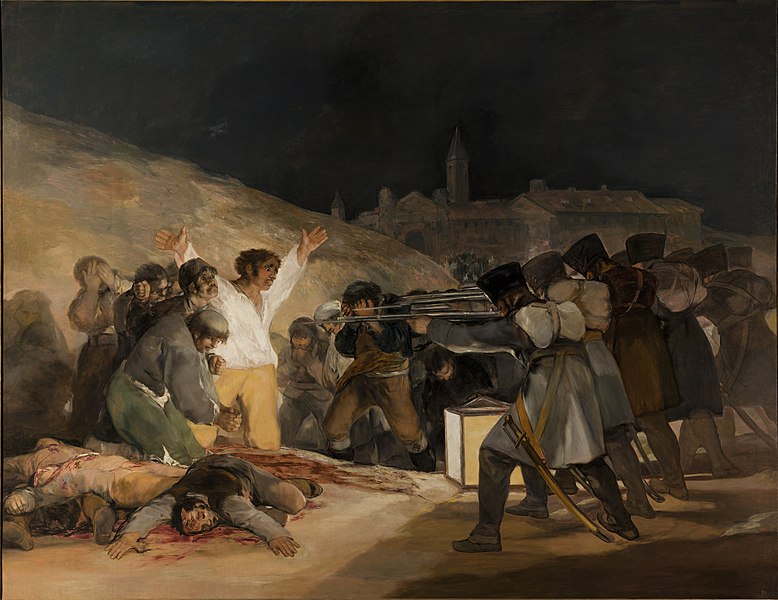
, Public domain, via Wikimedia Commons
Memorializing Spanish resistance against Napoleon’s troops, The Third of May captures a peasant’s execution before a faceless French firing squad. Dramatic lighting illuminates the man throwing his arms wide in agony and faith, echoing a martyr’s death. The painting’s emotional intensity, loose brushwork, and modern subject matter reflect the Romantic Movement while also signaling Francisco Goya‘s evolving anti-war outlook.
Completed when Goya was court painter for King Ferdinand VII who accommodated the French, this was among several works graphically condemning Napoleonic oppression. As one of history’s first paintings depicting contemporary political violence, it remains an iconic prefiguration of modernist shifts toward confronting war and injustice. Its influence resounds through Picasso’s Guernica and globally as an enduring emblem of moral outrage.
Practical Information
Year: 1814
Style: Romanticism
Commissioned by: None, but displayed in Madrid’s Prado Museum
23. Whistler’s Mother
Initially titled Arrangement in Grey and Black, James McNeill Whistler‘s iconic portrait of his elderly mother sitting in profile against an abstraction of a window embodies his belief that art should focus on harmony of colors, shapes, and spaces rather than realism or narrative. Rendered after failing to sell more daring works, this image went on to define him. Its critics’ derisive “potboiler” became a morality tale of public philistinism and commercialism suppressing artistic ideals.
The painting’s spare, muted tones evoke wistful gravity and dignity as well as emotional restraint in Victorian society. Ironically, its enormous subsequent popularity changed perceptions of Whistler’s brilliance. Like the Mona Lisa’s smile, its quiet yet monumental presence tapped into broader cultural desires for meaning, exemplifying how images reverberate across eras.
Practical Information
• Year: 1871
• Style: Realism merging into early modernism
• Commissioned by: Whistler’s idea, his mother unwillingly modeled
24. Primavera

, Public domain, via Wikimedia Commons
This tempera panel masterpiece fuses Sandro Botticelli’s linear grace with Renaissance humanism and Neoplatonism. Venus stands center while Zephyr chases Flora, the goddess of spring. Scholars interpret the mythological characters and interactions as an allegory for spiritual coming into being, with Venus’s raised hand suggesting the triumph of higher love. Completed for the Medici family, who sponsored Florentine artists, it reflects the cultural vibrancy of Lorenzo de’ Medici’s court circa the late 15th century.
While less famous than Birth of Venus during Botticelli’s life, Primavera better displays his poetic visual flair melding Christian and pagan worlds. Over 500 years later, its elegant figuration still channels a magic resonance – new innocence awakening amid nature’s perpetual cycles of death and rebirth.
Practical Information
Year: c. 1482
Style: Early Italian Renaissance
Commissioned by: For Lorenzo di Pierfrancesco de’ Medici
25. Christina’s World
Rendered by Andrew Wyeth, this image of a disabled woman crawling through a parched field under brooding skies became one of the most renowned American paintings of the 20th century. Scholarly perspectives debate whether its bleak landscape mirrors psychological desolation or resolute transcendence over limitation. Christina refuses pity yet yearns beyond circumscribed existence towards the distant house – homeland yet alien. The painting evokes varied standpoints of exile, vulnerability, perseverance and nostalgia.
Initially dividing critics, over time its sincerity and technical perfection conquered perception. Like American Gothic’s haunting flatness, Christina explores a more somber, brooding aspect of Regionalist art. Wyeth created an ambiguously profound statement on human fragility and determination through one anonymous woman’s daily act of will.
Practical Information
Year: 1948
Style: American Regionalism, Realism
26. A Sunday Afternoon on the Island of La Grande Jatte

, Public domain, via Wikimedia Commons
As the founder of Neo-Impressionism and master of Pointillism, Georges Seurat pushed paint’s optical possibilities to scientific heights in this epic Â鶹APPian park scene. Its mosaic-like dots manipulate color theory and retinal bias to sparkle against the River Seine’s shimmery gray curves. Â鶹APPians from poets to nursemaids to dogs promenade in studied spontaneity.
Seurat imposes a classical order via symmetry and frieze-like poses against the chaos of an atomizing modern city and class instability after France’s 1870 war with Prussia. Begun in 1884, its fractured style and contemporary subject matter build upon Impressionism as an avant-garde departure while seeking timeless order – resolving tensions between science and lived experience. Standing over 7 feet, it remains a pioneering beacon in European modernism.
Practical Information
Year: 1884-1886
Style: Pointillism
Commission: Painted speculatively before being exhibited at the final Impressionist exhibition in 1886
27. The Hay Wain
The Hay Wain captures rural English life at a transitional moment as industrialization threatened its agrarian existence. Painter John Constable Infuses grandeur into the quintessential scene of a haywain fording the River Stour before the old Suffolk willows and nuanced cloud-streaked skies emerge from his painstaking outdoor sketches. First exhibited at the Royal Academy in 1821 then won a gold medal In Â鶹APP, it signaled British rival achievements to French art while nostalgically mythologizing England’s endangered heritage.
Ironically the Francophile Constable reversed cultural supremacy through his innovative naturalism. The Hay Wain illustrated the cultural Institution of landscape painting, fueling Constable’s fame in death. Prefiguring Impressionism, it resonates globally as an ecological memento mori winking at transience through its cheery ordinariness.
Practical Information
Year: 1821
Style: Romanticism
Commission: None. Displayed at London’s National Gallery
28. The Basket of Apples

, Public domain, via Wikimedia Commons
Paul Cezanne’s still life series focusing solely on apples reconceptualized painting’s role in artistic renewal through reinventing how we see ordinary objects. Their simplified shapes, skewed angles and patchworks of unrelated colors forged a new visual language opening future pathways to abstraction. Unlike Impressionism’s strict en plein air style, Cezanne brought landscapes indoors through depthless reduction, focusing on relationships between forms, planes, volumes and colors.
This late work’s faceted blocks of red against emerald tablecloth dissolve on closer Inspection – what seems solid liquefies Into instability. Like his portraits or Mont Sainte-Victoire landscapes, these prosaic apples hold seismic power. As Cézanne declared, his small sensations aimed to synthesize nature’s volatility with timeless order – reality meeting art as an evolving process, not the conclusion.
Practical Information
Year: c.1890-1894
Style: Post-Impressionism
Commission: None. Later acquired by Samuel Courtauld for his Impressionist collection
29. The Sistine Madonna by Raphael

, , via Wikimedia Commons
This quintessential Madonna depicts Mary holding Christ flanked by diaphanous curtains pulled back by two cherubs gazing directly out at us. Divine transcendence mingles with mundane intimacy in the human tenderness between mother and child – Raphael’s grace amplifies emotional impact through idealized dignity and pyramidal poise. Initially, this Madonna iconography aimed to inspire religious devotion but over the ensuing centuries it far surpassed doctrine.
The Sistine Madonna grew renowned globally across sociopolitical milieus, ushering cultural sanctification through its unprecedented prints made possible by Durer’s innovations. Pilgrims still flock to Dresden’s Gemaldegalerie museum that long harbored It behind Cold War borders.
Practical Information
Year: 1512-1513
Style: High Renaissance
Commission: Painted for the Benedictine Abbey church in Piacenza before being purchased by Augustus I of Saxony in 1754
30. The Card Players
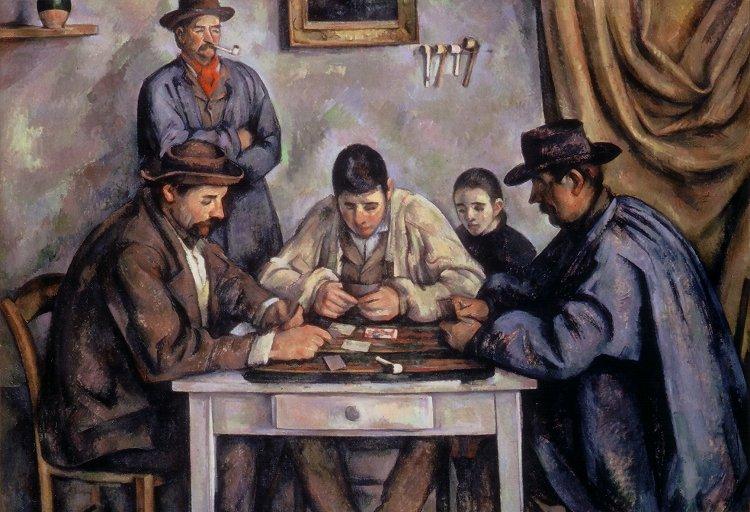
, Public domain, via Wikimedia Commons
Paul Cezanne returned repeatedly to the imagery of peasants absorbed in playing cards, seeking to solidify transient human visions into timeless form. This painting crystallizes his career-spanning interest. The abstracted card players merge with their milieu of earthen walls, wooden table and still tools behind them – reality dematerializing into geometric essentials and flattened spaces. Through repetitive scrutiny, Cezanne sought not snapshot illusion but underlying structures in humble situations that linked past and present ways of being.
His card-player paintings influenced pivotal Cubists like Picasso and cemented Cezanne’s legacy as the father of modern art by breaking scenes into underlying planes and volumes. Critics initially ridiculed his fractured style yet its forceful reductions came to reshape aesthetics and philosophy’s interweaving with visual perception and consciousness.
Practical Information
Year: 1890-1895
Style: Post-Impressionism
Commission: None. Later acquired by banker and prolific art collector Henry Goldman
31. The Dead Toreador

, Public domain, via Wikimedia Commons
The Dead Toreador is a symbolic painting completed by French artist Edouard Manet, just one year before his death. It depicts the corpse of a toreador, a matador, lying on the ground after being gored by a bull. The painting is done in Manet’s signature loose, impressionistic style with thick brushstrokes and dark tones. In the background, we see a crowded bullfighting arena from which the dead toreador has been dragged.
There is a sense of realism despite the painting’s small size. Art critics have interpreted The Dead Toreador as an allegory for Manet’s failing health at the time and a confrontation with mortality—the toreador a stand-in for the dying artist still dressed flamboyantly in his traditional costume. The painting exemplifies Manet’s bold visual style even when depicting somber subject matter.
Practical Information
Year: 1860
Style: Realism
32. Olympia
Marked by lush brushwork yet icy gaze, Edouard Manet’s painting ignited both outrage and acclaim when exhibited in 1865 Â鶹APP. In portraying a confrontational nude courtesan attended by a black maid, Manet jettisoned High Art niceties. Instead, he adapted painterly Old Masters grandeur to brazen depictions of modern Â鶹APPian ennui and alienation. Outraged critics deemed Olympia’s unabashed nudity and in-your-face sexuality indecent.
But defenders like Zola spotted its critical shattering of artistic tradition and bourgeois hypocrisy through magnifying societal fears around rising urbanization and female autonomy. While it opened gates to Impressionist liberalism and an expanding definition of beauty in art, initial shock exemplifies the ever-tenuous line between censorship and artistic freedom. Even now, there lingers discomfort – hers and the viewer’s – in her eyes’ defiant return of our gaze.
Practical Information
Year: 1863
Style: Early avant-garde Realism
Commission: None, for 1865 Â鶹APP Salon exhibition
33. The Fighting Temeraire

, Public domain, via Wikimedia Commons
M. W. Turner captures the sunset voyage of British warship HMS Temeraire as it sails towards its scrapping, tugged by a steam-powered paddlewheel boat. The old graceful ship that battled Napoleon glows romantic gold and red, stark against the cold industrial smoke rising beyond – glory fading as progress advances remorselessly onwards. During England’s industrial turmoil when Turner witnessed old structures destroyed and ancient trades disappearing, Temeraire’s plaintive spectacle encapsulated uneasy dialogues around fading grandeur, memory, and the costs of modernization.
A longtime member of Britain’s academy despite controversies, Turner’s expressive colors and atmospheric vagueness was deemed “pictures of nothing, and very like.” Yet his dynamic visions expanded landscape painting’s dramatic and symbolic potentials, influencing later Impressionism. The Fighting Temeraire endures globally as a memento from the clash of history colliding with encroaching futures.
Practical Information
Year: 1838
Style: Romanticism
Commission: None. Acquired by the National Gallery in London after Turner’s death
34. Nighthawks
Amid early 20th-century optimism, Edward Hopper distilled American anxieties around industrial progress and existential aloneness. Nighthawks‘ four customers conserve a neon-lit haven against the looming city darkness visible through the diner windows. Hopper eliminates extraneous details, trapping the figures like specimens under the microscope. Critics decode their averted gazes and disconnected isolation as an emblem of modern city alienation and disruption of community ties.
Beyond documenting its era of cultural turbulence, Nighthawks manages to freeze a timeless metaphor for human interiority. By rendering alienation through clean-cut realism and composite fabrication, Hopper shaped archetypes of loneliness now embedded into cinema, theatre, photography and literature as shared symbols. Despite its ubiquity and encroaching parody, Nighthawks retains disquieting resonance.
Practical Information
Year: 1942
Style: American Realism
Commission: None. Hopper’s wife Jo modeled for characters.
35. Luncheon of the Boating Party

, Public domain, via Wikimedia Commons
Capturing the Â鶹APPian bourgeoisie enjoying a summer Sunday afternoon, Pierre-Auguste Renoir’s masterpiece exudes Impressionism’s sensory pleasures yet also hints at societal fissures behind the jovial facade. Friends dine al fresco at the Maison Fournaise along the Seine, its owner imposingly central. Renoir enlivens their intermingling bodies through varied brush techniques reflecting each personality with vibrancy and warmth. But scholarly interpretations also unpack hints of class divides, unrequited love, loss and hints of feminist assertions.
Completed during France’s Belle Epoque apex before growing political disruption, this boisterous scene channels end-of-era doom beneath its luminous flirtations and convivial spirit. Despite Renoir’s later reactionary views on modernism, Luncheon influenced avant-garde developments through its fluid spatial relations and psychologically intimate focus beyond the merely optical.
Practical Information
Year: 1881
Style: Impressionism
Commission: For Georges Rivière, later purchased by art dealer Paul Durand-Ruel
36. Liberty Leading the People
Eugene Delacroix created this iconic allegory of revolution shortly after the July 1830 uprising toppled Charles X, elevating the ‘citizen king’ Louis-Philippe to power instead of re-instating Napoleon’s nephew. “Liberty” leads revolutionaries striding over the fallen while brandishing the Tricolore flag, bare-breasted like the Goddess of Reason.
Critics praised its energy yet condemned the glorification of violence and contemporary subject matter as vulgar. But the painting channels Romanticism’s zeal in exalting civic freedom, hugely marking its era despite the 1815-1830 restoration souring into renewed divisions. Over time, Liberty became an emblem of revolt against oppression from Â鶹APP 1968 to the 2011 Arab Spring, even spurring subversions.
Practical Information
Year: 1830
Style: Romanticism
Commissioned For: 1831 Â鶹APP Salon then transferred to the Louvre
37. Basket of Fruit

, Public domain, via Wikimedia Commons
Though simple in motif, Caravaggio’s undemonstrative still life encapsulates key aspects of his revolutionary Baroque contributions – stark realism, exaggerated chiaroscuro, and focus on mundane objects over lofty ideals. Against an abyssal darkness that dominates, ripened fruits burst with sensuous hyper-realism in detail, texture and heightened drama of light/shadow. He eliminates religious symbolism that dominated conventional still life, imbuing mundane items with unprecedented monumentality through stark single-source illumination.
This visual drama channels Caravaggio’s tempestuous style that captivated then shocked 17th-century audiences, influencing generations of artists despite his notoriously volatile life cut short mid-career. Partly for suspected homosexuality, Basket of Fruit marked Caravaggio’s last public commission. As with his genre-defining Biblical scenes, it brims with layered meaning.
Practical Information
Year: 1595-1598
Style: Baroque
Commissioned by: Cardinal Federico Borromeo
38. The Sleeping Gypsy
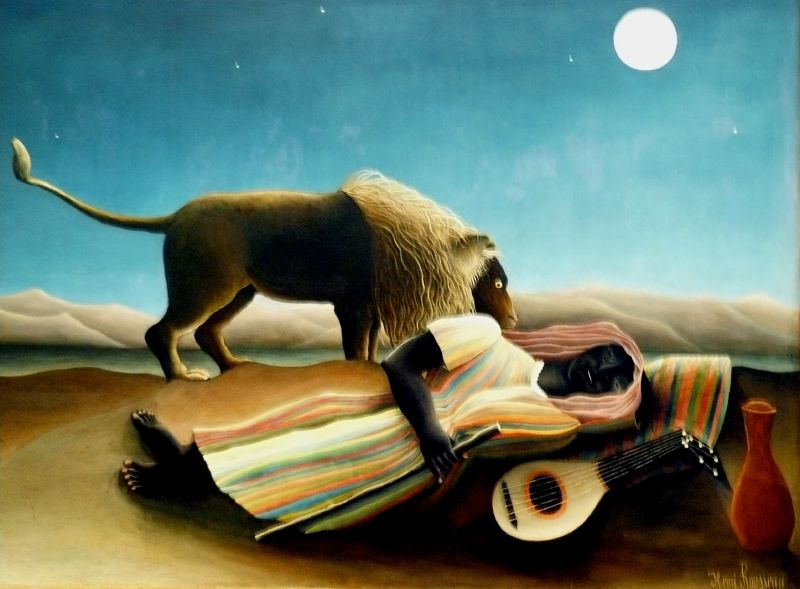
, , via Wikimedia Commons
Though ridiculed as naive during his lifetime then later heralded as a self-taught genius, French Post-Impressionist Henri Rousseau channeled Gauguin’s Symbolism in paintings seen as precursors to Surrealism with their dreamlike mystery. In Gypsy, the moon glows over the purchase figure slumbering with a vase-toting lion who mysteriously halts its menace. Rousseau eliminates contextual detail, evoking fairy tale suspension outside reality. Is it encounter or vision?
Critics argue whether the “primitive” style reflects “accidental profundity” or satirical intent. Its flatness accentuates emotional resonance as with his other jungle scenes. Rousseau claimed it as his favorite work. Pablo Picasso later threw a banquet in Rousseau’s honor, cementing avant-garde admiration. Through its enigmatic spell and confrontation with uncertainty, The Sleeping Gypsy still echoes Rousseau’s creative maxim – “we cannot begrudge our share of the unknown”.
Practical Information
Year: 1897
Style: Post-Impressionism, proto-Surrealism
39. The Son of Man
Painted self-portrait or green apple? Rene Magritte’s slippery imagery exposing weirdness below mundane reality made him a prime inspiration for the post-WWII artistic revolution toward existentialism and postmodernism. Against the featureless sky, a businessman is substituted by an apple occluding his face.
Critics see it as an emblem of modern alienation, the impersonal figure reflecting mass marketing’s spread. The bowler hat appears repeatedly across Magritte’s oeuvre as an alter ego or tribute to Charlie Chaplin. Perspective plays tricks, unbalancing our habitual ways of seeing.
While less overtly dreamy than Dali, Magritte shared Surrealism’s desire to unchain imagination yet through realism’s familiar codes upset and emptied from within. “Everything we see hides another thing,” he declared. Continually reproduced worldwide from ads to album covers, The Son of Man provokes us to slip loose from conventional visions -“thought unfettered towards infinity” as both threat and poetic release.
Practical Information
Year: 1964
Style: Surrealism
40. Three Musicians

, Public domain, via Wikimedia Commons
As World War I erupted, Picasso navigated Cubism’s fragmentation into more decorative classical lines in this iconic oil painting. But far beyond mere aesthetic departure, Three Musicians formalizes key dialogues around shifting European chaos – the commedia dell’arte characters symbolizing life’s creative act despite destructive forces. Their theatricality echoes Picasso’s obsession with the imagery of the traveling entertainer as the eternal artist.
Harlequin embodied his self-view with a diamond-patterned tunic linking to his own early Blue and Rose periods, the orange musician citing friend Braque. Its overlapping planes compress space while the outlined figures and pyramid arrangement impose order amid fracturing traditions. As violence destroyed old boundaries, Three Musicians signaled renewal through reinvention – art enduring through humanity’s persistent urge to rearrange chaos’ shards towards the light.
Practical Information
Year: 1921
Style: Cubism/Neoclassicism
41. Water Lilies by Claude Monet
Though Impressionism aimed to capture life’s immediacy through light and movement, later-phase Monet pursued more enduring visions through his decades-long studies of water lilies in his ornamental pond at Giverny. This series moves fully into abstraction, the interplay of strokes, textures and reflections conveying not just optical impressions but the fundamental essence of his subjective experience – “the instantaneousness of a world in constant flux”.
Critics argue whether their radical minimalism illustrates the fragility of personal perception or more universal rhythms. Begun during WWI and then continued despite debilitating cataracts, the iterative Water Lilies reconciles surface fluctuations with deeper balance – the stillness of motifs mirroring constancy within change. Their meditative focus catalyzed modern art’s expanded experimentation.
Practical Information
Year: 1840-1926
Style: Impressionism
Commission: For L’Orangerie in Â鶹APP
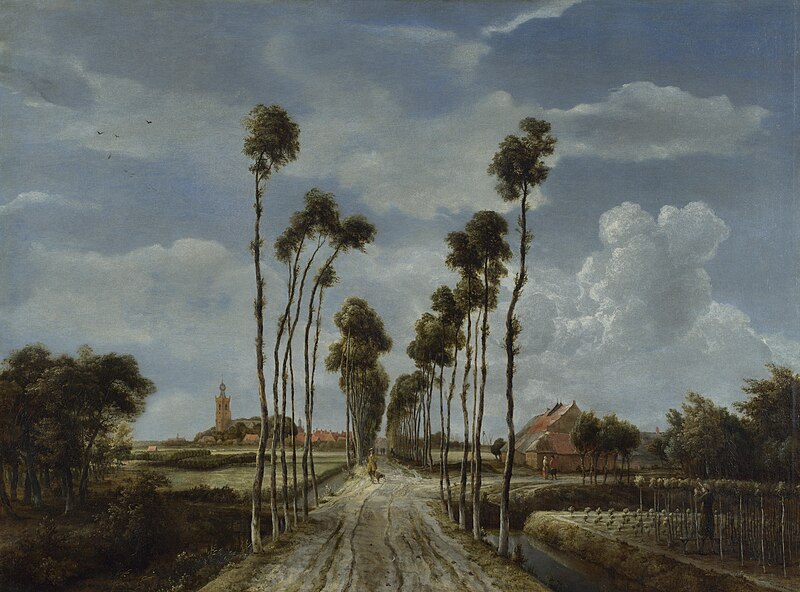
42. The Avenue at Middelharnis
, Public domain, via Wikimedia Commons
Despite personal obscurity then unlike better-known “Dutch Masters”, Meindert Hobbema’s detailed landscape oil paintings shaped enduring ideals of serene pastoral beauty. The Avenue’s centered gravel road draws the eye toward a distant church spire, belying the scene’s composite fabrication. Leaves glimmer with meticulous specificity yet the work feels seamlessly unified through balanced compositional geometry.
First exhibited mid-17th century then changing owners across centuries, it demonstrates Dutch Golden Age achievements in realistic detail and interest in ordinary life amidst the Netherlands’ immense prosperity following independence from Spain. Critics later deemed Hobbema the “one-picture painter” as Avenue reputation dominated, though all share similar simplicity in graphically sophisticated compositions bringing order to unruly nature.
Practical Information
Year: 1668
Style: Baroque
43. Young Girl Reading

, , via Wikimedia Commons
Jean Honore Fragonard captures his young niece engrossed in Rousseau’s sentimental novel Julie, ou la nouvelle Héloïse, its eroticism signaling her budding sexuality. Composed asymmetrically off-kilter amidst Roccoco extravagance, the luminously painted scene epitomizes Fragonard’s hedonistic subjects while upholding moral conservatism. Scholars decode symbols of love and loss – thorny roses, vanished garden. Freshly dressed, she’s too worldly to seem fully innocent, lips parted in unconscious delight, abandoned in reverie’s suspended moment.
Fragonard’s prolific output spanned styles from Boucher’s libertine eroticism to neoclassicism then Revolution’s upheaval. This domestic interior typifies the intimate psychology of eighteenth-century bourgeoise life – decorous conduct as mere polished guise over unruly human impulses kept genteelly clandestine.
Practical Information
Year: c. 1769
Style: Rococo
Commission: Possibly for mistress Madame du Barry
44. The Gleaners
Francois Millet’s famous painting contrasts bending peasant women salvaging leftover grains with vast field and towering sky, dwarfed by distance and labor. The scene evokes timeless fertility myths yet captures a hinge moment in European modernization, as industrial agriculture threatened traditional gleaning rights for poor villagers after harvest. Critics fiercely debated whether it dignifies backbreaking work or condescends “clodhopping viciousness”.
Millet aimed to elevate rural life without idealizing, the figures’ monumentality intensifying through detailed realism, woven diagonals, and implacable sunlight overshadowing fertile bounty. Beyond its period, Gleaners resonates through Van Gogh’s homages, Socialist sympathies, and feminism’s revival – spurring aesthetic and ethical questions on representing social groups. Torn from frames during WWII then hidden, it remains embedded in France’s memory as an unsettling emblem of loss and persistence despite ceaseless change remaking the terrain.
Practical Information
Year: 1857
Style: Realism
45. The Swing

, Public domain, via Wikimedia Commons
This Rococo painting revels in flirtatious intrigue and latent eroticism behind polite appearances – signature Jean-Honore Fragonard. The swinging lady kicks off her shoe towards her hidden lover amid shrubbery. All is dappled lightness on surface, but Fragonard amplifies voyeurism and breaking social codes through energetic composition converging diagonals diagonally left then swooping gaze back right in twisting revelation. Scholars decode symbols of secrecy, infidelity, and the shoe as erotic pun.
First refusing its overt sexuality, Louis XV later acquired Swing posthumously for the concealed Cabinet des Tableaux holding salacious art patronized for private pleasure at Â鶹APP. During the Revolution when art moved public, Swing narrowly escaped destruction for indecency. Fragonard’s restoration revealed his technical brilliance in color and fluid forms.
Practical Information
Year: 1767
Style: Rococo
Commissioned by: Baron Saint-Julien
46. The Astronomer
Rendered during the Dutch Golden Age’s advances in optics and cartography, Johannes Vermeer’s measured portrait distills the essence of rational inquiry and early modern science’s questing spirit. The astronomer gazes intently at a celestial globe, bathed in light from a window emblematic of knowledge sought despite the darkness of the unknown. Vermeer strips interpretation to amplify focus – the navigator of cosmic secrets absorbed in quiet revelation.
After the recent discovery of Saturn, the celestial globe’s prominence reflects contemporary zeitgeist though its meaning expands symbolically towards man seeking Higher Truths. Rediscovered only in the 19th century then influencing Modernists like Proust with its philosophical resonance conveyed through serene naturalism.
Practical Information
Year: 1668
Style: Baroque Golden Age
47. Bathing Woman

, CC0, via Wikimedia Commons
Pierre Bonnard returned repeatedly to private scenes of his wife Marthe bathing, the intimacy modern in approach. Moving beyond Impressionism into more abstract color planes, he diffuses conventional perspective into flattened spaces with a Japanese eye for decorative surfaces over studied depth, the woman almost merging into water, tiles, towel and foliage surroundings.
But its everyday subject pioneers shifting modernist spaces as exterior world flows into an internalized experience – art not depicting life but paralleling consciousness itself. Begun around 1912 amidst Fauve experiments then reworked for years, its long genesis echoes temporal fluidity like Proustian memory newly coherent in each renewed encounter.
Practical Information
Year: 1918
Style: Post-Impressionism, proto-Modernism
48. Les Demoiselles d’Avignon
Picasso’s radical painting fractured European aesthetics into shards and angles that came to define modern art. Inspired by African tribal masks, its five abstracted sex workers shocked Â鶹APP with their raw angularity and emotional violence – traditional technique and beauty overturned utterly.
He jettisons one-point perspective, classical form and painterly delicacy for primal extremities. Picasso branded it “exorcism painting” after his depressed friend died soon after seeing Demoiselles, yet its convulsive style also firearm modernism’s future trajectory through artists like Malevich. Instantly controversial as Cubism’s breakthrough, it challenged what constitutes the human, psyche, and the sacred in secular societies without old stabilizing faith.
Practical Information
Year: 1907
Style: Cubism
49. Large Bathers
Paul Cezanne labored for years across multiple studies to integrate moving groups of nude female bathers into unified structure, synthesizing varied viewpoints and rhythmic tensions between figures, forms, light and space. More than Impressionist landscape, his large Bathers designs aimed to solidify fleeting visions of the senses and human relationships into enduring permanence of structure. Paint applied in small, disjointed strokes compels viewers to step back where fractured distortions re-cohere into integral harmony.
Some decode eroticism or hidden symbolism but Cezanne insisted on emotive focus purely through plastic means like color, line and planar geometry. He distilled chaos into essential order, realizing artistic aims left incomplete at his death that opened future pathways. Cubists and Fauves adapted his style while abstract artists built upon the dignity and universalizing spirit in his stoic bathers reposing against turbulence.
Practical Information
Year: 1900-1906
Style: Post-Impressionism, proto-Cubism
Commission: None. Unfinished last works in Cézanne’s studio
50. The Dance Class

, Public domain, via Wikimedia Commons
Edgar Degas conveys both the precarious discipline and fleeting youth of teenage Â鶹APP Opera Ballet students. Unlike traditional ballet’s ethereality, Degas dissolved line between spectacle and exhausting labor. The off-kilter perspective intensifies their straining bodies angling oddly across diagonal floor tiles, the instructor grasping her back rigidly echoing their taut posture. Degas blurred motion through layering contours, conveying energy over academic polish.
Drawn to candid rehearsal moments beyond the performance, Degas daringly highlighted the behind-the-scenes artifice underscoring high culture’s idealized stereotypes. He repeatedly broke propriety codes in focusing on lower-class dancers often moonlighting as sex workers to support broken family ties – blurred boundaries that reviewers condemned as “pictures of underthings.”
Practical Information
Year: 1874
Style: Impressionism
Spanning medieval portraiture to modern dystopias, these 50 paintings demonstrate the perpetual tightrope between tradition’s gravity and disruptive originality necessary for creating iconic art. Interpretations continually evolve yet their original appeal persists to enthrall successive generations. New schools may topple previous norms just as digital tools today expand artistic frontiers, but the alchemy of pigment, texture and composition retains natural power. These works crossed conceptual thresholds by unveiling previously unarticulated collective moods and desires. In gazing backward at these iconic works, we therefore glimpse something integral about art’s role in bridging human emotions with cultural flux.
Planning a trip to Â鶹APP ? Get ready !
These are ´¡³¾²¹³ú´DzÔ’²õÌý²ú±ð²õ³Ù-²õ±ð±ô±ô¾±²Բµ travel products that you may need for coming to Â鶹APP.
Bookstore
- The best travel book : Rick Steves – Â鶹APP 2023 –Ìý
- Fodor’s Â鶹APP 2024 –Ìý
Travel Gear
- Venture Pal Lightweight Backpack –Ìý
- Samsonite Winfield 2 28″ Luggage –Ìý
- Swig Savvy’s Stainless Steel Insulated Water Bottle –Ìý
We sometimes read this list just to find out what new travel products people are buying.


