
 English


40 Weirdest Historical Events That Will Make You Laugh
*Originally Published by Pamela in March 2023 and Updated by Diana K in May 2024
Sometimes you find yourself researching the most bizarre things, from bizarre royal customs to some of the most peculiar scientific discoveries, the past is loaded up with the absolute strangest occasions that you’ll at some point run into.
In this article, we’ll be investigating the absolute most clever, most odd historical events that will make you laugh uncontrollably. From weird regulations to unconventional innovations, you will have a hard time believing how wild the past can be. So, get ready for some seriously weird historical events.
1. In 1914, an English man endeavored to cross the English Chanel in a bath

Image: Bath Tub. By Unknown.
In 1914, an English man named William Trubshaw endeavored to cross the English Direct in a bath. He was furnished with only an oar and a lifejacket and set out from the French port of Boulogne-sur-Mer. sadly, he wasn’t effective in his endeavor and had to leave the excursion after a couple of hours because of the terrible climate and ocean conditions. Regardless of his disappointment, Trubshaw pointed out a ton of the accomplishment and earned a little respect for his boldness and assurance. His endeavor was a sign of the force of the English Channel and the fortitude of the people who have considered crossing it.
2. The Incomparable Emu War

Image: A man holding an emu killed by Australian soldiers. By Unknown.
The Incomparable Emu Battle of 1932 was a natural life for the executive’s military activity in Western Australia. The Australian military was dispatched to winnow an enormous populace of emus that were obliterating crops and harming the framework nearby. The conflict went on for a very long time and regardless of the tactical’s earnest attempts, the emus ended up being a lot for them. The military needed to fall back on non-deadly techniques, for example, fencing and hunting with shotguns to lessen the emu populace. The conflict was at last pronounced a disappointment, with the emus eventually winning the conflict.
3. An improbable auto collision
In 1895, the whole territory of Ohio was a very different spot than it is today. Truth be told, there were just two vehicles out and about in the whole state. Sadly, these two vehicles wound up colliding with one another, making it presumably the primary fender bender in the state. This occurrence was an indication of how much innovation has changed and keeps on changing the scene of transportation.
4. The principal recorded episodes of ‘mooning’
The first morning during the Fourth Campaign is remembered to have happened around 1203. The story goes that a French knight, Robert de Clari, was caught by the Venetians and taken to a pinnacle in Constantinople. In the wake of being denied passage to the city, a gathering of French knights continued to accumulate around the pinnacle and counterfeit the Venetians by showing their bare bottoms. This demonstration of rebellion was viewed as an indication of a lack of respect and embarrassment and has thusly been known as the first morning of the Fourth Campaign. It is said that the Venetians were so humiliated by the sight that they permitted the knights to enter the city.
5. Don’t touch the columns
In 1821, the Turks ran low on projectiles during the Greek Conflict of Autonomy and chose to bring down the marble segments of the Parthenon in Athens. The marble was then used to assemble new strongholds around the Acropolis, with the end goal to shield the city from the Greek progressives. This activity was viewed as an incredible misfortune by a lot of people, as it was an image of the city’s brilliant past. This demonstration of obliteration likewise caused a lot of outrage and hatred among the Greeks, who felt that the excellence of their city had been profaned. Right up until now, the Parthenon stays a sign of the excellence and force of the old Greeks.
6. The demise of Archduke Ferdinand of Austria
Archduke Franz Ferdinand of Austria, beneficiary to the Austro-Hungarian throne, was killed on June 28, 1914, in Sarajevo, Bosnia. He was shot in the neck and midsection by 19-year-old Gavrilo Princip, a Bosnian Serb, and individual from the Dark Hand, a Serbian patriot association. Gavrilo Princip was having breakfast at a bistro close to the Latin Extension in Sarajevo shortly before he killed Archduke Franz Ferdinand of Austria. He had been trusting that the Archduke will pass by so he could attempt to take his life, and he did.
7. In 1906, a gathering of English ladies endeavored to fly the English Chanel in a sight-seeing balloon and wound up in France
In 1906, a gathering of English ladies, driven by Emily Shipton, endeavored to fly the English Direct in a sight-seeing balloon. The flight started in London and was the first of its sort. Sadly, high breezes and terrible weather conditions made the inflatable float off-kilter and the ladies in the end wound up in France, having gone more than 200 miles. Regardless of the ineffective endeavor, the ladies got a warm greeting from their French and were lauded for their gallant exertion. The occasion stood out as truly newsworthy all over the planet and the ladies were commended for their courage and spearheading soul.
8. In 1872, an English boat named The Mary Celeste was found deserted in the Atlantic Sea with nobody on board
It had left the port of New York City on November seventh and was spotted by one more boat on December fourth, however, nobody was ready. Everybody and everything had evaporated, leaving just the actual boat with its freight and group supplies unblemished. The secret regarding what befell Mary Celeste and its group has never been addressed. Different speculations have been proposed, going from a privateer assault to a waterspout. Some accept the team terrified and deserted the boat in the feeling of dread toward a fire, while others accept it was crafted by an otherworldly occasion. Anything that the reason, the strange vanishing of Mary Celeste has been an entertaining wellspring of interest for the majority for almost 150 years.
9. In 1867, The US bought The Frozen North from Russia for $7.2 million
The Frozen North Buy was a huge crossroads in history as it denoted whenever the US first bought land from another country. The buy dramatically increased the size of the US and gave the nation admittance to an abundance of undiscovered normal assets. It likewise opened up new exchanging open doors between the two countries and considered the development of the US into the far north. Albeit the buy was seen by some as a questionable choice at that point, it has since been demonstrated to be a savvy move that has helped the two nations.
10. In 1790, the French government offered an award of 12,000 francs for anybody who could concoct a method for utilizing human or creature waste to deliver energy
This was a progressive idea at that point, as it would give a method for producing energy from a formerly ignored asset. This prize was a significant impetus for researchers and creators to investigate the capability of waste as an energy source. The award was won by a man named Nicolas Cugnot, who developed a steam-fueled vehicle controlled by consuming creature squander. This innovation was the antecedent to current motors and demonstrated that waste could to be sure be utilized to produce energy.
11. The one who tossed the explosive that exploded the vehicle behind Franz Ferdinand didn’t have the foggiest idea about the projectile and had a 10-second clock.
He took the cyanide provided by the Dark Hand to commit suicide after the endeavor, and it lapsed, so he just wound up hurling a bundle. To “get it done” of death, he bounced into a close-by channel that was just two inches down. It didn’t turn out so perfectly for him.
12. In WWII, two besieging units were sent by Americans to a similar area to bomb it.
But one of them unintentionally showed up a great many feet a step down about the next one. Neither of them saw each other until they had proactively begun bombarding. Inexplicably, the lower planes were not hit by the higher planes, and the Germans generally thought they had concocted a brilliant besieging technique to bomb a region two times so a lot.
13. During the WW2, in the Skirmish of Crete where the New Zealand Maori contingent stayed confronting a German unit in a plantation
The Germans figured they would attempt to scare the foe by having their leaders holler out the request to ‘fix pikes’ in readiness for a blade charge. Point when the Maori heard this they began cheering. The Germans chose not to charge and unobtrusively withdrew. The name MÄ�ori was very nearly a dictum with the English Troopers. Their consistent pike charges and the destruction they caused among the Germans with cold steel procured them the name of the ‘Blade Men.’
14. Tourment of a Roman ruler
Caligula, the Roman Ruler, once held a huge gathering exclusively for a reason to tell the chaperons, that assuming he needed he can have them generally killed. Then, at that point, excused the gathering.
15. America’s seventh president Andrew Jackson’s Foul Fowl
Burial service participant Fire up. William Menefee Norment stated, “Before the lesson and keeping in mind that the group was gathering, a mischievous parrot that was a family pet, got energized and started swearing so clearly and long as to upset individuals and must be conveyed from the house.
See also Top 10 facts about Andrew Jackson
16. During World War 2, Russia used dogs that were strapped with bombs to destroy enemy tanks

Image: Anti-tank dogs. By unknown.
In 1935, tank canine units were authoritatively remembered for the Laborers’ and Workers’ Red Armed forces. The first thought was for a canine to convey a bomb lashed to its body, and arrive at a particular static objective. The canine would then deliver the bomb by pulling with its teeth a self-delivering belt and return to the administrator.
17. Lord Pyrrhus of Epirus’ unusual demise.
In 272 BC, he was matter-of-factly killed in a road battle in Argos when he was hit on the head by a rooftop tile tossed by the mother of a fighter he was going to strike down. It took him out and permitted an aggressor to complete him.
18. The medieval times were not putrid
The Medieval times were a period of tremendous development and change across Europe, and keeping in mind that many individuals envision the time to have been a rank and messy time, this isn’t be guaranteed to valid. While the facts confirm that the advances made in cleanliness during the period were not as progressed as they seem to be today, it is feasible to find proof that neatness was as yet critical to individuals. For instance, many individuals during this time utilized public bathhouses, and the affluent approached their confidential showers. Individuals likewise utilized clothing tubs and laundresses to keep their garments clean, and various spices were utilized in cleaning also.
19. Caligula, the Roman Emperor, waged war against Poseidon. He led 10,000 soldiers to the sea and ordered them to stab it with spears.

Image:
Caligula depositing the Ashes of his Mother and Brother in the Tomb of his Ancestors. By Unknown.
20. President Jimmy Carter was attacked by a giant swimming rabbit in 1979
President Jimmy Carter was fishing in his old neighborhood of Fields, Georgia, on April 20, 1979, alone in a level-lined boat while the staff was ashore close by. Carter said a hare being pursued by dogs “hopped in the water and swam toward my boat.
21. Tea was stored in a safe

Image: Tea Box. By Hannes Grobe.
Before, individuals used to store their tea in a locked cabinet to safeguard it from bugs and other ecological variables. This was finished by putting the tea in a firmly fixed holder or container and afterward locking it with a key. Individuals would likewise utilize wax or string to additional save the tea from being opened. This guaranteed that the tea stayed new and tasty as far as might be feasible. Also, this training was utilized to get the tea far from youngsters as well as to forestall robbery. At times, the tea was kept in a protected box with a lock.
22. There was a period of no Christmas celebration in Britain
England once had a restriction on Christmas that endured very nearly 400 years. This boycott was authorized by the Puritan Parliament from 1647 to 1660 during the English Nationwide conflict. During this time, the festival of Christmas was made unlawful and the people who took part in the celebrations were rebuffed. All types of Christmas festivity, including enriching, devouring, and present giving was banned and individuals who wouldn’t agree were fined or even detained. Albeit this boycott was in the end lifted, it lastingly affected the English public’s disposition towards Christmas.
23. Napoleon’s guards were responsible for his short appearance
Napoleon is in many cases considered to be short, however, in actuality, he was of normal level for his time. He remained at 5’7″, which was a typical level for men of the eighteenth and nineteenth hundreds years. Napoleon’s level was in many cases overstated by his adversaries trying to lessen his power and strength. This confusion is probably because of the way that he was encircled by a lot of taller men, as his gatekeeper was made up of men who were more than six feet tall.
24. English Kings often died on the toilet
Ruler George II passed on the latrine in 1760 after experiencing a serious assault of circulatory trouble. Lord Charles II additionally passed on the latrine in 1685, albeit the specific reason for his demise is questionable. Lord Edward VII is said to have kicked the bucket on the latrine in 1910, albeit a few students of history question this case. There is likewise a hypothesis that Ruler Henry VIII may have kicked the bucket on the latrine, even though there is no authority affirmation of this. Regardless of the conditions, the latrine has been the last resting place for a portion of Britain’s most noteworthy lords.
25. Caligula, the Roman Emperor, once marched his entire army towards the English Channel to invade Britain.
Upon appearance to the channel, he concluded that he at this point not wished to attack England so he requested his men to gather shells before heading home.
26. The pope declared war on cats
Pope Gregory IX was a middle age pope who pronounced battle on felines during the thirteenth 100 years. This was because of the notion of the time that felines were connected to evil powers. He pronounced that felines were to be obliterated and requested for felines to be scorched alive. This savage demonstration was because of the conviction that felines were related to witches and Satan, and he needed to free the universe of felines to safeguard individuals of the Catholic Church.
27. Harriet Tubman would carry chickens for safety

Image: Harriet Tubman. By Horatio Seymour Squyer.
She was known to convey chickens with her during her movements. Besides the fact that this gave truly necessary food, yet it likewise gave an interruption, which permitted her to get away from identification by slave proprietors and their canines.
Read also, Top 10 facts about Harriet Tubman
28. Poo collector was a serious job description in Victorian England

Image: A woman carrying buckets of night-soil. By Unknown.
Crap gatherers, commonly referred to as gong farmers or nightmen, were an essential piece of life in Victorian England. They were liable for gathering human waste, often called night soil, from the roads and discarding it in a protected and sterile way. They utilized various devices and strategies to do this, from digging tools and wheeled carts to endless trucks with pony and jackass groups. Because of the absence of a viable sewage framework, human waste was a significant general well-being peril and crap gatherers were fundamental in forestalling the spread of illness.
29. Pineapples were believed to be extravagant
Pineapples were the fanciest thing in Georgian England during the eighteenth hundred years. They were viewed as an image of riches and extravagance, and they were costly to such an extent that they were just delighted in by the privileged. That being said, they were an uncommon treat and were frequently challenging to get because of the expense and trouble of transportation. The pineapple was desired to the point that it was even utilized as a highlight at evening gatherings, and it was a distinction for the host to have the option to give one.
30. The book ‘Frankenstein’ was composed by a teenager
Mary Shelley composed the exemplary novel Frankenstein at 19 years old. She composed it in the late spring of 1816 during a stay at an estate close to Lake Geneva. This novel is viewed as one of the earliest works of sci-fi and hugely affects mainstream society.
31.The Great Kentucky Meat Shower of 1876
It was a normal day in Olympian Springs with everyone going about their business when suddenly meat started raining down from the sky. On 3rd March, 1876, a Mrs. Crouch stepped outside to make soap, her grandson Allen playing nearby. Suddenly, the clear blue sky opened up – but instead of rain, it was something else. Fist-sized pieces of raw meat pummeled the ground for several horrifying minutes.
Mrs. Crouch watched in shock. When it finally ended, the meat littered the property, clinging to fences and tree branches like something from a nightmare. The stunned Crouches and baffled neighbours could only gape in disbelief at the inexplicable “meat shower” from the heavens above.
32. Greece’s 1821 War for Independence
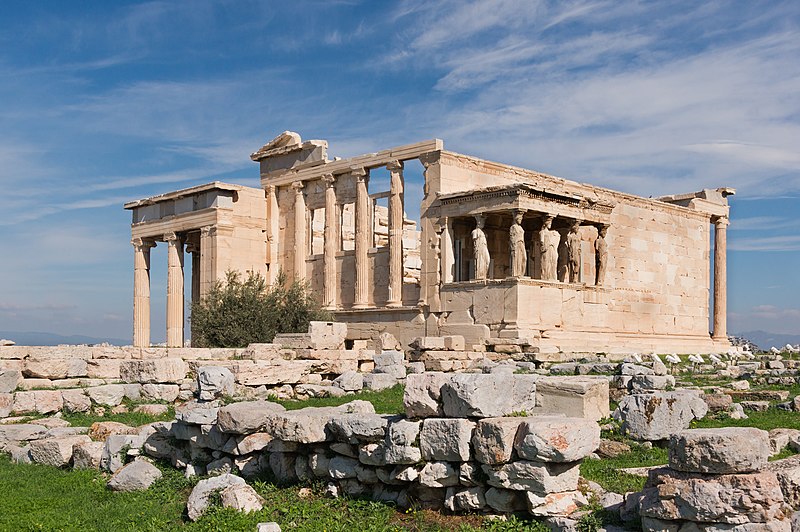
Can you imagine fighters sending bullets to the enemy to save ancient monuments? That’s exactly what happened during Greece’s 1821 war for independence against the Ottomans. When the Turkish garrison holed up in the Acropolis started dismantling the legendary Parthenon to use the marble for fortifications, the Greek rebel Kyriakos Pittakis had an ingenious idea. He proposed to give the Turks lead bullets so they would stop vandalizing the iconic temple. Incredibly, it worked! The Greeks managed to preserve parts of their cultural pride amidst the chaos of revolution.
33. The 1518 Bizarre “dancing plague” in Strasbourg
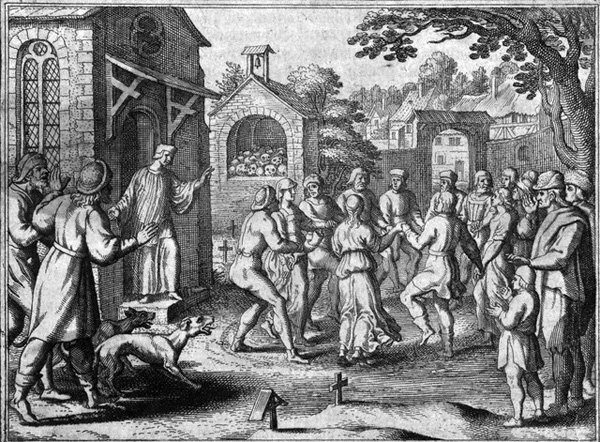
, Public domain, via Wikimedia Commons
In 1518, a bizarre phenomenon dubbed the “Dancing Plague” gripped the streets of Strasbourg. It began when a woman named Frau Troffea suddenly took to dancing for no apparent reason. Within a week, dozens more had joined her frenzied movements, unable to stop for days on end.
As the contagious mania spread, eventually, hundreds of people found themselves compulsively dancing despite exhaustion and injury. City authorities bizarrely encouraged the afflicted to keep dancing, hoping it would cure them. The Dancing Plague highlighted the potential for strange mass hysterias.
34. The Great Molasses Flood In 1919

, Public domain, via Wikimedia Commons
The Great Molasses Flood of 1919 was a peculiar event that unfolded in Boston‘s North End neighbourhood. On that fateful January day, a massive storage tank containing over 2 million gallons of thick, viscous molasses suddenly ruptured, unleashing a colossal wave of the sticky substance that barreled through the streets. Eyewitnesses described the molasses tsunami as being 15-foot-high, 160-foot-wide torrent.
Buildings crumbled, vehicles were tossed like toys, and helpless bystanders were swept away by the relentless deluge. In the aftermath, 21 lives were tragically lost, many suffocated by the overwhelming tide of molasses, while scores more were injured. Many years after the clean up locals claimed that the air still carried the unmistakable aroma of the sweet, sticky disaster on hot summer days.
35. The Great Stink of 1858
London’s sweltering summer of 1858 caused a truly putrid problem – the River Thames reeked of raw sewage. The foul odour was dubbed “The Great Stink.” Even the British Parliament was disrupted by the overpowering stench . Members could hardly stand the overwhelming stench wafting into their chambers from the waste-filled waters. There were fears of cholera outbreaks. It spurred engineer Joseph Bazalgette’s proposed an ambitious project to construct an intricate network of sewers. The effluent was thus diverted away from the Thames.
36. Korea Tree Incident: Operation Paul Bunyan

, Public domain, via Wikimedia Commons
You won’t believe this crazy historical event – the Korea Tree Incident of 1976! It started when some American and South Korean soldiers were just trying to prune an obstructive tree in the Korean Demilitarized Zone (DMZ). But a group of angry North Korean soldiers confronted them and it turned into an axe-swinging melee! Two American officers were brutally killed.
Three days later, the U.S. launched Operation Paul Bunyan as an intimidating show of force. Hundreds of air, naval, and ground troops descended on the area, with tanks and a huge security team, to aggressively cut down the rest of the tree while North Korea nervously watched.
36. The World War 1 Christmas Truce
The bitter fighting of World War I briefly halted on Christmas Eve 1914 when British and German soldiers initiated an unofficial truce. In the frozen trenches of the Western Front, the enemies emerged to exchange gifts and greetings across No Man’s Land. Remarkably, the bitter foes mingled freely, sharing food, cigarettes, and even playing soccer matches together.
For a short time, the horrors of war gave way to the spirit of Christmas. Though the truce was short-lived, this rare moment of peace and humanity amid the unspeakable brutality illustrated that even in the darkest circumstances, a flicker of hope can shine through.
37. Tanganyika Laughter Epidemic
An entire village was overtaken by uncontrollable laughter. That’s exactly what happened in 1962 in the small village of Kashasha, Tanganyika (now Tanzania). It started with a few giggly students at a missionary-run boarding school. But the laughter proved contagious—spreading like wildfire through the school, village and eventually to thousands across the region.
For up to 18 months, groups would spontaneously erupt into fits of laughing so intense that they collapsed from exhaustion. While seemingly funny at first, this laughter epidemic created total chaos and had to be taken seriously. Authorities tried everything to stop it, but the bizarre phenomenon baffled everyone until it finally petered out.
38. Emperor Nero’s Singing Career

, , via Wikimedia Commons
Can you imagine one of the most powerful rulers in history fancying himself an amazing singer? Well, that was Emperor Nero for you. This eccentric Roman emperor loved performing for audiences, even though accounts suggest his voice was pretty awful. People were forced to attend his lengthy musical shows against their will.
Nero went as far as having a child born during one performance killed because the parent’s cries ruined his concentration. It is even alleged that Nero sang the “Sack of Ilium” in stage costume while the city burned. He in Greek singing contests with his hired cheering squads ensuring he won every prize.
39. States Fighting a War over A Wooden Bucket
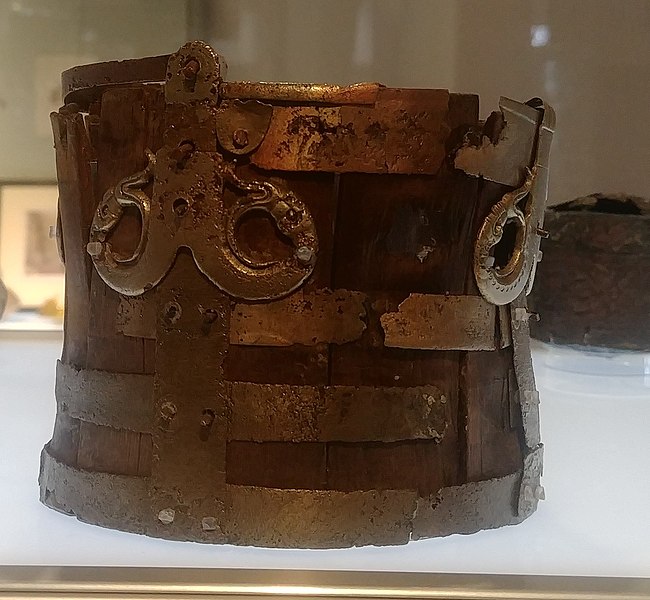
, , via Wikimedia Commons
Mostly we hear of wars being fought over land, resources, or power – but a bucket? Let me tell you about one of the weirdest historical conflicts ever. In 1325, the Italian cities of Bologna and Modena went to war…over a wooden bucket! It all started when some Modenese soldiers raided a Bologna village and stole their prized oaken bucket used for fetching water.
Bolognese forces retaliated, leading to a full-scale battle that lasted for over a year. Thousands died in this “bucket war” In the end, Bologna won and got to keep the famous bucket as a trophy. Just imagine risking your life to fight over a big wooden bucket – history is full of wild and hilarious stories like this one!
40. In 1778 the Austrian Army Fought Itself and Lost

, CC0, via Wikimedia Commons
One drunken night in 1788, the mighty Austrian army managed to defeat itself at the Battle of Karansebes. After drinking way too many schnapps, inebriated soldiers mistook a group of innocent gypsies for Ottoman Turks. Gunfire and shouts of “Turks! Turks!” erupted as the delirious troops fired blindly at each other.
The drunken chaos spiralled out of control until over 10,000* Austrian soldiers lay dead or wounded – all at their own hands before the actual Ottoman forces even arrived. Emperor Joseph II himself barely escaped the friendly fire fiasco, which went down as one of history’s most bizarre and utterly senseless military blunders.
While some historical events are remembered for their significance and gravitas, others stand out simply for their utter strangeness and absurdity. From futile military campaigns against animals to raining meat from the sky, the past is littered with baffling and hilarious incidents that make us question the sanity of those involved. Though they may induce laughter, the weirdest historical events are windows to the wonderful peculiarities that make exploring history so captivating.
Planning a trip to Â鶹APP ? Get ready !
These are ´¡³¾²¹³ú´Ç²Ô’²õÌý²ú±ð²õ³Ù-²õ±ð±ô±ô¾±²Ô²µÂ travel products that you may need for coming to Â鶹APP.
Bookstore
- The best travel book : Rick Steves – Â鶹APP 2023 –Ìý
- Fodor’s Â鶹APP 2024 –Ìý
Travel Gear
- Venture Pal Lightweight Backpack –Ìý
- Samsonite Winfield 2 28″ Luggage –Ìý
- Swig Savvy’s Stainless Steel Insulated Water Bottle –Ìý
We sometimes read this list just to find out what new travel products people are buying.


