
 English


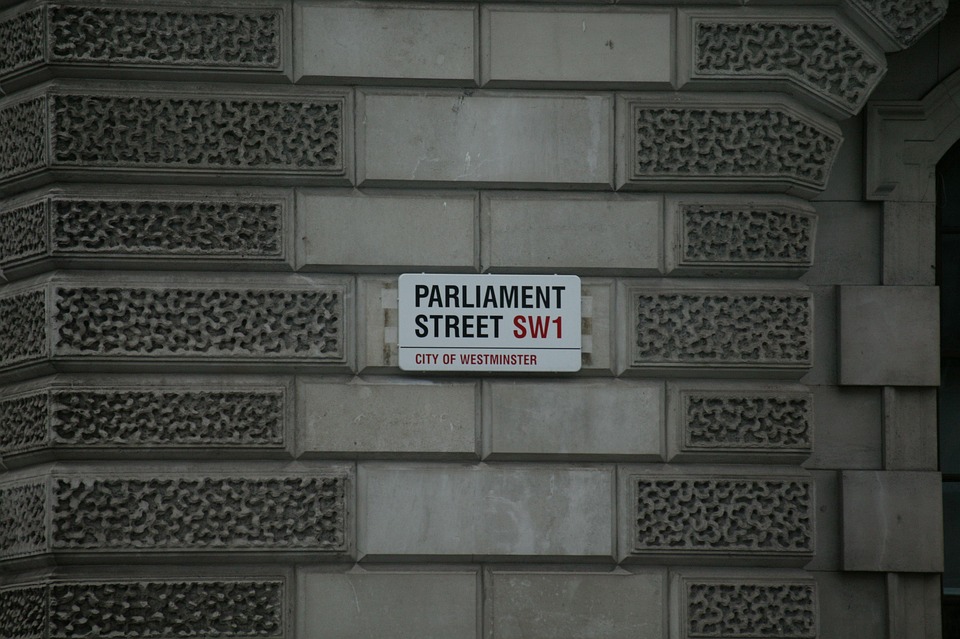
Image by from
Top 10 Amazing Facts about the Houses of Parliament
The Houses of Parliament shape the lives of every single citizen in the UK,
Once known better as the Palace of Westminster after it was built during the 11th century, the main building here was once a large royal palace.
The Palace of Westminster serves as the meeting place for both the House of Commons and the House of Lords, the two houses of the Parliament of the United Kingdom.
Informally known as the Houses of Parliament, the Palace lies on the north bank of the River Thames in the City of Westminster, in central London, England.
This original structure was badly damaged by a fire in 1512, and then completely destroyed by a subsequent fire in 1834. After this enduring damage, it was replaced with a more robust structure.
The Houses of Parliament combine spectacular architecture with a fascinating history. Located next door to Westminster Abbey and inextricably linked to it by history the Houses of Parliament are an intriguing place to visit.
For more amazing facts about the houses of parliament, continue reading.
1. Houses of Parliament are Property of the Monarch

Image by from
Parliament is bicameral but has three parts, consisting of the sovereign (Crown-in-Parliament), the House of Lords, and the House of Commons (the primary chamber).
The Houses of Parliament are the official meeting place for parliament, but as the UK is a constitutional monarchy, they are technically owned by the reigning monarch.
The remainder of Westminster continued to serve as the home of the Parliament of England, which had met there since the 13th century and also as the seat of the Royal Courts of Justice, based in and around Westminster Hall.
During ceremonial events, the venue also retains its original purpose as a royal residence and the Queen plays a key role in events such as the State Opening of Parliament – traditions which stretch back many centuries.
2. Houses of Parliament are Colour Coded

Image by Ukhouseoflords from
The building is colour coded; gold in the parts used by the Monarch, red for the Lords and green for the Commons.
Originally this hierarchy of colour – with green being the lowest grade – pretty much reflected the relative importance of each element of Parliament.
Over the years the power of the Monarch and the Lords declined. Since 1689 the Commons has been the more powerful of the two chambers.
House of Commons benches and furnishings are green in colour, a custom which goes back 300 years.
In the House of Lords, red is similarly employed in upholstery, hansard, notepaper etc.
This colour most likely stems from the use by monarchs of red as a royal colour and its consequent employment in the room where the Monarch met their court and nobles.
On a lighter note, in the House of Commons, where MPs can say yes to new laws, the seats are green. Green for go! But in the House of Lords, members can vote against these new laws to try and stop them. So red for stop.
3. Houses of Parliament Smelly Past

Image by from
Parliament considered abandoning the palace of Westminster because the River Thames used to smell so bad.
The whole drama goes under the name of The Great Stink of 1858. The river smelt so bad that Parliament first tried to dip their curtains in a mix of lime and chloride to hide the smell to no avail.
It got so bad that they laid down a bill and made it into law in a speedy 18 days the law paved the way for the extensive plumbing infrastructure and hygiene laws that saved London from its smelly past.
4. Houses of Parliament Continue to Maintain Amenities from Days Gone-by
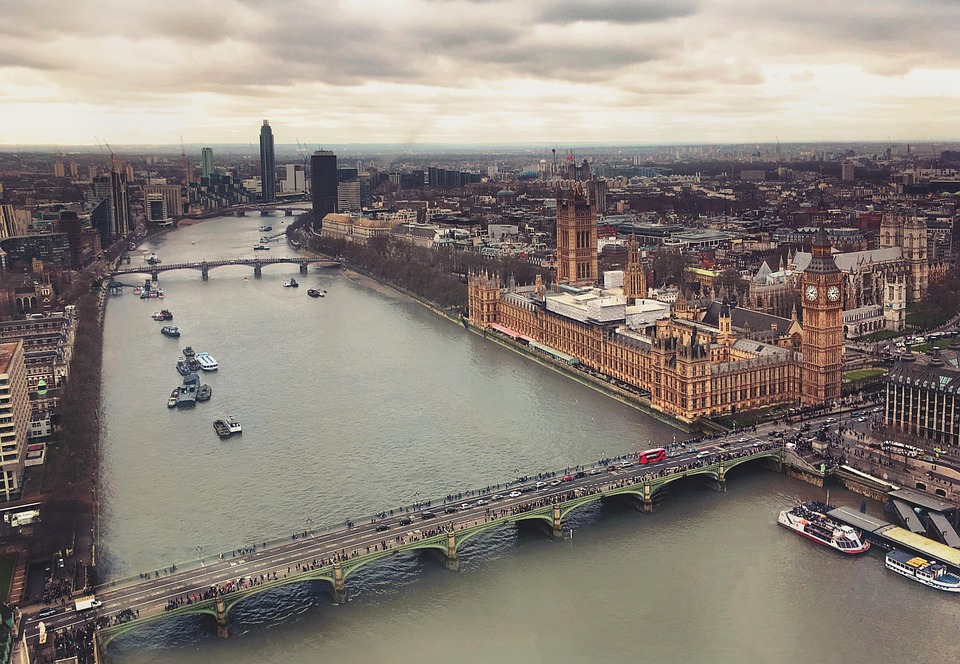
Image by from
At the core of the houses of Parliament is the respect for traditions.
While the Palace of Westminster is now home to modern government, it is also known for respecting traditions which stretch back many centuries.
In the earliest days of parliament, figures attending would have brought their swords – as such, the venue still provides a place to hang these swords.
In addition, the floor in many of the rooms includes marking which are each approximately ‘two sword lengths’ away from one another; it is reputed this was intended to stop fights breaking out in the building.
There is also a snuffbox by the front door of the Commons. It’s been there for centuries and it’s always full of snuff.
Apparently, this is because smoking has not been allowed in the chamber of the House of Commons since the 17th century so the snuff box is there instead. Whether many people actually use the snuff or not is a moot point.
5. The Commonwealth Rebuilt the Bombed House of Commons
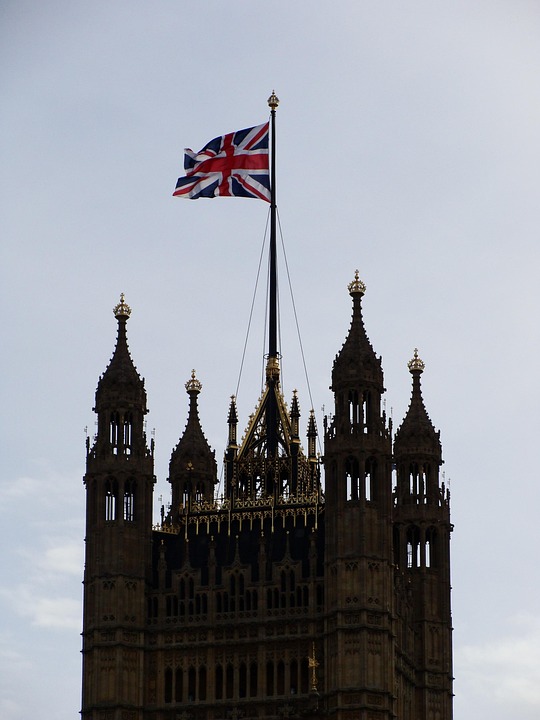
Image by from
On 10 May 1941, incendiary and high-explosive bombs were dropped on the Palace of Westminster, destroying the House of Commons Chamber and damaging the House of Lords Chamber, Westminster Hall and the Clock Tower.
The air raid was part of the Luftwaffe’s (German Air Force) campaign of sustained aerial bombing attacks on Britain, known as the Blitz.
It was rebuilt to designs by Giles Gilbert Scott, architect of both Bankside and Battersea power stations, as well as the famous ‘K2’ red telephone boxes dotted around the city.
In 1943, Prime Minister Sir Winston Churchill decreed that the Commons chamber must be ‘restored in all essentials to its old form, convenience and dignity, insisting that the crowded intimacy of the old chamber must be replicated.
All the countries of the British Commonwealth contributed to the refurbishment. Australia provided a replica of the original Speaker’s chair and Fiji provided one silver-gilt inkstand.
6. The House of Commons has Fewer Seats than MPs

Image by from
Winston Churchill ordered that the design be made so, his justification was that he wanted the MPs in attendance to really want to be there.
If there’s an important vote, MPs have to arrive early enough to guarantee a seat or use prayer cards to reserve their seats – in which case they have to arrive in time for the prayers at the beginning of the day and stay until they’ve finished whatever business they came for.
Despite there being 650 MPs, the chamber has only 427 seats – meaning there is often standing room only on big days, such as the Budget.
However, there is a rather arcane way of booking a seat to guarantee a spot on the green benches.
MPs have to roll up at 8am and place a “prayer card” in the place they would like to sit. They then have to be in the chamber at the start of that day’s sitting, for prayers.
7. The Black Rod Tradition
On the door to the House of Commons, there is a worn-out chunk of wood where the official known as ‘Black Rod’ is sent to summon the Commons.
The Black Rod might seem like a weird enough 650-year-old tradition in itself, but the way the Black Rod gains access to the House of Commons is even stranger.
In a symbol of the Commons’ independence, the door to their chamber is slammed in his face The rod then has to knock three times with their staff before being permitted to enter the House of Commons.
The Members of the House of Commons follow Black Rod and the Commons Speaker to the Lords Chamber and stand behind the Bar of the House of Lords (at the opposite end of the Chamber from the Throne) to hear the Queen’s Speech.
8. The Houses of Parliament are Open to All
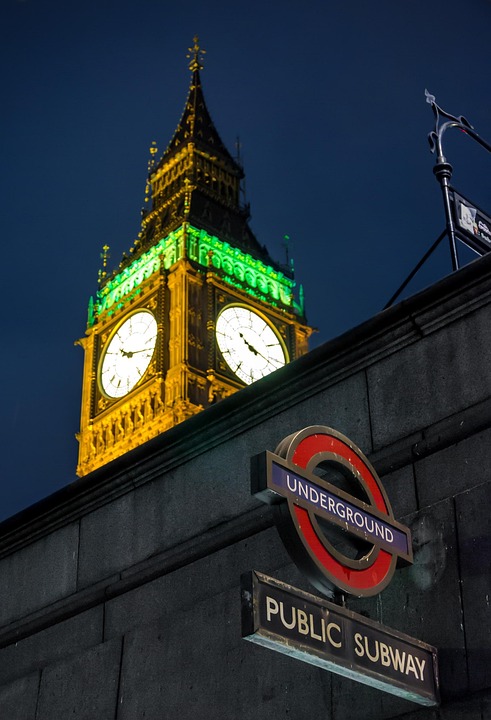
Image by from
Anyone can listen to Parliamentary debates from the galleries or even sit in on committees as they take evidence.
Entrance is on a ‘first-come, first-served basis. You are expected to listen quietly though. Anyone attempting a protest will be unceremoniously ejected.
If there is no space in the galleries, you can follow debates on TV or read transcripts on the Internet.
Further, you can go into the Houses of Parliament either on a tour, to watch Prime Minister’s Questions or Minister’s Questions, to attend a talk or event or to go and petition your MP.
You can’t, however, just walk around and see the inside of the Palace of Westminster unguided.
For a comprehensive tour of the parliament and its environs get in touch with Discoverwalks guides in London.
9. The Houses of Parliament have Set Limits for the Monarch
The Monarch comes to Parliament generally just once a year for the State Opening of Parliament. The Monarch is only allowed as far as the Throne in the House of Lords.
To go any further would be seen as an attempt to interfere with the workings of the elected Commons.
The Monarch reads a speech setting out the Prime Minister’s legislative programme for the next year.
Even if the Monarch disagrees with the Prime Minister’s plans there is nothing they can do to alter the speech.
10. The Houses of Parliament are Home to the Largest Bell ever Cast in Britain

Image by from
Strangely enough, ‘Big Ben’ isn’t visible from the street, as the name refers to the hour bell, which hangs inside Parliament’s clock tower.
‘Big Ben’, weighs in excess of thirteen tons. It was transported from Whitechapel bell foundry to its new home on a trolley pulled by sixteen horses in May 1859.
No one knows exactly why the bell is called ‘Big Ben.’ Some say the bell is named after the clerk of works at the time Benjamin Hall who was tiny, others that the nickname referred to Benjamin Caunt a burly Victorian prize-fighter.
Since 2012, the official name of the 96 metres (315 ft) high Clock Tower has been the Elizabeth Tower.
For millions of visitors, though, the name ‘Big Ben’ still conjures an image of the Clock Tower.
Westminster Hall has been used for lyings-in-state during state and ceremonial funerals. Such an honour is usually reserved for the Sovereign and for their consorts;
the only non-royals to receive it in the twentieth century were Frederick Sleigh Roberts, 1st Earl Roberts (1914) and Sir Winston Churchill (1965).
Planning a trip to Â鶹APP ? Get ready !
These are ´¡³¾²¹³ú´Ç²Ô’²õÌý²ú±ð²õ³Ù-²õ±ð±ô±ô¾±²Ô²µÂ travel products that you may need for coming to Â鶹APP.
Bookstore
- The best travel book : Rick Steves – Â鶹APP 2023 –Ìý
- Fodor’s Â鶹APP 2024 –Ìý
Travel Gear
- Venture Pal Lightweight Backpack –Ìý
- Samsonite Winfield 2 28″ Luggage –Ìý
- Swig Savvy’s Stainless Steel Insulated Water Bottle –Ìý
We sometimes read this list just to find out what new travel products people are buying.


