
 English


15 Fascinating Facts about Earthquakes
When the earth wakes all hell breaks loose! The ground starts to shiver, glass rattles and in their brittleness break, soon walls shake and everything collapses, signs of what could be a devastating earthquake. Mother Nature is powerful and of all-natural disasters, earthquakes are treacherous, as they usually arrive without warning and plunge our lives into chaos. In Just moments they reek of devastation on houses, cities and entire regions. Earthquakes are one of the most fascinating natural phenomena on our planet and they have shaped the world we live in today. From the devastating earthquakes that have destroyed entire cities to the mysterious seismic activity that occurs deep beneath the ocean floor, there are countless fascinating facts about earthquakes that will leave you in awe. They can occur on every continent around the world and as you continue to read this article you will learn 15 facts about earthquakes.
1. A Shake that Shortens the Day

Image by various from
Earthquakes can shorten the day! The “earthquake effect on rotation” or “seismic effect on rotation” are terms for this phenomenon. Changes in the rocks cause the earth to reshape itself during an earthquake, compressing it to a smaller diameter. The speed at which it rotates changes as its diameter decreases, resulting in a shorter day. The impact is negligible and only apparent in extremely large earthquakes. For instance, the earthquake that struck Japan in 2011 with a magnitude of 9.0 cut the day by approximately 1.8 microseconds.
This is because the earthquake resulted in a small shift in the Earth’s rotation axis as a result of mass redistribution. A complex model was used by NASA’s Jet Propulsion Laboratory’s scientist Richard Gross to perform a theoretical calculation of the “earthquake’s effect on the rotation” of the Japan quake in 2011. Another example is the 2010 earthquake in Chile with a magnitude of 8.8, according to Gross, it shortened the day by about 1.26 microseconds and shifted Earth’s figure axis by about 8 centimetres.
2. Chile’s Chilling Earthquake

Image by Pierre St. Armanf from
The Valdivia earthquake of 1960, which struck southern Chile on May 22, 1960, was the largest ever recorded. On the moment magnitude scale, the magnitude of the earthquake was 9.5, making it the strongest earthquake ever recorded. It is anticipated that between 1,000 and 6,000 people will pass away. The earthquake occurred along the border between the Nazca and South American plates, where the Nazca plate is subducting beneath the South American plate. The earthquake caused major ground shaking, landslides and liquefaction in the affected areas. It also triggered a massive tsunami, causing widespread devastation and loss of life not only along the coast of Chile but also in Hawaii, Japan, the Philippines and other Pacific islands.
15 Fascinating Facts about Volcanoes.
3. Fascinating Fact: A Chinese Astronomer Invented the Seismometer

Image by Chinese Museum Calgari, Alberta from
During the Han dynasty, a time of great intellectual and cultural development in ancient China, the seismometer was also one of many scientific and technological inventions. It was created by Zhang Heng, a Chinese astronomer around 132 AD. It was aptly christened “Houfeng Didong Yi,” which roughly translates to “instrument for measuring the seasonal winds and the movements of the Earth.” The device was a bronze vessel with eight dragon heads pointing in various directions.
The ground would shake and the balls would move, falling into the mouths of the appropriate dragon heads when an earthquake occurred. A mechanism within the vessel would be triggered, and a bronze rod would fall and strike a bronze drum, making a loud noise that could be heard from a distance. The invention of Zhang Heng was a significant advance in seismology because it made it possible to detect and measure earthquakes with greater precision than ever before.
Learn More About the Gujarat Earthquake of 2001.
4. Can Animals Sniff or Feel Earthquakes?
According to the USGS, animals can’t predict earthquakes thanks to their finely tuned senses, animals can detect a quake at its earliest stages. For example, it’s believed they can detect the arrival of primary waves (P-waves), which cause a parallel, back-and-forth motion and precede secondary waves (S-waves), which vibrate up and down. One study by the Department of Life Sciences at the Open University on animal behaviour and earthquakes found that a colony of toads abandoned their mating site three days before a magnitude 6.3 earthquake struck L’Aquila, Italy in April 2009. The toads didn’t return until 10 days later after the last of the significant aftershocks had passed. However, animals can’t offer specifics about when a quake will occur or where its epicentre will be.
NEXT READ: The 10 Most Famous Volcanoes in the World.
5. Did You Know this about the Earthquake Centre? …..

Different stages for earthquake cycles of megathrust earthquakes. Image by Xiaohan Song from
In the field of seismology, the epicentre and hypocenter are two important terms that describe an earthquake’s location. An earthquake has to start somewhere! The location within the Earth from which the earthquake originates is referred to as the hypocenter, or focus. Seismic waves originate from this location, which is typically a few kilometres below the surface of the Earth. On the other hand, the spot on Earth’s surface that is directly above the hypocenter is the epicentre. It is the location where the effects of the earthquake are greatest and the first seismic waves are felt. The magnitude and intensity of the earthquake can be determined using the distance between the epicentre and the hypocentre.
6. Tsunamis are Born of Earthquakes
The ocean floor moves and moves a lot of water when there is an earthquake in the ocean or another body of water. This can cause a series of waves to travel outward from the earthquake’s epicentre. As they approach the shore, these waves become extremely large and spread across the ocean, causing widespread destruction. In fact, earthquakes were the cause of some of the worst tsunamis in history, like the Indian Ocean Tsunami in 2004 and the Tohoku Tsunami in Japan in 2011. However, not all quakes result in tsunamis. An earthquake of a certain magnitude and type capable of significantly displacing the ocean floor must occur beneath or close to a body of water in order to cause a tsunami.
Also Read: The Devastating Power of Tsunamis.
7. Occurance is More Prevalent in Earthquakes Belts

Image by Gringer from
Millions of years ago, an ancient confrontation between giants had gone unnoticed, the Indian plate which was part of the supercontinent Gondwana had been pressing with increasing force on the neighbouring Eurasian plate. It was squeezing it and trying to push it up from a depth of 19 miles (30km). The growing tension shot out like a compressed spring, the ancient plates slipped relative to each other and the sea floor was thrown out for several thousand miles. The point at which this cataclysmic event occurred is part of the Pacific Ring of Fire.
The “Ring of Fire� also called the Circum-Pacific Belt, is the most geologically active area in the world thus the zone of earthquakes surrounding the Pacific Ocean. About 90% of the world’s largest earthquakes occur there. The ring of fire extends to over 40, 000 Kms where most earthquakes and tsunamis take place. The next most seismic region (5-6% of earthquakes) is the Alpide Belt which extends from the Mediterranean region, eastward through Turkey, Iran and Northern India.
8. Earthquakes are not Measured by “Shakiness” but Rather, Magnitude

Image by from
The magnitude of an earthquake is a numerical value that indicates the amount of energy released by an earthquake at its source and is used to measure an earthquake’s magnitude rather than its “shakiness.” Seismographs, which record the vibrations caused by an earthquake, are typically used to determine magnitude. One of the most common scales used to measure earthquake magnitude is the Richter scale. It ranges from 0 to 10, with each whole number increase representing a tenfold increase in earthquake energy. An earthquake with a magnitude of 6.0, for instance, generates ten times more energy than one with a magnitude of 5.0.
The Modified Mercalli Intensity Scale is a less well-known scale that measures a quake’s intensity, or “shakiness.” However, the Richter Scale is no longer used to measure the magnitude of earthquakes. The Moment Magnitude Scale (MMS) is preferred by modern seismologists due to its greater accuracy in estimating global quake magnitudes. An earthquake’s magnitude is decided by the tectonic fault it occurs on – the longer the fault, the larger the earthquake. The largest earthquake ever recorded on Earth was of a magnitude 9.5. According to the USGS, no magnitude 10.0 earthquake could ever occur since no fault is long enough to generate such an earthquake.
9. One, Two, Three….Half a Million ‘Shakes’ Annually
The United States Geological Survey (USGS) estimates that there are approximately 500,000 earthquakes worldwide each year. However, the vast majority of these tremors are of such a small magnitude that they may not be felt by humans. As a matter of fact, the minimum threshold for an earthquake to be felt by humans is 2.5, and only about 100,000 of these earthquakes have a magnitude greater than 2.5. Additionally, only a small number of earthquakes occur annually with a magnitude of 7.0 or greater, which can result in significant damage and fatalities. Without seismographs, many of these would go unnoticed deep within the crust of the Earth. According to seismologists, only about 20% of the world’s earthquakes are felt by humans, and approximately 100 of them annually cause damage.
Top 10 facts about Yellowstone National Park.
10. There are Shock Before and After Quakes
Although they share characteristics with earthquakes, foreshocks and aftershocks are distinct. A smaller earthquake that occurs prior to the main shock is called a foreshock. It releases less energy than the primary shock, but it is caused by the same process. Before an earthquake, there aren’t always foreshocks, and scientists don’t know why some earthquakes have foreshocks and others don’t. A smaller earthquake that follows the main shock is called an aftershock. As the fault adjusts to the new stress field, aftershocks are caused by the same fault that caused the main shock.
After the initial shock, aftershocks can last for days, weeks, or even months. They can still cause harm and be felt by people, despite usually being less severe than the main shock. The behaviour of earthquakes and the faults that cause them are better understood through the study of foreshocks and aftershocks by scientists. Scientists can learn more about the size and location of the main shock, the fault characteristics, and the likelihood of future earthquakes by analyzing the patterns of fore and aftershocks.
11. They are Hard to Predict

Image by from
Earthquakes are notoriously difficult to accurately predict, despite years of research. The intricate geological forces that lead to earthquakes are still poorly understood by scientists. It is difficult to survey and monitor earthquakes because they can occur deep beneath the surface. Additionally, tremors can be caused by a variety of faults and geological structures, each with distinct characteristics. It’s interesting that they show up suddenly, so it’s hard to say when or where they will show up. While scientists are able to monitor seismic activity and identify areas with a high risk of earthquakes using a variety of methods, accurately predicting when and where earthquakes will occur remains a challenge. However, ongoing research and technological advancements are assisting us in gaining a deeper comprehension of earthquakes and may eventually lead to more precise predictions.
12. Even the Mighty Everest bows to Earthquakes
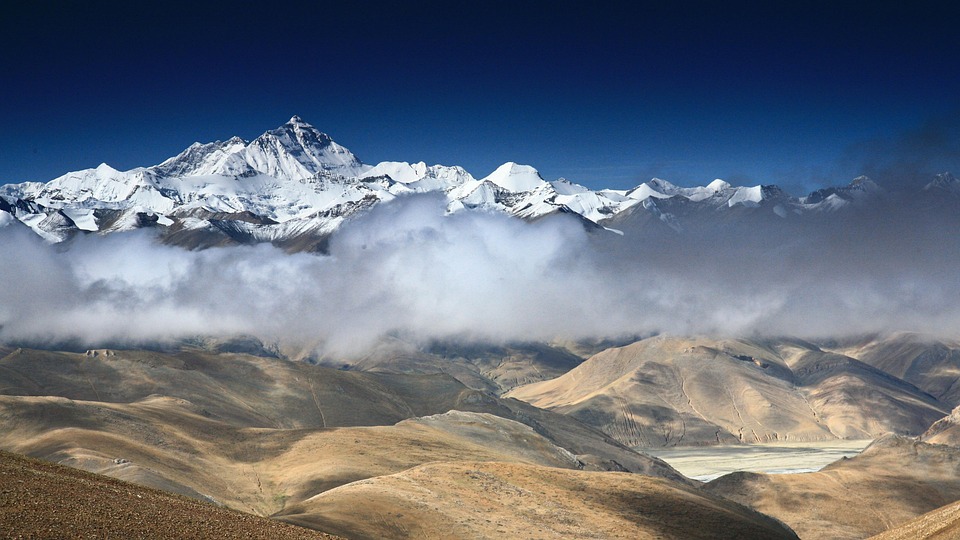
Image by from
The Nepalese earthquake that occurred on April 25, 2015, caused significant ground movement and displacement, which resulted in the movement of Mount Everest. According to a study published in the journal Science Advances in 2016, the earthquake caused the ground to move horizontally by up to 10 meters (33 feet) in some places and vertically by up to 3 meters (10 feet) in others. The study also revealed that the earthquake triggered a series of landslides on the slopes of Mount Everest resulting in the movement of large amounts of rock and debris, which, in turn, caused the mountain to move horizontally by approximately 1.2 inches (3 centimetres) towards the northeast.
It is worth noting that the movement of Mount Everest was not significant enough to change its height or affect its status as the highest mountain in the world. The Nepal quake was believed to have changed Mt. Everest’s height, but after a years-long surveying and re-measuring project, Nepali and Chinese officials reported that this claim was untrue. They did, however, announce in December 2020 that the mountain’s official height was no longer 29,028 feet, but rather 29,031 feet.
Related Read: Mt. Everest top Facts.
13. Earthquakes have Waves too

Image by US Forest Service from Wikimedia
The shockwaves that travel through the ground are called seismic waves. Seismic waves are waves of energy that travel through the Earth’s crust and interior, and they are caused by sudden movements of rock beneath the Earth’s surface. These movements can be caused by natural events like earthquakes, volcanic eruptions and landslides. Seismic waves can be detected and measured by instruments called seismometers, and they provide important information about the Earth’s interior structure and properties. They are very strong at the centre of the earthquake. The waves travel to the surface and this is when the ground shakes and destruction happens.
14. Numbers Don’t Lie
Throughout recorded history, numerous catastrophic earthquakes have claimed a significant number of lives. The Shaanxi earthquake in China in 1556, for instance, is thought to have killed more than 800,000 people, making it the deadliest earthquake in recorded history. The Haitian earthquake of 2010 killed an estimated 230,000 people, and the Indian Ocean earthquake and tsunami of 2004 killed more than 230,000 people in several countries. However, it is essential to note that earthquake fatalities have significantly decreased over time as a result of improvements in building codes, early warning systems, and emergency response efforts. Despite the fact that earthquakes are still a significant natural hazard, technological advancements like cell phones and increased preparedness have helped to reduce the risk to human life.
To Learn about the Deadliest Natural Disasters in the US. CLICK HERE
15. Earthquakes Can Be Triggered By Humans

Human activity that alters the stress in the crust can lead to earthquakes. Injecting liquid into the ground is one of the most common ways humans cause earthquakes. This can occur when injecting liquids for the generation of geothermal energy or treating wastewater from oil and gas operations. The liquid can push and slide existing faults, resulting in earthquakes, as it increases underground pressure when injected into the ground. By altering the weight distribution in the earth’s crust, large structures like dams and buildings can also cause earthquakes. Although man-made earthquakes are typically smaller than natural earthquakes, they can have a significant impact on communities nearby.
In conclusion, earthquakes are massive, unstoppable and deadly. The forces that cause quakes baffle experts who are on a desperate but urgent mission to predict when and where the next big one will hit. While scientists have made great strides in understanding the mechanics of earthquakes and predicting their likelihood and severity, there is still much to learn.
Planning a trip to Â鶹APP ? Get ready !
These are ´¡³¾²¹³ú´Ç²Ô’²õÌý²ú±ð²õ³Ù-²õ±ð±ô±ô¾±²Ô²µÂ travel products that you may need for coming to Â鶹APP.
Bookstore
- The best travel book : Rick Steves – Â鶹APP 2023 –Ìý
- Fodor’s Â鶹APP 2024 –Ìý
Travel Gear
- Venture Pal Lightweight Backpack –Ìý
- Samsonite Winfield 2 28″ Luggage –Ìý
- Swig Savvy’s Stainless Steel Insulated Water Bottle –Ìý
We sometimes read this list just to find out what new travel products people are buying.


