
 English


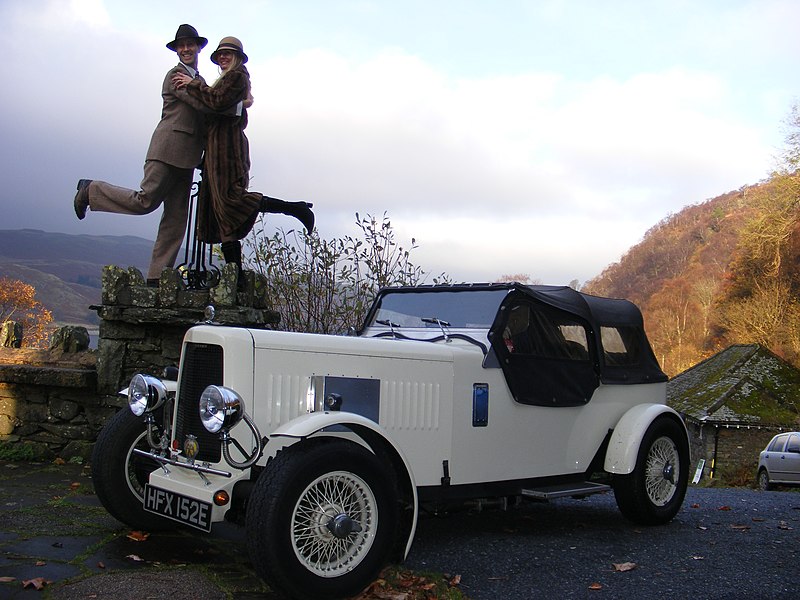
Photo by Anthonydpadgett from
10 Most Important Historical Events that Happened in the 1920s
The 1920s is frequently referred by many to as the “Roaring Twenties” or the “Jazz Age”, while to others the period is simply referred as the “Golden Twenties” because of its economic boom following World War I.
The Roaring Twenties brought highly visible social and cultural trends which were made possible by sustained economic prosperity. For women, knee-length skirts and dresses became socially acceptable, as did bobbed hair.
The era saw the large-scale adoption of automobiles, telephones, motion pictures, radio, and household electricity. It also saw unprecedented industrial growth, accelerated consumer demand, and significant changes in lifestyle and culture.
The 1920s was the era of many firsts and some of the major events that happened during that period are historical and still affect our daily life today. Let’s look at the 10 Most Important Historical Events that Happened in the 1920s.
1. The Discovery of Penicillin revolutionized the world of Medicine
Although many people around the world regularly use penicillin to treat various diseases, very few know when it was discovered and the impact it made on the world of medicine upon its discovery.
Penicillin’s legendary discovery is one of the most important historical events that happened in1920s. It was discovered in 1928 by Alexander Fleming while he was investigating a common type of bacteria that caused fatal infections in patients with weakened immune systems.
This discovery led to the introduction of antibiotics which has greatly reduced the number of deaths from bacterial infection around the world. Today, penicillin is used to treat throat infections, meningitis, syphilis, and other bacterial infections.
2. The Establishment of the League of Nations brought the World Together

Photo by Martin Grandjean from
Known as the “predecessor of the United Nations�, The League of Nations was an international diplomatic group developed after World War I as a way to solve disputes between countries before they erupted into open warfare.
The foundation of The League of Nations happened on 10 January 1920 immediately after the end of the First World War, which is considered to be the most brutal war in the history of mankind.
Its primary goals included preventing wars through collective security, and settling international disputes through negotiation and arbitration. The organization’s other concerns included labor conditions, human rights, and just treatment of prisoners of war.
The league of Nations survived for more than 20 years and was dissolved in 1946 after the Allied powers agreed to replace it with the United Nations.
Many League bodies, such as the International Labour Organization, continued to function and eventually became affiliated with the UN.
3. The Wall Street Crash of 1929 gave Way to the Great Depression
The 1920s, known as the “Roaring Twenties,” was a period of exuberant economic and social growth. However, the era came to a dramatic and abrupt end in October 1929 when the stock market crashed, paving the way for the Great Depression of the 1930s.
The crash began on Oct. 24, 1929, the day known as “Black Thursday,” and led to the worst economic meltdown in the history of the industrialized world. Together, the 1929 stock market crash and the Great Depression formed the largest financial crisis of the 20th century.
The panic of October 1929 has come to serve as a symbol of the economic contraction and has brought a constant debate among economists and historians as to what role the crash played in subsequent economic, social, and political events.
4. The Introduction of Radio Broadcasts Overhauled the Mass Media
Of all the new appliances to enter people’s homes during the 1920s, none had a more revolutionary impact than the radio. Sales of radios soared from $60 million in 1922 to $426 million in 1929.
Radio drew the people together by bringing news, entertainment, and advertisements to more than 10 million households by 1929. Radio blunted regional differences and imposed similar tastes and lifestyles.
No other media had the power to create heroes and villains so quickly. When Charles Lindbergh became the first person to fly nonstop across the Atlantic from New York to Â鶹APP in 1928, the radio brought this incredible feat into people’s homes, transforming him into a celebrity overnight.
Despite stiff competition from social media in recent years, Radio continues to garner audiences, with 3 billion listeners worldwide. its introduction in the 1920s qualifies as one of the most important things that happened in that period.
5. The Formation of the USSR Changed the World Geopolitics

Photo Source:
Until its collapse in 1991, USSR was one of the only two world superpowers. It was home to almost 300 million people and occupied 1/6 of all Earth’s land comprising 15 republics.
The Soviet Union was formed in 1922 after a conference of plenipotentiary delegations from the Russian SFSR, the Transcaucasian SFSR, the Ukrainian SSR, and the Byelorussian SSR declared the formation of the Union of Soviet Socialist Republics.
Since then it grew to become one of the largest and most powerful countries in the world. At the time of its collapse, it was ranked second in terms of industrial production and had the biggest nuclear-armed army in the world.
Many former Soviet citizens have nostalgia for the USSR, pointing towards most infrastructures being built during the Soviet era, increased job security, increased literacy rate, as well as political stability.
6. The Hosting of the first winter Olympic Games Harmonized the World Sports
Almost 30 years after the birth of the modern Olympics in 1896, the first Winter Olympic Games, or Winter Sports Week as they were called at that time, were held in the French Alps in Chamonix, France in 1924.
The original six sports included ski jump, bobsled, curling, ice hockey, skiing, and skating. Today, it has become a major international, multi-sport event that now includes 15 different sports with more than 100 events.
In 1925, the International Olympic Committee (IOC) decided to organize Olympic Winter Games every four years, independent of the Olympic Games proper and recognized the International Winter Sports Week as the first Olympic Winter Games in retrospect.
The tradition of holding the Winter Olympics in the same year as the Summer Olympics would continue until 1992, after which the current practice of holding a Winter Olympics in the second year after each Summer Olympics was adopted.
read more about the Olympics
7. The Discovery of Tutankhamun’s Tomb Triggered People’s interest in Archaeology

Photo by Steve Evans from
Since its discovery in 1922, the tomb of Tutankhamun remains the most famous find in the history of archaeology. Commonly referred to as King Tut, Tutankhamun was an Egyptian pharaoh who is believed to have reigned between 1332 and 1323 BC.
Upon its discovery by excavators led by Howard Carter, the tomb attracted a media frenzy from all over the world and its opening became one the most famous and important events of the 1920s.
The tomb contained over 2000 pieces of valuable antiques and some artifacts from the tomb, such as Tutankhamun’s golden funerary mask, are among the best-known artworks from ancient Egypt.
Today the discovery remains the most famous find in the Valley of the Kings and Tutankhamun the best-known Egyptian pharaoh. The tomb and its treasures are major attractions for Egypt’s tourist industry and sources of pride for the Egyptian public.
Learn more about Tutankhamun
8. Walt Disney’s famous Mickey Mouse cartoon character appeared for the first time

Photo Source:
Perhaps the greatest Important historical event that happened in the 1920s, was the creation of the most popular character in Walt Disney’s animated cartoons and arguably the most popular cartoon star in the world.
The first appearance of Mickey Mouse was in Plane Crazy on May 15, 1928. But the Walt Disney Company celebrates Mickey Mouse’s birth on November 18, 1928, upon the release of Steamboat Willie, because it is the first Mickey Mouse Cartoon with sound.
Mickey is traditionally characterized as a sympathetic underdog who gets by on pluck and ingenuity. The character’s status as a small mouse was personified through his diminutive stature and falsetto voice.
Today Mickey is one of the world’s most recognizable and universally acclaimed fictional characters of all time, and he appears in all Disney theme parks throughout the world.
Lead more in this article
9. The creation of the Communist Party of China shaped China as we know it today
One of the most important Historical Events that Happened in the 1920s, was the formation of China Communist party. It is the founding and ruling political party of modern China, officially known as the People’s Republic of China.
With more than 100 million members, the CCP is one of the largest political parties in the world. It is a monolithic, monopolistic party that dominates the political life of China.
The CCP was founded as both a political party and a revolutionary movement in 1921 by revolutionaries such as Li Dazhao and Mao Zedong.
On 1 October 1949, the CCP leadership proclaimed the establishment of the People’s Republic of China before a massive crowd at Tiananmen Square.
Since then PRC has grown to be one of the most powerful nations in the World. Thanks to the formation of the Communist Party of China, which was done on 31 July 1921 by 50 members only.
Read more about China
10. The Formation of BBC brought news to the people’s living rooms

Photo by Amanda Slater from
Another big historical event that happened in the 1920s, was the Formation British Broadcasting Company (BBC) in 1922. It is the oldest and the largest national broadcaster in the world.
The original British Broadcasting Company was founded in 1922, by various private firms, and made its first transmission on 14 November of the same year from station 2LO, located at Marconi House, London.
Its formation caught the people’s imagination and marked a turning point in the people’s attitude to radio.
Today the BBC World Service provides news, current affairs, and information in 28 languages around the world. It is available in over 150 capital cities with an estimated weekly audience of 192 million people.
Planning a trip to Â鶹APP ? Get ready !
These are ´¡³¾²¹³ú´Ç²Ô’²õÌý²ú±ð²õ³Ù-²õ±ð±ô±ô¾±²Ô²µÂ travel products that you may need for coming to Â鶹APP.
Bookstore
- The best travel book : Rick Steves – Â鶹APP 2023 –Ìý
- Fodor’s Â鶹APP 2024 –Ìý
Travel Gear
- Venture Pal Lightweight Backpack –Ìý
- Samsonite Winfield 2 28″ Luggage –Ìý
- Swig Savvy’s Stainless Steel Insulated Water Bottle –Ìý
We sometimes read this list just to find out what new travel products people are buying.


