
 English


20 Amazing Facts the Vietnamese Traditional Dress
From the vibrant colors that dance like a rainbow on silk to the intricate details that whisper tales of history, Vietnamese traditional dress, known as the “Ã�o Dà i,” is a masterpiece of elegance and tradition. But this is just the beginning – the Ã�o Dà i carries within it stories of centuries past, reflecting the spirit and resilience of a nation.
From its roots in the Nguyen Dynasty to its modern interpretations on global runways, the Ã�o Dà i has a story to tell. Prepare to be captivated by 20 astounding facts that will transport you to the heart of Vietnam’s traditions, where the past gracefully dances with the present, and the Ã�o Dà i takes center stage as a symbol of grace, beauty, and national pride.
1. The AO Dai is Vietnam’s National Dress

Photo by on
From ancient times to the present day, the Ao Dai has remained a symbol of grace and sophistication in Vietnamese culture. Wearing the Ao Dai is not just about donning a piece of clothing; it’s about proudly wearing a piece of Vietnam’s soul. The Ao Dai is a long, flowing dress that typically features a fitted top, wide sleeves, and a long, slit skirt. It is worn over a pair of pants or leggings.
The color and pattern of the Ao Dai can vary depending on the occasion. It is believed to have originated in the 17th century, during the reign of the Nguyen dynasty. At the time, the Ao Dai was a simple, loose-fitting garment worn by both men and women.
2. The Ao Dai has a Rich History

, , via Wikimedia Commons
In those bygone days (18th century), the Ao Dai donned a more modest visage, comprising loose-fitting trousers harmoniously paired with a long, cascading tunic. Crafted predominantly from the finest silks and luxurious fabrics, this iconic attire often boasts intricate embroidery and delicate beading that bestow upon it an aura of unparalleled beauty.
But the Ao Dai is not merely a garment; it embodies the very spirit of the Vietnamese people. Its resplendent presence becomes even more pronounced during Tết, the Vietnamese New Year, and various other cherished traditional festivities.
3. When wearing Ao Dai each Colour is Meaningful
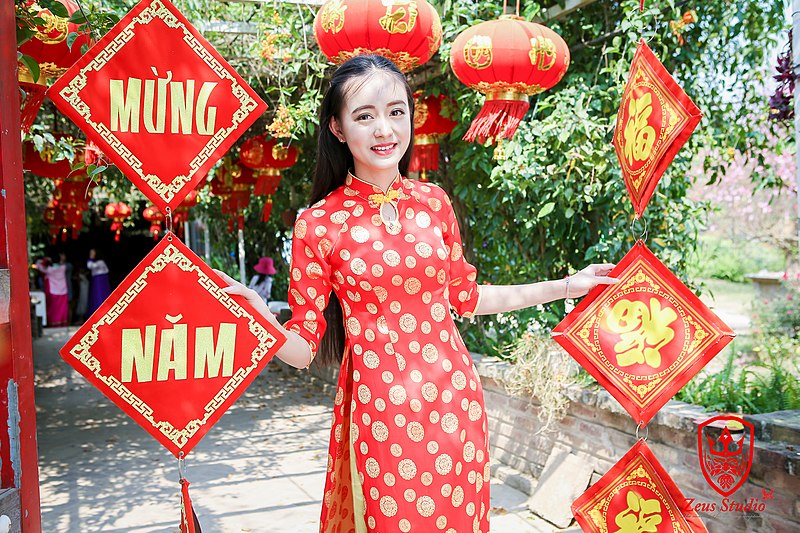
, CC0, via Wikimedia Commons
The pure and pristine white, adorning the Ao Dai, embodies the essence of purity itself, like a fresh sheet of unblemished paper waiting to be written upon by life’s experiences. It’s as if wearing the Ao Dai bathes the wearer in a protective cloak of fortune, a silent but powerful wish for a prosperous journey ahead.
It’s as if wearing this color invites luck to dance alongside the graceful folds of the Ao Dai. Then, there’s the regal yellow, a hue that drapes the wearer in an aura of royalty. The white, red, and yellow intermingle like threads of a vivid narrative, adorning the Ao Dai with profound meaning.
4. It is a Two-Piece Ensemble

Photo by on
Imagine a beautiful, slender tunic draping gently over the wearer’s figure, while the flowy trousers gracefully sweep the ground beneath. The Ao Dai’s tunic, with its snug embrace, accentuates the wearer’s silhouette in a tasteful manner. In elementary terms, the Ao Dai is like a long, fancy shirt paired with loose pants, and it looks really nice.
It’s a bit like wearing a beautiful dress that covers the legs too. This outfit is special because it’s both pretty and covers the body modestly. People who wear it look elegant and graceful, like in fairy tales. So, next time you see someone wearing an Ao Dai, you’ll know it’s not just clothes; it’s a piece of art and tradition combined.
5. Every Ao Dai is Tailored to Fit the Wearer
Every Ao Dai undergoes a meticulous transformation, designed to snugly envelop the wearer’s unique physique, making it not just a garment, but a second skin. Close your eyes and envision this: a seasoned tailor, a virtuoso with years of mastery, meticulously measures and fashions each component, taking scrupulous care of even the most minuscule particulars.
The nimble fingers of the tailor dance along the fabric, creating a symphony of stitches that harmonize to perfection. This dedication to perfection is not merely a routine; it’s a tradition etched in time, passed down through generations. The wearer can relish unparalleled coziness in a garment that appears as if it were made exclusively for them.
6. The Ao Dai features a decorative front panel called “Phan Trang”
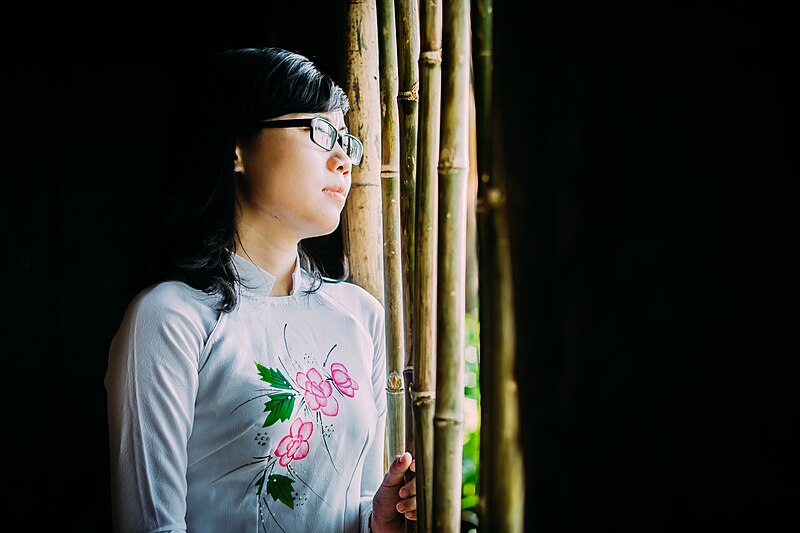
, , via Wikimedia Commons
Phan Trang, located deep within the essence of the Ao Dai, stands as a remarkable testament to the profound craftsmanship and innate creativity encapsulated within this cherished and time-honored attire. This captivating tradition was originally introduced by the Cham people of Vietnam centuries ago, during an era when silk and cotton held sway as the principal textiles for clothing.
Phan Trang finds its most splendid moments during special occasions like weddings, festivals, and the Tet (Lunar New Year) celebration. In the days of yore, when silk and cotton reigned supreme as the primary fabrics for attire, the Cham people ingeniously employed the concept of Phan Trang as a unique adornment for their garments.
7. Silk and Satin are the Predominant Fabrics used to Create Ao Dais

Photo by on
These two materials, silk and satin, truly shine when it comes to creating the exquisite Ao Dais. Silk glides smoothly against your skin, providing a gentle touch of sheer luxury. The way these fabrics gracefully drape around the body, embracing its natural curves, conjures an atmosphere of regal allure.
Picture this: you’re wearing a silk Ao Dai, and with each step, it’s as if you’re dancing with history, wrapped in the elegance of the ages. Meanwhile, satin Ao Dais have an almost magical ability to transform you into a beacon of sophistication, drawing admirers with their subtle yet captivating luster.
8. The French Influence on the Ao Dai
During the time when the French were in charge in Vietnam, they made some changes to the Ao Dai, which is Vietnam’s traditional outfit. One big change they made was to the collar. You see, before the French came along, the Ao Dai had a low and rounded collar. But the French, they liked things to look fancy and posh, so they said, “Let’s make the collar higher.” They thought it would make the Ao Dai look more elegant and classy.
Another thing the French did was add side slits to the Ao Dai. The regular Ao Dai didn’t have these slits on the sides, but the French thought it was too tight and uncomfortable. So, the clever Vietnamese designers started making Ao Dais with those side slits to please their new bosses from France.
But that’s not all! The French also brought new materials and colors into the world of Ao Dai. They introduced fabrics and shades that weren’t there before, giving the traditional dress a bit of a makeover. So, you see, during the French colonial period, the Ao Dai got a bit of a makeover with higher collars, side slits, and new materials and colors. It’s fascinating how different cultures can influence each other, even in something as simple as clothing.
9. Rock your Clothes during the Ao Dai Week

, , via Wikimedia Commons
Ao Dai Week is a special celebration that usually happens in March, right when International Women’s Day is in the air. It’s like a big fashion party where everyone in Vietnam is invited to put on their Ao Dai outfits and flaunt them everywhere – at work, school, and pretty much any place you can think of!
So, during Ao Dai Week, it’s all about rocking this elegant ensemble and showing it off with pride. It’s a chance for folks to say, “Hey world, check out our awesome Ao Dai!” It’s like a big, joyful shout-out to this beautiful piece of Vietnamese culture. So, if you’re ever in Vietnam in March, don’t be surprised if you see a sea of Ao Dais – it’s just the coolest fashion show in town!
10. Ao Dai is Immortalized in Literature
The Ao Dai, oh, what a delightful muse it has been in the world of Vietnamese literature! Picture this: words flowing like a serene river, painting vivid pictures of the Ao Dai’s beauty and grace. Many a poem has sung praises to the way it drapes, like a gentle caress of silk against the skin. And let’s not forget the songs! They’re like a musical journey through the world of Ao Dai, each note a tribute to its elegance.
It’s like the Ao Dai has a language of its own, whispered in verses and melodies. So, when you dive into Vietnamese literature, don’t be surprised if you find yourself lost in the enchanting world of Ao Dai-inspired words and melodies, where every page and every note tells a story of elegance and grace.
11. Ao Yem Complements the Ao Dai

, , via Wikimedia Commons
The everyday Ao Yem was usually crafted from comfortable materials like cotton or linen, emphasizing simplicity and functionality for women in their daily routines. However, when special moments like weddings or festivals came around, the Ao Yem transformed into a work of art. During these grand occasions, women would don exquisite Ao Yems made from luxurious fabrics such as silk or brocade.
Even in modern times, the Ao Yem has not lost its significance. While it may not be a part of daily wear as it once was, this captivating attire continues to grace the shoulders of Vietnamese women on special occasions.
12. Ao Dai Features Prominently in Education

, , via Wikimedia Commons
The áo dà i, Vietnam’s national dress, is a long, flowing tunic that is worn by women and girls of all ages. In recent years, the áo dà i has become increasingly popular as a school uniform for Vietnamese girls. Picture this: Rows of bright-eyed students, their youthful enthusiasm shining through, all donning the traditional Ao Dai.
There are many reasons why the áo dà i is such a popular choice for school uniforms. Second, the áo dà i is a very versatile garment. Third, the áo dà i is a very flattering garment. Fourth, the áo dà i is a relatively inexpensive garment. It is also relatively easy to care for and can last for many years.
13. Ao Dai in Weddings

, , via Wikimedia Commons
The Ao Dai, a cherished emblem of Vietnamese culture, exudes a timeless elegance that is both gracefully understated and intricately woven in its design. When it lovingly embraces a bride, it creates a cocoon of unparalleled grace and beauty, seamlessly intertwining the threads of ancient tradition with the tapestry of modernity.
On the most special day of her life, the Vietnamese bride becomes a vision of ethereal elegance as she dons her Ao Dai. The gown delicately billows around her, reminiscent of a soft cloud, as she takes each step down the aisle.
14. The Ao Dai has a Global Footprint

, , via Wikimedia Commons
Imagine attending a glamorous fashion show in Â鶹APP. On the runway, models strut their stuff in the latest designs from the world’s most renowned couturiers. Suddenly, a model appears wearing a stunning Ao Dai. The crowd gasps in awe as she glides by, her long, flowing tunic billowing in the breeze. From the runways of Â鶹APP to the bustling streets of New York, the Ao Dai’s influence can be seen and felt. It can be dressed up or down, depending on the occasion.
For formal events, the Ao Dai is typically made of silk or brocade and features intricate embroidery. For more casual occasions, the Ao Dai can be made of cotton or linen and feature simpler designs. In 2018, former US First Lady Michelle Obama wore a custom-made Ao Dai to a meeting with Vietnamese President Nguyen Phu Trong. The Ao Dai’s global influence is not limited to the fashion world.
15. Ao Dai Defines Vietnamese Cinema
Whether it’s the lively streets of Hanoi or the tranquil beauty of Ha Long Bay, the Ao Dai’s presence is unmistakably elegant. Take, for instance, the film “Dreamy Eyes” from 2010, where the áo dà i takes center stage, highlighting Vietnam’s social and cultural shift during the early 20th century. Similarly, in “Three Seasons” from 1999, the áo dà i serves as a visual contrast, showcasing the dual roles of Vietnamese women in both traditional and modern contexts. But the cinematic importance of the áo dà i extends beyond mere aesthetics. In the film Three Seasons (1999), the áo dà i is used to juxtapose the traditional and modern roles of Vietnamese women.
16. Ao Dai is an Important Aspect in Vietnamese Diplomacy

, , via Wikimedia Commons
This is not surprising, as the áo dà i is a beautiful and elegant garment that can help to project a professional and confident image. One example of the áo dà i being used in diplomacy is the áo dà i fashion show that was organized by the Vietnamese Embassy in the United Kingdom in 2018.
Another example of the áo dà i being used in diplomacy is the Vietnamese Ambassador to the United Nations, Dang Hoang Giang. Ambassador Giang is often seen wearing an áo dà i when attending official meetings. When Vietnamese women wear the áo dà i in diplomacy, they are not only representing themselves, but also their country and its people.
Here are some additional ways to use the áo dà i in diplomacy:
- Host áo dà i workshops or fashion shows at embassies and consulates.
- Encourage Vietnamese diplomats to wear the áo dà i when attending official meetings and events.
- Give áo dà i as gifts to foreign dignitaries.
- Feature the áo dà i in promotional materials and social media posts.
- Partner with Vietnamese fashion designers to create áo dà i designs that are specifically tailored for diplomacy.
17. Learn more at the Ao Dai Museum

, CC0, via Wikimedia Commons
Nestled amidst the vibrant streets of Ho Chi Minh City, there lies a mesmerizing museum dedicated entirely to the exquisite history and profound significance of the Ao Dai. As you step into this enchanting repository of tradition, you are immediately engulfed by the sheer artistry that adorns each and every stitch and seam of these beautiful garments. Picture yourself strolling through its hallowed halls, where every exhibit is a page from a vibrant, centuries-old story.
Its presence in the bustling cityscape is not just a museum but a living testament to the enduring legacy of the Ao Dai. So, if you’re ever in this captivating city, make sure to carve out time for this extraordinary museum – an ode to the timeless elegance of the Ao Dai.
18. The Menfolk are not Left Behind

, , via Wikimedia Commons
The “Ao Ngu Than” and “Ao Dai Nam” exude a sense of simplicity and comfort. Unlike their female counterparts, they are characterized by their loose-fitting design and the inclusion of trousers, providing men with a more relaxed and practical clothing option. While the women’s Ao Dai embraces an aura of elegance and grace, the male counterparts take a distinct route by emphasizing functionality and ease of movement.
Transitioning from the form-fitting grace of the women’s Ao Dai to the relaxed refinement of the “Ao Ngu Than” and “Ao Dai Nam,” it’s akin to embarking on a captivating journey through history and style that is bound to leave you in sheer amazement.
19. The Ao Dai has Yielded to Modern Adaptations
The Ao Dai, Vietnam’s national dress, has evolved over time to reflect the changing needs and tastes of Vietnamese women. One notable evolution is the emergence of short-sleeved Ao Dais. Short-sleeved Ao Dais come in a variety of styles, from simple and understated to bold and eye-catching. Others have opted for a more traditional approach, simply shortening the sleeves of the Ao Dai while maintaining its overall silhouette.
Regardless of the style, short-sleeved Ao Dais are a popular choice for both everyday wear and special occasions. They can be dressed up or down, depending on the fabric and accessories chosen. For example, a short-sleeved Ao Dai in a neutral color and simple design can be worn to work or school, while a short-sleeved Ao Dai in a bold color or with intricate embroidery can be worn to a wedding or other formal event. Once upon a time, Ao Dais were typically made from plain fabrics in solid colors.
20. Ao Dai Fashion Shows are Unmissable Spectacles
To a great extent, the mesmerizing allure of Ao Dai Fashion Shows in Vietnam humanizes the past and present, invoking a sense of enchantment that captivates the audience. As models grace the runway with their graceful strides, dressed in exquisite Ao Dais, they breathe life into the rich history of this traditional attire, seamlessly merging it with contemporary chic.
They transport spectators on a visual journey where time-honored traditions are elegantly entwined with the latest fashion trends. Attendees are treated to a sensory feast as models gracefully glide down the runway, draped in Ao Dais that evoke a sense of nostalgia while embracing the spirit of modernity. Imagine yourself in the audience, where your senses are immersed in a lavish feast of sights, sounds, and emotions.
The Ao Dai, with its elegant, figure-hugging silhouette, has been an iconic symbol of Vietnam for centuries. But did you know that its origins can be traced back to the 18th century, evolving from a more modest attire? Now, picture this: the intricate artistry of hand-embroidered Ao Dai, where skillful artisans laboriously craft delicate patterns that weave tales of Vietnam’s rich culture and history. And here’s the kicker—these dresses aren’t just for women! Let’s not forget the symbolism that lies beneath the layers of fabric. But the marvels don’t stop there. The evolution of Ao Dai through time, the role it played during wartime, and its resurgence as a symbol of national pride—all these weave together a tapestry of captivating history.
Planning a trip to Â鶹APP ? Get ready !
These are ´¡³¾²¹³ú´Ç²Ô’²õÌý²ú±ð²õ³Ù-²õ±ð±ô±ô¾±²Ô²µÂ travel products that you may need for coming to Â鶹APP.
Bookstore
- The best travel book : Rick Steves – Â鶹APP 2023 –Ìý
- Fodor’s Â鶹APP 2024 –Ìý
Travel Gear
- Venture Pal Lightweight Backpack –Ìý
- Samsonite Winfield 2 28″ Luggage –Ìý
- Swig Savvy’s Stainless Steel Insulated Water Bottle –Ìý
We sometimes read this list just to find out what new travel products people are buying.


