
 English


Zinn giving a lecture at Marlboro college Photo by Jared & Corin –
Top 10 Outstanding Facts about Howard Zinn
Howard Zinn born August 24 1922 was an American historian, author, playwright, and social activist. He was a political science professor at Boston University.
Zinn wrote more than 20 books, including his best-selling and influential A People’s History of the United States.
Howard Zinn grew up in Brooklyn in a working-class, immigrant household. At the age of 18, he became a shipyard worker; three years later he joined the Air Force.
His experiences in the shipyard and the Air Force helped shape both his opposition to war and his passion for history
After attending college under the G.I. bill, he worked as a warehouse loader while earning a PhD in history from Columbia University.
From 1956 to 1963, he taught at Spelman College in Atlanta, GA, where he became active in the Civil Rights Movement.
Zinn was a professor of political science at Boston University, where he taught until his retirement in 1988.
1. Howard Zinn Fought in World War II.
 Flying in formation Photo by –
Eager to fight fascism, Zinn joined the U.S. Army Air Force during World War II and was assigned as a bombardier in the 490th Bombardment Group, bombing targets in Berlin, Czechoslovakia, and Hungary.
As a bombardier, Zinn dropped napalm bombs on Royan, southwestern France. His experiences informed the anti-war stance Zinn developed later in life.
Zinn said his experience as a wartime bombardier, combined with his research into the reasons for, and effects of the bombing of Royan and Pilsen, sensitized him to the ethical dilemmas faced by G.I.s during wartime.
Zinn questioned the justifications for military operations that inflicted massive civilian casualties during the Allied bombing of cities such as Tokyo, Hiroshima and Nagasaki in World War II, Hanoi during the War in Vietnam, Baghdad during the war in Iraq and the civilian casualties during bombings in Afghanistan.
He laid out the case against targeting civilians with aerial bombings.
2. Howard Zinn was an Anti-War Activist.
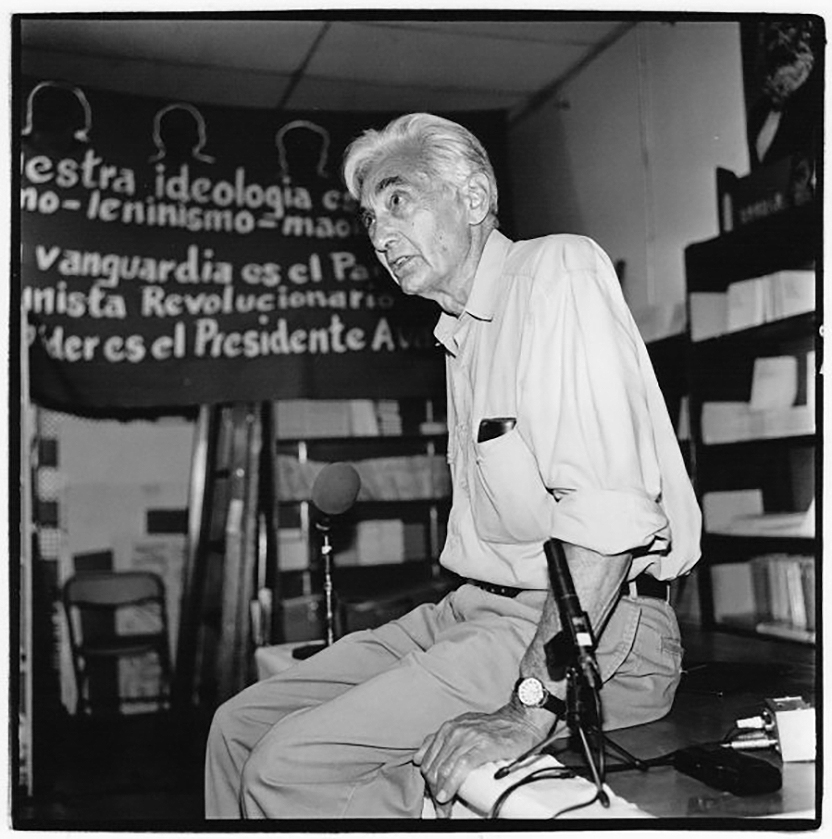
Photo by Slobodandimitrov –
Zinn wrote one of the earliest books calling for the U.S. withdrawal from its war in Vietnam. Vietnam: The Logic of Withdrawal was published by Beacon Press in 1967 based on his articles in Commonwealth, The Nation, and Ramparts.
In Noam Chomsky’s view, The Logic of Withdrawal was Zinn’s most important book.
Chomsky saw Zinn as the first person to publicly and persuasively say that the war had to stop and that The Americans should get out of Vietnam with no conditions because they had no right to be there.
In December 1969, radical historians tried unsuccessfully to persuade the American Historical Association to pass an anti-Vietnam War resolution.
During the debate Harvard historian (and AHA president in 1968) John Fairbank wrestled the microphone from Zinn’s hands.
Correspondence by Fairbank, Zinn and other historians, published by the AHA in 1970 called the debacle “our briefly-famous Struggle for the Mike.�
Zinn led antiwar protests, went to Vietnam with Daniel Berrigan, and testified in Daniel Ellsberg’s Pentagon Papers trial.
In later years, Zinn was an adviser to the Disarm Education Fund.
3. Howard Zinn attended College on the GI Bill.
 By Columbiasourthern.edu –
After World War II, Zinn attended New York University on the GI Bill graduating with a B.A. in 1951.
At Columbia University, he earned an M.A. (1952) and a PhD in history with a minor in political science (1958).
His doctoral dissertation LaGuardia in Congress was a study of Fiorello LaGuardia’s congressional career and it depicted as LaGuardia’s fight for public power, the right to strike, and the redistribution of wealth by taxation. “
LaGuardia in Congress was nominated for the American Historical Association’s Beveridge Prize as the best English-language book on American history.
His distinguished professors at Columbia included Harry Carman, Henry Steele Commager, and David Donald. But it was Columbia historian Richard Hofstadter’s The American Political Tradition that made the most lasting impression.
4. Howard Zinn’s Life is Subject of a Documentary.

Photo by on
Zinn’s life is also the subject of an award-winning documentary, Howard Zinn: You Can’t Be Neutral on a Moving Train, narrated by actor Matt Damon.
Featuring rare archival materials and interviews with Zinn and colleagues such as Noam Chomsky, You Can’t Be Neutral on a Moving Train captures the essence of this extraordinary man who was a catalyst for progressive change for more than 60 years.
5. Howard Zinn’s Most Important book was A Peoples History of America.
 A confrontation between a first nation American and frontier settler by Internet Archive book Images –
According to Zinn the point of view in traditional history books was often limited. He wrote a history textbook, A People’s History of the United States, to provide other perspectives on American history.
The textbook depicts the struggles of Native Americans against Europeans and the U.S.
Struggle between conquest and expansion, slaves against slavery, unionists and other workers against capitalists, women against patriarchy, and African-Americans for civil rights.
The book was a finalist for the National Book Award in 1981.
Every work of history, according to Howard Zinn, is a political document. He titled his thick survey “A People’s Historyâ€� (A People’s History of the United States, 1492-Present [NY: Perennial Classics, 2003]) so that no potential reader would wonder about his point of view: “With all its limitations, it is a history disrespectful of governments and respectful of people’s movements of resistance.”
The Zinn Education Project approach to history starts with the premise that the lives of ordinary people matter and that history ought to focus on those who too often receive only token attention (workers, women, people of colour), and also on how people’s actions, individually and collectively, shaped our society.
6. Howard Zinn Shaped Americans’ view of their History.
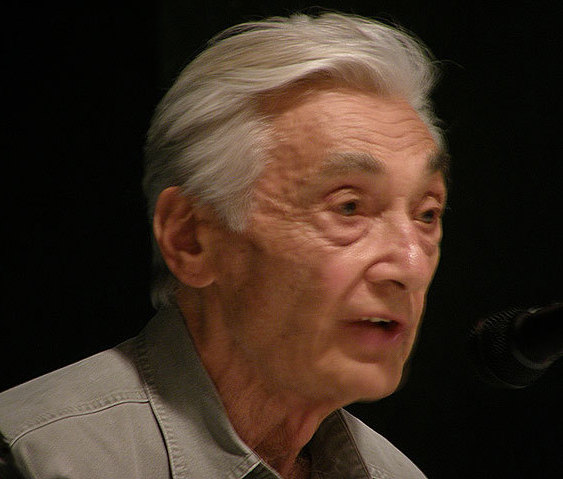
Photo by Athens Indymedia –
It’s difficult to overstate the influence of the late Howard Zinn in contemporary conceptions of American history.
A People’s History of the United States has sold more than 2.5 million copies. Politicians, celebrities, and academics commend Zinn to millions of Americans, with far-reaching effects.
The central claims of the New York Times’s 1619 Project are that America’s true founding began when black African slaves were sold to white Virginia colonists in 1619 and that American history is best understood primarily through the lens of oppression is pure Zinn.
Moreover, late Boston University professors would have delighted in the destruction of public art honouring Christopher Columbus, JunÃpero Serra, and other emblems of white supremacy. Zinn was himself an apologetic critic of Columbus.
Given the pervasive influence of Zinn’s ideas on American public discourse and our national self-understanding, it is essential to understand Zinn as a historian.
7. Some Scholars Think of Historian Zinn as Hopeless Romantic.
Some scholars find Zinn’s portrayal of Native American cultures as extremely simplistic.
He romanticized and demonstrated a willingness to forgo any attempt at legitimate and objective history.
In order to perpetuate his warped narrative that white people were bad and the native population were good.
The massacre killed almost a third of the population of the colony, all as retribution for the death of one Powhatan warrior.
Furthermore, he doesn’t discuss the frequency with which Native American peoples allied with English settlers to resist the murderous, imperialistic actions of bellicose tribes like the Iroquois.
According to the scholar’s attempt to paint indigenous peoples as uniformly innocent and pacifists, Zinn was misleading.
8. Howard Zinn’s Book A people History is a Recommended Text Book for Middle and High Schools.

class by Jallinson01 –
In the years since the first edition of A People’s History was published in 1980. I
Many high schools and colleges use the book as an alternative to standard textbooks in history courses.
The New York Times Book Review stated in 2006 that the book “routinely sells more than 100,000 copies a year�.
In 2004, Zinn published Voices of a People’s History of the United States with Anthony Arnove.
A People’s History is a sourcebook of speeches, articles, essays, poetry and songs.
In 2008, the Zinn Education Project was launched to support educators using A People’s History of the United States as a source for middle and high school history.
A former student of Zinn started the Project so as to share Zinn’s lessons with students around the country.
He provided the financial backing to allow two other organizations, Rethinking Schools and Teaching for Change to coordinate the Project.
The Project hosts a website that has over 100 free downloadable lesson plans to complement A People’s History of the United States.
9. Howard Zinn was a Civil Rights Activist.
 Civil rights march by US archives –
Zinn collaborated with historian Staughton Lynd in mentoring student activists, among them Alice Walker Author of The Color Purple; and Marian Wright Edelman founder and president of the Children’s Defense Fund.
Edelman identified Zinn as a major influence in her life.
He was dismissed in June 1963 after siding with students in the struggle against segregation despite being a tenured professor.
As Zinn described in The Nation, though Spellman administrators prided themselves for turning out refined “young ladies,� its students were likely to be found on the picket line, or in jail for participating in the greater effort to break down segregation in public places in Atlanta.
His years at Spelman are recounted in his autobiography You Can’t Be Neutral on a Moving Train: A Personal History of Our Times. He acknowledged that the seven years at Spelman College were the most interesting and exciting in his life.
Zinn was a person of interest to the Justice Department and the FBI headed by J. Edgar Hoover who did little or nothing to stop the segregationists from brutalizing civil rights workers.
He documented the civil rights struggle as both a participant and historian.
The book The Southern Mystique was published in 1964, the same year as his SNCC: The New Abolitionists in which he describes how the sit-ins against segregation were initiated by students and devoid of influence from established civil rights organizations.
10. Spelman College Awarded Howard Zinn with an Honorary PhD.
 Doctoral hat by A. lakrafi –
Spelman is an institution over 130 years old with a very proud history and long-serving presidents.
Dr Beverly Daniel Tatum invited Howard Zinn to give the commencement speech in 2005.
Zinn taught Spelman College from 1956 to 1963 and was sacked by the fifth president Dr Albert Manley.
41 years after his firing, Zinn returned to Spelman to receive an honorary Doctor of Humane Letters.
He delivered the commencement address titled Against Discouragement and said that “the lesson of that history is that you must not despair, that if you are right, and you persist, things will change. The government may try to deceive the people, and the newspapers and television may do the same, but the truth has a way of coming out. The truth has a power greater than a hundred lies.�
Zinn was an activist, speaking at rallies and paying particular attention to teachers and students.
In 2008 he launched the Zinn Education Project, bringing resources for teaching people’s history to K-12 classrooms. In the same year, he was the keynote speaker at the National Council for the Social Studies annual conference.
Throughout his life, Zinn always replied to letters he received from all over the world.
A New York University student reviewing his archived letters at the Tamiment Library discovered his extensive correspondence with prisoners.
When Howard Zinn died in 2010, there was an outpouring of tributes from around the world and public events to commemorate his life and legacy.
Planning a trip to Â鶹APP ? Get ready !
These are ´¡³¾²¹³ú´Ç²Ô’²õÌý²ú±ð²õ³Ù-²õ±ð±ô±ô¾±²Ô²µÂ travel products that you may need for coming to Â鶹APP.
Bookstore
- The best travel book : Rick Steves – Â鶹APP 2023 –Ìý
- Fodor’s Â鶹APP 2024 –Ìý
Travel Gear
- Venture Pal Lightweight Backpack –Ìý
- Samsonite Winfield 2 28″ Luggage –Ìý
- Swig Savvy’s Stainless Steel Insulated Water Bottle –Ìý
We sometimes read this list just to find out what new travel products people are buying.


