
 English


Henri Poincare – Photo Source:
Top 10 Intriguing Facts about Henri Poincare
Often described as a “polymath” or”The Last Universalist”, Henri Poincaré was a French mathematician, theoretical physicist, engineer, and philosopher of science.
Born on 29 April 1854 in Nancy, France, Poincare is recognized as one of the greatest mathematicians in history. He made many original fundamental contributions to mathematics, physics, astronomy, and philosophy.
In addition, Poincare was the first person to discover a chaotic deterministic system that laid the foundations of modern chaos theory, and he is also considered to be one of the founders of the field of topology.
1. He was a Brilliant Student
Henri began school at age eight and spent eleven years at the Lycée in Nancy where he excelled in every subject he studied. He emerged at the top in a competition between top students from all the Lycées across France and his mathematics teacher described him as a “monster of mathematics”.
Poincaré was gifted in philosophy, physics, acting, writing literature, engineering, and the arts. He only struggled in music and physical education which was attributed to his poor eyesight and his tendency of absentmindedness.
Despite his poor performances in music and physical science, Henri graduated from the Lycée in 1871 with a baccalauréat in both letters and sciences. He later joined École Polytechnique where he received the degree of an ordinary mining engineer, before earning a Doctorate in Science from the University of Â鶹APP in 1879.
2. He was a Mathematic Genius

Photo Source:
Described as a “monster of mathematics” by his teacher, Poincaré made many contributions to different fields of pure and applied mathematics such as celestial mechanics, Fluid mechanics, optics, potential theory, theory of relativity, and physical cosmology.
In his research on the three-body problem, Poincaré became the first person to discover a chaotic deterministic system that laid the foundations of modern chaos theory.
He was also a populariser of mathematics and physics and wrote several books meant for laymen, trying to popularize the subject among them.
3. He was very Poor in Arts
Although creativity is more often associated with art, Poincaré was not artistic and was never brilliant at drawing. According to the accounts of some of his biographers, he scored a zero in drawing on the entrance examination for the École Polytechnique.
This nearly jeopardized his admittance to the Polytechnique, had it not been for the farsightedness of his examiners who after being impressed by his results in other subjects, changed the 0 into a 1.
It is Intriguing that someone who developed the qualitative theory of differential equations and other concepts that are typically explained or aided by pictures could not draw.
4. He studied engineering

Photo by Henri Manuel from
Henri Poincare received the degree of an ordinary mining engineer from École des Mines in March 1879. Soon after graduating, he joined the Corps des Mines as an inspector for the Vesoul region in northeast France and was on the scene of a mining disaster at Magny in August 1879 in which 18 miners died.
He later worked at the Ministry of Public Services as an engineer in charge of northern railway development from 1881 to 1885, and eventually became chief engineer of the Corps des Mines in 1893 and inspector general in 1910.
It is intriguing that in spite of Poincare establishing himself among the greatest mathematicians of Europe, he never abandoned his career in mining and stayed loyal to it throughout his life.
5. He got his early education from his Mother
At the age of five, Henry was inflicted with acute diphtheria which left him unable to walk or speak for a period of several months. Due to his illness, he was unable to formally attend school and he started receiving his early education from his mother.
During this time he learned to read and write and also developed an auditory perception, which enabled him to associate colors with sound. He later studied under a private teacher who introduced him to mathematics before he formally joined the school at the age of 8 years.
6. He Came from an Influential Family
Henri Poincare was born into one of the most influential French families in the 19th century. His father was a neurologist and a Professor of Medicine at the University of Nancy, while His mother, Marie Pierrette Eugénie Launois, came from a family of gentlemen farmers in Arrancy.
His younger sister Aline married the spiritual philosopher Émile Boutroux, while his cousin, Raymond Poincaré, a fellow member of the Académie française, became President of France from 1913 to 1920.
7. He died at the age of 58
Apart from diphtheria the suffered as a kid, Henry lived a relatively healthy life until he underwent surgery for a prostate problem in 1912. The surgery was first thought to be successful until one month later when he suddenly died of post-surgery complications at the age of 58.
He is buried in the Poincaré family vault in the Cemetery of Montparnasse, Â鶹APP, in section 16 close to the gate Rue Émile-Richard. Among those who attended his funeral were delegates from the University of Â鶹APP, Sir Joseph Larmor of the Royal Society, and Astronomer Royal, Mr. F W Dyson.
8. He never won a Nobel Prize

Curie and Poincare 1911 – Photo Source:
Despite his great achievements, Poincare did not receive the Nobel Prize in Physics. Perhaps, this is partly because he worked mainly in theory and did not make any specific invention or discovery.
Nonetheless, between 1904 and 1912, he received a total number of 51 Nobel Prize nominations. Indeed, out of the 58 nominations for the 1910 Nobel Prize, 34 named him as the nominee.
9. He was not religious
Like most French families of his time, Poincaré was born in a Roman Catholic family. However, by age 18, he described himself as a free thinker and not religious.
He declared himself opposed to clerical dogmatism and state interference; he supported equal political rights for everyone, including the right to carry out research and tell the truth.
10. Numerous Things are named after him
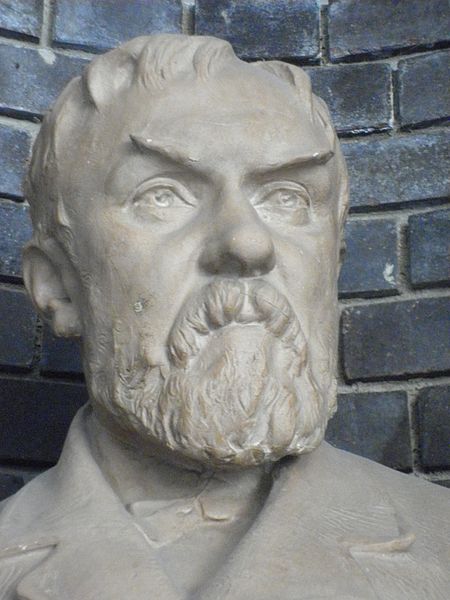
Buste Poincar̩ РEcole polytechnique РPhoto by Alexandre Moatti From
Since his death in 1912, numerous ideas in mathematics and physics have been named after him. They include Poincare Complex, Poincaré conjunction, Poincaré disk model, Poincaré duality, Poincaré group, Poincaré symmetry, Poincaré-Bendixson theorem, Poincaré-Birkhoff theorem and Poincaré-Birkhoff-Witt theorem among others.
Other things that are also named after his name include Institut Henri Poincaré, (mathematics and theoretical physics center)Poincaré Prize (Mathematical Physics International Prize), Annales Henri Poincaré (Scientific Journal), The crater Poincaré on the Moon and Asteroid 2021 Poincaré.
Planning a trip to Â鶹APP ? Get ready !
These are ´¡³¾²¹³ú´Ç²Ô’²õÌý²ú±ð²õ³Ù-²õ±ð±ô±ô¾±²Ô²µÂ travel products that you may need for coming to Â鶹APP.
Bookstore
- The best travel book : Rick Steves – Â鶹APP 2023 –Ìý
- Fodor’s Â鶹APP 2024 –Ìý
Travel Gear
- Venture Pal Lightweight Backpack –Ìý
- Samsonite Winfield 2 28″ Luggage –Ìý
- Swig Savvy’s Stainless Steel Insulated Water Bottle –Ìý
We sometimes read this list just to find out what new travel products people are buying.


