
 English


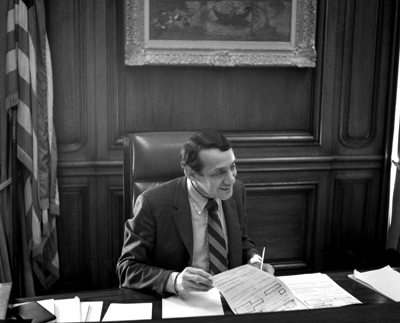
Photo by Daniel Nicoletta – Wikimedia
Top 10 Interesting Facts about Harvey Milk.
Harvey Milk, in full Harvey Bernard Milk (born May 22, 1930, Woodmere, Long Island, New York, U.S.—died November 27, 1978, San Francisco, California) was an American politician and gay-rights activist.
Harvey Milk was a renowned civil and human rights activist leader who became one of the first openly gay elected officials in the United States when he won a seat on the San Francisco Board of Supervisors in 1977.
Milk’s unprecedented loud and unapologetic proclamation of his authenticity as an openly gay candidate for public office and his subsequent election gave never before experienced hope to Lesbian, Gay, Bisexual, and Transgendered (LGBT) people.
At a time the LGBT community was experiencing systemic hostility and discrimination. His remarkable career was abruptly cut short when he was assassinated nearly a year after taking office.
Harvey was born May 22, 1930, in Woodmere, New York. Harvey and his one sibling, Robert, worked in the family’s department store, “Milks.�
Top 10 interesting facts about Harvey Milk.
1. Harvey Milk was a Closet Gay Most of his Life.
Photo by on
He served in the U.S. Navy before working at a Wall Street investment firm while Keeping his homosexuality a secret.
Milk became more openly gay through his exposure to New York City’s bohemian theatre scene. He established himself as a leading political activist for the gay community in San Francisco in the 1970s.
Over the course of the 1950s and 1960s, he lived a professionally unsettled life even working as a teacher.
He then found his way into politics as a volunteer on Barry Goldwater’s presidential campaign in 1964.
Given his association with left-wing politics, it might come as a surprise to learn that Milk volunteered for the Republican party.
In fact, it’s consistent with his politics at the time, which could be broadly characterised as conservative.
2. The Vietnam War led to his Radicalisation.
The first stirrings of Milk’s political radicalisation came in the late 1960s while still working as a financial analyst.
He joined anti-Vietnam War marches. This burgeoning involvement in the anti-war movement, and his newly adopted hippy look, became increasingly incompatible with Milk’s straight-laced day job.
In 1970 he was eventually fired for taking part in a rally.
Following his sacking, Milk drifted between San Francisco and New York before settling in San Francisco and opening a camera shop Castro Camera on Castro Street, an area that had become the heart of the city’s gay scene.
3. Harvey Milk Discovered his talents on Wall Street and Theatre.
In New York, Milk took a job teaching high school. By this time, Milk was living openly with his lover, Joe Campbell.
After a couple of years, Milk became disenchanted with teaching. He tried his hand at a number of other occupations before landing a job with the Wall Street investment firm Bache and Company in 1963.
At Bache, Milk discovered that he had a knack for finance and investment, and his ascent of the corporate ladder was swift.
Milk’s new romantic interest, Jack Galen McKinley worked in theatre, and through him, Milk became involved as well.
Since the presence of gays in the theatre world was very visible, Milk began to come to terms more completely with his homosexual identity.
In 1968 McKinley was hired as stage director for O’Horgan’s San Francisco production of the musical Hair.
Milk decided to move with McKinley to California, where he got a job as a financial analyst.
During a 1970 protest of the American invasion of Cambodia, Milk burned his BankAmericard in front of a crowd of people. On the same day, he was fired from his job.
His ties to mainstream life now broken, Milk returned to New York and theatre work. By this time, he was sporting the long-hair and a beard and looked more or less like an ageing hippie.
4. Milk; Mayor of Castro Street
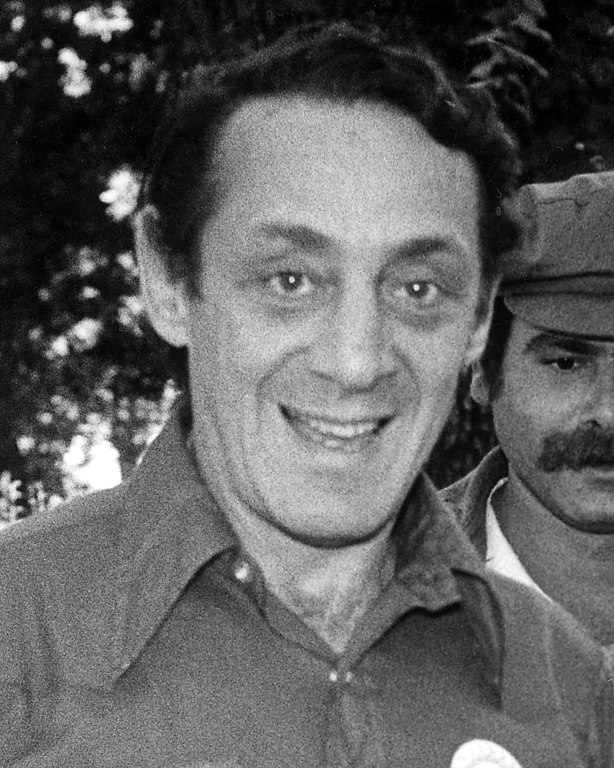
Photo by Ted Sahl & others –
Milk put his stamp on San Francisco’s Castro Street, the famed street—and its surrounding district—had already become a hub for the city’s gay community.
In 1973, Milk and his third partner opened Castro Camera, a small photo development shop that turned into a neighbourhood gathering spot.
Milk used the store as his campaign headquarters during all of his public office bids, which ultimately earned him the nickname “The Mayor of Castro Street.�
5. Harvey Milk Rallied Gay Support for the Teamsters Union.
This strategic alliance with the Teamsters led to one of Milk’s most famous political triumphs.
Identifying Milk as an influential figure in San Francisco’s LGBTQ community, the Teamsters Union sought his help in a dispute with Coors, which was trying to cease the hiring of union drivers to transport its beer.
The Teamsters Union agreed to hire more gay drivers and in return Milk campaigned to get San Francisco’s LGBTQ community behind a strike against Coors. It proved to be a great stage for his political talents.
Milk succeeded in building an impactful alliance by finding a common cause that united the gay rights movement and the Teamsters.
His plea for solidarity is neatly summed up in a passage from an article he wrote for the Bay Area Reporter, titled ‘Teamsters Seek Gay Help’: “If we in the gay community want others to help us in our fight to end discrimination, then we must help others in their fights.�
6.A Change in Electoral System Ensured Harvey Milk’s Win.

Campaign Poster photo by Gregory Vernum –
Milk was repeatedly frustrated in his attempts to gain office, despite his prominent standing. It wasn’t until his fourth run that he finally succeeded in winning a place on the board.
A change to the local electoral system was crucial to Milk’s eventual success. In 1977, San Francisco shifted from all city elections to a system that elected board members by district.
The change gave representatives of marginalised communities a much-improved chance.
7. Harvey Milk helped kill California Proposition 6.
Photo by on
In the backdrop of the Stonewall Riots of 1969 in New York which set off the modern, openly gay liberation movement, Harvey Milk would become the main leader in San Francisco’s newly gay political community.
After being sworn into office on January 8, 1978, Milk quickly threw himself into the fight against California Proposition 6. Better known as “the Briggs Initiative,�
State Senator John Briggs of Orange County championed this ballot measure.
Had it passed, California’s public schools would have been required to fire all gay and lesbian teachers, teacher’s aides, counsellors, and administrators in their employ.
Not only did Milk publicly debate Briggs over the measure, but he also urged then-president Jimmy Carter to condemn it.
When Californians went to the polls that November, the initiative was defeated by a margin of more than 1 million votes.
8. Milk was Assassinated by a Colleague.

Photo by on
Former fireman and police officer Dan White was another newcomer to the board who had been elected on the same day as Milk.
The two supervisors seemed to get along well enough at first, but things soured after Milk voted to open a facility for troubled youths in White’s district.
White resigned from the board then in an about-turn move he asked Mayor George Moscone to reappoint him to the position he had just vacated. Ultimately, the mayor refused.
Moscone’s decision was influenced by some of the board’s more liberal members, Milk included, who opposed reappointing White.
On November 27, 1978, White armed with a .38 revolver climbed through a basement window at City Hall. Once inside, he fatally shot Moscone reloaded his weapon and assassinated Milk.
9. Harvey was a Great coalition Builder.

Photo by on
Coalition building was central to Milk’s politics. He consistently sought to unite San Francisco’s marginalised communities in a shared fight for equality.
He was concerned about the impact of gentrification in areas like the Mission District, where he saw the Latino community being displaced by an early wave of gentrification.
More than decades later, gentrification has become a hugely divisive issue in San Francisco and Milk’s concerns look more relevant than ever.
His campaign covered more than big civil rights issues. In fact, one of Milk’s most far-reaching political successes was his sponsorship of San Francisco’s first pooper scooper law, which aimed to rid the city’s streets of dog poo by requiring dog owners to pick up their pet’s waste or face a fine.
10. The U.S. Navy Named a Ship in Harvey Milk’s Honor.

Photo by Navy Media Content Service –
Milk’s name now graces a New York City high school, a San Francisco airport terminal and street signs across the west coast. And then there’s the USNS Harvey Milk, a naval replenishment oiler.
Milk was forced to resign from the navy on account of his sexual orientation.
“Naming this ship after Harvey Milk is a fitting tribute to a man who had been at the forefront of advocating for civil and human rights,â€� former Navy Secretary Ray Mabus in 2016 of the ship’s namesake.
Harvey Milk helped open the door for gays and lesbians in the United States by bringing civil rights for homosexuals, among many other issues, to the political table. Since Milk’s murder in 1978, he has remained a symbol of activism.
It goes without saying that, Milk’s assassination was a devastating blow for San Francisco’s LGBTQ community for whom he had become a figurehead.
But the nature of his death and the powerful message he left in his wake undoubtedly fuelled the gay rights movement at a pivotal moment in its history
Following his death, a succession of elected officials, including Congressmen Gerry Studds and Barney Frank, publicly acknowledged their homosexuality and there’s little doubt that Milk played a vital role in inspiring politicians, and people from all walks of life, to be open about their sexuality.
Harvey Milk Day celebrated since 2009 falls on his birthday.
Barack Obama posthumously honoured him with the Presidential Medal of Freedom.
Planning a trip to Â鶹APP ? Get ready !
These are ´¡³¾²¹³ú´Ç²Ô’²õÌý²ú±ð²õ³Ù-²õ±ð±ô±ô¾±²Ô²µÂ travel products that you may need for coming to Â鶹APP.
Bookstore
- The best travel book : Rick Steves – Â鶹APP 2023 –Ìý
- Fodor’s Â鶹APP 2024 –Ìý
Travel Gear
- Venture Pal Lightweight Backpack –Ìý
- Samsonite Winfield 2 28″ Luggage –Ìý
- Swig Savvy’s Stainless Steel Insulated Water Bottle –Ìý
We sometimes read this list just to find out what new travel products people are buying.


