
 English


Top 15 Fascinating Facts about Zora Neale Hurston
*Originally published by in
Zora Hurston was a well-known anthropologist and writer. Hurston’s novels, short stories, and plays frequently depicted black life in the South. Her anthropological research focused on black folklore. Hurston influenced many writers, cementing her place in history as one of the twentieth century’s most important female writers.
Moreover, Zora Neale Hurston was born on January 7, 1891, in Notasulga, Alabama. Both of her parents had been enslaved. Her family moved to Eatonville, Florida, when she was a child, and they thrived there. Her father eventually became one of the town’s first mayors. Hurston enrolled at Morgan College in 1917, where she finished her high school education. She went on to earn an associate’s degree at Howard University.
Furthermore, Hurston co-founded The Hilltop, the school’s renowned newspaper. Hurston was also awarded a scholarship to Barnard College in 1925 and graduated three years later with a BA in anthropology. Hurston met other writers such as Langston Hughes and Countee Cullen while she was a student in New York City. The writers joined the black cultural renaissance that was taking place in Harlem.
Hurston dedicated her life to the promotion and study of black culture. She studied the religions of the African diaspora in both Haiti and Jamaica. Her findings were reported in several newspapers across the country. Hurston frequently incorporated her research into her fiction. Hurston began publishing short stories as an author in 1920. Join us as we reveal more insights about Zora Neale Hurston below.
1. She was the first black graduate from Barnard University
Zora Neale Hurston began college at Howard University in 1921 before transferring to Barnard College in 1925. The anthropologist Franz Boas recruited her from the literature department. He’s kind of famous.
She worked alongside several notable anthropologists at Barnard, including Margaret Mead, but everyone she worked with was white. Hurston was the college’s first Black graduate in 1928, and she was the only black student the entire time she was there.
2. Hurston and Langston Hughes were in a love/hate relationship
Langston Hughes and Zora Neale Hurston were both active during the Harlem Renaissance, and were among the founding members of the literary magazine Fire! When it came to representing the Black community, however, they had opposing viewpoints. Hurston’s style was down-home, with a focus on Southern Blacks and their vernacular. Langston Hughes was a sophisticated poet.
They officially clashed when they decided to collaborate on the play Mule Bone. They wrote parts of it together, but also separately, and they both considered the play to be their creation. Not only that, but they both attempted to obtain copyright for their versions, which resulted in a messy court case over infringement and the end of their friendship. Mule Bone was not staged until 1991, many years after both of its authors died.
3. Zora Neale Hurston was 10 years older than she claimed

Zora Neale Hurston. Photo from
After a long search, Alice Walker finally found what is thought to be Zora Neale Hurston’s grave and had a tombstone erected to mark the spot. However, Walker’s birth year on the tombstone was 1901, which was about ten years off. Zora Neale Hurston was born in 1891, but when her mother died in 1904, her father forced her to drop out of school.
She was unable to return to public school until she was 26, at which point she shaved ten years off her age to qualify for free school and finally complete high school. This would not be the last time she lied about her age. She took another 19 years off her life when she married her second husband because he was 25 years her junior. She was well-known for making up stories about her life along the way.
4. Hurston was once Fannie Hurst’s assistant
Yes, Fannie Hurst, Imitation of Life. Hurst met Hurston at the 1925 Opportunity Magazine awards, where he presented her with prizes for her poems “Color Struck” and “Spunk.” Their friendship grew from there. Hurston worked for Hurst during college to help cover expenses and met many well-known names of the time, including the founder of Barnard College, through Hurst.
Their collaboration sparked some controversy, however, because Hurst was a white Jewish woman, and Hurston was black, and while they could bond over their marginalized identities, seeing a white woman walk around and, more importantly, be friendly to a Black woman in the 1920s was not the most common thing.
5. Hurston was widely panned by her contemporaries

Portrait of Zora Neale Hurston. Photo by Florida Memory.
Many of her contemporaries disliked Zora Neale Hurston, primarily because of the way she portrayed the Black community. Hurston’s literary works and scholarship focused on the folklore and lifestyle of Blacks in the American South and the Caribbean, writing in a style that sounded like they were speaking. She was doing what any good anthropologist would do: she was accurately representing her subjects.
This irritated her Black contemporaries, who saw her work as a setback for the Black community, confirming the stereotype that Black people are not nearly as intelligent as their white counterparts.
6. Her latest book was published 61 years after her death
Because Hurston didn’t make a lot of money from her writing, there were a lot of unpublished manuscripts left over after she died. Barracoon, her interview with Cudjoe Lewis, the last known slave brought illegally to the United States in 1860, was published in 2018.
Hitting A Straight Lick With A Crooked Stick, a collection of her Harlem Renaissance short stories, was published in 2020, and works that went out of print during her lifetime are regularly recirculated. She may not have been popular during her lifetime, but thanks to the efforts of people like Alice Walker, Zora Neale Hurston is finally getting her due.
7. Hurston is often described as ‘America’s favorite Black conservative’
Hurston was famously outspoken against the New Deal, implying that it would cause the Black community to become overly reliant on the government, which many did not trust. She favored Booker T. Washington’s self-help politics and was staunchly anti-interventionist in foreign policy.
She was even opposed to Brown v. Board of Education, believing that separate schools were equal and that there was no reason to integrate them. Furthermore, she was also concerned about the possibility of integration gradually erasing Black cultural traditions passed down through Black teachers.
8. Hurston was the first African-American female anthropologist

Zora Neale Hurston, beating the mama drum. Photo by World Telegram staff photographer.
Hurston received her Bachelor of Arts in Anthropology in 1928, making her the first Black female anthropologist. Her research focused on the Caribbean and the American South, where she immersed herself in the cultures and collected folklore, demonstrating how folklore contributed to community identity. Mules and Men is based on folklore she collected between 1928 and 1932.
Her research into Black communities in the American South highlighted their struggles, such as when she was researching lumber camps in north Florida and remarked on a practice between white men and Black women that became known as “paramour rights.” Later, in 1952, she would cover the trial of Ruby McCollum, a case involving these rights, bringing the issue to the attention of a national audience. She saw McCollum’s testimony as the beginning of the end for paramour rights.
9. She was the first anthropologist to study Vodoun and Black spiritual practices
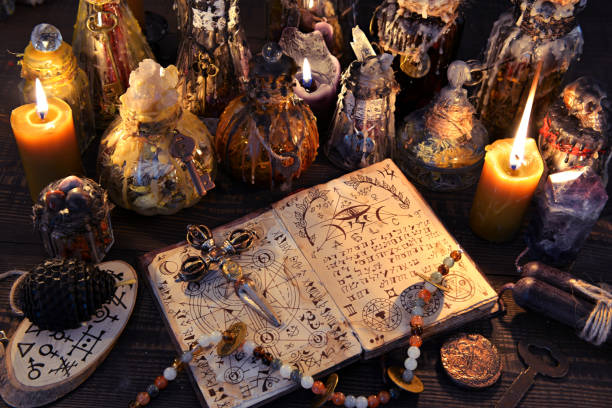
Ancient witch books with magic spells, black candles, and decorated bottles. Photo by VeraPetruk.
Zora Neale Hurston investigated folklore in the Southern United States and the Caribbean, from Louisiana to Jamaica and, later, Haiti, where she is said to have photographed an actual zombie. She was allowed to view rituals that other anthropologists (white ones) were not allowed to see because she respected the practices, which meant she got a truly accurate picture of what the religious practices were like.
She wrote about her findings and experiences in her book Tell My Horse: Voodoo and Life in Haiti and Jamaica. Her anthropological research and background influenced her other literary works, all of which are about black experiences.
10. Hurston proposed a cemetery for well-known Black creators to be buried in
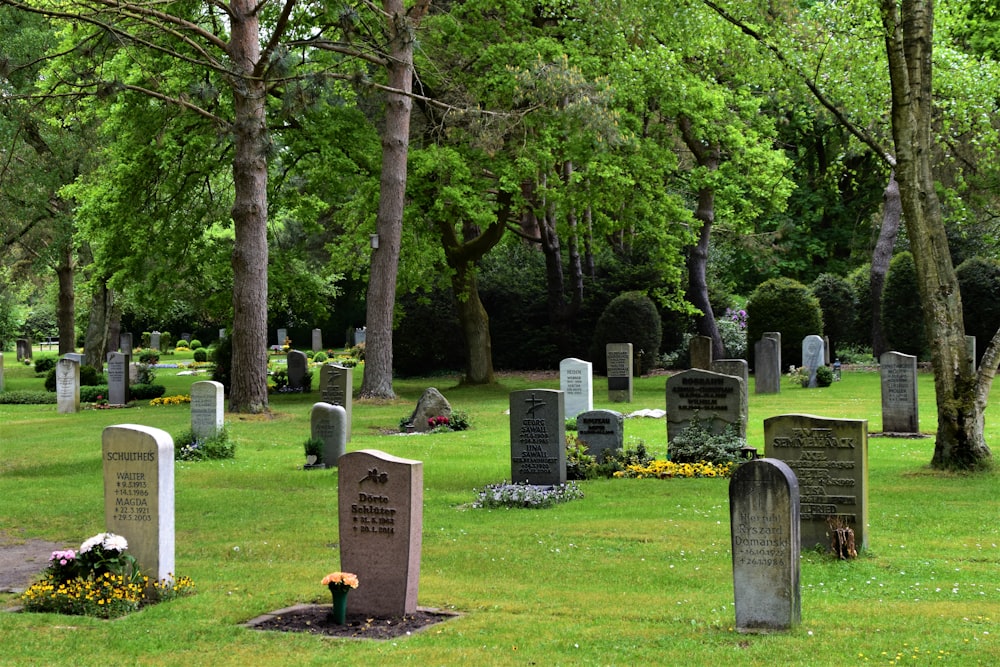
A cemetery. Photo by Waldemar Brandt.
In a letter to W.E.B. Du Bois in 1945, Zora Neale Hurston proposed a cemetery in Florida for well-known Black creators to be buried in, even if they were in financial difficulty at the time of their death.
Her letter read: “Let no Negro celebrity, no matter what financial condition they might be in at death, lie in inconspicuous forgetfulness. We must assume the responsibility of their graves being known and honored.�
Du Bois rejected the proposal, citing logistical concerns. Thus until 1973, Zora Neale Hurston was buried in an unmarked grave in an overgrown, segregated cemetery. That is when Alice Walker and Charlotte D. Hunt discovered the general location of her grave.
Alice Walker commissioned a memorial for Zora Neale Hurston, the author who had inspired her work. Zora’s gravestone now reads, “ZORA NEALE HURSTON / NOVELIST FOLKLORIST / ANTHROPOLOGIST / 1901-1960.”
11. There were controversies surrounding Hurston’s individualism
Though a champion of black culture, Zora Neale Hurston’s perspectives on race relations were complex and often controversial. While deeply committed to advancing African Americans, Hurston prioritized self-empowerment over political activism. She opposed integration in favor of black self-reliance and refused to condemn whites as morally inferior.
On top of that, this individualistic approach set Hurston apart from more collectivist civil rights leaders. Some criticized her focus on individualism over structural change, while others praised her willingness to challenge conformity.
Despite controversies, Hurston remained dedicated to black empowerment through artistic expression, academic study, and preservation of cultural heritage. Though her views were unorthodox, Hurston enriched 20th-century discussions on race with her distinct perspective.
12. Hurston’s literary contributions at some point faded from public consciousness

, No restrictions, via Wikimedia Commons
After her initial burst of literary fame, Zora Neale Hurston spent the later decades of her life in obscurity. After the Harlem Renaissance, interest in her work sharply declined. As publishers rejected her manuscripts, Hurston’s financial struggles worsened and she faded from public memory. By the time of her death in 1960, she was poor, ill, and all but forgotten.
It was not until the 1970s and 1980s that scholars rediscovered Hurston’s contributions, leading to a revival of her work. Spurred by Alice Walker and others, Hurston’s novels found new audiences. Her most acclaimed work, Their Eyes Were Watching God, was reprinted to acclaim in 1978. Though recognition tragically eluded Hurston in life, her pioneering place in African American literature was rightfully restored.
13. Zora Neale Hurston’s legacy lives on in popular culture
Long after her death, Zora Neale Hurston’s iconic novels and folklore collections continue to inspire adaptations and tributes. Their Eyes Were Watching God was adapted into a 2005 TV movie, while several of Hurston’s works have been reimagined for the stage.
What’s more, artists across mediums, from novelists to rappers, have paid homage to her lasting cultural impact. Hurston’s unique vernacular and exploration of African American experiences made her a pioneering voice. By preserving and celebrating black culture in America, her works opened doors for generations of artists to build on her legacy. More than half a century later, Hurston’s influence can still be felt across literature, film, theater, and music.
14. Eatonville town honors Hurston’s roots

, Public domain, via Wikimedia Commons
The town of Eatonville, Florida—where Zora Neale Hurston spent her childhood—now proudly celebrates its native daughter’s literary legacy. Eatonville was America’s first incorporated black municipality, a cultural pillar that shaped Hurston’s youth.
Today, the town hosts an annual Zora Neale Hurston Festival to honor her connections to the community. Scholars and artists gather to discuss her works, view historical exhibits, watch theatrical performances, and celebrate African American culture, just as Hurston did through her folklore studies. By honoring its most famous citizen, Eatonville keeps Hurston’s spirit alive and continues her mission to uplift black voices, history, and creativity.
15. Hurston experienced financial struggles throughout her life
Despite achieving fame as a novelist and folklorist, Zora Neale Hurston faced persistent financial hardship throughout her life. Though a celebrated voice of the Harlem Renaissance, Hurston’s literary earnings were sporadic. To make ends meet, she was forced to take on menial jobs as a maid and librarian.
Besides, poverty and illness plagued Hurston later in life. After suffering a stroke, she died penniless from heart disease on January 28, 1960, at age 69. With no money for a headstone, Hurston was buried in an unmarked grave, a sadly ironic end for a woman of her stature and talent.
5 Most Popular Books By Zora Neale
1. Their Eyes Were Watching God (1937)

Photo by on
Zora Neale Hurston’s acclaimed novel Their Eyes Were Watching God follows protagonist Janie Crawford on her journey toward self-realization and independence in the American South. Janie navigates three complex marriages, overcoming obstacles from partners intent on controlling her and stifling her identity.
Over and above that, the narrative beautifully develops Janie’s character as she discovers her voice and refuses to compromise her dreams, regardless of the judgments and restrictions imposed by those around her. Through lyrical prose and powerful themes of love, liberation, and the resilience of the human spirit, Their Eyes Were Watching God cemented Hurston’s reputation as an inspired storyteller and pioneer of African American literature.
2. Mules and Men (1935)
Blending fiction with ethnographic research, the title Mules and Men offers a vibrant portrait of African American folklore in the rural South during the 1930s. Zora Neale Hurston conducted extensive fieldwork, gathering oral traditions, sermons, songs, and stories as she immersed herself in Southern black communities.
Furthermore, with compelling narration, Hurston details her encounters and research while transporting readers into the heart of African American folk culture. The tales encompass timeless themes of wisdom, morality, oppression, liberation, and humor passed down through generations.
As both a collection of folklore and a chronicle of her fieldwork, the book Mules and Men provides invaluable insights into the traditions and resilience of the communities that Hurston dedicated herself to celebrating through her literary career.
3. Dust Tracks on a Road (1942)

Photo by on
In this autobiography, Zora Neale Hurston chronicles her life journey from childhood in the small all-black town of Eatonville, Florida to her development as a celebrated writer and folklorist. With her signature wit and lyrical voice, Hurston offers a personal account of coming of age in the early 20th century amidst the challenges of racism, sexism, and economic hardship.
Additionally, she recounts her experiences with resilience and positivity that celebrates black life, culture, and voices. The narrative provides intimate insights into Hurston’s passions, struggles, and motivations as she eventually finds literary success, though not without difficult setbacks along the way.
Dust Tracks on a Road stands as a compelling self-portrait of an extraordinary woman driven by curiosity about human nature and the power of storytelling to uplift the human spirit.
4. Jonah’s Gourd Vine (1934)
Zora Neale Hurston’s debut novel provides a sympathetic portrait of a flawed yet charismatic protagonist, John Buddy Pearson. A popular preacher, Buddy’s talents command the pulpit, but his personal life is more turbulent. He struggles to balance his religious calling with earthly temptations, enduring disillusionment as his marriage unravels.
To boot, Hurston explores wider themes of human morality, relationships, and the place of spirituality in the Southern black community. While the novel examines Buddy’s weaknesses, Hurston preserves his dynamism and magnetism. With rich characters and lyrical prose, Jonah’s Gourd Vine announced the emergence of Hurston as a storyteller who would fearlessly explore the contradictions of African American life.
5. Tell My Horse (1938)

Photo by on
In this compelling travelogue, Zora Neale Hurston documents her anthropological field research across Jamaica and Haiti, offering an intimate look at folklore, Vodou practices, and culture.
By combining scholarly analysis with vivid first-person narration, Hurston details her encounters as well as the social history and spiritual traditions of the communities she encountered. She provides extensive insights into Vodou, defending it as a complex, evocative belief system.
Besides, while some of her perspectives reflect outdated attitudes of the era, Tell My Horse remains a fascinating, groundbreaking ethnographic study of Afro-Caribbean cultures and religious rites. The book exemplifies Hurston’s pioneering contributions to anthropology and African diasporic heritage.
Zora Neale Hurston’s life and work are a testament to the power of storytelling to shape cultural understanding and redefine literary landscapes. From her roots in Eatonville to the heights of the Harlem Renaissance, Hurston’s journey is one of resilience, creativity, and unapologetic individualism. As we celebrate her legacy, we honor not only a literary giant but a pioneer who fearlessly embraced the complexity of the African American experience.
Planning a trip to Â鶹APP ? Get ready !
These are ´¡³¾²¹³ú´Ç²Ô’²õÌý²ú±ð²õ³Ù-²õ±ð±ô±ô¾±²Ô²µÂ travel products that you may need for coming to Â鶹APP.
Bookstore
- The best travel book : Rick Steves – Â鶹APP 2023 –Ìý
- Fodor’s Â鶹APP 2024 –Ìý
Travel Gear
- Venture Pal Lightweight Backpack –Ìý
- Samsonite Winfield 2 28″ Luggage –Ìý
- Swig Savvy’s Stainless Steel Insulated Water Bottle –Ìý
We sometimes read this list just to find out what new travel products people are buying.


