
 English

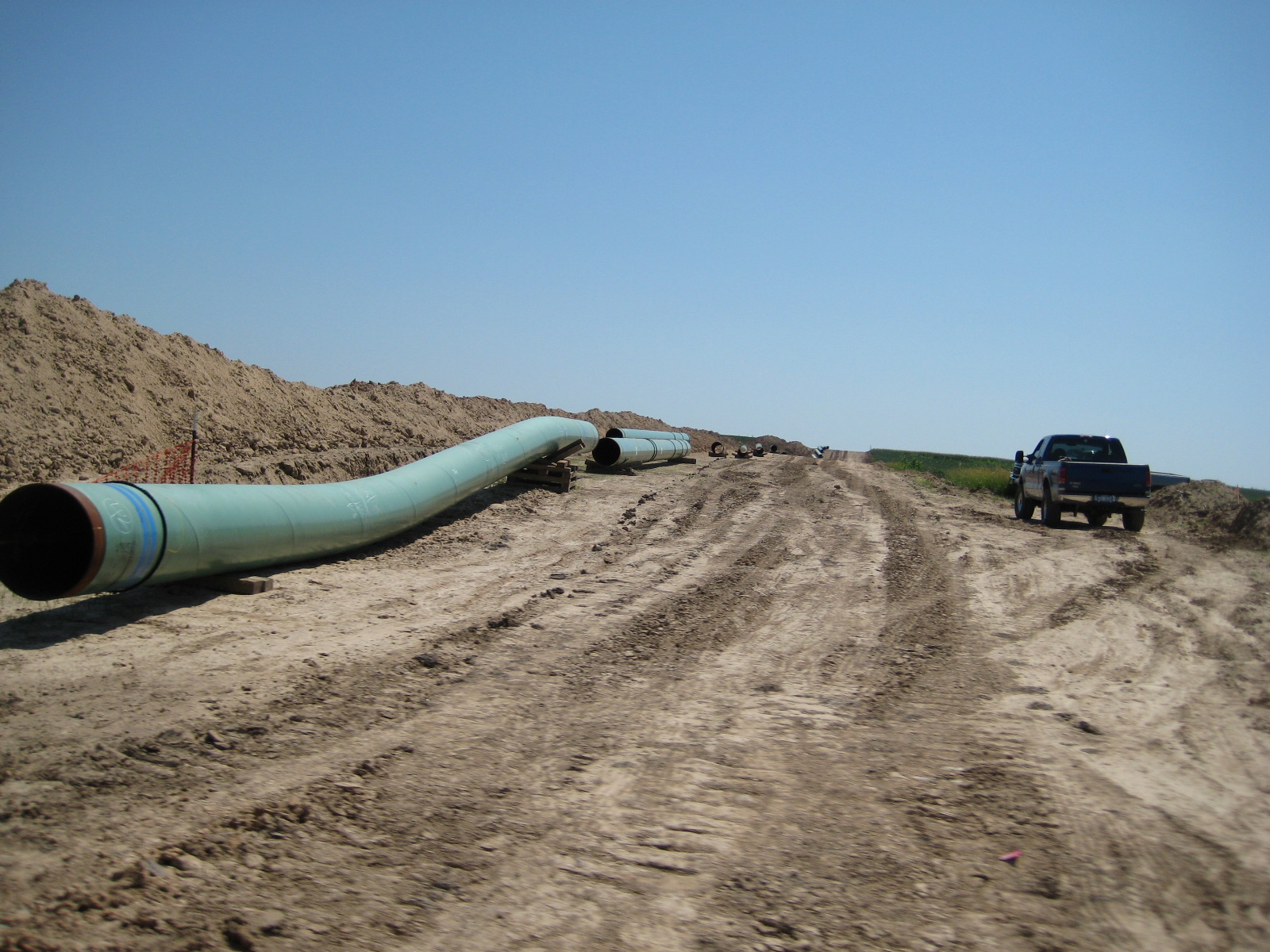
Pipes for the Keystone Pipeline. Photo by shannonpatrick17- Wikimedia commons
Top 10 Facts About The Keystone Pipeline
The Keystone Pipeline System is a Canadian and American oil pipeline structure that was completed in 2010 and is operated by TC Energy since March 2020, the Government of Alberta. It connects Alberta’s Western Canadian Depositional Basin to factories in Illinois and Texas, as well as fuel tank estates and a pipeline central warehouse in Cushing, Oklahoma.
The demise of the infamous Keystone XL (KXL) oil sands pipeline will be remembered by many as among of the most massive environmental triumphs of this era. The Keystone XL channel has been decommissioned after more than ten years of persevering demonstrations, protracted court cases, and back-and-forth executive orders covering three secretaries of state. Led by president Joe Biden’s rejection of a crucial license during his initial day in Whitehouse, the program’s organizational shareholder, the Canadian energy production corporation TC Energy, formally gave up on it in June 2021.
However, the road to triumph didn’t always appear definite. A lot of people wished that the catastrophic proposal would be put to rest in November 2015, when the Obama regime threatened to veto it, recognizing the pipeline’s widespread risks to global warming, biosphere, clean water, and the nation’s general healthcare.
However, soon after assuming office, President Donald Trump resurrected the evil proposal, as well as the law suits against it. The dirty energy infrastructure had grown into one of the greatest prominent global warming scandals of our time by the time President Biden entered into power in 2021, prepared to carry out his manifesto pledge to suspend the cross-border license.
Here’s all there is to learn about the iconic KXL pipeline battle, in addition to why the pipeline’s rescission has had no effect on rising fuel costs.
1.The construction is covers quite a bit of mileage
The posts appear to incorporate the Keystone XL Pipeline with the bigger Keystone Pipeline System by asserting that the venture was in “Phase 4” of renovation.
As stated on the firm’s web page, the Keystone XL Pipeline “is the fourth stage of the Keystone Pipeline System,” a 2,687-mile project whose Canadian fraction “starts from Hardisty, Alberta, east into Manitoba, where it turns south and traverses the Canadian border into North Dakota.”
The current Keystone Pipeline System in the United States starts from the North Dakota border “south via South Dakota to Steele City, Nebraska, where it divides – one stream flowing east via Missouri to Wood River and Patoka, Illinois, while the other is flowing south via Oklahoma to Cushing and on to Port Arthur and Houston, Texas.”
The Keystone XL Pipeline is a designed continuation to this bigger structure which might run 1,210 miles from Hardisty, Alberta to Steele City, Nebraska. It is referred to as the “4th stage of the Keystone Pipeline System”
Reuters reached out to James Stevenson, a press officer for the Canada Energy Regulator, that supervises the Canadian leg of the Keystone XL Pipeline, through email. Stevenson stated that approximately 152 km (93 miles) of pipeline had been placed close to the US-Canada state line as of late 2020. As a result, by the time President Biden voided the license, approximately 8% of the plotted 1,210-mile XL augmentation had been completed.
2.The Keystone Pipeline is harmful to the environment
The Keystone Pipeline, like all other pipelines, is highly damaging to the natural world. As per National Geographic, pipelines have the possibility to jeopardize numerous wild breeds as well as their ecosystems across the United States.
The Grus Americana, which is currently close to extinction, would have been at danger of flying into electric lines if the Keystone Pipeline development had been finished, according to National Geographic. And, with certain human made activities already wreaking havoc on the environment, we really have enough going on.
3.The Keystone XL Pipeline is divided into two sections
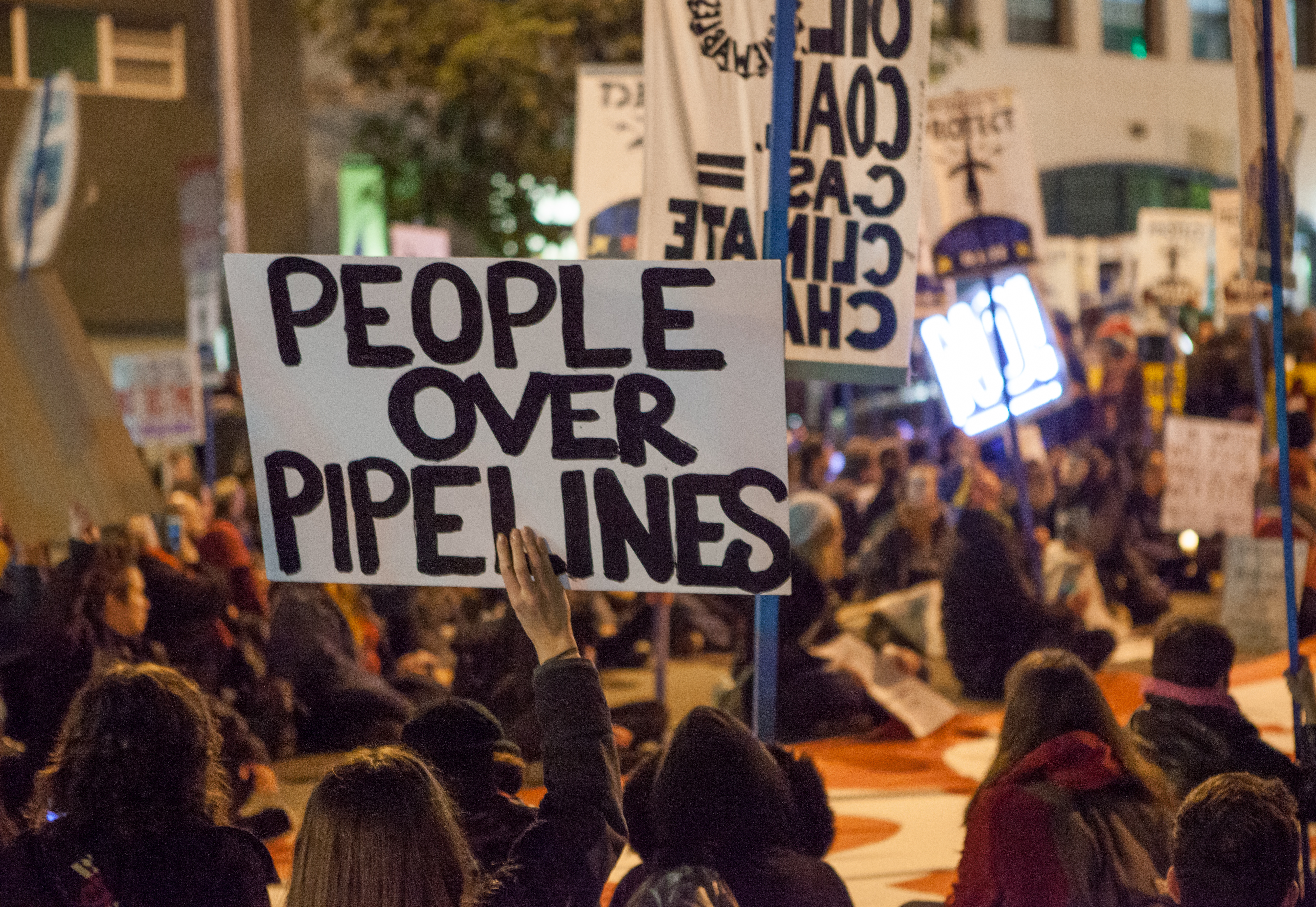
Protesters against the Dakota Access Pipeline and Keystone XL Pipeline hold a sit-in in the street next to the San Francisco Federal Building. Photo by Pax Ahimsa Gethen- Wikimedia commons
The Gulf Coast Initiative was the very first one. This component would pump oil 435 miles from Cushing, Oklahoma to Port Arthur, Texas via a 36″ pipe. The Keystone XL section could very well occupy 1,179 miles from Hardisty, Alberta to Steele City, Nebraska.
4.This Pipeline has a lot of health hazards on human beings
The US Department Of state (the entity with the responsibility of evaluating the task) performed a bogus evaluation. Their operations have been tarnished by a financial advantage in pursuit of the venture and they have struggled to evaluate pipeline health hazards with any strictness, imperfectly advised countless Primitive regions, and overlooked to defend Americans from asset forfeiture danger posed by TransCanada. This encompasses special privileges for TransCanada’s leading legislator (a close adviser to State Department Secretary Hilary Clinton) in addition to offshoring a great deal of the performance review to a corporation that has a large rapport with customers with TransCanada.
5.The Keystone Pipeline is very controversial
Across 2011, climate activists, such as author Bill McKibben, became interested in Keystone XL. They mentioned that oil sands shale oil has a greater impact on climate change than normal shale oil due to the additional energy required for extraction. NASA engineer James Hansen cautioned that destroying the massive oil dunes would be “very messed up” for global warming.
This occurred at a point when climate activists were experiencing demotivation. A global climatic legislation had just been killed in the Senate. Republicans had begun taking control of the House. The outlook for fighting climate change in Congress appeared grim.
As a result, the pipeline became an uniting force for environmentalists, an evident objective they could accomplish by applying stress on a president who had promised to resolve climate change.
Right-wingers made note as well. Left-wingers contended that since the government dragged its feet on a pipeline ruling, Obama continued stifling the energy market with red tape. It proved to be the excellent political tool: polls showed that the wider populace strongly supported Keystone XL. However, Obama couldn’t sign off on it without upsetting his environmentalist voters. As a result, there is some debate on the matter.
6.How the Keystone XL Pipeline affects the oil market and the fuel costs
Evil energy activists contended that improving oil sands will indeed guard America’s energy supply and lower gas costs. However, Obama and Trump regimes contended that the Keystone XL pipeline would have had no effect on fuel costs. NRDC and its stakeholders also discovered that the majority of Keystone XL oil was going to be exported to international traders, helped by a 2015 repeal of a crude oil export prohibition.
This corresponds to an ongoing trend: oil and gas corporations internationally ship 8.4m barrels of unrefined petroleum and oil products each day. That’s about threefold more than a decade ago, and it accounts for 42% of America’s total expenditure. And these international shipments exceed the suggested Keystone XL pipeline’s potential by more than tenfold.
7.This particular proposal cost America quite a lot

People Risk Arrest at State Department Office in Boston Protesting Keystone XL Pipeline. Photo by Kayana Szymczak- Wikimedia commons
In accordance with a TC Energy public statement from March 2020, the proposal’s projected value was $8 billion.
As per TC Energy, at the time of the public statement, the Alberta government had funded $1.1 billion in the proposal, which would encompass the majority of the infrastructure costs through the end of 2020.
The rest of the money ($6.9 billion) required for building is anticipated to be “generally made in 2021 and 2022 and bankrolled through a combined effect of a US$4.2 billion planning and evaluation term loan completely backed by the State of Alberta and a US$2.7 billion capital by TC Energy,” according to the public statement.
�In simple terms, 14 percent of the funding was completed in 2020, while the rest of the total (86 percent) was saved and will be billed in 2021 and 2022.
Reuters approached the TC Energy for statement as to whether extra resources were accumulated between January 1, 2021 and January 20, 2021 however, did not get a reply in time for this paper’s publishing.
The Reuters Fact Check crew initially disproved Keystone XL Pipeline-related social media narratives.
8.The Keystone XL Pipeline proposal was canceled
President Biden signed an executive order canceling the building project of the Keystone XL Pipeline on his first day in the Whitehouse. As per AP News, the site’s benefactor, TC Energy, pulled out of it a few months later. This was a massive victory for Indigenous individuals and environmental protestors worldwide.
9.Regardless of all the negative comments, some people fully support the Keystone XL Pipeline

People Risk Arrest at State Department Office in Boston Protesting Keystone XL Pipeline. Photo by Kayana Szymczak- Wikimedia commons
There is a percentage of people who are in full support of the pipeline have a variety of arguments to back up their position. For instance, the pipeline will diversify the United States’ oil demand. It’ll additionally generate up to 43,000 new job opportunities, the overwhelming bulk of which will be long-term.
Promoters also contend that the pipeline will improve US energy safety as well as keep raw oil resources sufficient for US factories. The pipeline will enable the United States to replace imported oil with Canadian oil. Keystone XL will supply the United States with straightforward pipeline connectivity to Canada’s safe and rising raw production, reducing America’s reliance on imported oil from Mexico and Venezuela (the two biggest oil suppliers into the Gulf Coast). Lastly, the pipeline would extend oil sands mass transit from the Midwest to the Gulf Coast.
10.The situation is so serious even musicians are raising awareness
To demonstrate the extent to which the cultural phenomenon Keystone XL has now become, Neil Young and Willie Nelson have been performing in assistance of the fight against the pipeline influences. Neil Young even composed the song “Stand Up and Fight” about global warming, oil refineries, and oil drilling: I wouldn’t say it’s his finest stuff, although it’s contextually appropriate.
Planning a trip to Â鶹APP ? Get ready !
These are ´¡³¾²¹³ú´Ç²Ô’²õÌý²ú±ð²õ³Ù-²õ±ð±ô±ô¾±²Ô²µÂ travel products that you may need for coming to Â鶹APP.
Bookstore
- The best travel book : Rick Steves – Â鶹APP 2023 –Ìý
- Fodor’s Â鶹APP 2024 –Ìý
Travel Gear
- Venture Pal Lightweight Backpack –Ìý
- Samsonite Winfield 2 28″ Luggage –Ìý
- Swig Savvy’s Stainless Steel Insulated Water Bottle –Ìý
We sometimes read this list just to find out what new travel products people are buying.


