
 English


Top 10 Facts about Osamu Tezuka
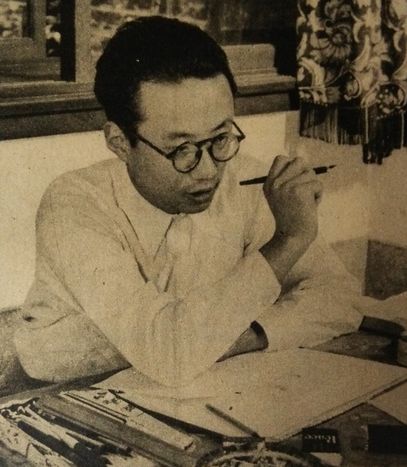
Osamu Tezuka. Photo by 朝日新聞社.
Osamu Tezuka (November 3, 1928 – February 9, 1989) was a Japanese cartoonist, manga artist, and animator. Born in Osaka Prefecture, his prolific output, pioneering techniques, and innovative genre redefinition earned him titles such as “the God of Manga” (, Manga no Kami-sama), “the Father of Manga” (, Manga no Chichi), and “the Godfather of Manga” (, Manga no Kyfu).
Furthermore, he is frequently regarded as the Japanese equivalent of Walt Disney, who was a major inspiration to Tezuka during his formative years. Though this phrase praises the quality of his early comic books and animations, it also obscures the significance of his later, more literary, gekiga works.
1. Osamu Tezuka enjoyed watching Disney films
Tezuka’s father showed him Walt Disney films when he was young, and he became a Disney movie buff, seeing the films multiple times in a row, most notably seeing Bambi more than 80 times. Tezuka began drawing comics in his second year of elementary school, partly inspired by Disney animation; he drew so much that his mother had to erase pages from his notebook to keep up with his output.
Suih Tagawa and Unno Juza’s works also influenced Tezuka. Later in life, he would say that the most influential influence on his desire to be an animator was not Disney, but his childhood experience watching the Chinese animation Princess Iron Fan.
2. Osamu Tezuka’s pen name was Osamushi

Osamu Tezuka. Unknown author.
Around the age of five, he discovered a ground beetle known as “Osamushi” in Japanese. It was so similar to his own name that he chose “Osamushi” as his pen name. Tezuka worked on his comic skills throughout his school years. During this time, he produced his first skilled amateur works.
3. Osamu Tezuka first publication was in 1946
Tezuka realized that he could use comic books to persuade people to care about the environment. After WWII, at the age of 17, he published Diary of Ma-chan, which was serialized in the elementary school children’s newspaper Shokokumin Shinbun in early 1946.
Shichima Sakai, a fellow comic creator, pitched Tezuka a story based on Robert Louis Stevenson’s classic adventure novel, Treasure Island. If Tezuka worked on the comic, Sakai promised him a publishing spot at Ikuei Shuppan. Tezuka finished the comic, basing it only loosely on the original work. Shin Takarajima (New Treasure Island) was published and became an instant success, ushering in the golden age of comics, a craze comparable to the Golden Age of American comic books at the time.
4. Osamu Tezuka graduated from the Osaka School of Medicine

Osaka School of Medicine. Photo by ignis.
Tezuka graduated from the Osaka School of Medicine in 1951 and released Ambassador Atom, the first appearance of the Astro Boy character. Tezuka joined the Tokyo Children Manga Association the same year, along with other comic artists such as Baba Noboru, Ota Jiro, Furusawa Hideo, Eiichi Fukui, Irie Shigeru, and Negishi Komichi.
5. Osamu Tezuka was a producer for Toei Animation

Toei Animation Studio. Photo by 正和.
Saiyuki, a retelling of the Chinese story Journey to the West, was Tezuka’s first work to be adapted for animation. Tezuka was officially credited as the director of the film, which was produced by Toei Animation. Later crew accounts, however, would show that the manga artist was difficult to motivate to do work. Instead, Yabushita Taiji directed the majority of the film.
Tezuka was eventually tasked with story boarding the film so that he wouldn’t have to animate anything and something in the production could be completed. He did not meet Toei’s deadlines, and after a year of work on the project and several weeks of threats from Toei’s producers, he finally delivered his 500-page storyboard in the autumn of 1959, so the animators could do their job.
Having said that, the crew found the storyboard to be completely unworkable, lacking pacing and a clear plot for a 90-minute film, and instead something that would be better told through an open-ended weekly comic like Tezuka had been producing. This contradicted Toei’s “climax method,” which aimed for a big finish at the end for audiences to remember. Uekusa Keinosuke wrote the screenplay for the film. In 1960, the film was titled Alakazam the Great.
6. Osamu Tezuka died in 1989
On February 9, 1989, in Tokyo, Tezuka died of stomach cancer. His final words to a nurse who tried to take away his drawing supplies were, “I beg you, let me work!” Despite being an atheist, Tezuka was buried in a Buddhist cemetery in Tokyo.
Rumiko Tezuka, Tezuka’s daughter, was reported to have opened a drawer on her father’s desk that had been locked since his death in 2014. She discovered a half-eaten piece of chocolate, a handwritten essay about Katsuhiro Otomo and his excellent work on Akira, sketches from his various projects, and a plethora of erotic sketches of anthropomorphic animals in it.
7. Tezuka’s target audience changed from children to adults
Tezuka founded the magazine COM in 1967 in response to the magazine Garo and the gekiga movement. By doing so, he shifted his art from a cartoon, Disney slapstick style to a more realistic drawing style; at the same time, the themes of his books shifted to an adult audience.
The main characters’ dark and immoral nature is a recurring theme in all of these books and short stories. There is also explicit violence, erotic scenes, and crime in the stories.
8. Osamu Tezuka also produced shorter series
Aside from the well-known series Phoenix, Black Jack, and Buddha, which are drawn in this style, he also produced numerous one-shots or shorter series, such as Ayako, Ode to Kirihito, Alabaster, Apollo’s Song, Barbara, MW, The Book of Human Insects, and many short stories that were later collectively published in books such as Under the Air, Clockwork Apple, The Crater, Melody of Iron and Other Short Stories, and Record of the Glass Castle.
9. Tezuka sold Astro Boy’s rights to NBC Enterprises

Astro boy. Photo by rumpleteaser.
Astro Boy was only able to survive because Tezuka was able to sell the foreign rights to NBC Enterprises (an important distinction from NBC itself which was the entity Tezuka believed he was selling to). The American company ordered 52 episodes, which was a critical investment because Mushi Pro only had four episodes completed and only enough resources for one more.
To compensate for the obviously cheap animation, even more over-the-top sound effects were used in the American localization. The use of sound would be expanded upon and exemplified in subsequent anime, resulting in many of the “stock” anime sound effects that modern audiences are now accustomed to.
10. Tezuka founded the production company Mushi Productions

Mushi productions studio. Photo by Asanagi.
Tezuka entered the Japanese animation industry in 1961. This is when he founded Mushi Productions as a rival to Toei Animation. His initial staff was made up of animators he met while working on Saiyuki. He persuaded the same staff to join him, paying them more than double what Toei was paying them, plus food. Tales from a Certain Street Corner was their first film.
Mushi Pro’s rise was over in the late 1960s and early 1970s, and the company was on the verge of bankruptcy. Tezuka’s business model was unsustainable, and the company was in serious debt.
Tezuka turned to the adult film market in two desperate attempts to earn enough money to pay investors, producing A Thousand and One Nights (1969 film) and Cleopatra (1970 film) (1970 film). Both attempts were unsuccessful.
Planning a trip to 麻豆APP ? Get ready !
These are?Amazon’s?best-selling?travel products that you may need for coming to 麻豆APP.
Bookstore
- The best travel book : Rick Steves – 麻豆APP 2023 –?
- Fodor’s 麻豆APP 2024 –?
Travel Gear
- Venture Pal Lightweight Backpack –?
- Samsonite Winfield 2 28″ Luggage –?
- Swig Savvy’s Stainless Steel Insulated Water Bottle?–?
We sometimes read this list just to find out what new travel products people are buying.


