
 English


Flag of China. Photo by Toa55.
Top 10 Intriguing Facts about Lee Teng-hui
Lee Teng-hui was a Taiwanese statesman and economist who served as President of the Republic of China (Taiwan) under the 1947 Constitution and as Chairman of the Kuomintang (KMT) from 1988 to 2000. He was Taiwan’s first president, the last to be indirectly elected and the first to be directly elected.
During his presidency, Lee oversaw the end of martial law and the ROC’s full democratization, advocated for Taiwanese localization, and led an ambitious foreign policy to gain allies around the world. Lee, dubbed “Mr. Democracy,” was credited with completing Taiwan’s transition to a democratic era. He remained active in Taiwanese politics after leaving office. Lee was the “spiritual leader” of the pro-independence Taiwan Solidarity Union (TSU) and had previously recruited for the party.
1. He grew up during the era of Japanese colonization

Lee Teng-hui, wearing kendo protector as a junior high school student in Taiwan under Japanese rule. Photo from
Lee was born in the rural farming community of Sanshi Village in the Japanese Taiwanese prefecture of Taihoku. He is of Yongding and Tingzhou Hakka ancestry and always dreamed of traveling abroad as a child thus becoming an avid stamp collector. He developed a strong interest in Japan while growing up under Japanese colonial rule. His father was a middle-level Japanese police aide, and his older brother, Lee Teng-chin, attended the colony’s police academy before joining the Imperial Japanese Navy and dying in Manila.
Lee graduated with honors from Taihoku High School, one of only four Taiwanese students in his class, and was awarded a scholarship to Japan’s Kyoto Imperial University.
2. Lee was greatly influenced by famous Japanese thinkers
He studied kendo and bushido in high school. Lee, a lifelong book collector, was heavily influenced by Japanese thinkers such as Nitobe Inaz and Kitaro Nishida in Kyoto. He, too, volunteered for service in the Imperial Japanese Army in 1944, rising to the rank of second lieutenant in command of an anti-aircraft gun in Taiwan.
He was sent back to Japan in 1945 and helped clean up after the Great Tokyo Air Raid in March 1945. After the surrender, Lee remained in Japan and graduated from Kyoto Imperial University in 1946.
3. He studied agricultural science and agricultural economics at the university

National Taiwan University Library. Photo by peellden.
Lee enrolled at National Taiwan University and graduated with a bachelor’s degree in agricultural science in 1948. He went on to earn a master’s degree in agricultural economics from Iowa State University (ISU) in the United States in 1953 finally returning to Taiwan in 1957 as an economist for the Joint Commission on Rural Reconstruction (JCRR), a US-sponsored organization aimed at modernizing Taiwan’s agricultural system and implementing land reform. During this time, he also worked as an adjunct professor in the Department of Economics at National Taiwan University and taught at National Chengchi University’s Graduate School of East Asian Studies.
4. He received his economics doctorate from an Ivy League college
Lee returned to the United States in the mid-1960s and earned a Ph.D. in agricultural economics from Cornell University in 1968. John Williams Mellor was his advisor. His doctoral dissertation, Intersectoral Capital Flows in the Economic Development of Taiwan, 1895-1960, was named the American Association of Agricultural Economics’ best doctoral thesis of the year and remains an influential work on Taiwan’s economy during the Japanese and early KMT periods.
5. Lee joined politics in 1971

Lee Teng-hui. Photo by 國民大會秘書處.
Lee joined the KMT shortly after returning to Taiwan in 1971. The Kuomintang (KMT), also known as the Guomindang (GMD) or the Chinese Nationalist Party, is a major political party in the Republic of China, first on the Chinese mainland and later in Taiwan. He was appointed as a cabinet minister without a portfolio in charge of agriculture. Lee was elected mayor of Taipei in 1978, where he addressed water shortages and improved the city’s irrigation system. He became governor of Taiwan Province in 1981 and made additional irrigation improvements.
6. Chiang Ching-Kuo nominated him as vice president

Chiang Ching-Kuo. Photo by Jack Birns.
Lee quickly caught President Chiang Ching-Kuo’s attention as a strong candidate for vice president as he was a skilled technocrat. Instead of continuing to promote waisheng ren (mainland Chinese immigrants who arrived in Taiwan after 1949 and their descendants), Chiang sought to delegate more authority to the bensheng ren (residents of Taiwan prior to 1949 and their descendants). President Chiang appointed Lee as his Vice President. In 1984, Lee was formally elected by the National Assembly.
7. Lee became president after Chiang Ching-Kuo’s death in 1988
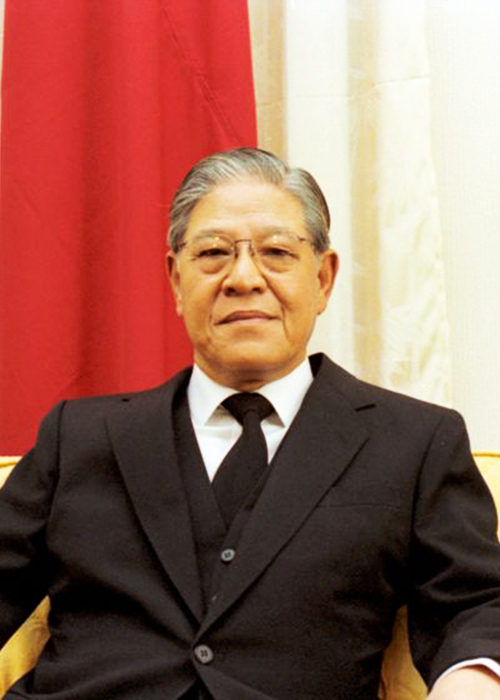
Lee Teng-hui. Photo by 中華民國總統府(國史館提供).
Lee took over as president after Chiang Ching-kuo died in January 1988. The KMT’s “Palace Faction,” a group of conservative mainlanders led by General Hau Pei-tsun, Premier Yu Kuo-hwa, and Education Minister Lee Huan, as well as Chiang Kai-widow, shek’s Soong Mei-ling, were deeply distrustful of Lee and sought to prevent his election as Chairman of the KMT. With the assistance of James Soong Lee, Lee was able to ascend to the chairmanship unhindered.
8. He single-handedly democratized Taiwan’s political system
Lee spearheaded a campaign to repeal the Temporary Provisions Effective in May 1991. During the period of the Communist Rebellion, laws were enacted following the KMT’s arrival in 1949 that suspended the government’s democratic functions.
The original members of the Legislative Yuan, elected in 1948 to represent mainland China constituencies, were forced to resign in December 1991, and new elections were held to allocate more seats to the bensheng ren. The elections forced Hau Pei-tsun out of the prime ministership, which he had been given in exchange for his tacit support of Lee. He was replaced by Lien Chan, a Lee ally at the time.
9. Lee became the first democratically elected president in 1996
Lee was the first ROC president to be elected by popular vote, receiving 54% of the vote. Many people who worked or lived in other countries returned to the island to vote. In addition to the president, the governor of Taiwan Province and the mayors of Taipei and Kaohsiung (who were previously appointed by the president as leaders of provincial-level divisions) were popularly elected.
Lee stepped down from the presidency at the end of his term in 2000, observing constitutional term limits he helped enact. In a three-way race that year, Democratic Progressive Party candidate Chen Shui-bian won the national election with 39% of the vote. Chen’s victory effectively ended KMT rule and marked Taiwan’s first peaceful transfer of power under Taiwan’s new democratic system.
10. He died at the age of 97

A photo of Lee Teng-hui during his funeral. Photo by 總統府.
Lee, 97, died of multiple organ failure and septic shock at Taipei Veterans General Hospital on July 30, 2020, at 7:24 p.m. Since being admitted to the hospital in February, he had been plagued by infections and cardiac issues.
A state funeral was announced, and a memorial venue at the Taipei Guest House where people could pay their respects to Lee was open to the public from August 1 to 16, 2020. Lee’s body was cremated and his remains were interred at Wuzhi Mountain Military Cemetery. For three days, all national flags at government buildings were flown at half-mast.
Planning a trip to 麻豆APP ? Get ready !
These are?Amazon’s?best-selling?travel products that you may need for coming to 麻豆APP.
Bookstore
- The best travel book : Rick Steves – 麻豆APP 2023 –?
- Fodor’s 麻豆APP 2024 –?
Travel Gear
- Venture Pal Lightweight Backpack –?
- Samsonite Winfield 2 28″ Luggage –?
- Swig Savvy’s Stainless Steel Insulated Water Bottle?–?
We sometimes read this list just to find out what new travel products people are buying.


