
 English


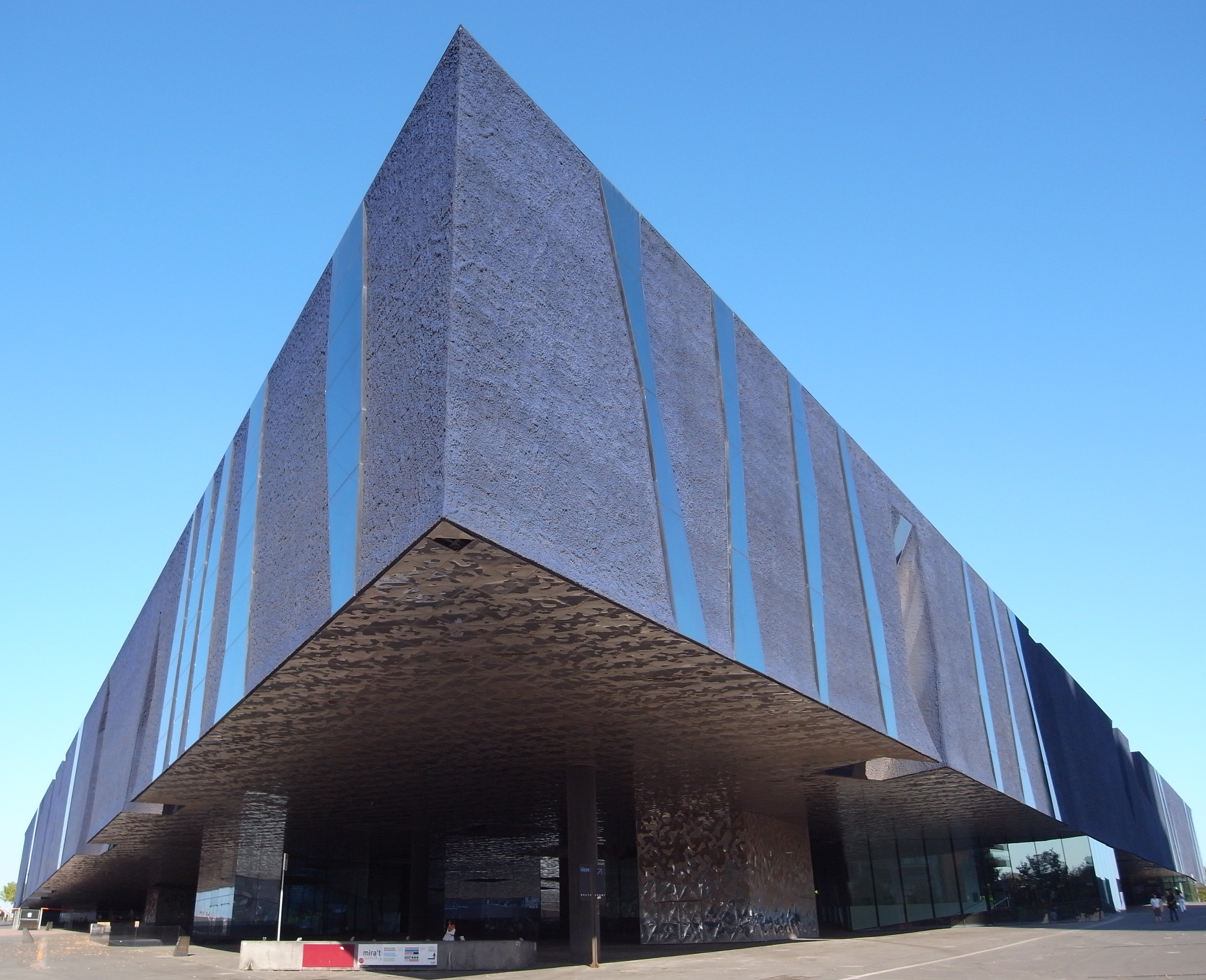
Forum Building (Jacques Herzog & Pierre de Meuron), Diagonal Mar, Barcelona. Photo by Victoriano Javier Tornel GarcÃa.
Top 10 Outstanding Facts about Pierre De Meuron
From 1970 to 1975, Pierre de Meuron studied architecture at the Swiss Federal Institute of Technology Zurich (ETHZ) with Aldo Rossi and Dolf Schnebli. In 1978, he founded Herzog & de Meuron in Basel with Jacques Herzog. Since 1989, he has been a visiting professor at Harvard University in the United States, and from 1999 to 2018, he was a professor at ETH Zürich and co-founder of ETH Studio Basel – Contemporary City Institute.
The Pritzker Architecture Prize (2001), the RIBA Royal Gold Medal (UK, 2007), the Praemium Imperiale (Japan, 2007), and the Mies Crown Hall Americas Prize were all awarded to Pierre de Meuron and Jacques Herzog (USA, 2014). They established the charitable foundation “Jacques Herzog und Pierre de Meuron Kabinett, Basel” in 2015.
1. Pierre De Meuron is a founder of Herzog & de Meuron Basel Ltd

Herzog & de Meuron Basel building in the background in Basel. Photo by Andreas Schwarzkopf.
Herzog & de Meuron Basel Ltd also known as Herzog & de Meuron Architekten, BSA/SIA/ETH (HdM), is a Swiss architecture firm headquartered in Basel, Switzerland.
Founders and senior partners Jacques Herzog and Pierre de Meuron attended the Swiss Federal Institute of Technology (ETH) in Zurich at the same time. They are perhaps best known for converting London’s massive Bankside Power Station into the new Tate Modern home. Since 1994, Jacques Herzog and Pierre de Meuron have been visiting professors at Harvard University Graduate School of Design and professors at ETH Zürich.
2. Pierre De Meuron is a product of ETH Zurich
In 1977, he received a degree in architecture from the ETH Zurich. 1978: Assistant to Professor Dolf Schnebli at ETH Zurich Since 1994, he has been a visiting professor at Harvard University in Cambridge, Massachusetts. Since 2002.
3. He co-directs “Studio Basle”
It’s an external experimental laboratory created to test new forms and methods of teaching, with Roger Diener, Jacques Herzog, and Marcel Meili. The project “Switzerland – a Portrait” combines methodical broad-ranging urban development analyses with issues of conceptual development of large, open spaces.
4. His company was chosen to renovate Gund Hall at Harvard University
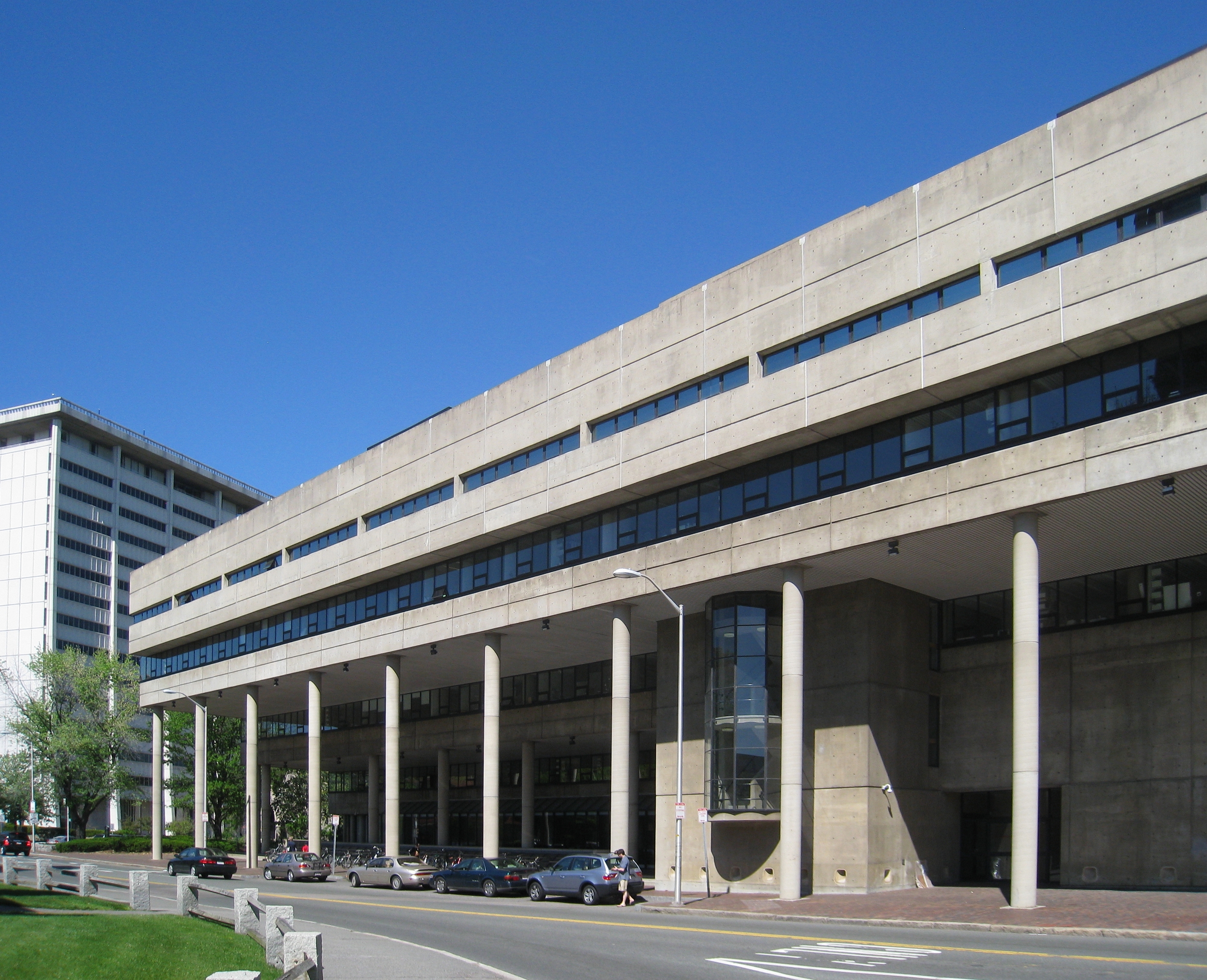
Gund Hall at Harvard University front view. Photo by Daderot.
Harvard University Graduate School of Design (Harvard GSD) has chosen Basel-based Herzog & de Meuron as design consultant and New York-based Beyer Blinder Belle (BBB) as architect of record to transform Gund Hall, the School’s primary campus building, into a twenty-first-century center of design education and innovation.
The proposed expansion would include new space that would be integrated into the existing structure of the School. The reimagined facility will represent the School’s innovative and multidisciplinary work at the intersection of design, pedagogy, research, and practice.
Harvard University organized a two-stage selection process for the architects. The designer selection committee for the project included Harvard GSD faculty and staff members, as well as University-appointed design advisors.
5. Early in his career, Pierre De Meuron’s firm received international acclaim
Herzog & de Meuron gained international acclaim early in their career with:
- the Blue House in Oberwil, Switzerland (1980),
- the Stone House in Tavole, Italy (1988), and
- the Apartment Building along a Party Wall in Basel (1990).
- The Ricola Storage Building in Laufen, Switzerland, was the firm’s breakthrough project (1987).
- Dominus Winery in Yountville, California, gained fame in the United States (1998).
- The Goetz Collection, a Gallery for a Private Collection of Modern Art in Munich (1992), is the first in a long line of internationally acclaimed museum structures,
- including the Küppersmühle Museum for the Grothe Collection in Duisburg, Germany (1999).
Many of the architects’ projects have included collaborations with artists, with Rémy Zaugg, Thomas Ruff, and Michael Craig-Martin being notable examples.
6. His company has expanded to a global office
Herzog & de Meuron Basel building in the background in Basel. Photo by Andreas Schwarzkopf.
Professionally, the Herzog & de Meuron partnership has expanded to a global office of over 120 people. They have offices in London, Munich, and San Francisco, in addition to their headquarters in Basel.
They work in groups, but they are not permanent. As new projects begin, they rearrange them. All the work is the result of discussions with Pierre and the other partners, Harry Gugger and Christine Binswanger. The work of various teams may involve many different talents in order to achieve the best results, which is a final product called Herzog & de Meuron architecture.
7. During the construction of Beijing National Stadium, Pierre De Meuron’s firm was chastised

Beijing National Stadium. Photo by Ank Kumar.
During the construction of the Beijing National Stadium, Herzog & de Meuron faced criticism for their vision of migrant workers in Beijing. In a July 2008 interview with the German magazine Der Spiegel, Jacques Herzog was chastised by the interviewer for not doing more to ensure the conditions under which migrant workers built the stadium, to which Jacques Herzog responded that the architect’s influence on the construction process is rapidly dwindling.
Some scholars, however, such as Deyan Sudjic, believe that the stadium’s construction sent a signal from the Western architecture firm to the Chinese government to change societal norms. Others, however, have argued that this statement would apply to any stadium design, reducing the possibility of the signal.
8. Both Pierre De Meuron and Jacques Herzog were professors at Harvard University
The first years of university education were dominated by sociological and philosophical perspectives influenced by the ideological legacy of 1968. They graduated with an urban thesis on the city of Basel in 1975, forever joining their professional career. They began working as Schnebli’s assistants in 1977. Both are committed to teaching and professional activities; they were professors at Harvard from 1989 to 1994 and at the Eth Polytechnic of Basel since 1999.
9. The Bankside Power Station in London was converted into a gallery by Pierre de Meuron and his colleague

The Bankside Power Station in London. Photo by secretlondon123.
Perhaps their most visible project is the completion of the Bankside Power Station on London’s south bank of the Thames into a new Gallery of Modern Art for the Tate Modern Museum. This visit created a sensation around the world: it was the first time a non-British architecture studio was given a prominent public role in England.
Jacques Herzog and Pierre de Meuron transformed London’s Bankside power station into a gallery 20 years ago. The Swiss architects approached the conversion with care, creating a modern public space while preserving the building’s historical significance. The impressive cultural landmark has become the world’s most visited museum of modern art, revitalizing its once-isolated industrial district.
10. Herzog and de Meuron tend to avoid a signature style
Forum Building (Jacques Herzog & Pierre de Meuron), Diagonal Mar, Barcelona. Photo by Victoriano Javier Tornel GarcÃa.
Herzog and de Meuron learned from contemporary art that concept is more important than style – unlike other architects, Herzog and de Meuron avoid a signature look and instead seek a different set of materials, details, and forms for almost every project.
At the same time, each is recognizably theirs due to a consistent underlying attitude. They also learned to engage people in new ways by combining the intellectual and the sensual: they like to build with fascinating and engaging materials.
Planning a trip to Â鶹APP ? Get ready !
These are ´¡³¾²¹³ú´Ç²Ô’²õÌý²ú±ð²õ³Ù-²õ±ð±ô±ô¾±²Ô²µÂ travel products that you may need for coming to Â鶹APP.
Bookstore
- The best travel book : Rick Steves – Â鶹APP 2023 –Ìý
- Fodor’s Â鶹APP 2024 –Ìý
Travel Gear
- Venture Pal Lightweight Backpack –Ìý
- Samsonite Winfield 2 28″ Luggage –Ìý
- Swig Savvy’s Stainless Steel Insulated Water Bottle –Ìý
We sometimes read this list just to find out what new travel products people are buying.


