
 English


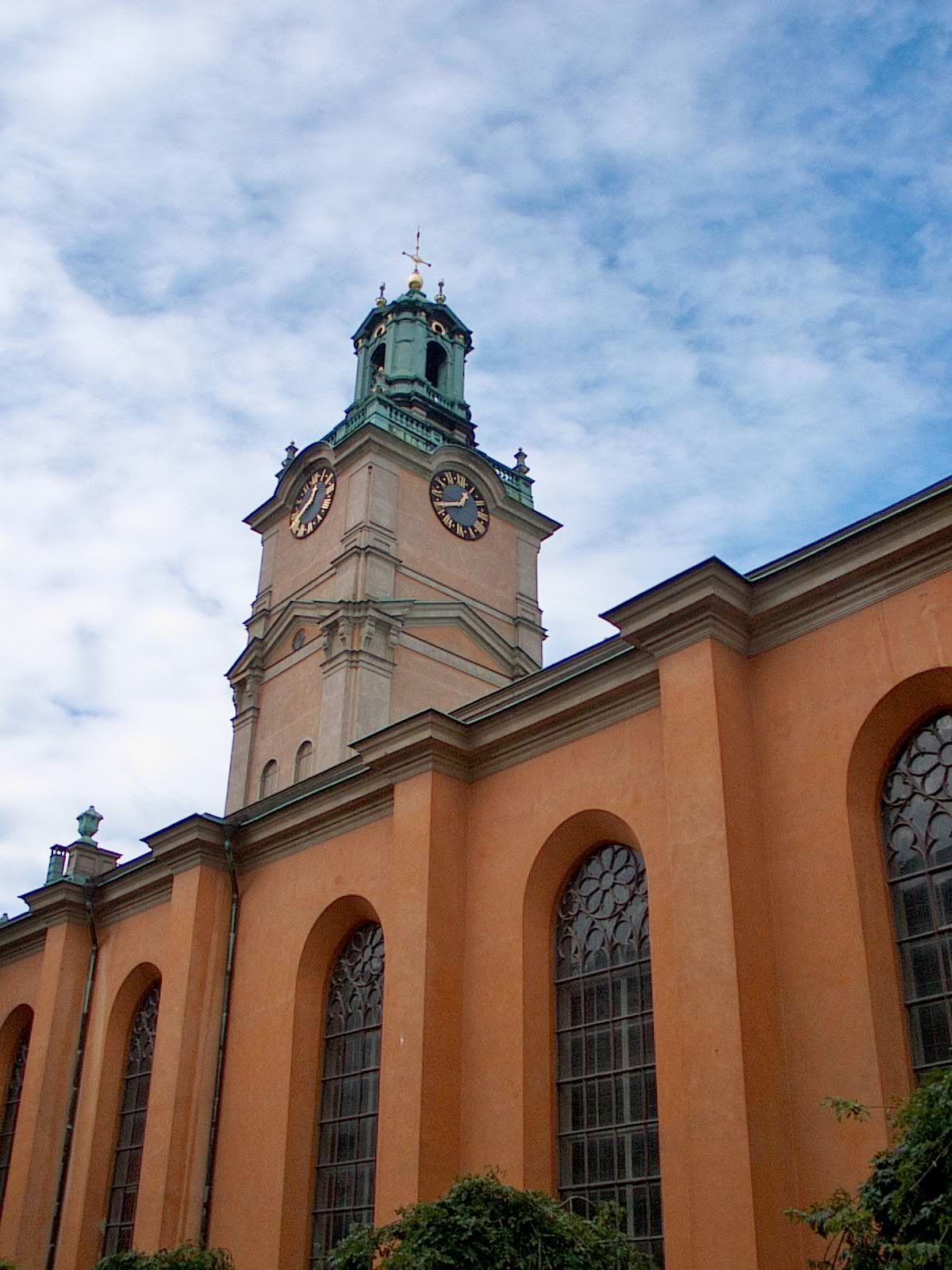
Storkyrkan. Photo by Bernt Fransson.
Top 10 Outstanding Facts about Storkyrkan
Storkyrkan is Stockholm’s oldest church. Storkyrkan is located in Gamla stan, between Stockholm Palace and Stortorget, Stockholm’s old main square. It was dedicated to Saint Nicholas in 1306 but construction most likely began in the 13th century.
Storkyrkan retains much of its late medieval appearance on the inside, with a vaulted ceiling supported by brick pillars. The church’s exterior, on the other hand, is uniformly Baroque in style, the result of extensive changes made in the 18th century.
During the Reformation in Sweden, the church played an important role as the first place where Mass was celebrated in Swedish. Since the establishment of the Diocese of Stockholm in 1942, it has served as the seat of the Bishop of Stockholm within the Church of Sweden.
1. Storkyrkan is Stockholm’s oldest church
Storkyrkan was originally the parish church for the entire city, so it was built in the heart of the medieval city. It is located on Gamla stan’s highest point, between the Stock Exchange Building and Stockholm Palace.
The church, along with the palace, Stortorget, and Stockholm’s first town hall (located on the site of the current stock exchange building), formed the heart of the city’s early development. While the interior of the church retains much of its medieval appearance, the exterior is largely the result of 18th century changes. It is part of a coherent ensemble of Baroque architecture that includes the Royal Palace, the Axel Oxenstierna palace, Slottsbacken and its obelisk, and the Tessin Palace. It has been described as an “irreplaceable” part of Stockholm’s cityscape.
2. Storkyrkan is surrounded on three sides by streets

Storkyrkan. Photo by W. Bulach.
Streets surround Storkyrkan on three sides (Trngsund to the west, Storkyrkobrinken and Högvaktsterrassen to the north, and Slottsbacken to the east).
Immediately south of the church is a courtyard. The courtyard on the opposite side faces the back of the stock exchange buildings, and two small pavilions designed by Erik Palmstedt as stock exchange wings were actually built as the church’s burial chapel and coach-house. They were constructed in 1767. The courtyard is bounded to the west and east by walls, with openings through wrought iron gates.
3. Outside Storkyrkan, there are three statues
Both gates’ at the courtyard were originally adorned with allegorical statues, though only the couple on the west gate remains. Peter Schultz created these two statues, which most likely depict Reason (on the south post) and Divine Love (on the north post), in 1675. Previously, the statues on the east gate posts depicted females representing Caution and Hope. Daniel Kortz [sv] created the pair in 1702.
Another statue, depicting the Swedish reformer Olaus Petri, stands next to the church’s east facade. Even though it is not formally connected to Storkyrkan, it faces Slottsbacken and is part of the church ensemble. It was designed by Theodor Lundberg [sv] and debuted in 1898.
4. Storkyrkan was founded by Birger Jarl

Storkyrkan. Photo by Julian Herzog. Wikimedia
The presence of a church in Stockholm was first mentioned in 1279. The consecration of the city church is also mentioned in 1306, making Storkyrkan the city’s oldest church. Birger Jarl is also said to have founded the church. It is thus possible that the church inaugurated in 1306 was preceded by another church, that it was under construction for a long time, or that it was re-dedicated in 1306. Regardless, the oldest parts of the current building most likely belong to the church inaugurated in 1306.
5. Sculptures in Storkyrkan were vandalized during Sweden’s Reformation
Storkyrkan. Photo by Julian Herzog. Wikimedia
The Reformation in Sweden during the 16th century resulted in significant changes for the church. Catholicism was abandoned in favor of Lutheranism. The state seized much of the church’s property, including large amounts of silver from Storkyrkan’s chapels and altars. Although there were no widespread outbreaks of iconoclasm in Sweden during the Reformation, some of the church’s formerly Catholic sculptures were vandalized.
When Christian II of Denmark lived in Stockholm in 1520, the church was fortified, a reflection of the political tensions that led to the Stockholm Bloodbath in 1521, among other things. These works were created by Adam van Düren, who also created an allegorical sculpture that adorns the base of one of the church’s pillars.
It features a male and female lion and an eel, as well as a satirical inscription with dubious meaning. During the reign of King John III, some additional changes were made to the church’s pillars, vaults, and walls in order to further harmonize the interior space.
6. A bishop was ordained in Storkyrkan in 1338
Storkyrkan has hosted significant events in Sweden’s history. During the Middle Ages, Stockholm’s growing wealth and influence, as well as the church’s proximity to the Royal Palace, drew the attention of both the Archbishop of Uppsala and the monarchs of Sweden. The archbishop appointed special representatives to the church on occasion and frequently intervened in local church matters. A bishop (Hemming of Turku) was ordained in Storkyrkan at least once, in 1338.
7. Lutheranism was publicly preached in Sweden for the first time in Storkyrkan
Storkyrkan was at least partially responsible for the Swedish Reformation: it was here that Lutheranism was publicly preached for the first time in Sweden, and it was also the first church in Sweden where Mass was celebrated in Swedish (rather than Latin), in 1525.
Olaus Petri, a key Reformation advocate in Sweden, later served as a priest in Storkyrkan.
8. The first royal coronations took place in Storkyrkan in 1336
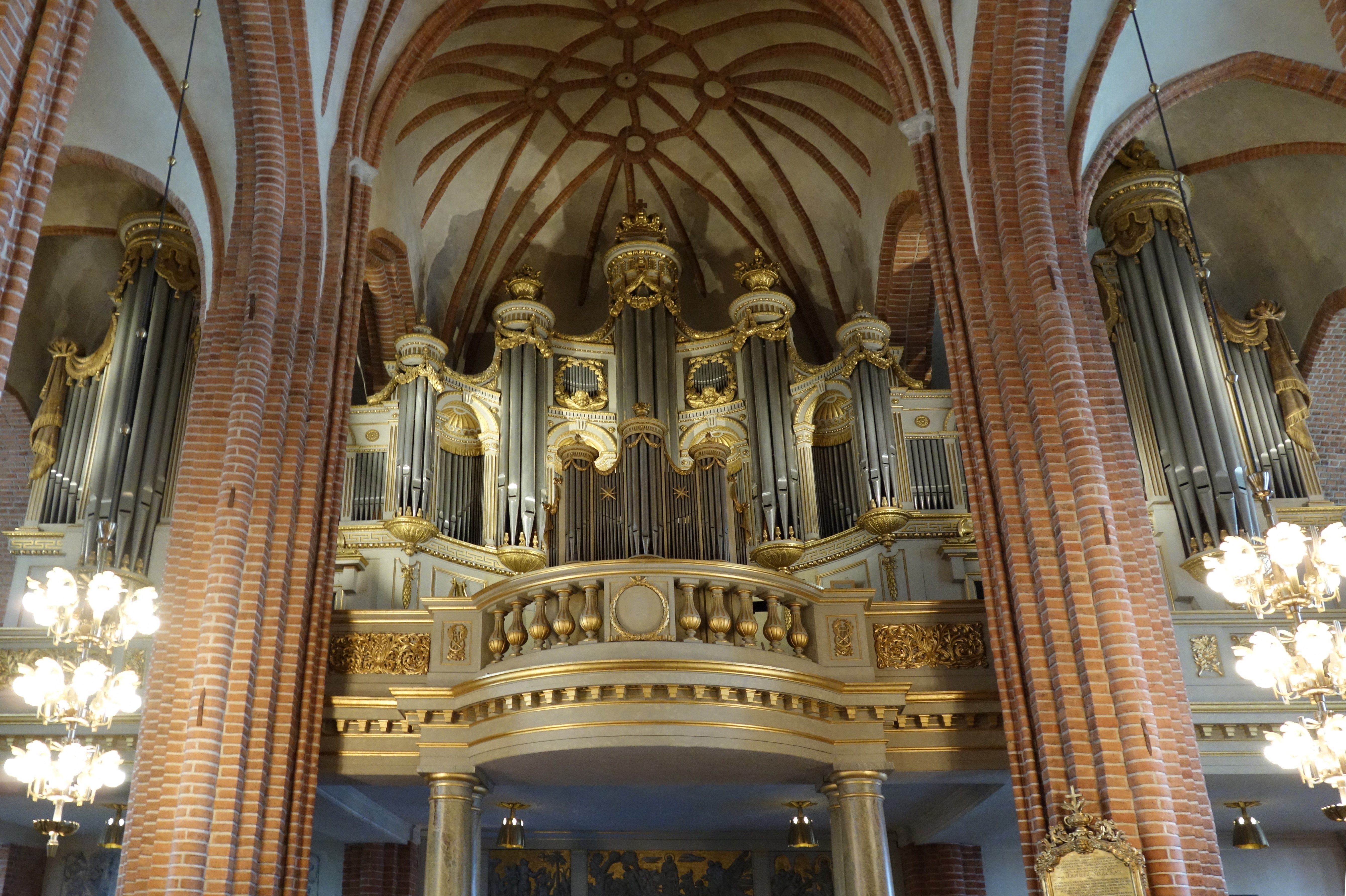
Storkyrkan. Photo by Mtag.
On several occasions, the church has been used for the coronation of Sweden’s kings and queens. Magnus IV and Blanche of Namur were the first royal coronations to take place in Storkyrkan in 1336. The coronation was presided over by Bishop of Tartu Engelbert von Dolen [de], in the presence of all Swedish bishops. The majority of medieval coronations, on the other hand, took place in Uppsala Cathedral. The next coronation in Storkyrkan occurred during the Kalmar Union in 1497, when King John was crowned King of Sweden there.
9. Storkyrkan is home to two monumental works by David Klöcker Ehrenstrahl
The Crucifixion and The Last Judgment, both painted by David Klöcker Ehrenstrahl in 1695 and 1696, are housed in Storkyrkan. They were meant to be displayed in the Royal Chapel at Tre Kronor, but they were saved from the fire that destroyed the castle and are now on display at Storkyrkan. The Crucifixion stands 7.4 meters tall, while The Last Judgment stands more than 10 meters tall.
10. Storkyrkan has four choirs
A choir. Photo by Haley Rivera.
Since the end of the 18th century, the church has been used as a concert venue. The church now has four choirs. Storkyrkans Gosskör (Storkyrkan’s Boys Choir), for example, dates back to the 17th century. At least three Storkyrkan organists and composers were Andreas Düben (c. 1597/98-1662), Ferdinand Zellbell the Younger (1719-1780), and Harald Fryklöf (1882–1918).
Planning a trip to Â鶹APP ? Get ready !
These are ´¡³¾²¹³ú´Ç²Ô’²õÌý²ú±ð²õ³Ù-²õ±ð±ô±ô¾±²Ô²µÂ travel products that you may need for coming to Â鶹APP.
Bookstore
- The best travel book : Rick Steves – Â鶹APP 2023 –Ìý
- Fodor’s Â鶹APP 2024 –Ìý
Travel Gear
- Venture Pal Lightweight Backpack –Ìý
- Samsonite Winfield 2 28″ Luggage –Ìý
- Swig Savvy’s Stainless Steel Insulated Water Bottle –Ìý
We sometimes read this list just to find out what new travel products people are buying.


