
 English


Hugh Masekela (2009). Photo by: H.L.I.T.- Wikimedia.
Top 10 Fascinating Facts about Hugh Masekela
Hugh Masekela, known as the “Father of South African Jazz,” has been honored with a Google Doodle on his 80th birthday today. The musician, singer, composer, and human rights advocate died in January 2018 of prostate cancer, but his songs live on around the world.
Here are five facts about this jazz legend that you might not know.
1. Nelson Mandela once watched him live!
Masekela’s fame grew in tandem with his trumpet skills. In the 1950s, before the ANC was banned, he performed at charity events for it, with Mandela among those who went to watch.
As he evolved his unique Afro-jazz sound, he discovered South African compositions and closely followed advancements in the American jazz scene. In 1959, he formed the Jazz Epistles with Abdullah Ibrahim (then known as Dollar Brand) and Gwangwa, and they released the first album by a South African jazz band, Jazz Epistle Verse 1.
2. Hugh Masekela used Louis Armstrong’s old trumpet to perform

Hugh Masekela. Photo by: Jacob Crawfurd- Wikimedia.
Masekela began playing the piano at the age of six, but it wasn’t until he was a teenager that he identified his true calling. After seeing the 1950 film Young Man with a Horn, starring Kirk Douglas, Lauren Bacall, and Doris Day, he decided to take up the trumpet at the age of 14.
Masekela ended up with Louis Armstrong’s old trumpet three years later after the legendary musician heard about a youth band in South Africa in need of instruments.
Masekela stated that the instrument gave him a “spiritual connection” with jazz musicians in America.
3. Hugh Masekela was a member of South Africa’s first all-black jazz band to record an album
In 1959, Masekela and pianist Dollar Brand formed The Jazz Epistles. They broke down barriers by recording an album, performing at white clubs, and organising a national concert tour—all of which were uncommon of for black artists at the time.
4. Hugh Masekela had been effectively exiled
Masekela left South Africa at the age of 21 after his tour with The Jazz Epistles was cancelled following the Sharpeville Massacre, which resulted in new laws prohibiting gatherings of more than ten people.
He studied music in England before moving to New York and enrolling at the Manhattan School of Music. Masekela intended to return to South Africa after graduation, but was unable to do so due to the government’s apartheid policies.
“By then, [Nelson] Mandela had received a life sentence,” Masekela told CNN in 2009. “As a result, I stayed 26 years longer than I had planned.”
5. Hugh Masekela’s song reached the top of the US pop charts in 1968
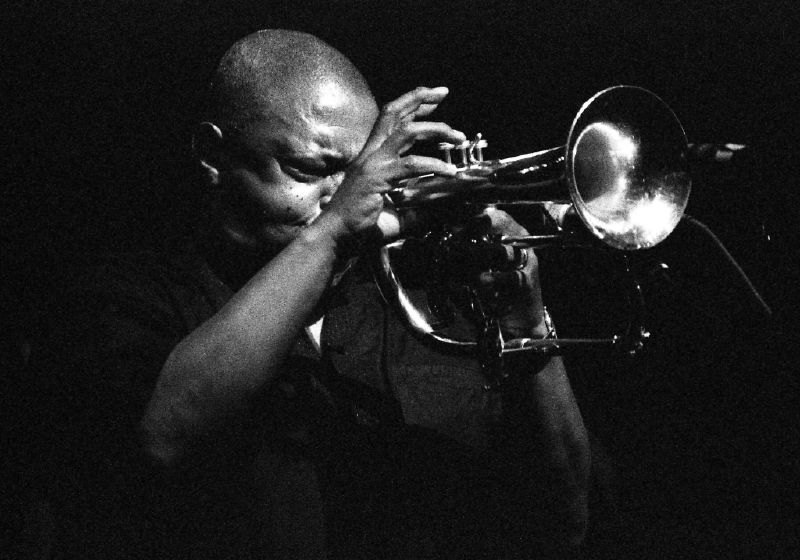
Hugh Masekela, a South African trumpetist, composer, and singer. Photo by: Scorpius73- Wikimedia.
Masekela’s single “Grazing in the Grass” reached number one on the Billboard charts in 1968. At one point, his song was more popular than The Doors’ “Hello, I Love You,” Mama Cass’ “Dream a Little Dream of Me,” and the Rolling Stones’ “Jumpin’ Jack Flash.”
6. Hugh Masekela’s music provided the backdrop for Nelson Mandela’s release from prison
Masekela performed “Bring Him Back Home (Nelson Mandela)” in 1987, a protest song he wrote. “Bring back Nelson Mandela, bring him back home to Soweto,” the opening lines say.
We want to see him walking down South African streets tomorrow.” His wish was granted three years later, when Mandela was released from prison and elected president.
7.Early years of Hugh Masekela
Hugh Ramapolo Masekela was born in the Witbank township of KwaGuqa (now called Emalahleni), South Africa, to health inspector and sculptor Thomas Selena Masekela and social worker Pauline Bowers Masekela.
Barbara Masekela, his younger sister, is a poet, educator, and ANC activist. He began singing and playing the piano as a child and was mostly raised by his grandmother, who ran an illegal bar for miners.
Masekela began playing the trumpet at the age of 14 after seeing the 1950 film Young Man with a Horn (in which Kirk Douglas plays a character modeled after American jazz cornetist Bix Beiderbecke).
Archbishop Trevor Huddleston, the anti-apartheid chaplain at St. Peter’s Secondary School, now known as St. Martin’s School, bought him his first trumpet from a local music store (Rosettenville).
Uncle Sauda, the leader of Johannesburg’s “Native” Municipal Brass Band at the time, was asked by Huddleston to teach Masekela the fundamentals of trumpet playing.
Masekela mastered the instrument quickly. Soon after, some of his classmates expressed an interest in learning to play instruments, resulting in the formation of the Huddleston Jazz Band, South Africa’s first youth orchestra.
After hearing about this band from his friend Huddleston, Louis Armstrong sent Hugh one of his own trumpets as a gift. Masekela joined Alfred Herbert’s African Jazz Revue in 1956, after leading other ensembles.
Masekela began performing music that reflected his life experiences in 1954. South Africa’s agony, conflict, and exploitation in the 1950s and 1960s inspired and influenced him to create music while also spreading political change.
He was a musician who vividly depicted his country’s struggles and sorrows, as well as its joys and passions, in his music. His music was a protest against apartheid, slavery, and the government, as well as the hardships that people faced. Masekela reached a large audience that felt oppressed as a result of the country’s situation.
Following a Manhattan Brothers tour of South Africa in 1958, Masekela found himself in the orchestra of Todd Matshikiza’s musical King Kong.
King Kong was South Africa’s first blockbuster theatrical success, touring the country for a sold-out year and starring Miriam Makeba and Nathan Mdledle of the Manhattan Brothers. The musical later spent two years in London’s West End.
8. Some of the initiatives Hugh was part of
Masekela was engaged in a lot of community projects, including serving on the board of the Lunchbox Fund, a non-profit organisation that provides a daily meal to students at Soweto township schools.
9. Hugh’s death and private life
Masekela was married to singer and activist Miriam Makeba from 1964 to 1966. He married Chris Calloway (daughter of Cab Calloway), Jabu Mbatha, and Elinam Cofie after that. He spent the last few years of his life with the dancer Nomsa Manaka.
He was the father of Sal Masekela, an American television host. His younger sister is poet, educator, and activist Barbara Masekela.
Masekela died of prostate cancer in Johannesburg early on January 23, 2018, at the age of 78.
10. Masekela’s history with the Grammy’s

Hugh Masekela – Apollo Theater “Africa Now! South Africa.” Photo by: Peter Matthews- Wikimedia.
Masekela was nominated for three Grammy Awards: Best World Music Album for his 2012 album Jabulani, Best Musical Cast Show Album for Sarafina! The Music Of Liberation (1989), and Best Contemporary Pop Performance for the song “Grazing in the Grass” (1968).
Planning a trip to Â鶹APP ? Get ready !
These are ´¡³¾²¹³ú´Ç²Ô’²õÌý²ú±ð²õ³Ù-²õ±ð±ô±ô¾±²Ô²µÂ travel products that you may need for coming to Â鶹APP.
Bookstore
- The best travel book : Rick Steves – Â鶹APP 2023 –Ìý
- Fodor’s Â鶹APP 2024 –Ìý
Travel Gear
- Venture Pal Lightweight Backpack –Ìý
- Samsonite Winfield 2 28″ Luggage –Ìý
- Swig Savvy’s Stainless Steel Insulated Water Bottle –Ìý
We sometimes read this list just to find out what new travel products people are buying.


