
 English


Large tree in the forest. Photo by Veeterzy-
Top 10 Outstanding Facts about Buryatia Nature Museum
The Republic of Buryatia (Russian: еcулика урти, tr. Respublika Buryatiya, IPA: [rjspubljk brjtjj]; Buryat: урад ла�, Buryaad Ulas, [brjat las]) is a federal subject of Russia (a republic) in Asia. Ulan-Ude is its capital city. It has a population of 972,021 people and an area of 351,300 square kilometers (135,600 square miles) (2010 Census).
Buryatia is a beautiful land where East and West meet, as well as many different ethnic backgrounds, religions, and points of view. Everything is represented in the culture of the republic, providing a different space for new impressions.
Tourism and recreational activities have a lot of potential in the Republic of Buryatia.
The desirable geographical location, the rich historical and cultural resources, the well-developed transportation system that connects the republic with other Russian regions and foreign countries, the sustainable general environment, the social harmony of religions, and the increasing popularity of Lake Baikal all contribute to the growth of tourism.
Those visiting Buryatia for the first time will learn a lot of new and interesting things. Buryatia’s museums feature a diverse array of different archives.
The Museum of Nature in Ulan Ude is a good place to learn about Baikal’s fauna and flora. All of the species found in Baikal are depicted here.
1. What can one expect to see in Buryatia Nature Museum?
Stuffed animals stand in a setting that resembles their natural habitat. A miniature model of Baikal Lake, its islands, and the surrounding mountains can be found in one room.
It depicts the lake’s depth and provides a clear picture of the geology of the area. Countless species are endemic (they only grow or live in Baikal), such as clear water seals, which prefer to rest on rocks near Olkhon Island.
2. The Buryatia Nature Museum is full of photos
It also demonstrates how species adapt to the cold winter in the Baikal region, with wolves, rabbits, and the rare hermins sporting white winter fur. It’s a charming visit, despite the fact that the decorations and display from the 1970s and 1980s are dusty and dated.
Some photographs show local Buryat and Russian scientists cooperating during the Soviet era. Both people appear to be passionate about their work with nature; perhaps their love of Baikal Nature contributed to their peaceful cohabitation.
3. How to get to Buryatia Nature Museum
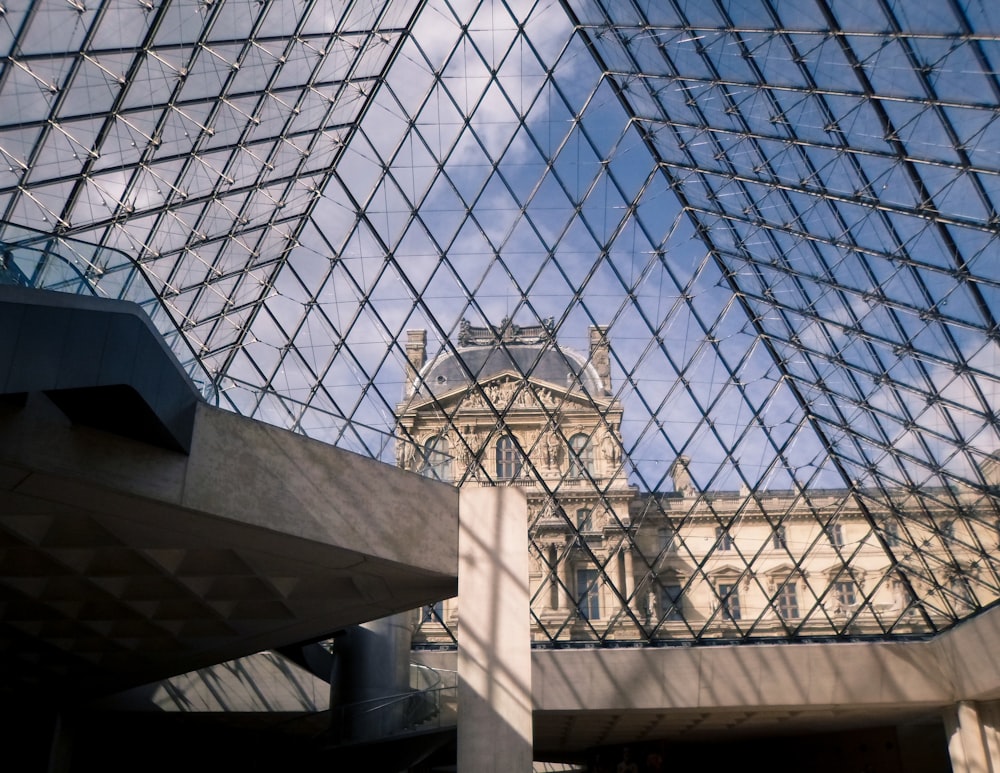
The view through the sky through the solarium roof. Photo by Sofia Costa-
Nature Museum should be on your travel plans if you want to add a little more culture to your getaway. Check to see if there are any guided tours available, or simply wander around on your own.
This attraction can be found in Ulan-Ude. Pay the admission fee and then explore at your own pace. After you’ve finished at the Nature Museum, visit the Ulan-Ude Museum of Railway History, the Khoca Nasamraev Literature Museum, and the Lenin Head.
4. Buryatia Nature Museum working hours
The museum’s primary mission is environmental education. Unique zoological, paleontological, geological, and botanical collections are on display. The museum was established in 1983. During World War I, Austrian prisoners built the one-story structure. Hours of operation: daily (except Monday) from 10 a.m. to 6 p.m.
5. What experience should you expect inside the Buryatia Nature Museum?
Inside, the staff is very welcoming and showed tourists several exhibits. The information on Lake Baikal and its wildlife was very informative and interesting; it prepares tourists very well, some of who end up going for a trip to Baikal the following day via Irkutsk.
There are few English signs, however, there are pamphlets with useful information! Also, very affordably prices!
6. How many exhibits are in the Buryatia Nature Museum?
The view through the sky through the solarium roof. Photo by Sofia Costa-
Nature Museum’s over 2000 exhibits depict Buryatia’s mountain ranges, wide valleys, coniferous and deciduous forests, steppes, and lakes. A one-of-a-kind collection depicts the variety of flora and fauna, as well as minerals, found in the Baikal region. Rare exhibits such as a stuffed Przevalsky’s horse and a hooded crane on record in Red Book can be found here.
7. The Buryatia Nature Museum’s first hall
The museum is divided into five halls. The first hall is a helpful introductory hall. Buryatia’s scenery shares similar geographical and climate features. The state’s scientific research heritage.
8. The second hall in Buryatia Nature Museum
The second hall is a natural science hall. Mammoth, rhinoceros, and bison bones dating from 10,000 to 2.5 million years old. Mammoth discoveries are common in Buryatia. These continues to remain prove of the notion of Earth’s evolution.
9. The Buryatia Nature Museum’s 3rd hall
The third hall is geological in nature. You will see a map of mineral resources (200 deposits of underground resources) proven on Buryatia’s territory. Buryatia is known as Asia’s Ancient Crown by geologists. Why? Because there are so many benk Archaean measurement sites here, ornamental stones and semi-precious stones draw special attention. Nephrite is well known among them; it can be of various green tinctures in Buryatia.
9. The fourth hall in Buryatia Nature Museum
The view through the sky through the solarium roof. Photo by Sofia Costa-
The fourth and fifth halls depict Buryatia’s scenery, major ecosystems, framework, and trophic relationships. The fourth hall is dedicated to the climate change impact. This hall displays the majority of rare animals inhabiting this territory (bustard, black crane, reindeer, and so on), as well as the Red Book of Buryatia.
10.The last hall in Buryatia Nature Museum
The fifth hall is a high relief hall. You can see how natural areas change with altitude: Buryatia has a wide range of such zones, ranging from steppe (or prairie) to tundra (or cold desert). Eastern Sayany is Buryatia’s highest-altitude district.
There is the highest mountain in Eastern Siberia, Munku Sardik (3491 meters). The voiced diorama will easily transport you to the Highlands. Here you can see red deer, sable, and eared seal.
There are three reservations and two national parks in Buryatia, and information about them can be found here. The Barguzin Reservation is Russia’s oldest reservation. It was founded in 1916 with the goal of protecting and reproducing the Barguzin Sable.
Planning a trip to Â鶹APP ? Get ready !
These are ´¡³¾²¹³ú´Ç²Ô’²õÌý²ú±ð²õ³Ù-²õ±ð±ô±ô¾±²Ô²µÂ travel products that you may need for coming to Â鶹APP.
Bookstore
- The best travel book : Rick Steves – Â鶹APP 2023 –Ìý
- Fodor’s Â鶹APP 2024 –Ìý
Travel Gear
- Venture Pal Lightweight Backpack –Ìý
- Samsonite Winfield 2 28″ Luggage –Ìý
- Swig Savvy’s Stainless Steel Insulated Water Bottle –Ìý
We sometimes read this list just to find out what new travel products people are buying.


