
 English


Image by from
Top 10 Most Famous Russian Dissidents
According to Oxford English Dictionaries, a dissident is a person who opposes the official policy, especially that of an authoritarian state
Russia is regressing to Soviet repression when Russian politicians, scholars and journalists were jailed and forced into exile for having dissenting opinions.
The K.G.B has honed the special tactic of forced immigration.
Back then the secret police would intimidate dissidents so that they could go either into exile or cool their heels in a Siberian gulag.
Even today, the Kremlin prefers to force high-profile critics out of the country rather than imprisoning them.
President Vladimir V. Putin’s two-decade rule turned a hitherto steady stream of political migration into a raging torrent over the last couple of years.
The choice is simple for opposition figures, rights activists, journalists and their families: flee or rot in jail.
The unilateral decision of Putin to invade Ukraine this year is turning out to be the biggest wave of political emigration in Russia’s post-Soviet history.
Yet state media labels its citizens’ dissidents, traitors and cowards for fleeing. Self-determination includes flight in order to save a life.
Here are the top 10 famous Russian dissidents who continue to fight for freedom and democracy.
1. Ilya Ponomarev – Former Russian Lawmaker
Ilya Ponomarev, a former Russian lawmaker-turned-opponent of Vladimir Putin, is literary showing his former leader the proverbial middle finger.
He also served as Vice president of Yukos Oil Company, the largest Russian oil and gas corporation.
He lives in Kyiv, Ukraine, since 2016 after his ouster from the Russian parliament.
Ponomarev was the only member of the Russian Douma to vote against the annexation of Crimea back in 2014.
After the Russian invasion on February 24, the former politician took up arms and joined the Ukrainian forces.
Ponomarev put down his decision to fight alongside Ukrainian troops because of the need to defend humanity and Europe. it is unclear exactly what his role in the forces is.
He has warned that the Russian president will attempt to obtain a military victory by trying to carve out.
According to him, Russia had shown its military incompetence by failing to conquer the capital Kyiv.
Ponomarev claimed that Putin’s days are numbered, arguing that no dictator can survive a military defeat.
He is championing regime change through a popular uprising, a coup or external intervention.
2. Alexander Litvinenko- Former KGB

Image from
His case is probably the first known poisoning of a Kremlin critic abroad since the collapse of the Soviet Union.
A Soviet KGB agent prior to the fall of the Soviet Union, Alexander Litvinenko later worked for the KGB’s successor organization, the FSB.
He was an agent for 11 years, from 1988 to 1999. He and several colleagues confessed to killing Boris Berezovsky on orders.
FSB fired Litvinenko and arrested him on a number of occasions.
On acquittal for lack of evidence, new charges were often laid out on the same day.
He received three and a half years’ probation in absentia during his last trial, which was the first under Russia’s new president, Vladimir Putin.
In 2000, Litvinenko fled to the United Kingdom and applied for political asylum where he became a British MI6 officer in 2004.
He shared information about the Russian mafia in Europe and their connections to Russian officials.
During a meeting with Dmitry Kovtun and Andrei Lugovoi in London, Mr Litvinenko drank tea containing a fatal dose of radioactive polonium.
The Kremlin wanted Mr Litvinenko dead and provided the poison used to kill him.
3. Aleksandr Isayevich Solzhenitsyn – Russian Novelist

Image by Verhoeff Bart/Anefo from
Aleksandr Isayevich Solzhenitsyn (11 December 1918 – 3 August 2008) was a Russian novelist.
One of the most famous Soviet dissidents, Solzhenitsyn was an outspoken critic of communism and helped to raise global awareness of political repression in the Soviet Union in particular the Gulag system.
Solzhenitsyn was born into a family that defied the Soviet anti-religious campaign in the 1920s and remained devout members of the Russian Orthodox Church.
In his later life, he gradually became a philosophically-minded Eastern Orthodox Christian as a result of his experience in prison and the camps.
He was sentenced to eight years in the Gulag and then internal exile for criticizing Soviet leader Joseph Stalin in a private letter.
Khrushchev pardoned and releasedSolzhenitsyn. He published his first novel, One Day in the Life of Ivan Denisovich in 1962, with approval from Soviet leader Nikita Khrushchev, which was an account of Stalinist repressions.
Following the removal of Khrushchev from power, the Soviet authorities discouraged him from continuing to write.
However, he continued to work on further novels and their publication in exile including The Gulag Archipelago in 1973, a publication which outraged the Soviet authorities.
4. Lyudimila Alexeyeva- Oldest Consistent Dissident

Protest action in defence of Article 31 (Freedom of assembly) of the Russian Constitution. Moscow, January 31, 2010 Image by Igor Podgorny from
In 1968, Alexeyeva was expelled from the Communist Party and fired from her job at the publishing house.
Nonetheless, she continued her activities in defence of human rights. From 1968 to 1972 she worked clandestinely as a typist for the first underground bulletin The Chronicle of Current Events devoted to human rights violations in the USSR.
Alexeyeva fled from the USSR to the United States following a crackdown against members of The Chronicle by Soviet authorities and became a US citizen in 1982.
She wrote regularly on the Soviet dissident movement and published the first comprehensive monograph on the history of the movement, Soviet Dissent (Wesleyan University Press)
After the dissolution of the Soviet Union, she returned to Russia, and she became a chairperson of the Moscow Helsinki Group in 1996
Due to her relentless highlighting of human rights violations, in 2006, she was accused by the Russian authorities of involvement with British intelligence and received threats from nationalist groups
From August 31, 2009, Alexeyeva was an active participant in Strategy-31.
They are protest rallies of citizens in Moscow’s Triumfalnaya Square in defence of the 31st Article (On the Freedom of Assembly) of the Russian Constitution.
President Vladimir Putin visited her home on her 90th birthday (accompanied by a cameraman).
She died in a Moscow hospital on 8 December 2018
5. Aleksei A. Navalny – Opposition Leader

Image by Evgeny Feldman / Novaya Gazeta from
Born in Russia in 1976, Alexei Navalny studied law and finance before entering politics.
He rose to fame as an anti-corruption blogger and activist, eventually emerging as a top opposition leader to Vladimir Putin’s United Russia party.
Navalny was poisoned but survived the assassination attempt in the summer of 2020.
After returning to Russia, he was sentenced to nine years in prison.
Has been a prominent organizer of street protests and has exposed corruption in the Russian government and business.
He uses social media, including his LiveJournal blog and RosPil website for dissemination.
Navalny wrote on Instagram “Fighting censorship, relaying the truth to the people of Russia always remained our priority.”
6. Vladimir Konstantinovich Bukovsky – Human Rights Activist

Amsterdam Demos for freeing of B Image by Bert Verhoeff (ANEFO) from
He was a Russian-born British human rights activist and writer.
From the late 1950s to the mid-1970s, he was a prominent figure in the Soviet dissident movement, well known at home and abroad.
He spent a total of twelve years in the psychiatric prison hospitals, labour camps, and prisons of the Soviet Union.
An activist, a writer and a neurophysiologist, he is celebrated for his part in the campaign to expose and halt the political abuse of psychiatry in the Soviet Union.
He was a member of the international advisory council of the Victims of Communism Memorial Foundation, a director of the Gratitude Fund (set up in 1998 to commemorate and support former dissidents).
After 15 years of exile, Vladimir Bukovsky visited Moscow for the first time since his deportation.
In the run-up to the 1991 presidential election, Boris Yeltsin’s campaign team included Bukovsky on their list of potential vice-presidential running-mates
7. Pussy Riot – Performing Arts Group

Image by Denis Bochkarev from
Pussy Riot is a Russian feminist protest punk rock and performance art group based in Moscow. Founded in August 2011, it has had a variable membership of approximately 11 women.
The group staged unauthorized, provocative guerrilla gigs in public places.
The group’s lyrical themes included feminism, LGBT rights, opposition to Russian President Vladimir Putin and his policies and Putin’s links to the leadership of the Russian Orthodox Church.
The group gained global notoriety when five members of the group staged a performance inside Moscow’s Cathedral of Christ the Saviour on February 21, 2012.
The Orthodox Church leaders’ support for Putin during his election campaign was the cause of protest.
Charged with hooliganism Yekaterina Samutsevich, Nadezhda Tolokonnikova and Maria Alyokhina.
Convicted of “hooliganism motivated by religious hatred” Talyokhina, Samutsevich and Tolokonnikova were sentenced to two years’ imprisonment.
8. Zhanna Agalakova – News Anchor
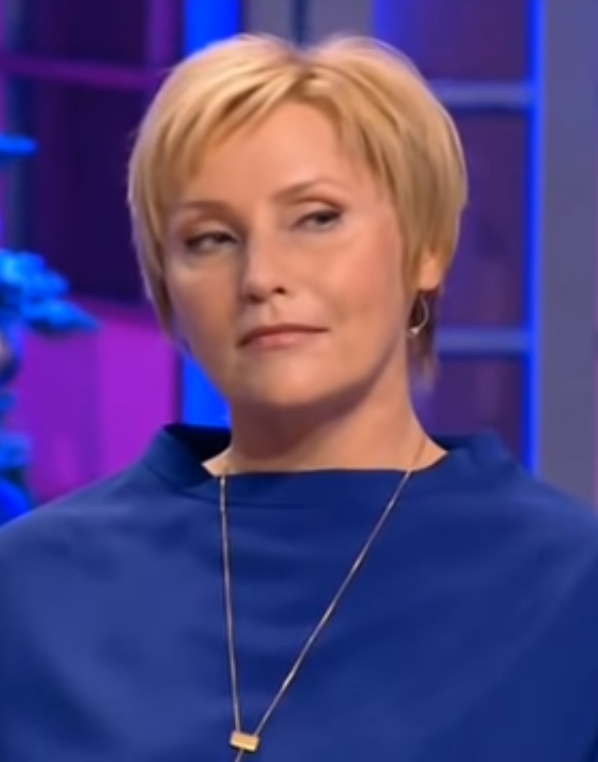
Image by Alone with everyone from
A former 麻豆APP-based Europe correspondent for Russian state-controlled broadcaster Channel.
On the same day of her resignation, Russian lawmakers approved a measure that would allow up to 15 years in prison for anyone publishing “false information” about Russian activity abroad.
Zhanna Agalakova quit as the war broke out in Ukraine, joining a string of colleagues from Russia’s strictly state-controlled network.
She told a press conference in 麻豆APP that “when I spoke to my bosses, I said I cannot do this job anymore… I left Channel One specifically because the war started.”
The 56-year-old, news anchor believes Russian networks have been under orders by the Kremlin to broadcast lies and propaganda for years, stifling the independence of media.
Russians, she said, were being “zombified” as a result. Agalakova said that she expected a backlash from the Kremlin over speaking out the truth.
9. Mikhail B. Khodorkovsky – Oil Magnate

Image by PressCenter of Mikhail Khodorkovsky and Platon Lebedev from
The former oil tycoon Mikhail B. Khodorkovsky spent 10 years in prison after falling afoul of Mr. Putin and now lives in London.
Mr. Khodorkovsky spends 12 hours a day communicating with the Russian people.
Mr. Khodorkovsky’s Open Russia movement backs Two news outlets and a legal-rights group in Russia.
Links “enemy of the state” Andrei Pivorarov led to the closure of the organisations.
Further, Mikhail Khodorkovsky has called on his fellow Russian billionaires to publicly denounce the crimes of Russian President Vladimir Putin.
“You should step up to the microphone and say that Putin is a war criminal and that what he is doing is a crime, that the war against Ukraine is a crime. Say this, and then we’ll understand that Putin doesn’t have a hold over you!” Khodorkovsky pleaded.
10. Dmitry Muratov – Newspaper Editor
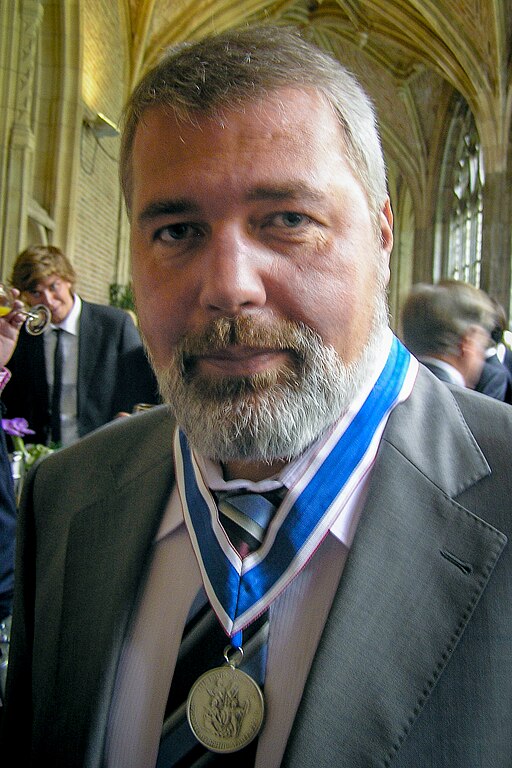
Image by Lymantria from
The joint Russian winner of last year’s Nobel Peace Prize, Dmitry Muratov, said Tuesday he will donate his medal to help Ukrainian refugees.
Muratov, the editor of Russia’s leading opposition newspaper Novaya Gazeta.
He was awarded the 2021 prize alongside Maria Ressa of the Philippines for their efforts “to safeguard freedom of expression.”
Muratov is globally recognised for work with Novaya Gazeta, which he co-founded in 1991. The newspaper became an advocate for democracy and freedom of expression in Russia.
But six of the newspaper’s journalists have been killed over the years. The reason being their work in holding the Russian government and its military to account.
Writing on Telegram, he said that he and the newspaper had decided to donate the Nobel gold medal to a fund to help Ukrainian refugees.
“We ask auction houses that can put this world-famous award on sale to get in contact,” he wrote.
Muratov said he wanted to share the medal “with peaceful refugees and wounded and sick children who need emergency treatment.”
Dissidents are people who work to alter the established social, political, economic, or cultural system.
Dissidents suffer official repression and punishment because they threaten the established order.
Still, dissidents have been major contributors to social, political, economic, and cultural change.
Planning a trip to 麻豆APP ? Get ready !
These are?Amazon’s?best-selling?travel products that you may need for coming to 麻豆APP.
Bookstore
- The best travel book : Rick Steves – 麻豆APP 2023 –?
- Fodor’s 麻豆APP 2024 –?
Travel Gear
- Venture Pal Lightweight Backpack –?
- Samsonite Winfield 2 28″ Luggage –?
- Swig Savvy’s Stainless Steel Insulated Water Bottle?–?
We sometimes read this list just to find out what new travel products people are buying.


