
 English


Photo Source: Deutsche Fotothek from
Top 10 Amazing Facts about Dmitri Shostakovich
Dmitri Shostakovich was born on 25 September 1906 in Saint Petersburg, Russia. Shostakovich was the second of three children of Dmitri Boleslavovich and Sofia Vasilievna.
He was a Soviet-era Russian composer and pianist. Shostakovich achieved early fame in the Soviet Union but had a complex relationship with its government.
Shostakovich was known for his 15 symphonies, numerous chamber works, and concerts that many he wrote under the pressures of government-imposed standards of Soviet art.
He was a great pianist who discovered his talent for playing piano at the age of nine.
Here are the top 10 amazing facts about Dmitri Shostakovich;
1. Shostakovich was only 26 when he Completed Lady Macbeth

Photo Source: from
Stalin was in Moscow to hear his opera Lady of Mtsensk which had been touring successfully for two years. The morning after, the state newspaper Pravda condemned his masterpiece claiming it corrupted the Soviet spirit. Stalin himself inspired the article.
The opera disappeared overnight with every publication and political organization in the country heaped personal attacks on Shostakovich.
The verbal attacks made him live in fear, sleeping in the stairwell outside his apartment to spare his family the experience of his imminent arrest.
Lady Macbeth became the vehicle for a general denunciation of his music by the communist party in early 1936.
2. Dmitri Shostakovich was a Perfectionist
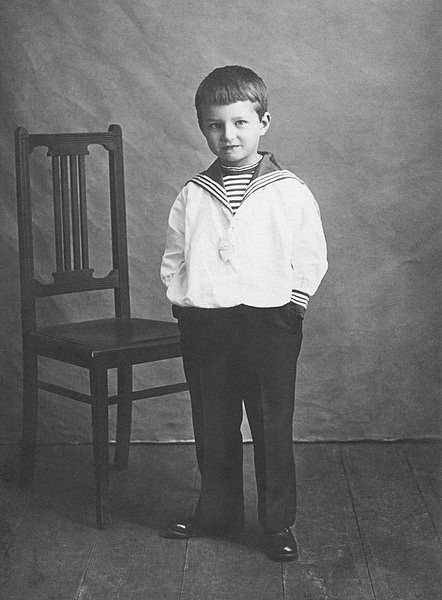
Photo Source:
Shostakovich was neurotic in music and in his personal life. Shostakovich was obsessed with cleanliness, and he also synchronized the clocks in his apartment.
He would also regularly send cards to himself to test how well the postal service worked, which was considered extreme.
Shostakovich perfected his art and continuously produced good music adored by all his supporters. He worked on his symphonies in a hostile environment with negative pressure from the government.
His seventh symphony showed this as he worked on the seventh symphony amidst the siege in his home town Leningrad.
3. Dmitri Shostakovich Loved Soccer
Shostakovich thought about taking a course to become a soccer referee. He believed the stadium was the only place people could express themselves openly. When a player scores, people cheer because they are happy and not to please the players. He eventually became a certified referee.
He bought full-season match tickets and never missed any game Zenit Leningrad played, which was his favorite team. Shostakovich also liked card games.
He used to buy people tickets to watch football matches as he believed soccer made people genuinely happy.
4. Dmitri Shostakovich was a Great Film Composer

Photo by Mikhail Ozerskiy from Wikimedia
Shostakovich composed music tracks for 36 films. His music brought the best effect on movies. The ‘Eyes Wide Shut by Stanley Kubrick opens with a beguiling waltz from the Suite for Variety Orchestra.
Bridge of Spies by Steven Spielberg features the slow movement of the second piano concerto in a tense scene between a Soviet spy and his American lawyer. Second Waltz is also music to the film ‘The First Echelon’.
Most of Shostakovich’s film music has been lost or exists in fragments. The ‘Golden Mountains’ is one of the most varied, colorful, and over the top of all his film scores.
5. Dmitri Shostakovich’s Waltz No.2
Waltz No.2 is one of the most recognized classical music pieces globally. The Waltz became famous for the soundtrack to ‘Stanley Kubrick’s Eyes Wide Shut’ and the Dutch violinist Andre Rieu.
Andre had built an immense global reputation with his ‘Johann Strauss Orchestra’ in the last 20 years.
The suit comprises eight small movements, all of which are part of the large orchestra. ‘variety’ element is supported by Shostakovich’s edition of the whole saxophone section.
Waltz No.2 is the most famous from the suit, due to its affiliation with the ‘First Echelon’.
6. Dmitri Shostakovich’s String Quartet No.8

Photo by Deutsche Fotothek from
Shostakovich’s Eighth String Quartet Op. 110 was written in just three days. It was written shortly after Shostakovich’s reluctance to join the Communist Party.
According to his daughter Galina, Shostakovich dedicated his piece to himself. The published dedication was imposed by the Russian authorities.
His friend Lev Lebedinsky said that Shostakovich thought of it as his epitaph and that he planned to commit suicide around this time.
It was written in Dresden where Shostakovich was to write music for the film ‘Five Days, Five Nights’ that was about the bombing of Dresden in World War2.
7. Dmitri Shostakovich was Denounced
Publicly
Shostakovich lived and worked throughout Stalin’s dictatorship. He was for years in fear of his life, and yet was decorated and celebrated by the Soviet Union, and was a deputy of the Supreme Soviet of the USSR.
Despite several opportunities, he never defected to the West. Shostakovich’s opera Lady Macbeth of the Mstensk District particularly annoyed Stalin when he went to see its performance.
Two days after the performance, Shostakovich received unpleasant reviews from Pravda. It said the music ‘quacks, grunts and growls’ and that the composer ignored the demand of Soviet culture. The opera was later banned.
8. Dmitri Shostakovich’s Opus No.7
Dmitry Krymov, one of Russia’s most influential theatre directors, created a biopic of Shostakovich entitled ‘Opus No.7’.
The ‘Opus No.7’ featured dueling pianos, living walls, and blizzards of newsprint. The UK premiere was performed at Brighton Festival in 2014.
In the play, he is depicted to be an eternally beleaguered little person, struggling to create and stay alive in a Soviet culture that did not like independent-minded artists.
Dmitry Krymov said that his vision of Shostakovich was partly inspired by Charlie Chaplin’s beleaguered ‘Little Tramp’. The show presents Shostakovich as a human chandelier oppressed by his country.
9. Dmitri Shostakovich’s Seventh Symphony
The Seventh Symphony was launched in the city of Leningrad by the Red Orchestra. His home city Leningrad lay under siege by the German army.
Because of this, only 14 musicians remained in the orchestra. It resulted in conductor Karl Eliasberg recruiting anyone who could play a musical instrument to perform the symphony. Shostakovich completed the work in Kuybyshev ( now ‘Samara) where he and his family were taking refuge.
He wrote that the Seventh was a symphony about ‘our age, our people, our sacred war, and our victory’.
10. Dmitri Shostakovich’s unrecorded music
Shostakovich lost music writings were recovered in 2004. They had been salvaged during his lifetime when a composer friend bribed Shostakovich’s housemaid to deliver the contents of his office waste bin to him instead of taking it to the garbage.
These pages of original music sheets were important in remembering some of Shostakovich’s greatest masterpieces.
Because of this, most of his symphonies got replayed, and people understood the impact of his music during his days.
Planning a trip to Â鶹APP ? Get ready !
These are ´¡³¾²¹³ú´DzÔ’²õÌý²ú±ð²õ³Ù-²õ±ð±ô±ô¾±²Բµ travel products that you may need for coming to Â鶹APP.
Bookstore
- The best travel book : Rick Steves – Â鶹APP 2023 –Ìý
- Fodor’s Â鶹APP 2024 –Ìý
Travel Gear
- Venture Pal Lightweight Backpack –Ìý
- Samsonite Winfield 2 28″ Luggage –Ìý
- Swig Savvy’s Stainless Steel Insulated Water Bottle –Ìý
We sometimes read this list just to find out what new travel products people are buying.


