
 English


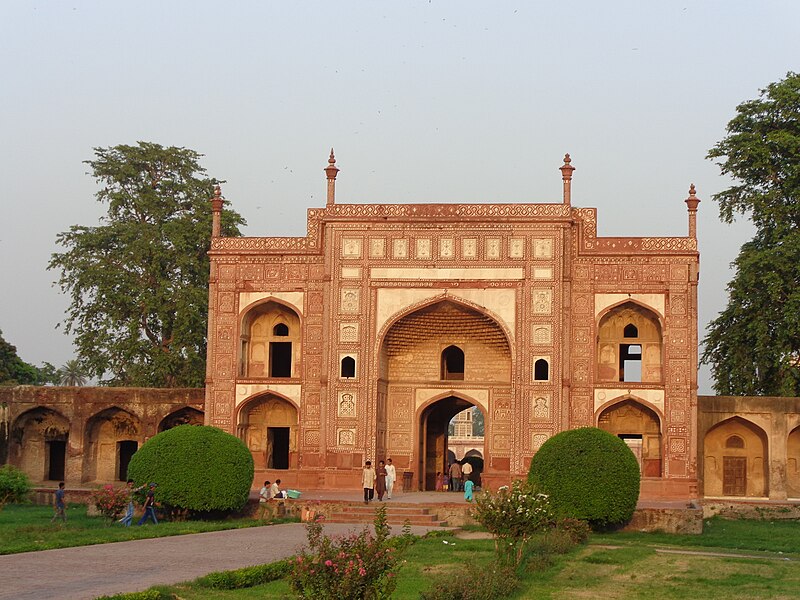
Image by Hamza440 from
Top 10 Astonishing Facts about Akbari Sarai
The Akbari Sarai (Palace of Akbar) is a large oblong-shaped courtyard situated between Jahangir’s Tomb and Asif Khan’s Tomb in Lahore city in Punjab province of Pakistan. This unique Mughal-era structure was built in 1637 to host travellers and caretakers of Jahangir’s Tomb. It also served as a mail station known as dak chowki.
The court historian to the Emperor Shah Jahan, Abdul Hamid Lahori, mentioned the original name of the building as “Jilu Khana-e-Rauza (attached court of the tomb) in his book the Padshahnama. The name Akbari Sarai began during the reign of Islam Shah Suri in the mid-1550s, not during the reign of the Mughal Emperor Akbar.
The series of tombs called Akbari Sarai is situated between the tombs of Jahangir and Asif Khan. The open courtyard of the Sarai is flanked on all sides by a raised terrace with rows of 180 small cells. The corners of the Sarai are graced by burjis.
The Sarai has two stately gateways in the Mughal style, one on the north and the other on the south. These gateways are beautifully decorated with frescoes. Here are 10 more astonishing facts about Akbari Sarai.
1. Akbari Sarai was a State Guesthouse

mage by Meemjee from
The Sarai actually served as a state guesthouse and was administered by a Shahna (official caretaker) and several assistants. It also had a physician and a resident baker. Fodder for animals, hot and cold water, and bedsteads were provided free of cost.
During the Sikh era, Maharajah Ranjit Singh converted the complex into a cantonment of one of his foreign generals called Musa Farangi. It was also used as a private residence.
This unique Mughal era structure was built in 1637 to host travellers and caretakers of Jahangir’s Tomb. It also served as mail station known as dak chowki.
2. Akbari Sarai Mughal Architecture Connection

Image by Hamza440 from
The Sarai measures 797 feet by 610 feet covering 12 acres of land and is bordered by a raised terrace containing 180 cells with front verandas and a common passage.
The Sarai has four Burjes in its corners containing elaborate chambers that feature an elliptical hall in front with a veranda and an octagonal room in the back.
It is accessible by two stately entrances on its north and on the south. Featuring typical Mughal style art, these gates are beautifully adorned with frescoes and Ghalib Kari (a network of ribs in stucco and plaster applied to curved surfaces in each archway).
Its facade’s decorative elements, the style of the structure, the size of the bricks used for construction; the Sarai and the eastern entrance gateway to the Jahangir’s tomb are believed to have been built in the same period.
3. The Akbari Sarai was originally Built for Travellers

Image by Wahhaj Ahmad from
The Akbari Sarai was originally built for travellers, as well as for caretakers of the Tomb of Jahangir. The Sarai is most notable for being the best-preserved example in Pakistan
The Sarai served as both a station for wayfarers and also a mail station known as a d�k chowkī. The Akbari Sarai was administered by an official known as Sh�hn� with several assistant caretakers.
The 180 cells around the courtyard were used as living areas and storage spaces for luggage, weapons and other gear carried by visitors to the tombs.
Fodder for animals, hot and cold water and bedsteads were provided free of charge. The Sarai also had a physician, as well as a resident baker and a water well located outside of the walls of the Sarai. Like many Sarais, a small bazaar may have run between each gate.
4. Akbari Sarai name was Adopted During the Reign of Islam Shah Suri
The original name of the building was “Jilu Khana-e-Rauza (attached court of the tomb) in his book the Padshahnama. The name Akbari Sarai began during the reign of Islam Shah Suri in the mid-1550s, not during the reign of the Mughal Emperor Akbar.
The mosque at the Sarai dates from the Suri period, though the cells which line the complex and its gateways date from the Shah Jahan period in the mid-1600s.
5. Akbari Sarai was Taken Over by Various Armies

Image by Zahidali219 from
Maharajah Ranjit Singh converted the complex into a cantonment for one of his foreign generals, Musa Farangi, who used to live there with his platoon. The site was severely damaged during the British era when it was used as a rail depot following the construction of the nearby rail line.
Unfortunately, it was also plundered and damaged during the Sikh period, with precious materials and artefacts taken and used in the construction of the Golden Temple at Amritsar. It has been painstakingly restored today and gleams with a stately beauty.
6. There are a series of Tombs at Akbari Sarai
The series of tombs called Akbari Sarai, is situated between the tombs of Jahangir and Asif Khan. The corners of the Sarai are graced by burjis. The Sarai has two stately gateways of the Mughal style, one on the north and the other on the south.
These gateways are beautifully decorated with frescoes and ghalibkari. From the decorative elements, the style of the structure and the size of bricks, the Sarai and the entrance to the tomb seem to have been built in the same period and are apparently parts of the complex of Shah Jahan’s Tomb.
7. Akbari Sarai is on the tentative list of UNESCO World Heritage Sites

Image by King Eliot from
The Akbari Sarai, along with the Tombs of Jahangir and Asif Khan, was added on the tentative list of UNESCO World Heritage Sites in 1993.
A World Heritage Site is a landmark or area with legal protection by an international convention administered by the United Nations Educational, Scientific and Cultural Organization. World Heritage Sites are designated by UNESCO for having cultural, historical, scientific or other forms of significance.
8. Akbari Sarai is Located in Burhanpur
Burhanpur is a city in the Indian state of Madhya Pradesh. It is the administrative seat of Burhanpur District. It is situated on the north bank of the Tapti River and southwest of the state’s capital city of Bhopal. The city is a Municipal Corporation.
Burhanpur was an important city under the Rashtrakuta Dynasty from 753–982. Excavations of the Tapti River and Asirgarh Fort have discovered many coins, goddess idols and temples from the prehistoric era. However, Burhanpur came to prominence during the medieval period.
9. Akbari Sarai had a Mosque

Image by Kumail Hasan from
Akbari Sarai is so beautiful and spread in a large area with so many rooms with 3 main doors and one masjid. 2 doors are used for entrance and exit the Sarai, 1 door is the entrance the jahangir tomb and a small door is the entrance the Asif khan tomb.
The central area of Sarai is divided into 4 small lawns like charbahar garden. A big and beautiful mosque also build in this Sarai but most parts of this mosque collapsed but it is still used for prayers.
10. Akbari Sarai Location
: Akbari Serai, Shahdara Town, Shahdara, Lahore, Punjab, Pakistan
Planning a trip to Â鶹APP ? Get ready !
These are ´¡³¾²¹³ú´Ç²Ô’²õÌý²ú±ð²õ³Ù-²õ±ð±ô±ô¾±²Ô²µÂ travel products that you may need for coming to Â鶹APP.
Bookstore
- The best travel book : Rick Steves – Â鶹APP 2023 –Ìý
- Fodor’s Â鶹APP 2024 –Ìý
Travel Gear
- Venture Pal Lightweight Backpack –Ìý
- Samsonite Winfield 2 28″ Luggage –Ìý
- Swig Savvy’s Stainless Steel Insulated Water Bottle –Ìý
We sometimes read this list just to find out what new travel products people are buying.


