
 English


Roy Lichtenstein. Photo by Nationaal Archief.
Top 10 Facts about Roy Lichtenstein
Roy Lichtenstein, an American artist, was a key figure in the Pop Art movement of the 1950s. His work was inspired by comic strips, advertisements, and parodied elements of popular culture. Later in his career, Lichtenstein broadened his visual references to everyday objects, art styles, and art historical elements. His art style has become one of the most recognizable in art history.
Roy Lichtenstein was not like most people, and he did not consider painting to be a ridiculous profession. He worked in his studio for ten hours a day until his death at the age of 73. Lichtenstein rose to fame and success during his lifetime alongside Andy Warhol and Jasper Johns. In the 1960s, he was a pioneer of Pop Art.
1. Roy Lichtenstein was born in New York
Roy Lichtenstein was born in the city so beautiful that it was named twice: New York, New York. Like many other artists, Lichtenstein was drawn to New York by its magnetic pull. He left New York after graduating from an Upper West Side preparatory school to pursue a degree in fine arts at Ohio State University. World War II interrupted his studies, transporting him across the Atlantic to England, France, Belgium, and Germany with the army.
Before moving to Cleveland, he completed additional studies in Columbus and a brief teaching position at OSU. He got closer and closer to his hometown as time passed. He first moved to up state New York to teach at SUNY Oswego, then to New Jersey to teach at Rutgers before returning to Manhattan across the Hudson River.
2. Roy Lichtenstein had a variety of interests
During his childhood, Lichtenstein developed an interest in the arts and creativity, and he was a frequent visitor to New York’s Museum of Modern Art (MoMA). He had a lifelong fascination with aeroplanes and spent a lot of time building miniature versions of them. He then trained as a pilot for World War II, but never flew a combat mission.
Not only that, but he was also musically gifted, having studied the piano and clarinet and forming a jazz band in high school. During this time, he experimented with drawing and created several still lives of his instruments.
3. Lichtenstein was an accomplished sculptor

Brushstrokes by Roy Lichtenstein – Portland Art Museum (2013). Photo by Another Believer.
Lichtenstein created sculptures in addition to paintings. Lamp and Barcelona Head, which he created for the 1992 Olympic Games in Barcelona, are two of his most well-known sculptural works. This piece incorporates elements of his signature style, such as Ben-Day dots and vibrant colours.
4. His signature style was inspired by his son

Barcelona Head by Roy Lichtenstein. Photo by Bert Kaufmann.
Lichtenstein’s work is notable for its use of Ben-Day dots, as well as a comic-inspired aesthetic and iconography. Look Mickey (1961), his first work in his signature style, features the characters Mickey Mouse and Donald Duck.
According to legend, Lichtenstein created the painting after his son compared his work to a Mickey Mouse comic book, saying, “I bet you can’t paint as good as that, eh, Dad?”
5. Lichtenstein was the inventor of the rotating easel
He claimed that the subjects of his works were less important to him than the visual aspects of them. He was very concerned with the creation process and the style of his paintings. To help with this, he designed an easel that could be rotated to easily reach different angles of an artwork.
This allowed him to paint from any angle and helped him keep his monumental style pieces consistent. His easel design was the first of its kind, serving as the prototype for the many different types of rotating easels that are available today.
6. His most expensive work was created in the Cubist style
While Lichtenstein was best known for his signature comic-book style and Ben-Day dots, he also created notable works in other genres. His Cubist-style painting Woman with Flowered Hat (1963) sold for an astounding $56.1 million in 2013, making it his most expensive piece ever purchased.
It was inspired by Pablo Picasso’s Dora Maar Au chat (1941) and was painted in a typical Cubist composition. However, its primary colour palette is typical of Lichtenstein’s other comic-inspired works.
7. Lichtenstein produced a film
In Los Angeles, Lichtenstein collaborated with filmmaker Joel Freedman to produce Three Landscapes (1971). The film was a three-screen installation that featured painting, comic strips, and collage, and it focused on a series of landscape paintings by Lichtenstein created between 1964 and 1966. It first aired at LACMA’s Art and Technology show in 1971, and it was re-exhibited in 2011 at the Whitney Museum in its original 35 mm format, and then again in 2013 at the Tate Modern.
8. His work expanded later in his career

Exhibition Roy Lichtenstein in Stedelijk Museum. Photo by Ron Kroon.
Lichtenstein began experimenting with various artistic mediums in the 1960s. Rowlux and Plexiglass were among the external materials and elements he used in his work. He also worked in ceramics and sculpture, creating large-scale freestanding brushstroke pieces in a cartoon style. His work’s subject was also more varied. He started making nudes in his signature style.
He also recreated masterpieces by artists such as Paul Cézanne, Piet Mondrian, and Pablo Picasso. These were created in his technique and colour palette, with stylistic details reminiscent of his other works. In the 1970s and 1980s, Lichtenstein was also associated with the Pop-Surrealism movement. Among these are his piece Pow Wow (1979), as well as a series of paintings created between 1979 and 1981 that feature Surrealist elements and Native American thematic inspiration.
9. Critics were harsh on Lichtenstein’s work

“Little Big Painting”, by Roy Lichtenstein. Photo by Tim Evanson.
His work existed between highbrow and lowbrow art, navigating uncharted territory by incorporating elements of popular culture. This was highly controversial, and he was labelled a plagiarist rather than an artist by art critics and the public. LIFE magazine published an inflammatory profile of the artist titled “Is He the Worst Artist in America?”
However, Lichtenstein defended his artistic style, claiming that his comic-book influences were what made his pieces popular with the public. “The closer my work is to the original, the more threatening and critical the content,” he explained.
10. Roy Lichtenstein has received commissions from all over the world
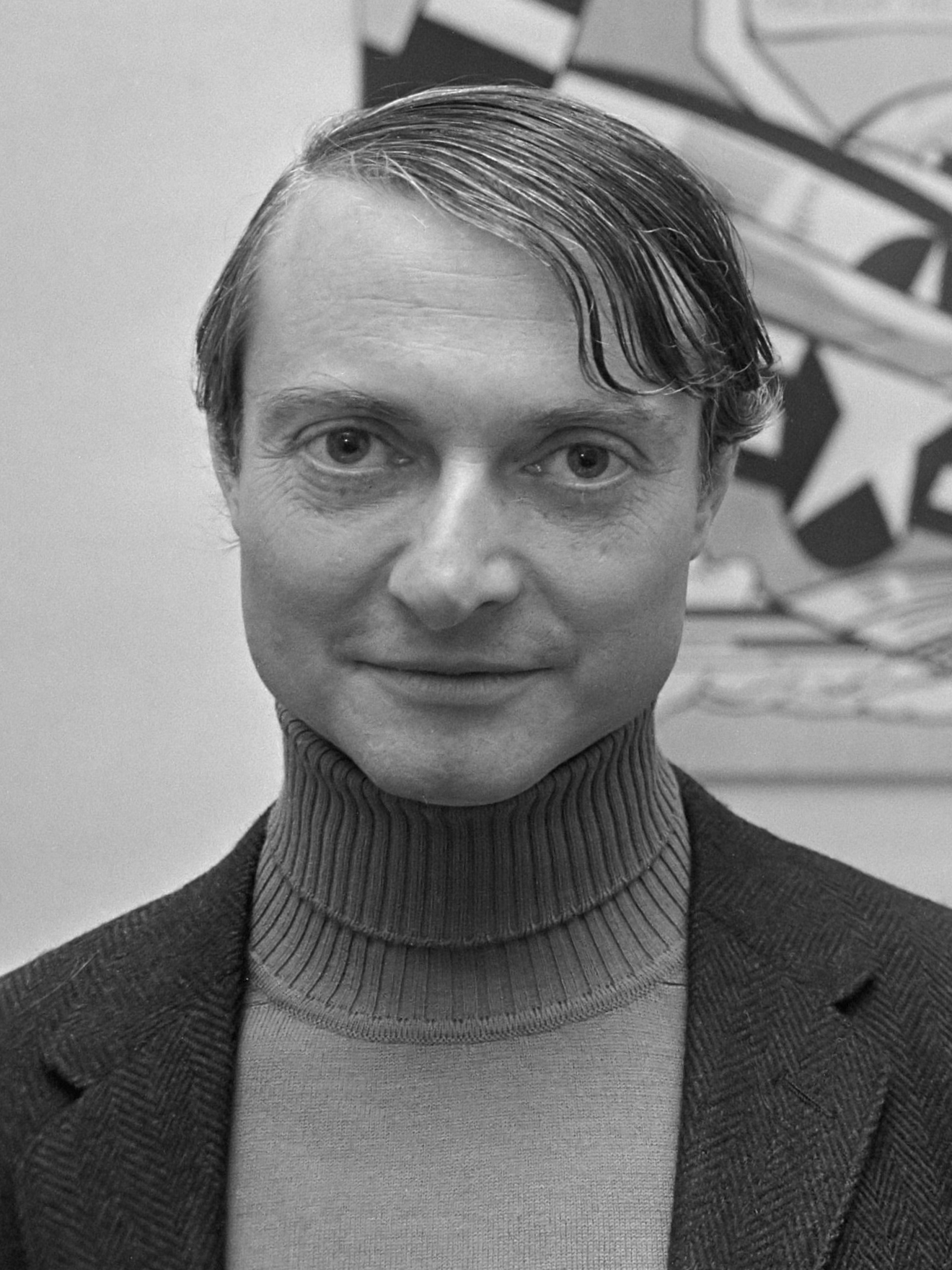
Roy Lichtenstein. Photo by Eric Koch. Wikimedia Commons
The DreamWorks Records logo (which he vowed would be his first and last corporate logo), a five-story mural at the Equitable Center in New York, and painting a Group 5 Racing Version of the BMW 320i are among his more notable commissions. He has also finished commissions in Amsterdam, Barcelona, Japan, and other places.
Planning a trip to Â鶹APP ? Get ready !
These are ´¡³¾²¹³ú´Ç²Ô’²õÌý²ú±ð²õ³Ù-²õ±ð±ô±ô¾±²Ô²µÂ travel products that you may need for coming to Â鶹APP.
Bookstore
- The best travel book : Rick Steves – Â鶹APP 2023 –Ìý
- Fodor’s Â鶹APP 2024 –Ìý
Travel Gear
- Venture Pal Lightweight Backpack –Ìý
- Samsonite Winfield 2 28″ Luggage –Ìý
- Swig Savvy’s Stainless Steel Insulated Water Bottle –Ìý
We sometimes read this list just to find out what new travel products people are buying.


