
 English


Jan van Gilse. Photo by Digital Library for Dutch Literature.
Top 10 Fascinating Facts about Jan van Gilse
Jan van Gilse, who grew up in a theological family, demonstrated an early talent for piano playing and composition. He studied at the Cologne Conservatory beginning in 1897. When his teacher, Franz Wüllner, died in 1902, he continued his studies in Berlin with Engelbert Humperdinck. He studied in Italy from 1909 to 1911. Van Gilse received the Beethoven-Haus Prize in Bonn in 1901 for his; in 1906, he received the Michael Beer Prize for his (‘Elevation’; for soprano solo and orchestra).
Van Gilse’s early style is heavily influenced by German late romanticism. However, after about 1920, it becomes more modernist. Thijl (1940), one of his final works and a completely unique conception, is widely regarded as his masterpiece and arguably the most important opera in Dutch musical history. German occupiers attempted to destroy all of Van Gilse’s work, but his collaborators stopped them.
1. Van Gilse developed an interest in conducting in addition to his passion in composing
He began his career at the Bremen Opera, which was followed by positions in Munich and Amsterdam. He returned to the Netherlands after the outbreak of the First World War made travel difficult.
Van Gilse was the conductor of the Utrecht Municipal Orchestra from 1917 to 1922. (Utrechtsch Stedelijk Orkest). After a disagreement with the orchestra’s board of directors, Van Gilse resigned in 1921. Willem Pijper, a composer and music critic, had been attacking Van Gilse in the daily Utrechts Dagblad for some time, with increasingly vicious attacks. Van Gilse’s request to deny Pijper access to concerts was so long delayed that he lost faith and resigned. Following that, the board denied him a farewell concert.
2. He became actively involved in the anti-German resistance movement in the Netherlands
During World War II, Van Gilse became actively involved in the Dutch resistance movement against German occupation. Both of his sons were resistance fighters who were killed by the occupiers before Van Gilse died (probably from pneumonia) in the autumn of 1944. He was buried in an unmarked grave outside the village of Oegstgeest to protect his shelter.
3. In February 1917, Jan van Gilse was appointed conductor of the Utrecht Municipal Orchestra (USO)

A conductor. Photo by Andrea Zanenga.
In Utrecht, he demonstrated not only musical but also organizational abilities. Because of his tireless efforts, the USO became an independent orchestral institution, distinct from the Tivoli Society, which had run the orchestra for many years while never losing sight of its own interests. Jan van Gilse owed the members of the USO not only better remuneration, but also more social security and a pension fund.
Van Gilse was able to raise the USO to a high musical and technical level, and he was well-liked by orchestra members and audiences alike. He was no longer mentally up to the task due to the extremely harsh and often unreasonable reviews of the young composer Willem Pijper, especially since the USO board did nothing to help him.
4. Van Gilse was deeply committed to improving the orchestra members’ living and working conditions
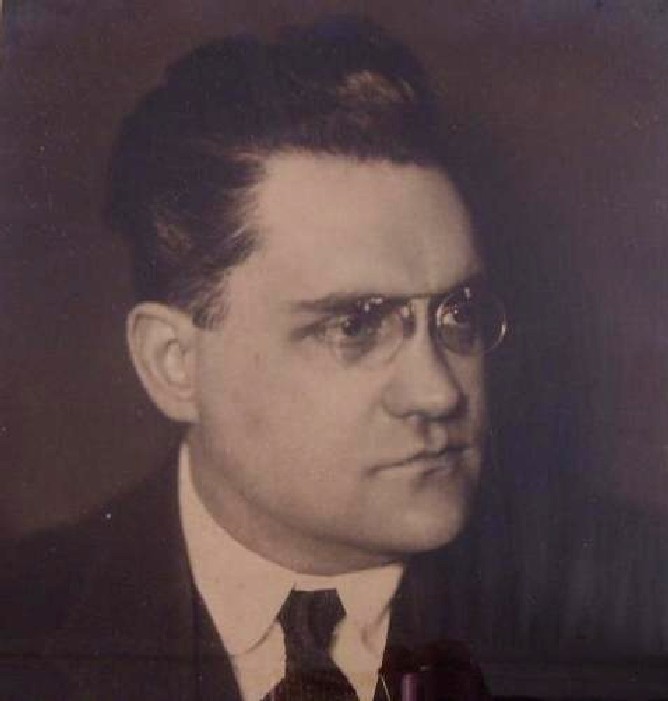
Jan van Gilse. Photo by
He established a pension fund for musicians and deposited the first thousand guilders. He also broke the contract with the venue’s owner, who had shamelessly exploited the orchestra, making both friends and enemies. Willem Pijper, a composer who was initially grateful for the opportunities provided by Van Gilse, later became a bitter adversary.
Pijper, a popular newspaper critic, systematically demolished van Gilse’s conducting. Van Gilse demanded that Pijper be barred from performing at his concerts, but the orchestral board remained silent. Van Gilse resigned, feeling abandoned and disappointed.
5. Jan Van Gilse had publicly stated his opposition to National Socialism severally

Jan Van Gilse. Photo by Heinrich Martin Krabbé.
He was threatened with incarceration. He was warned about a German raid on his Amsterdam home in February 1942 and had to flee. From then on, he and his wife had a difficult life, fleeing from one hiding place to the next. Maarten van Gilse, the youngest son, was killed by an occupying force bullet on October 1, 1943, and his eldest son Janrik was killed in the same way on March 28, 1944. Jan van Gilse has never fully recovered from these blows.
He became seriously ill while hiding out with composer Rudolf Escher in Oegstgeest. He died on September 8, 1944, after succumbing to a malignant disease. To avoid endangering others, they buried him under a different name. Janrik, his eldest son, died in the same manner on March 28, 1944. Jan van Gilse has never fully recovered from these blows.
6. His musical talent was discovered early on, but those around him were uninterested
Jan composed his first piece, a funeral march for piano, around 1889; he was already able to play waltzes and opera melodies he heard during summer concerts of civic guard music at the Rotterdam Zoo on the piano. Mrs. Kindler-Hanken taught him piano, F. Blumentritt taught him music theory, and he learned to play the violin at Rotterdam’s Toonkunst music school.
After graduating from high school, he took an entrance exam for the Cologne Conservatory, which was then led by the internationally renowned Franz Wüllner. He studied conducting and composition with Franz Wüllner and piano with Max van de Sandt at this university.
7. In 1933, he returned to Utrecht to take over as director of the conservatory and music school
Jan van Gilse. Photo by Digital Library for Dutch Literature.
Jan van Gilse fled Germany when Hitler came to power because he did not want to live or work under such a regime. In 1933, he returned to Utrecht to take over as director of the conservatory and music school. He resigned in 1937 to devote himself entirely to composing after experiencing numerous disappointments in these positions that prevented him from realizing his ideas. The first plans for a new opera emerged at the end of 1937.
The dramatic legend ‘Thijl’ would become his most famous work. The text is based on Charles de Coster’s book Uilenspiegel and Lamme Goedzak’s heroic, cheerful, and glorious deeds in Flanders and elsewhere. Hendrik composed the libretto.
8. Richard Strauss and Max Reger continue to influence Jan van Gilse’s early works
Jan van Gilse’s early works continue to influence the great exponents of German late romanticism, Richard Strauss and Max Reger. Van Gilse’s work bears far fewer similarities to Mahler than is commonly assumed, and the epithet “Mahler epigone” is also incorrect. The last two movements of the fourth symphony signal the beginning of a tendency toward an individual style. This is accomplished with the previously mentioned Dance Sketches (1926). From 1923 (‘Gardener songs’), impressionistic influences, particularly from Ravel, enter his music, which he processes in his own way.
His works were sometimes ‘thinner’ instrumented after this point, resulting in a more transparent sound image. Despite stylistic innovations in his music, Van Gilse was never able to completely free himself from the ‘heavy German’ instrumentation he had learned during his study years in Cologne.
9. Jan Van Gulise was known as trio for flute, violin and viola
Van Gilse’s Trio for Flute, Violin, and Viola is a work strongly influenced by late German Romanticism and late French Impressionism. It is an excellent opportunity for the contemporary flutist, whose repertoire does not include many chamber music pieces in this late Romantic style. The Trio for Flute, Violin, and Viola is a highly substantive work in the flutist’s late Romantic repertoire, saturated in sumptuous chromaticism and featuring sultry melodic lines (and lasting over sixteen minutes).
10. To avoid endangering others, they buried him under a different name

The grave of Jan van Gilse and his wife Ada nee Hooijer in the Calvinist Cemetery of Oegstgeest. Photo by Author Harvey Kneeslapper.
Janrik, his eldest son, died in the same manner on March 28, 1944. Jan van Gilse has never fully recovered from these blows. He became seriously ill while hiding out with composer Rudolf Escher in Oegstgeest. He died on September 8, 1944, after succumbing to a malignant disease. To avoid endangering others, they buried him under a different name.
Planning a trip to Â鶹APP ? Get ready !
These are ´¡³¾²¹³ú´Ç²Ô’²õÌý²ú±ð²õ³Ù-²õ±ð±ô±ô¾±²Ô²µÂ travel products that you may need for coming to Â鶹APP.
Bookstore
- The best travel book : Rick Steves – Â鶹APP 2023 –Ìý
- Fodor’s Â鶹APP 2024 –Ìý
Travel Gear
- Venture Pal Lightweight Backpack –Ìý
- Samsonite Winfield 2 28″ Luggage –Ìý
- Swig Savvy’s Stainless Steel Insulated Water Bottle –Ìý
We sometimes read this list just to find out what new travel products people are buying.


