
 English


Pancho Villa. Photo from
Top 10 Interesting Facts about Pancho Villa
It’s easy to see why Pancho Villa is one of the most (if not the most) famous Mexican historical figures known outside of Mexico. He not only decided to mess with the US during the Mexican Revolution, but he also possessed all the characteristics associated with Mexican culture.
He was a manly churro who was skilled at horseback riding and shooting. Likewise, he wore an unforgettable outfit, complete with his signature sombrero and crossed bandoliers, not to mention his iconic mustache.
Overall, his image embodies long-held stereotypes of Mexicans, but who was this “bandit” who attacked the United States and essentially got away with it?
1. He got basic education from a local church-run school
Francisco “Pancho” Villa, born José Doroteo Arango Arámbula, June 5, 1878 – July 20, 1923. He was a Mexican Revolutionary War general. He was a pivotal figure in the revolutionary movement that deposed President Porfirio Daz and installed Francisco I. Madero as President in 1911. When Madero was deposed in February 1913 by a coup led by General Victoriano Huerta, he led anti-Huerta forces in the Constitutionalist Army 1913-14.
He received some education as a child from a local church-run school, but he was only proficient in basic literacy. His father, Agustn Arango, was a sharecropper, and his mother, Micaela Arámbula. He grew up on the Rancho de la Coyotada, one of the state’s largest haciendas.
After his father died, he dropped out of school and worked as a sharecropper, muleskinner (arriero), butcher, bricklayer, and foreman for a U.S. railway company.
2. Pancho Villa was his nickname

Pancho Villa. Photo by National Photo Company Collection.
“His name is derived from Saint Francis of Assisi and was bestowed upon him by his neighbors,” says John Mason Hart, Moores professor of history at the University of Houston and one of the country’s foremost Mexican scholars, via email said: “It means village protector.” His friends referred to him as La Cucaracha, or “the cockroach.” His real name was José Doroteo Arango Arámbula.
3. He was never interested in the presidential sit
Despite a famous photograph of him in the presidential chair, Villa had no desire to be President of Mexico. He supported Francisco Madero and wanted the revolution to succeed in order to depose Dictator Porfirio DÃaz. Villa never supported any other presidential candidate wholeheartedly after Madero died. He hoped that someone suitable would appear so that he, Villa, could serve as a senior military officer.
4. He fled to the United States after escaping from a Mexican prison
Madero appointed Victoriano Huerta as General of the Federal Army, and under his command, Villa won even more battles. However, Villa refused to recognize Huerta as his true leader, which irritated Huerta.
The latter sought vengeance on the “Centaur of the North” (as Villa was known) and accused him of stealing a fine horse. In 1912, he was imprisoned and escaped in December of that year.
Then he fled to the United States to raise his own army. When Madero was assassinated, Villa decided to return to Mexico and pursue the traitor.
5. He was a provisional governor for four weeks

Pancho Villa. Photo by National Photo Company Collection.
Villa was a brilliant battlefield tactician, which translated into political support. Local military commanders elected him provisional governor of the state of Chihuahua in 1913, against the wishes of First Chief Carranza, who preferred Manuel Chao.
As Governor of Chihuahua, Villa added more experienced generals to his military staff, including Toribio Ortega, Porfirio Talamantes, and Calixto Contreras, and achieved greater success than ever before. Pérez Rul, Villa’s secretary, divided his army into two groups, one led by Ortega, Contreras, and Orestes Pereira and the other by Ortega, Contreras, and Orestes Pereira and Severianco Ceniceros, Talamantes and Contreras’ former deputy. After four weeks as governor, Villa resigned at the suggestion of Carranza, leaving Manuel Chao in charge.
6. Villa printed his own currency
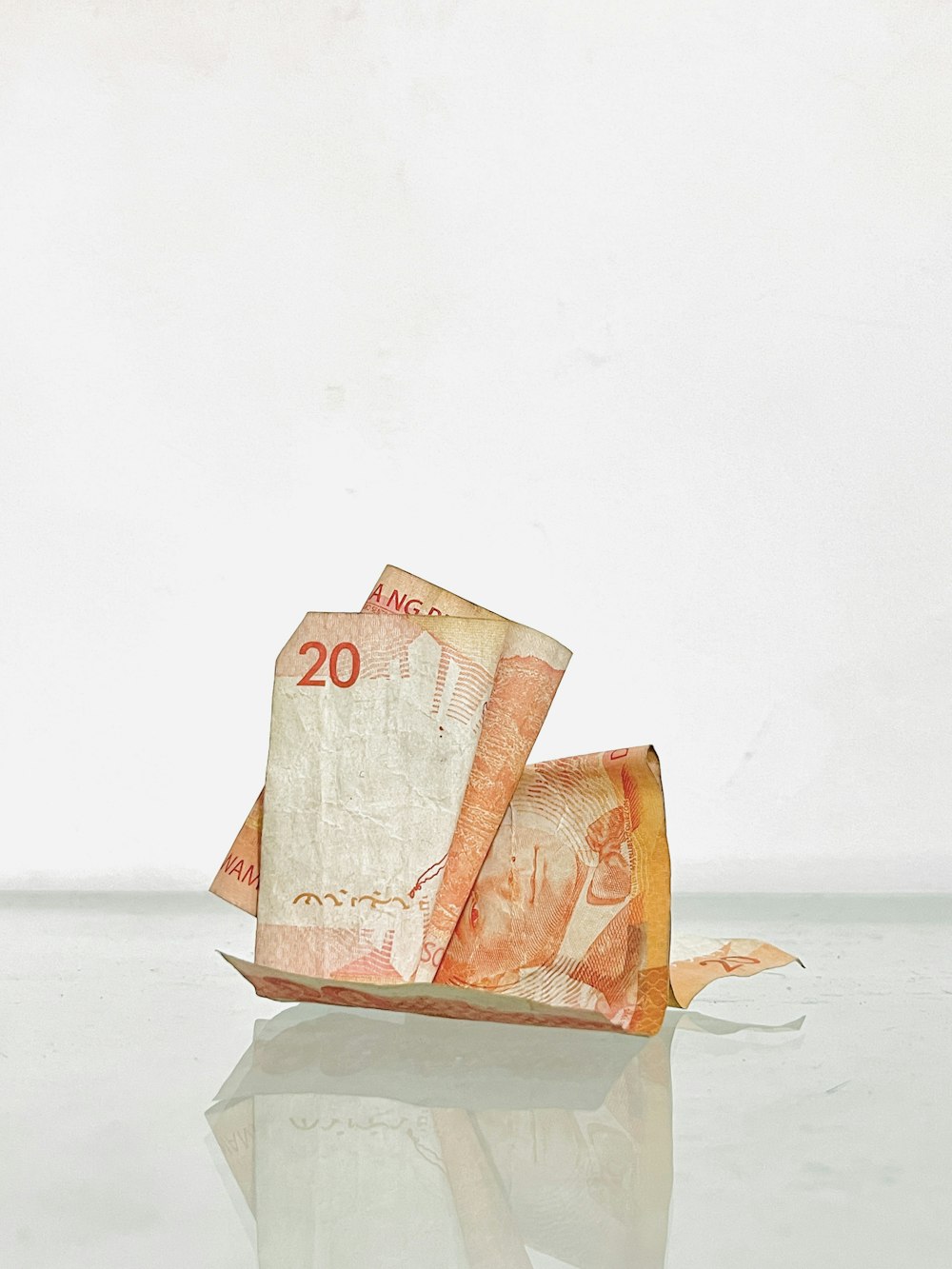
Pesos. Photo by Ethan M.
As governor of Chihuahua, Villa used various methods to raise funds for a southern drive against Huerta’s Federal Army. He issued his own currency and declared that it could be traded and accepted on the same terms as gold Mexican pesos.
He compelled the wealthy to make loans in order to fund the revolutionary war machine. Not only that, but he seized gold from several banks and held a member of the Banco Minero’s owning family, the wealthy Terrazas clan, hostage until the location of the bank’s hidden gold reserves was revealed.
7. Villa created a large army known as the Division del Norte

An army. Photo by British Library.
Villa expanded and modernized his forces, purchasing draft animals, cavalry horses, arms, ammunition, mobile hospital facilities (railroad cars and horse ambulances staffed by Mexican and foreign volunteer doctors known as Servicio sanitario), and other supplies, as well as rebuilding the railroad south of Chihuahua City.
He also gathered fighters from Chihuahua and Durango to form the Division del Norte (Division of the North), Mexico’s most powerful and feared military unit. Villa’s troops and artillery were transported south by the rebuilt railroad, where he defeated Federal Army forces in a series of battles at Gómez Palacio, Torreón, and eventually at the heart of Huerta’s regime.
8. Villa’s army was defeated badly in 1915
Carranza dispatched his most capable general, Obregón, north to defeat Villa in a series of battles. Villa and Obregón first fought at the Battle of Celaya in the Bajo from 6 to 15 April 1915, and Villa’s army was severely defeated, with 4,000 killed and 6,000 captured.
Obregón engaged Villa again at the Battle of Trinidad, which took place between April 29 and June 5, 1915, and caused Villa yet another massive loss. Villa crossed into Sonora, the main stronghold of Obregón and Carranza’s armies, in October 1915, with the intention of crushing Carranza’s regime. Carranza, on the other hand, had reinforced Sonora, and Villa was defeated once more.
9. He negotiated a peace settlement following the death of his aide
Pancho Villa. Photo from
Carranza, along with his top advisers and supporters, was assassinated on May 21, 1920, by supporters of lvaro Obregón. Villa was ready to negotiate a peace settlement and retire.
Villa was finally able to send a telegram to Mexican interim President Adolfo de la Huerta on July 22, 1920, stating that he recognized De la Huerta’s presidency and requested amnesty. De la Huerta met with Villa six days later and negotiated a peace settlement.
10. Pancho Villa was assassinated
Villa was assassinated in an ambush while visiting Parral on July 20, 1923, most likely on the orders of political foes Plutarco Elas Calles and President Alvaro Obregón.
He frequently traveled from his ranch to Parral for banking and other errands, where he felt safe. Villa was usually accompanied by a large entourage of armed Dorados, or bodyguards, but for some unknown reason that day, he had gone into town with only three bodyguards and two other ranch employees.
He went to the local bank to pick up a shipment of gold to pay his Canutillo ranch employees. Villa passed by while driving back through town in his black 1919 Dodge touring car.
A pumpkin seed vendor ran toward Villa’s car and shouted, “Viva Villa!” This signaled a group of seven riflemen, who then appeared in the middle of the road and fired more than 40 rounds into the car. Nine dumdum bullets, which are normally used for hunting big game, hit Villa in the head and upper chest during the fusillade, killing him instantly.
Planning a trip to Â鶹APP ? Get ready !
These are ´¡³¾²¹³ú´Ç²Ô’²õÌý²ú±ð²õ³Ù-²õ±ð±ô±ô¾±²Ô²µÂ travel products that you may need for coming to Â鶹APP.
Bookstore
- The best travel book : Rick Steves – Â鶹APP 2023 –Ìý
- Fodor’s Â鶹APP 2024 –Ìý
Travel Gear
- Venture Pal Lightweight Backpack –Ìý
- Samsonite Winfield 2 28″ Luggage –Ìý
- Swig Savvy’s Stainless Steel Insulated Water Bottle –Ìý
We sometimes read this list just to find out what new travel products people are buying.


