
 English


Flag of Malawi. Photo by Central Intelligence Agency- Wikimedia commons
Top 10 Most Famous People from Malawi
Malawi, a landlocked country in southeastern Africa, is distinguished by its highlands divided by the Great Rift Valley and the massive Lake Malawi. The lake’s southern end is part of Lake Malawi National Park, which is home to a variety of wildlife, including colorful fish, baboons and its clear waters are famous for diving and boating. The beach resorts of Peninsular Cape Maclear are well-known.
1.Frank Chipasula
Frank Mkalawile Chipasula was born October 16, 1949. He is a Malawian writer, editor and university professor who has been described as “easily one of the finest of the famous authors in the dialogue of Malawian letters.”
Frank Chipasula was born in Luanshya, Northern Rhodesia, he went to St. Peter’s Primary School on Likoma Island, Soche Hill Day Secondary School, Malosa Secondary School, Chancellor College, University of Malawi and finally, the Great East Road Campus of the University of Zambia, Lusaka, where he graduated in exile with a B.A. in 1976.
Chipasula worked as a freelance presenter for the Malawi Broadcasting Corporation before leaving Malawi to study English and French at university.
Following his graduation from the University of Zambia, he worked as an English Editor for the National Education Company of Zambia, his first publishers, in Lusaka.
As a result of the Hastings Banda government, Chipasula went into exile in the United States in 1978, where he earned an M.A. in Creative Writing at Brown University, a second M.A. in African American Studies at Yale University, and a Ph.D in English literature from Brown University in 1987.
Chipasula, a former lecturer of Black Studies at the University of Nebraska at Omaha and Howard University, has also served as the Malawian embassy’s education attache in Washington, D.C. Visions and Reflections (1972), his first book, is the first ever published poetry volume in English by a Malawian writer. In addition to his popularly anthologized poetry, he has composed radio plays and fiction.
Chipasula has been married to Stella, a retired schoolteacher whom he met in Mulanje, Malawi, in 1972, since January 10, 1976. James Masauko Mgeni Akuzike and Helen Chipo are their two grown children.
2.Joyce Banda
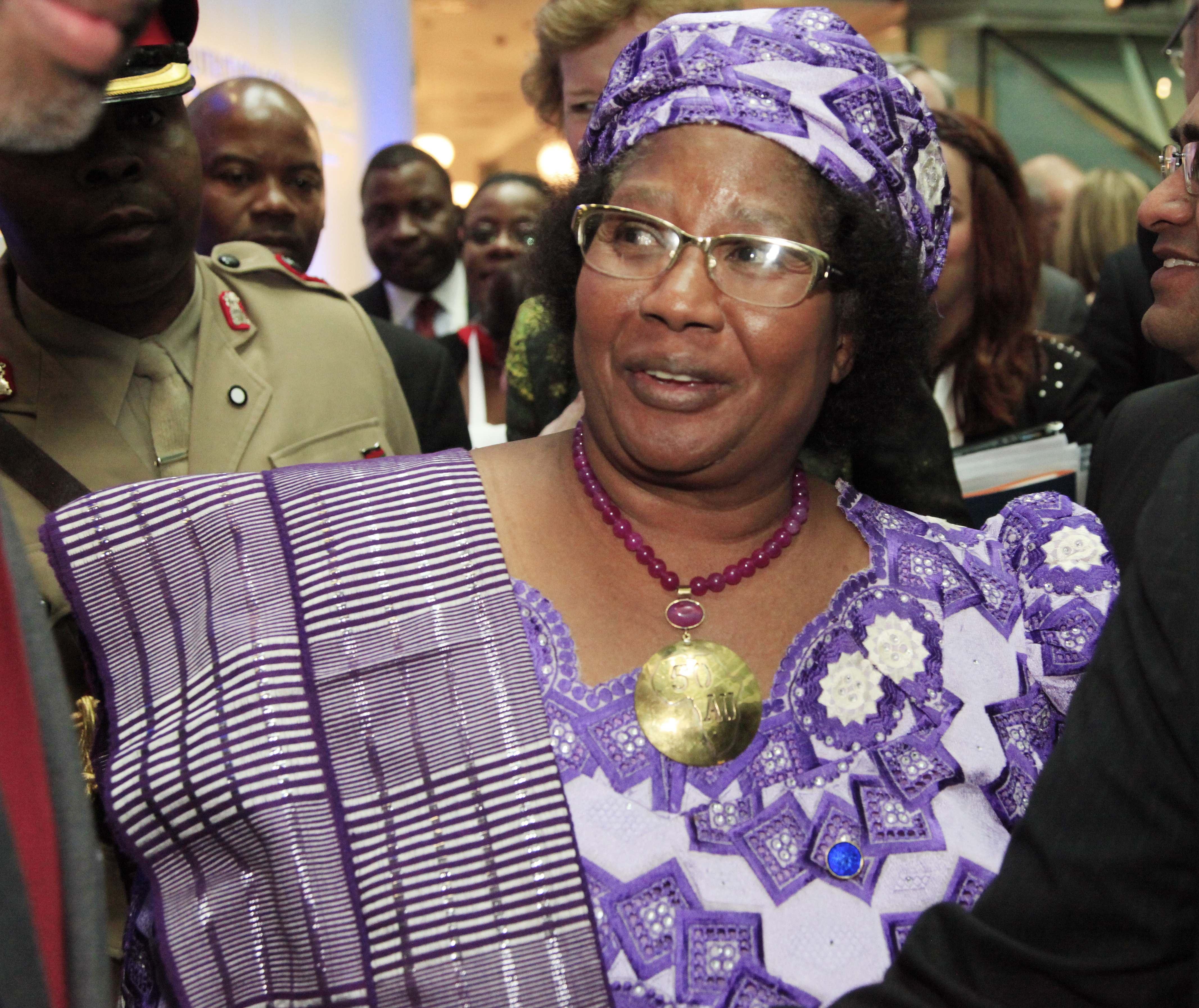
Malawi president Joyce Banda at the Nutrition for Growth conference in London, June 8, 2013. Photo by DFID – UK Department for International Development- Wikimedia commons
Her Excellency Dr. Joyce Banda was the President of the Republic of Malawi, as well as a business lady, advocator, politician and benefactor from 2012 to 2014. She was Malawi’s and Africa’s second female president.
Her Excellency Dr. Joyce Banda, named Africa’s most effectual woman by Forbes Magazine for two years in a row and one of the world’s most influential women. She is a leader for the rights of women, children, the disabled and other disadvantaged communities.
Dr. Banda worked as a Member of Parliament, Minister of Gender and Child Welfare, Foreign Minister, and Vice President of the Republic of Malawi before becoming President of Malawi.
Dr. Banda actively promoted the implementation of the Prevention of Domestic Violence Bill in 2006, which offers a legislative structure for the abolition and avoidance of all shapes of violence against women and girls, while working as the Minister of Gender and Child Welfare.
Her Excellency Dr. Banda is a great proponent for women’s and girls’ freedom and empowerment, as well as a well-known human rights activist. She has received more than 15 international honors, such as the “Hunger Project Africa Prize for Leadership for the Sustainable End of Hunger,” which she shared with President Joaquim Chissano of Mozambique in 1997.
She established the Joyce Banda Foundation International, which oversees projects ranging from women’s empowerment to orphan learning.
Her Excellency Dr. Joyce Banda was crucial to the creation of groups such as the African Federation of Women Entrepreneurs (AFWE), which is now active in 41 African countries; the Council for the Economic Empowerment of Women in Africa (CEEWA); and the American & African Business Women’s Alliance (AABWA), of which she worked as First President.
Her Highness Dr. Banda is a member of several international organizations. These include UNIFEM’s Executive Advisory Committee, the Global Leaders Council for Reproductive Health, and the Scientific Advisory Board for Harvard Medical School’s program in Global Health and Social Change.
3.Attati Mpakati
Attati Mpakati died 24 March 1983 in Harare, Zimbabwe. He was a Malawian dissident and – following the death of Yatuta Chisiza – leader of the Socialist League of Malawi (LESOMA) from 1975 until his death.
He was killed by a letter bomb while in exile in Zimbabwe. It is widely suspected that the parcel was sent by agents of President Hastings Banda of Malawi.
Mpakati had survived a similar attack in 1979, which President Banda admitted ordering.
After this first attack, which crippled both of his hands, Mkapati, together with his wife and children, first flew to London for medical treatment and then tried without success to fly to East Berlin to meet with the exiled LESOMA representative for Eastern Europe Mahoma M. Mwaungulu.
4.James Frederick Sangala
During the period of British colonial rule, James Frederick Sangala was a founding father of the Nyasaland African Congress. Sangala was given the moniker “Pyagusi,” which translates as “one who perseveres.”
Sangala was born around 1900 in a village in what is now southern Malawi’s highlands, near the Domasi Presbyterian Mission, a few years after the British established the British Central Africa Protectorate. He finished Standard VI (roughly the eighth grade in the United States) in Blantyre around 1921 and taught at Domasi for at least the next five years.
Following that, until around 1930, he earned between 30/- (shillings) and 75/- per month working as a cashier, bookkeeper and capitao for a series of businessmen (foreman).
From 1930 to 1942, he worked as a clerical assistant to successive Provincial and District Commissioners in the colonial administration. He began working as an interpreter at the High Court in 1942. He then retired and started a brick-making business.
Sangala became a leader of the Nyasaland Native Association movement in the 1930s, inspiring the creation of local representative groups. In 1943, he was a founding member and acting secretary of the Nyasaland African Congress (NAC), which sought to unite local associations and advocate for greater African rights. He served as President of the Congress from 1954 to 1956 however, was convinced to step down to give room for more prominent members pursuing complete independence.
Notwithstanding his liberal stance, Sangala was arrested numerous times in the 1950s for his pursuits. The NAC, renamed the Malawi Congress Party, was to win all of the seats in the Nyasaland elections in 1961 and to guide the nation to self-government in 1963 and gained independence as the nation of Malawi in 1964.
5.James Sangala
James Sangala was born on the 20th of August, 1986. He is a Malawian international footballer who plays defensively. In 2006, he made his first international appearance.
6.Rachel Sibande

Rachel Sibande pictured here in 2020. Photo by Yonseboy- Wikimedia commons
Rachel Sibande was born in Lilongwe, Malawi on January 9, 1986. She is a computer scientist and social entrepreneur from Malawi. She is the founder of mHub, a technology hub and incubator for entrepreneurs and innovators.
She is a technology activist, a Google Anita Borg Scholarship awardee and Forbes titled her one of Africa’s 30 most promising entrepreneurs under the age of 30.
In 18 countries, Sibande has actively promoted the creation and implementation of cutting-edge technology ideas in food production, public health, election tracking, citizen involvement, disaster management and digital banking programs. She has ten years of industry experience ranging from academia to advancement to social entrepreneurship.
7.William Kamkwamba
William Kamkwamba was born on the 5th of August, 1987. He is a Malawian writer, engineer and inventor. In 2001, he drew national attention when he constructed a wind turbine to control numerous electronic devices in his family’s house in Wimbe, 23 kilometers (14 miles) east of Kasungu, out of blue gum trees, bicycle parts and metals he found in a local scrapyard.
He has now created a solar-powered water pump that provides the first drinking water in his village, as well as two other wind turbines, the tallest of which stands at 12 meters (39 feet), and is planning two more, including one in Lilongwe, Malawi’s political capital.
8.Patrick Allen
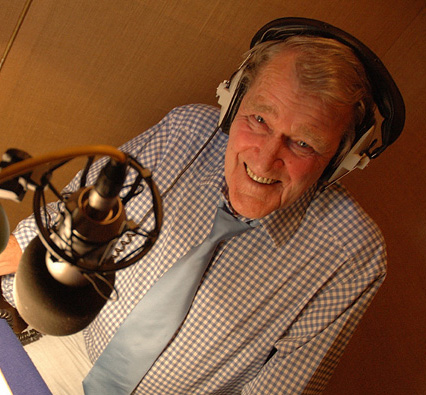
Patrick Allen during a recording session in London in March 2005. Photo by Matzeachmann- Wikimedia commons
John Keith Patrick Allen was born on March 17, 1927 and passed away on July 28, 2006. He was a well-known British actor.
Allen was born in Nyasaland (now Malawi) to a tobacco farmer father. After his parents relocated to the United Kingdom, he was displaced to Canada during WWII, where he stayed to complete his education at McGill University in Montreal.
Before returning to Britain, he worked as a local radio broadcaster and appeared in plays and documentaries on television.
9.Chakufwa Chihana
Chakufwa Chihana was born on April 23, 1939 and passed away on June 12, 2006. He was a Malawian human rights advocator, pro-democracy activist, trade unionist and political leader in his later years. In Malawi, he served as Second Vice President under President Bakili Muluzi.
He is known as the “Father of Malawian Democracy.” He led Malawi’s first underground political movement, urging President Hastings Kamuzu Banda, who had governed for three decades, to hold a referendum on representative democracy. In 1992, he received the Robert F. Kennedy Human Rights Award.
10.Justin Chimera Malewezi
Justin Chimera Malewezi was born on December 23, 1943 and passed away on April 17, 2021. He was a Malawian politician who worked as a Member of Parliament for Ntchisi North in Malawi’s Central Region.
From 1994 to 2004, he served as Malawi’s Vice President. Malewezi left the United Democratic Front in 2004 to run for the People’s Progressive Movement in the 2004 general election, where he received 2.5% of the national vote.
Planning a trip to Â鶹APP ? Get ready !
These are ´¡³¾²¹³ú´Ç²Ô’²õÌý²ú±ð²õ³Ù-²õ±ð±ô±ô¾±²Ô²µÂ travel products that you may need for coming to Â鶹APP.
Bookstore
- The best travel book : Rick Steves – Â鶹APP 2023 –Ìý
- Fodor’s Â鶹APP 2024 –Ìý
Travel Gear
- Venture Pal Lightweight Backpack –Ìý
- Samsonite Winfield 2 28″ Luggage –Ìý
- Swig Savvy’s Stainless Steel Insulated Water Bottle –Ìý
We sometimes read this list just to find out what new travel products people are buying.


