
 English

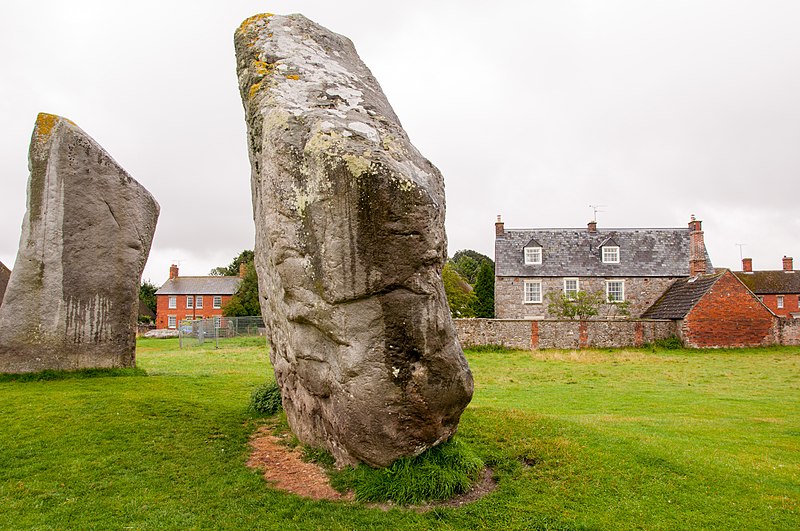
photo by Bo&Ko from
Top 10 Interesting Facts about Avebury Stone Circle
This Neolithic wonder contains three stone circles built at different times. Avebury Stone Circle is found in Wiltshire, southwest England
One of the best-known prehistoric sites in Britain, it contains the largest megalithic stone circle in the world.
It was Constructed over several hundred years in the third millennium BC, during the Neolithic, or New Stone Age.
Avebury is owned and managed by the National Trust. It has been designated a Scheduled Ancient Monument, as well as a World Heritage Site.
Here are some top 10 interesting facts about the Avebury stone circle:
1. Avebury Stone Circle was a Ceremonial Site

photo by Dgrussell8 from
Formed during the Neolithic and Bronze Ages, the Avebury Stone Circle was used as a ceremonial site. during the Neolithic and Bronze ages
According to evidence found at the site, people who built the Avebury Stone Circle used it as a peace offering to the gods who controlled the climate and other natural occurrences.
Neolithic peoples used it to worship gods in exchange for protection against natural disasters and diseases.
There are claims that in the medieval age people may have used the site to hold ceremonies associated with paganism and devil worship.
2. Avebury Stone Circle area was a Woodland

Photo by JimChampion from
Though grassland, the area around Avebury Stone Circle was covered in oak woodland. ,
As the Neolithic progressed, the woodland around Avebury and the nearby monuments receded and were replaced by grassland.
The major reason for the change can be attributed to human activity mainly farming.
The change in the soil profile was a result of environmental changes.
Historians through carbon dating and analysis of pollen conclude that most of the changes occurred at the time between 4250-4000 BC.
3. Avebury Stone Circle Construction History is Unknown

Photo by Tony Grist from
The design of the Avebury Stone Circle was a series of activities running over a long time.
Archeologists suggest that the actual construction took place between 3000 and 2400 BC.
It was not designed as a single monument but is the result of various projects that were undertaken at different times during late prehistory.
The outermost ring of the Avebury stone circle has a diameter of 1,088 feet; it is the largest stone circle in Britain.
The transformation that came with the introduction of farming in the area has been cited as a major point of evidence on why the Avebury Stone Circle was constructed.
4 . Avebury Stone Circle Abandoned During the British Iron Age
Archeologist Aubrey Burl suggested that those living during the British Iron Age had no information on the construction of the site.
Much later during the Roman Iron Age visitors came from the nearby areas and Avebury started to come back to life.
The Roman Empire had its influence felt by building a road connecting Avebury to the surrounding areas.
The easy accessibility brought more visitors and there is evidence of visitors at the time.
5. Alexander Keiller Preserved Avebury Stone Circle

Photo by Unknown Author from
Born in 1889 Alexander Keiller dedicated his life to preserving the Avebury stone circle historic site.
He was from Scotland and inherited his wealth from his family’s marmalade and confectionery business.
Keiller fought in the First World War and became an archaeologist after the war ended; He used his resources to buy 950 acres of land in Avebury for preservation.
The archaeologist founded the Morven Institute of Archaeological Research. He later sold the land to the National Trust.
Alexander Keiller died in 1955. His widow Gabrielle Keiller donated the Avebury museum and its contents to the nation in 1966.
6. Avebury Stone Circle is a UNESCO World Heritage Site

Photo by Steve Daniels from
The monuments are preserved as part of a Neolithic and Bronze Age landscape for the information they provide regarding prehistoric people’s relationship with the landscape.
Avebury Stone Circle was recognized and listed as a World Heritage Site in 1986.
This recognition extends to other sites including West Kennet Long Barrow, Silbury Hill, and Windmill Hill.
It was an important moment for England as these are some of the most significant monuments dating back to the Neolithic and Bronze Ages.
7. Avebury Stone Circle is a Tourist Site

Photo by Tony Grist from
Avebury is one of the exciting places to visit in England. Hundred of thousands of people in England and from other places around the world visit the site every year.
In 2013 Avebury was named the second-best World Heritage site in the world with an impressive score of 78%.
Important archeological finds from excavations of the stone circle are on display in the museum.
Avebury provides visitors with a rural setting, a less crowded environment, and ample space.
8. Avebury Stone Circle was Discovered by John Aubrey
On 7 January 1649 Aubrey was in the company of friends on a hunting mission when he found a village with ancient materials.
John Aubrey was a pioneer archaeologist in England; he recorded numerous megalithic and other field monuments in southern England,
He is particularly famous for his discovery and systematic examination of the Avebury henge monument.
In 1649 he discovered the megalithic remains at Avebury, which he later mapped and discussed in his important antiquarian work Monumenta Britannica.
Aubrey produced the first plan of the monuments in 1663.
9. Avebury is Drones Free Zone
Although Avebury stones circle is best viewed from above, flying drones over the site is prohibited.
Only contractors or a partner on a certified mission, are not allowed to fly a drone in areas under the management of the English Heritage.
Those allowed to do so undergo a rigorous process with the Civil Aviation Authority getting involved.
The Avebury Stone Circle and the other nearby sites are a great way to learn more about ancient civilizations in England, and viewings from the ground are still breathtaking.
10. Avebury Stone Allows visitor to Bring in their Dogs

Photo by Poliphilo from
Avebury is a welcoming place and people are allowed to take their dogs along.
Restaurant, Manor, and Garden allow in their premises assistant dogs only.
Avebury management requires dog owners to ensure their animals do not wander to avoid causing disturbance to other visitors
The site requires dog owners to collect their poop to maintain the clean nature of the area.
Planning a trip to Â鶹APP ? Get ready !
These are ´¡³¾²¹³ú´Ç²Ô’²õÌý²ú±ð²õ³Ù-²õ±ð±ô±ô¾±²Ô²µÂ travel products that you may need for coming to Â鶹APP.
Bookstore
- The best travel book : Rick Steves – Â鶹APP 2023 –Ìý
- Fodor’s Â鶹APP 2024 –Ìý
Travel Gear
- Venture Pal Lightweight Backpack –Ìý
- Samsonite Winfield 2 28″ Luggage –Ìý
- Swig Savvy’s Stainless Steel Insulated Water Bottle –Ìý
We sometimes read this list just to find out what new travel products people are buying.


