
 English


Top 10 Astonishing Facts about Menachem Begin

Israeli Prime Minister Menachem Begin (front) exits from the aircraft upon his arrival in the United States. Photo by MSGT DENHAM.
Menachem Begin was an Israeli politician and the sixth Prime Minister of Israel. He was the leader of the Zionist militant group Irgun, a revisionist breakaway from the larger Jewish paramilitary organization Haganah, prior to the establishment of the state of Israel.
On 1 February 1944, he declared a revolt against the British mandatory government, which was opposed by the Jewish Agency. He led the Irgun against the British in Palestine.
Later, the Irgun fought the Arabs in Mandatory Palestine during the 1947–48 Civil War, and its leader Begin was labeled by the British government as “leader of the notorious terrorist organization” and barred from entering the country.
1. Menachem Begin armed himself with a Bible upon arrest
With news of the German army’s progress, Begin and Aliza were forced to flee the city, along with members of the Betar Commission and other movements, and make their way to Vilna. Despite being offered a certificate allowing him to enter Israel, Begin remained in Vilna and attempted to reorganize the Betar movement’s activities in occupied Europe.
When Lithuania became a Soviet republic in July 1940, Begin and his wife were forced to flee to the outskirts and hide with a Catholic family, along with Dr. Israel Eldad (then Scheib) and his wife. However, the Soviet authorities quickly tracked them down. On September 20, 1940, “NKVD” agents of The Soviet secret police arrested him, and knowing what was in store for him, he armed himself with a Bible.
He was imprisoned in Lukishki Prison for eight months, in freezing and hungry conditions, and questioned about his Zionist activities. He was sentenced in absentia at the end of his detention period, and it was determined that he would be sent to a labor camp for eight years.
Begin was detained in Pechora in northern Russia and subjected to hard labor. This trying time is described in his book “white nights.”
2. Menachem Begin was released from prison

Menachem Begin giving a public speech. Photo by Israeli GPO photographer.
With the German invasion of the Soviet Union in 1941, Polish inmates were released from Soviet prisons to form a Polish army to fight the Germans. Thus, in September 1941, he was released and drafted into the Polish army. The Porsh army was led by General Anders.
Begin attempted to travel to Israel and arrived in April 1942, where he was reunited with his wife, who had arrived in Israel in 1940. He learned of his family’s fate shortly after arriving in Israel.
His parents, nephew Ari, and brother Herzl were all murdered by the Germans. Many residents of the city were drowned in the river; Menachem Begin led them and encouraged them to sing HaTikva before they died.
3. Begin dared to bomb Iraqi’s nuclear reactor
Begin took Saddam Hussein’s anti-Zionist threats seriously targeted Iraq, which was building the Osirak or Tammuz nuclear reactor with French and Italian assistance. Preparations were stepped up when Begin took office.
Begin authorized the construction of a full-scale model of the Iraqi reactor for Israeli bombing practice. Israel attempted to negotiate with France and Italy to cut off aid and with the US to obtain assurances that the program would be terminated.
The talks fell through. Begin saw diplomacy as futile, and feared that prolonging the attack would result in a fatal inability to respond to the perceived threat.
Within Begin’s government, the decision to attack was hotly debated. However, the Mossad informed Begin in October 1980 that the reactor would be fueled and operational by June 1981. This assessment was aided by reconnaissance photos provided by the US, and the Israeli cabinet agreed to launch an attack.
Begin ordered the reactor’s destruction in June 1981. The Israeli Air Force destroyed the reactor on June 7, 1981, in a successful long-range operation known as Operation Opera.
4. Begin eliminated tuition fees for secondary education
Begin presided over various domestic reforms as Prime Minister. Tuition fees for secondary education were eliminated, and compulsory education was extended to the tenth grade, while new social programs such as long-term care insurance and a national income support system were implemented.
5. Begin lifted the ban on colored TV

Prime Minister Menachem Begin delivers an address upon his arrival in the US for a state visit. Photo by USAF personnel.
A color television ban imposed to enforce social equality was lifted, and the minimum age for obtaining a driver’s license was reduced to 17.
6. He worked towards better infrastructure as Prime Minister
Another government program, “Project Renewal,” was launched with the goal of rehabilitating impoverished towns and neighborhoods. These areas, primarily inhabited by Sephardi and Mizrahi immigrants and their descendants, were characterized by slum conditions and substandard housing.
Extensive work was done in these areas to eliminate slum conditions and improve overall quality of life. Physical infrastructure such as roads, sewage and drainage systems, and street lighting were upgraded, and hundreds of public service facilities such as community centers, early childhood development centers, day centers for the elderly, playgrounds, and educational and healthcare facilities were built or renovated.
7. Begin was awarded The Nobel Peace Prize in 1978
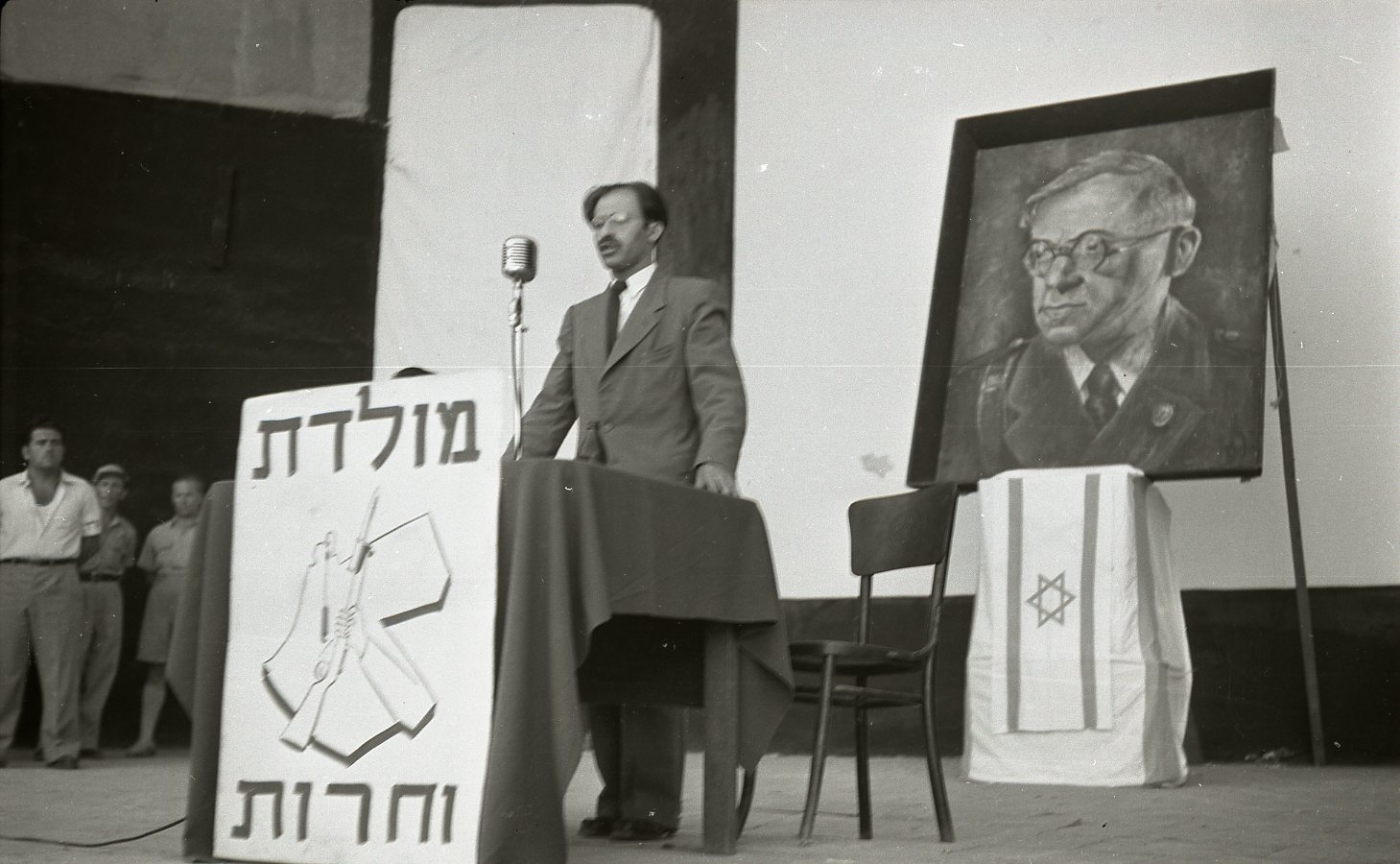
Menachem Begin. Photo by Benno Rothenberg.
He signed the peace treaty with Egypt as Prime Minister of Israel, and he was the first Israeli statesman to receive the Nobel Peace Prize in 1978. He served as a model of integrity and leadership over the years, based firmly on Jewish values and the sanctification of Israel’s parliamentary democracy.
8. Menachem Begin secluded himself
Begin later retired to an apartment overlooking the Jerusalem Forest and lived alone for the rest of his life. He suffered from clinical depression, according to an Israeli psychologist.
He rarely left his apartment. Begin only left to go to his wife’s grave to say the traditional Kaddish prayer for the departed. His children kept an eye on him. Also his lifetime personal secretary Yechiel Kadishai.
Begin would see almost no one besides close friends and family. He changed his phone number after a year because journalists were constantly calling him.
9. Begin suffered a heart attack
Begin suffered a severe heart attack in his apartment on March 3, 1992, and was rushed to Ichilov Hospital. He was admitted to the intensive care unit. Begin arrived at the hospital unconscious and paralyzed on his left side.
10. Begin died in 1992
His condition improved slightly after treatment, and he regained consciousness after 20 hours. Begin remained in critical condition for the next six days. On March 5th, a pacemaker was implanted in his chest to stabilize his heartbeat.
Begin was too frail to recover from the effects of the heart attack. His condition began to deteriorate rapidly on March 9 at around 3:15 a.m. He was resuscitated by an emergency team of doctors and nurses.
His children were informed and rushed to his side. Begin passed away at 3:30 a.m. An hour and a half later, his death was announced. The hospital rabbi arrived at his bedside shortly before 6:00 a.m. to say the Kaddish prayer.
Planning a trip to Â鶹APP ? Get ready !
These are ´¡³¾²¹³ú´Ç²Ô’²õÌý²ú±ð²õ³Ù-²õ±ð±ô±ô¾±²Ô²µÂ travel products that you may need for coming to Â鶹APP.
Bookstore
- The best travel book : Rick Steves – Â鶹APP 2023 –Ìý
- Fodor’s Â鶹APP 2024 –Ìý
Travel Gear
- Venture Pal Lightweight Backpack –Ìý
- Samsonite Winfield 2 28″ Luggage –Ìý
- Swig Savvy’s Stainless Steel Insulated Water Bottle –Ìý
We sometimes read this list just to find out what new travel products people are buying.


