
 English


Doctor Maria Montessori (1870-1952). Photo by Unknown author- Wikimedia commons
Top 10 Remarkable Facts about Maria Montessori
Maria Tecla Artemisia Montessori was born in August 31, 1870 was an Italian doctor and teacher better remembered for her philosophy of education and writings on scientific teaching methods. Montessori attended classes at an all-boys specialized school at a young age, hoping to become an engineer.
She soon changed her mind and enrolled in medical school at the Sapienza University of Rome, becoming one of the first women to do so in Italy; she graduated with honors in 1896. Her educational method is now used in numerous public and private schools all over the globe.
1.Montessori founded the first Montessori school to combat property damage
Rome was experiencing massive development at the start of the twenty-first century. As a result of this expansion, some overly aggressive companies went out of business, leaving behind half-finished projects. Wealthy banks made an investment in one of these projects in the San Lorenzo district and transformed it into low-income shelter.
Children in these residences ran around unmonitored among the newly constructed buildings because both parents worked. The developers then approached Maria Montessori and asked her to figure out how to keep the students occupied. This resulted in the Casa Dei Bambini’s opening in January 1907.
2.She broke so many different boundaries for women in Italy during her time
Throughout that time, girls were not permitted to attend public school. The academic achievement of a girl was decided by her family and the Catholic Church. Women were owned by their fathers, husbands, brothers, and uncles. Women could not open their own bank accounts, own property, or vote.
Maria was seven years old when Italy first opened its doors to women for public schooling. This was one of the many modifications that took place during Italy’s recent birth. Maria Montessori was undoubtedly a woman of her time. She was capable of defying the social rules of Italy’s evolving society so as to blossom into an important figure in the education system.
3.Montessori was the very first woman in Italy to be a doctor

Maria Montessori in 1913. Photo by Public Domain- Wikimedia commons
Despite her reputation as a ground-breaking educator, Dr. Montessori was Italy’s first female physician. She went to medical school and then majored in psychiatry. During her internship, she worked in psychiatric wards and was moved by the struggles of the handicapped, impoverished, and intellectually disabled children.
The anguish of these lost children motivated Montessori’s desire to create a practical alternative of assisting the poor and disadvantaged. She used this skills to develop academic tools and strategies, and she opened her first Children’s House in Rome’s ghetto.
Her noteworthy comprehension of how young children and babies learn still serves us today. Plenty of her strategies and theories are still being validated and rekindled to this day.
4.Her big shift from being a doctor to an educator with Séguin’s help
Séguin was a harsh critic of the highly structured education of the time, emphasizing respect and sympathy for each particular child. He devised functional devices and equipment to aid in the development of mentally stunted children’s sensory systems and motor skills, which Montessori later applied in novel ways.
Montessori’s participation with the Lega nazionale per l’educazione dei fanciulli deficienti drove her to visit as co-director of the Orthophrenic School, along with Giuseppe Montesano. The school accepted children with a wide range of disabilities and proved to be a watershed moment in Montessori’s life, signaling a transition in her professional role from doctor to teacher.
Her theories about developmental psychology were only ideas until now, but the small school, designed in the style of a teaching hospital, permitted her to put them into training. Montessori worked at the Orthophrenic School for two years, testing with and optimizing Itard and Séguin’s components and introducing a scientific, empirical outlook to the task; instructing and watching the children during the day and documenting her notes at night.
5.She had a chance to travel the world because of her teaching methods
Maria Montessori’s innovative teaching approach had taken over the globe prior to World War II, and countless numbers of Montessori schools had opened. All of this came to a halt with the outbreak of the war.
Maria was forced to abandon her home in Barcelona and relocate to England after all Montessori schools in Italy and Germany were closed. Maria had the chance to interact and collaborate with well known Indian leaders such as Gandhi, Nehru, and Tagore when a three-month speaking tour in India turned into a seven-year home confinement.
6.Aside from teaching, Maria has written a couple of books that are very famous till this day

Maria Montessori in Amsterdam. Photo by Jack de Nijs- Wikimedia commons
Her books have been translated into at least 20 various languages, and several countries have founded training schools for teachers who use this approach. In the United States, for example, there were over 1,000 schools by 1925. There are currently over 23,000 Montessori schools in 115 countries all over the globe.
7.Her personal life and her affairs with other great minds
From 1896 to 1901, Montessori worked with and studied “phrenasthenic” children, or children with some type of mental limitation, diseases, or impairment. She also started to travel, research, converse, and write on a national and international scale, rising to popularity as a proponent for women’s rights and special education for children.
On March 31, 1898, her only child, a son named Mario Montessori, was born. Mario Montessori was the result of her love affair with Giuseppe Montesano, a fellow doctor and co-director of the Orthophrenic School of Rome with her. Montessori would be obligated to stop working professionally if she married.
Montessori chose to carry on her work and studies rather than marry. Montessori desired to maintain her relationship with her child’s father a secret as long as neither of them married anyone else. When her child’s father was pushed by family to make a more beneficial genuine relationship and later married, Montessori felt violated and chose to quit the university hospital.
She was compelled to leave her son in the care of a wet nurse who lived in the countryside, and she was devastated to miss his first few years of life. She would eventually be reconnected with her son in his adolescence, when he demonstrated to be an invaluable research assistant.
8.Montessori was nominated for the Nobel Peace Prize more than once!
Maria Montessori was nominated for the Nobel Peace Prize three years in a row, in 1949, 1950, and 1951, for her efforts to education and child development.
Starwood Academy of Frisco, which continues Maria Montessori’s legacy, provides an authentic Montessori education to students in the Frisco area. At our Montessori school, our Montessori-certified guides have the honor of witnessing thousands of children accomplish a feeling of their own liberation and a strong commitment to work.
9.The Italian government even hired Maria to oversee the education
In 1922, she was selected as a state officer of schools in Italy. Regrettably, when neo nazis took power in Italy in 1934, she fled.
10.The amazing legacy she left behind and the importance it has to education today
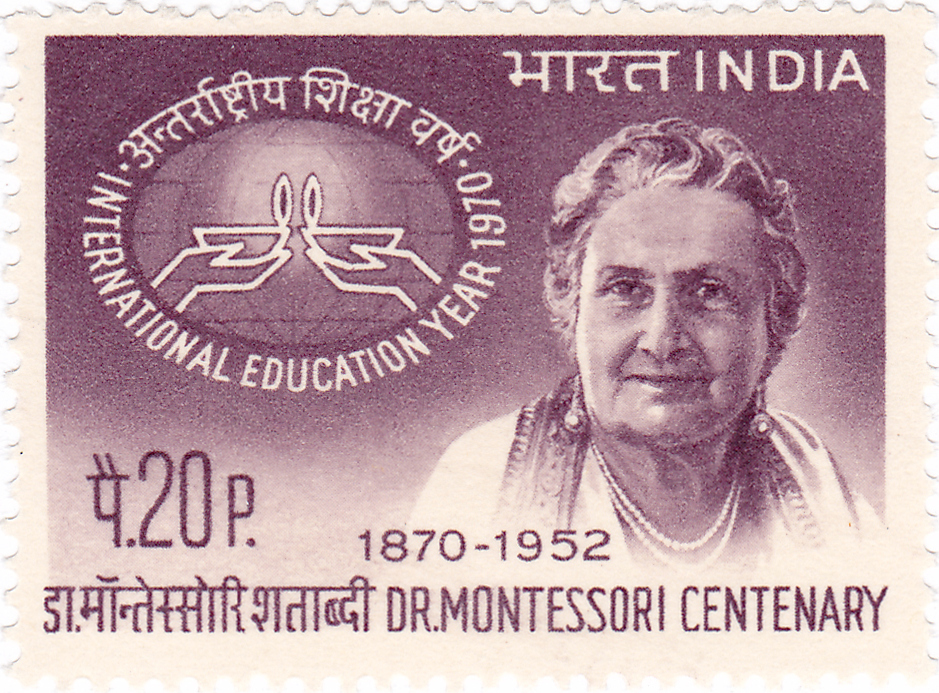
Maria Montessori 1970 stamp of India. Photo by India Post, Government of India- Wikimedia commons
Maria Montessori and Montessori schools have appeared on Italian coins and banknotes, as well as stamps issued by the Netherlands, India, Italy, the Maldives, Pakistan, and Sri Lanka.
Her name was given to a KLM McDonnell Douglas MD-11 (registration PH-KCB), which resigned in November 2014.
Montessori was named one of Time’s Top 100 Women of the Year in 2020, an offshoot of their Person of the Year award.
Planning a trip to Â鶹APP ? Get ready !
These are ´¡³¾²¹³ú´Ç²Ô’²õÌý²ú±ð²õ³Ù-²õ±ð±ô±ô¾±²Ô²µÂ travel products that you may need for coming to Â鶹APP.
Bookstore
- The best travel book : Rick Steves – Â鶹APP 2023 –Ìý
- Fodor’s Â鶹APP 2024 –Ìý
Travel Gear
- Venture Pal Lightweight Backpack –Ìý
- Samsonite Winfield 2 28″ Luggage –Ìý
- Swig Savvy’s Stainless Steel Insulated Water Bottle –Ìý
We sometimes read this list just to find out what new travel products people are buying.


