
 English


Enzo Ferrari and the dashboard of the 1947 Ferrari 125 S s/n 01C which was finalized in the spring of 1947. Photo by Unknown photographer- Wikimedia commons
Top 10 Amazing Facts about Enzo Ferrari
Enzo Ferrari was believed to have been born on 18 February 1898 in Modena, Italy, and that his birth was documented on 20 February because a heavy snowstorm hindered his father from reporting the birth at the local registry office; however, his birth certificate states that he was born on 20 February 1898, while the birth was registered on 24 February 1898 and was reported by the midwife.
Alfredo Junior was the younger of two children born to Alfredo Ferrari and Adalgisa Bisbini (Dino). Alfredo Senior, the son of a Carpi grocer, established a metal-working workshop in the family home.
Enzo received little formal schooling as a child. He was 10 years old when he watched Felice Nazzaro’s victory at the 1908 Circuito di Bologna, which motivated him to become a race car driver. During World War I, he was a member of the Italian Army’s 3rd Mountain Artillery Regiment.
Alfredo and his older brother, Alfredo Jr., died in 1916 as an outcome of a prevalent epidemic of Italian flu. Ferrari became severely ill during the 1918 flu pandemic and was eventually disposed from the Italian army.
1.His long time dream to be a race car driver happened for him at the age of 20
Enzo vowed to his father that he would become a race car driver after noticing ramshackle racing drivers struggle all around track at the Circuit of Bologna in 1908.
In the ten years that followed, Enzo survived World War I, the flu pandemic of 1918, and his own near-death experience with the illness before joining CMN (Construzioni Meccaniche National), a small auto maker with a racing bent.
Enzo started working in their factory, converting trucks into small cars, and was given the opportunity to race their 15 horsepower open wheeled racer. He agreed.
2.Enzo’s son died at a very young age due to muscular dystrophy
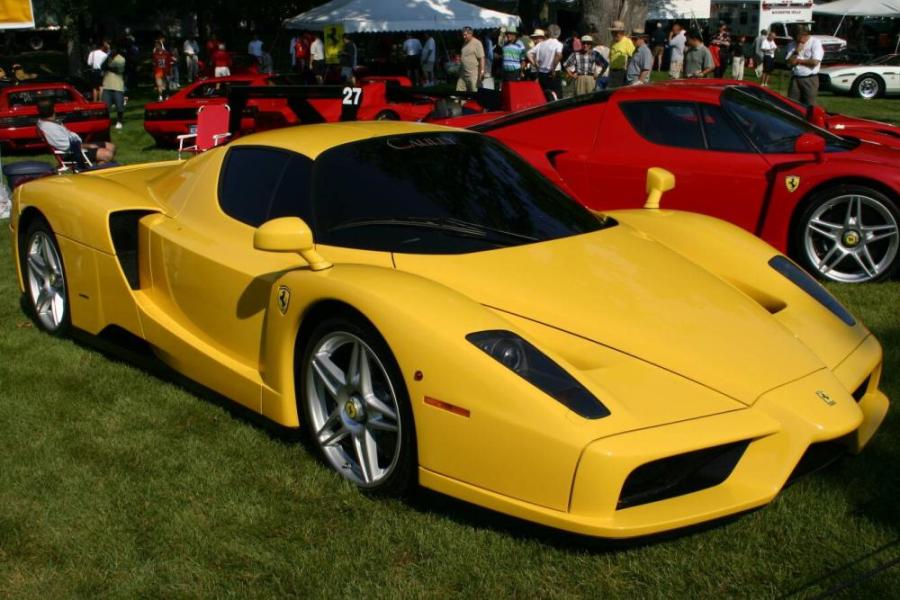
2003 Enzo Ferrari photographed at the Meadow Brook Concours d’Elegance in Rochester. Photo by Douglas Wilkinson- Wikimedia commons
Alfredino, or “Dino,” Enzo Ferrari’s only son, was born in 1932. “Dino” was trained to be Enzo’s true heir however, he died too young. Dino died of muscular dystrophy in 1956, at the age of 24.
Enzo was heartbroken by his son’s death and, by all means, he would visit his grave as frequently as he could. “Dino” had previously proposed constructing a 1.5-liter DOHV V6 engine for F2 cars.
Following his son’s death, Enzo committed the Dino series of road and racing cars to his memory, using the V-6 engine he recommended.
In 1945, Enzo had another illegitimate son, Piero, with his mistress Lina Lardi. Piero would go on to become Ferrari’s deputy president.
Piero’s net worth was approximated to be $1.3 billion in 2015.
3.Due to World War II the release date of Ferrari was postponed to a later date
In 1919, Ferrari started his racing career as a driver for C.M.N (Costruzioni Meccaniche Nazionali) and soon went on to Alfa Romeo, where he was placed in charge of the Alfa Corse racing branch.
After agreeing to refrain from using the name “Ferrari” for four years, he struck out on his own in 1939 and eventually built race cars. Enzo Ferrari built two 815 Auto Avio Costruzioni cars in 1940 however, they weren’t official Ferraris.
Then came World War II, and Allied forces started bombing Ferrari’s factory in Maranello in 1944 and again in 1945. Following these hardships, the V12 125 S, the first official Ferrari, launched in March 1947, two years after the war ended.
4.The signature Red color happened by accident but worked out great
A Ferrari can now be purchased in a variety of colors, including bright yellow, black, and metallic grey. However, there isn’t a huge variety of colors to choose from. The most classic color for a Ferrari is, of course, red.
In fact, most ardent collectors believe that the only true color for a legendary machine like a Ferrari is its signature red. Any other color is a sin. Today, red Ferraris account for 45 percent of all sales.
What you may not know is that all Ferraris were initially red. In the early start, there was no other color option.
The red paint is officially known as “Rosso Scuderia.” And, while the color red has become associated with the Ferrari brand in recent years, it was never a magnificent marketing strategy.
In the early days of motorsport, the International Automobile Federation assigned the color red to all Italian grand prix race cars. So, the fact that Ferrari made Italian race cars dictated that they be painted red, and the rest is history.
5.The best known capering horse logo was designed by an Italian pilot during WWI

Ferrari owner Enzo Ferrari (left) and the motoring journalist Giovanni Canestrini (right, smoking) in 1966. Photo by Unknown photographer- Wikimedia commons
Of course, every great racing team requires a great logo, which Enzo took from famed Italian ace Francesco Baracca. In battle, he always operated a plane with the horse enveloped by yellow, and after his death, Ferrari met Baracca’s mother, who told him to put the horse on his cars for good luck. The thought stayed with him.
6.Enzo Ferrari was very sad about the death of his good friend, Gilles Villeneuve
Gilles Villeneuve is widely regarded as one of the finest racing drivers of all time. He would spend the next six years in Grand Prix racing for Ferrari.
Horrifically, his phenomenal career was interrupted by a fatal collision in May 1982. He died as a result of injuries suffered during a 139 mph (225 km/h) impact caused by a crash with Jochen Mass’s March during qualifying for the 1982 Belgian Grand Prix.
This occurrence has seemed to have caused Enzo Ferrari great distress. He was so heartbroken that he kept a photo portrait of Giles in every one of his homes and offices.
7.Ferrari got a chance to watch the Formula 1 races before he died
Ferrari has won the most Formula One championships (15) of any team throughout history. Before his death in 1988, Enzo Ferrari watched nine of these.
8.Initially, Ferrari only built street cars begrudgingly
After his factory in Modena was blown up, it was indefinitely moved to Maranello, where it was immediately blown up again. His financial advisors implored him to construct the establishments required to manufacture street cars as a major source of revenue to fund his racing team during the second reconstruction. He unwillingly agreed.
9.Enzo Ferrari was a reserved individual who struggled with claustrophobia
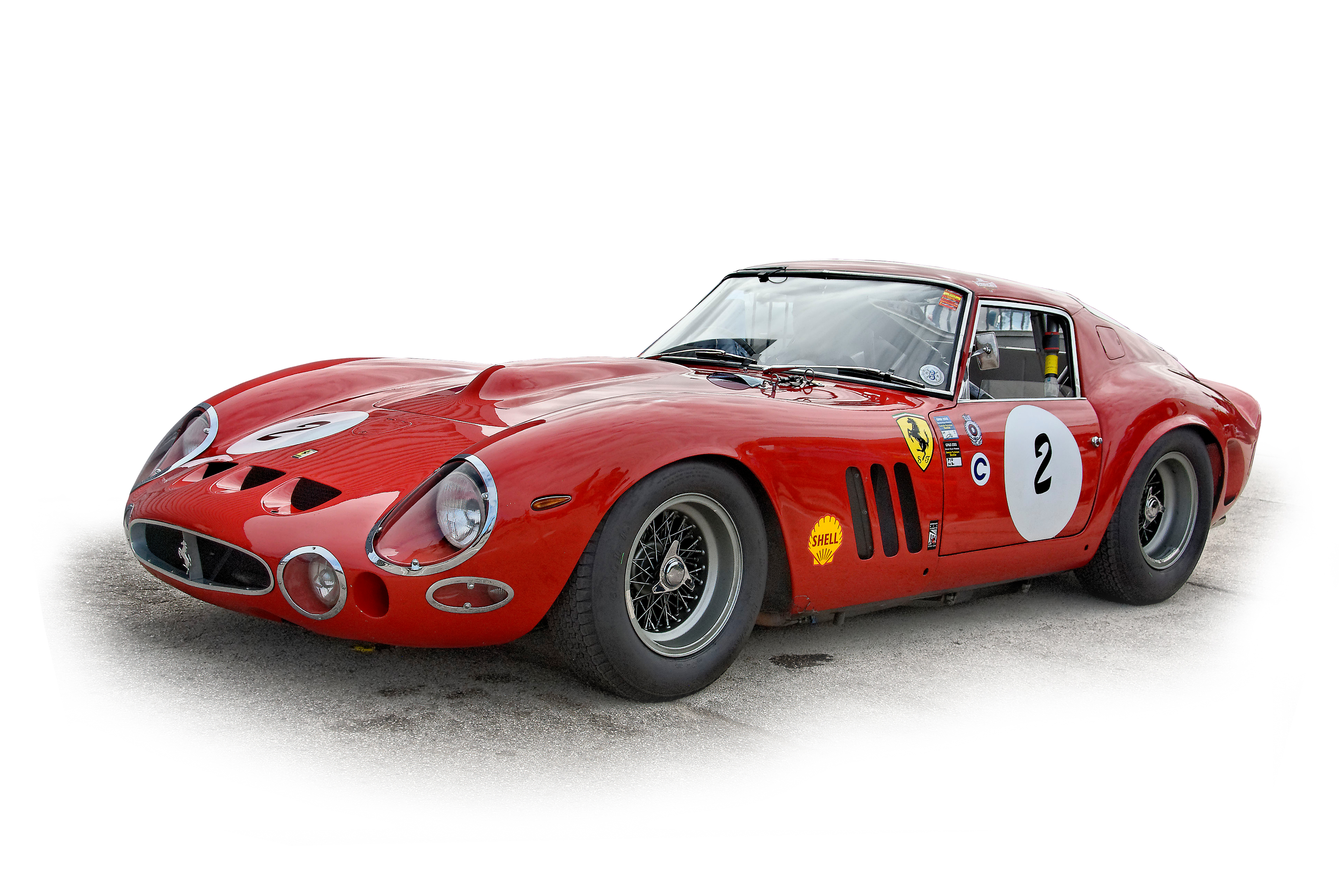
1963 Ferrari 330 GTO s/n 4561SA. Photo by ZANTAFIO56- Wikimedia commons
Notwithstanding his celebrity status, Enzo Ferrari seems to have lived a quiet life. He very seldom granted interviews and avoided leaving his homes in Modena and Maranello.
Enzo would leave only in rare situations, such as the Monza Grand Prix and a trip to Â鶹APP in 1982 to resolve a rift between FISA and FOCA. He also allegedly never flew in an airplane, toured to Rome, or stepped inside a lift.
As reported by the Guardian Newspaper, Enzo struggled with claustrophobia, which explains his aversion to entering small spaces such as airplanes and elevators.
10.The very last car Enzo contributed in before his death was a F40
As he didn’t believe in aerodynamic efficiency, the last car Enzo Ferrari worked on was among the most aerodynamic of the time: the Ferrari F40. The car, which debuted not long before the iconic carmaker’s death at the age of 90, was the absolute epitome of the man Enzo Ferrari and is recognized as the ultimate Ferrari.
Planning a trip to Â鶹APP ? Get ready !
These are ´¡³¾²¹³ú´Ç²Ô’²õÌý²ú±ð²õ³Ù-²õ±ð±ô±ô¾±²Ô²µÂ travel products that you may need for coming to Â鶹APP.
Bookstore
- The best travel book : Rick Steves – Â鶹APP 2023 –Ìý
- Fodor’s Â鶹APP 2024 –Ìý
Travel Gear
- Venture Pal Lightweight Backpack –Ìý
- Samsonite Winfield 2 28″ Luggage –Ìý
- Swig Savvy’s Stainless Steel Insulated Water Bottle –Ìý
We sometimes read this list just to find out what new travel products people are buying.


