
 English


Reproduced Mural of 220 cave, Mogao caves, Dunhuang. Lots of buddhas. Photo by: Hiroooooo- Wikimedia.
Top 10 Interesting Facts about Mogao Caves
The Mogao Caves (Mogao Grottoes), or the Thousand Buddha Grottoes, are located in the west end of Gansu Province, southeast of the center of Dunhuang. They are the world’s largest treasure trove of Buddhist art.
They were designated a worldwide cultural historical landmark in 1987, and are known as the most valuable cultural discovery of the twentieth century and the “Oriental Louvre.” The caves were carved into the side of a 2-kilometer-long cliff.
The caves contained numerous murals, sculptures, and other objects. These pieces of art provide an amazing array of vibrant materials depicting various aspects of western China’s medieval politics, economics, culture, arts, religion, ethnic relations, and daily dress.
1. What does Mogao stand for?
In terms of its name, it was originally known as “Mogao Caves,” which can be or in Chinese, and Mo means “desert” as well as “no.” If no, the Mogao Caves are “the caves in high place of the desert.” Also, “Mo” should mean “no” in Buddhism, and “Mogao Caves” means that there are no higher or better caves than the peerless ones.
2. What can you find inside the Mogao?

The gate of Mogao Caves, China. Photo by: Fanghong- Wikimedia.
There are 735 caves on the cliffs of Dangquan River and Mingsha Mountain in the East, facing the direction of Sanwei Mountain, a branch of Qilian Mountain in the East; there are also 2,415 colored sculptures and 45,000 square meters of murals in the cave. In modern times, more than 50,000 ancient scriptures and documents were discovered in the Sutra cave.
3. Mogao construction in the medieval century
The Mogao Caves were discovered in the second year of Jianyuan, 366 AD, during the pre-Qin period. The caves have survived for over 1,000 years, including the dynasties of Beiwei (386 AD – 534 AD), Beizhou (557 AD – 581 AD), Sui (581 AD – 618 AD), Tang (618 AD – 907 AD), Song (960 AD – 1279 AD), Xixia (1038 AD – 1227 AD), Yuan (1271 AD – 1368 AD), and others.
4. Who constructed the Mogao Caves?

Mogao Cave 288, Devatas at the Balcony, Western Wei period- Wikimedia.
The Mogao Caves have nearly 600 existing Grottoes after more than 1,000 years of building. Cave builders are primarily comprised of three forces: the cave owner, the benefactor, and the craftsman.
The cave owner is the cave’s owner. The benefactor is the person who donated money and assisted the cave owner in the construction of the cave. The cave construction’s specific operator is the craftsman.
They can be classified based on their expertise, such as sculptor, painter, carpenter, and so on. The cave, however, only records the cave owner and benefactor.
The relationship between the benefactor and the craftsman is one of servitude and employment, and the craftsmen are rarely mentioned in the caves. The answer can be found in many mural paintings of the cave’s benefactors and cave owners, including the great clans, eminent monks of Dunhuang, and ordinary people from all walks of life.
5. Why were the Mogao Caves constructed?
The Mogao Caves of Dunhuang are not used for normal residents to live in, but rather for monks to cultivate themselves according to religious doctrine. According to ancient inscriptions, the first monk who began when he traveled to Dunhuang in 366 AD.
He went to the foot of a mountain during sunset, and the sunray came down to the top of the mountain, which appeared to show the image of thousands of Buddhas. So the monk decided to excavate a Buddha grotto on the cliff opposite the mountain, which became Dunhuang’s first cave.
Eventually, as Buddhist activities expanded, the number of caves increased day by day, and the cave-building boom lasted for more than 1000 years. Aside from the scenic views coincidence, there were many Buddhists who preached Dharma among the merchants of the western regions who traveled along the silk road during the period of Buddhism’s eastward spread.
Buddhist monks from the West came here to spread Buddhism, translating Buddhist scriptures and establishing temples. As a result, Dunhuang had become a flourishing Buddhist center, which aided in the construction and development of Mogao grottoes.
6. Why were the Mogao Caves constructed on the cliff?
The grotto temple is a place for Buddhist activities, just like any other temple. Monasteries and temples, according to Buddhism, require a clean environment that is as free of interference from secular life as possible.
As a result, the mountain and forest have always been popular locations for Buddhist temples and grottoes. Many well-known mountains have temples. Grottoes have different requirements than regular monasteries, such as the presence of cliffs to be dug.
The Mogao Caves are located in the west on the cliffs of Mingsha Mountain formed by river erosion. It is not only remote from secular life, but also because of the presence of the Daquan River, which creates a peaceful natural setting. The dryness is better for preserving statues and murals in grottoes, and the sedimentary rock is also good for excavation.
7. Who discovered the Mogao Caves?
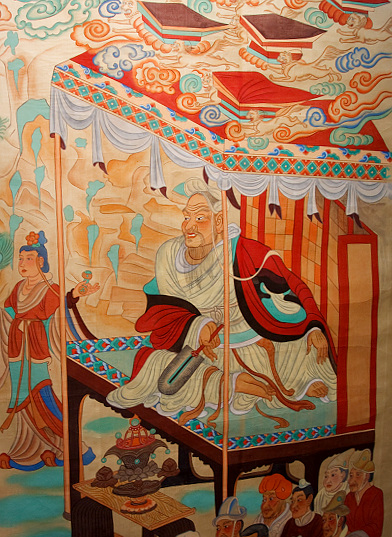
Vimalakirti Bodhisattva debates Manjusri Bodhisattva. Scene from the Vimalakirti Nirdesa Sutra. Dunhuang, Mogao Caves, China, Tang Dynasty- Wikimedia.
The Mogao Caves were mostly constructed during the Northern and Southern Dynasties, as well as the Sui and Tang Dynasties. At the time, rulers revered Buddhism and were obsessed with building grottoes.
The excavation gradually subsided after the Tang Dynasty (618 AD – 907 AD) collapsed. Because of historical changes, the Mogao Cave was gradually forgotten and left untouched during the Ming and Qing dynasties.
Wang Yuanlu, a Taoist, arrived in the Mogao Caves in 1900 A.D. and stayed for several years. He discovered a grotto with any ancient books and scriptures buried inside while cleaning the grottoes.
He informed the local governors of his realization. Nobody realized their worth until a British explorer named Stein came to the Mogao Grottoes and purchased a huge number of these priceless religious texts, causing quite a stir in the archaeology field and attracting archaeologists and explorers from France, the United States, Japan, and Russia to come here with the intention of bringing a large number of scriptures and murals back to their home countries. The Mogao Caves have emerged from the desert and are well-known on the other side of the world.W
8. What Mogao Caves are famous for?
The Mogao Caves are a magnificent Archaeological find of ancient architecture, sculptures, and murals. The caves were built in various shapes and sizes due to their various functions; the sculptures are the highlights of Mogao Grottoes, which were placed in a prominent position in the grottoes; murals cover the walls of the grottoes, vividly representing Buddhist thought and philosophy with plenty of colors and rich details.
The Mogao Grottoes are more than just “treasure troves.” The excavation of Mogao Grottoes began in 366 A.D. and continued until the Yuan Dynasty (1271 AD – 1368 AD). After surviving so many dynasties, the grottoes had been completely excavated, to the point where later generations would even cover and redraw the original murals in previous grottoes.
The mural we see now is a record of millennial art. Different styles, shapes, and cultures collide. It is not an exaggeration to say that the Mogao Caves are the only place in the world where artists from different periods of history can compete at the same site.
Such a magical occurrence can only occur in Mogao Grottoes. Aside from architecture, colored sculptures, and murals, a large number of scriptures discovered here are scattered throughout the world, recording the history, culture, and religion of various nationalities along the way.
9. The location was a cultural melting pot
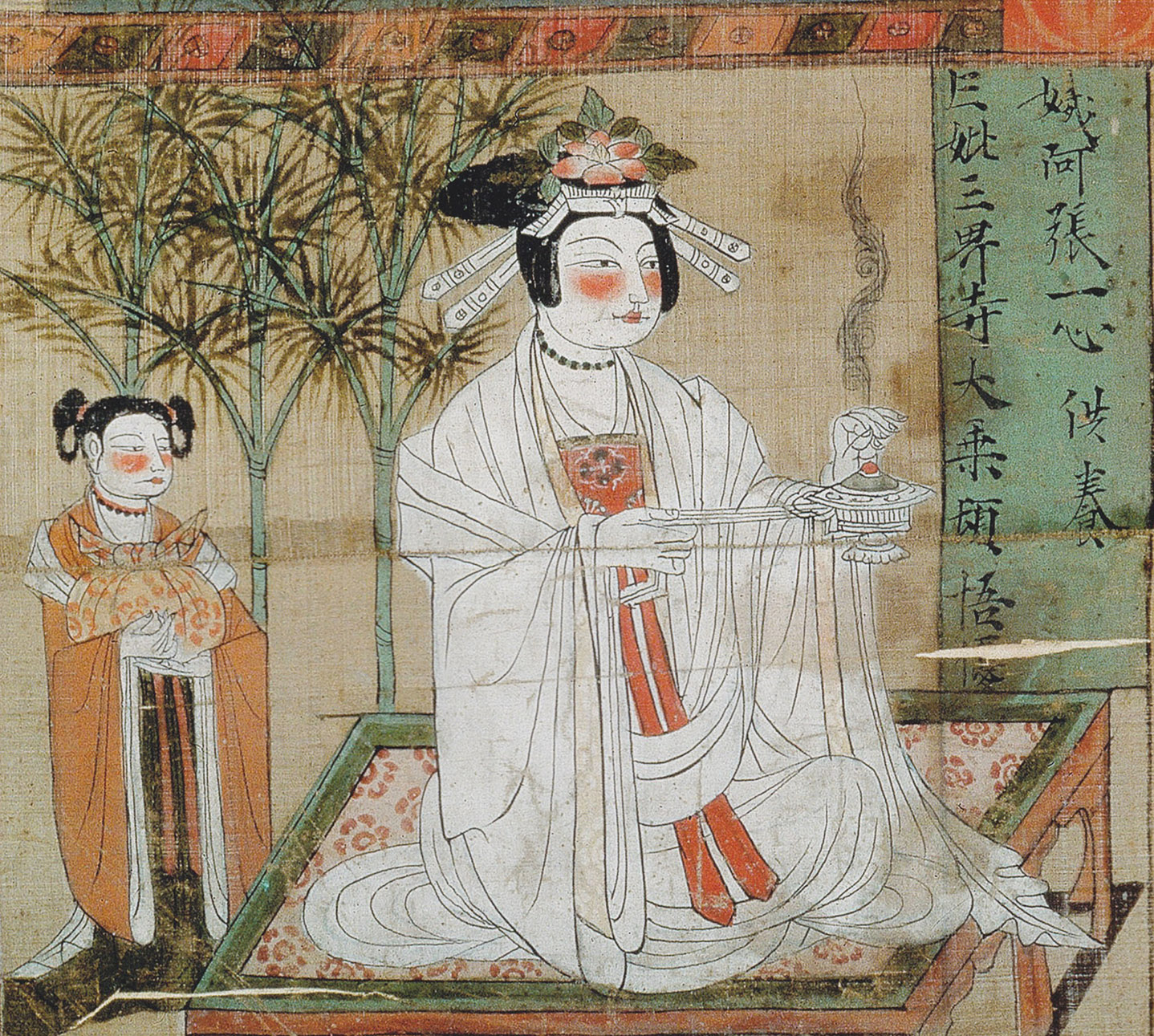
It’s the portrait of the rite’s beneficiary accompanied by a servant. Bamboo trees on the background. Photo by: Unknown artist of Mo-kao caves- Wikimedia.
Despite being a Buddhist site, the art and objects found at Mogao reflect the meeting of cultures along the Silk Road, a network of trade routes that connected China, Central Asia, and Europe for centuries. Confucian, Daoist, and Christian texts, as well as records in Chinese, Sanskrit, Tibetan, and Old Turkish, were found at the site. There were even Hebrew manuscripts discovered there.
10. Records discovered in caves bring Medieval China to life
The materials discovered in the Library Cave paint a vivid picture of life in medieval China. Accounting ledgers, contracts, medical texts, dictionaries, and even descriptions of music, dance, and games were discovered.
Planning a trip to Â鶹APP ? Get ready !
These are ´¡³¾²¹³ú´Ç²Ô’²õÌý²ú±ð²õ³Ù-²õ±ð±ô±ô¾±²Ô²µÂ travel products that you may need for coming to Â鶹APP.
Bookstore
- The best travel book : Rick Steves – Â鶹APP 2023 –Ìý
- Fodor’s Â鶹APP 2024 –Ìý
Travel Gear
- Venture Pal Lightweight Backpack –Ìý
- Samsonite Winfield 2 28″ Luggage –Ìý
- Swig Savvy’s Stainless Steel Insulated Water Bottle –Ìý
We sometimes read this list just to find out what new travel products people are buying.


