
 English


Municipal Art Gallery, Heraklion. Photo by Abbamains.
Top 10 Incredible Facts about Municipal Art Gallery Heraklion
The Heraklion Municipal Art Gallery is housed in one of the city’s most historic buildings. It’s known as the Saint Marcos Basilica, which the Venetians built in 1239 a.c. It was later rebuilt following a major earthquake that occurred in 1303.
The Turks converted it into a Muslim temple in 1669, and it remained that way until 1956 when the Company of Cretan and Historical Studies restored it to its original form.
The museum hosts events and exhibitions and displays work by Thomas Fanourakis, Georgios Georgiadis, Lefteris Kanakakis, and Aristodimos Papadakis.
1. The building is a reminder of Heraklion’s Venetian past

St. Mark’s Basilica. Photo by Maxmarwiki.
The Basilica of Saint Mark (Agios Markos in Greek) is meant to conjure up images of Saint Mark in Venice. Venice ruled Crete for four centuries (1205-1669) before succumbing to the Ottoman Turks after a 25-year siege, the longest in European history.
Crete was known as the Regno di Candia, and Candia, which is now Heraklion, was its power center. St Mark dominates the city square where the Venetian ruler’s palace once stood. Small traces of it exist today. St Mark’s is a simple structure that was converted into a mosque during Ottoman rule.
2. The basilica building survived an earthquake
With only a few minor repairs, the Basilica of Saint Mark has survived the various earthquakes that have shaken Heraklion over the centuries. Under Turkish rule, it was renamed the Defterdar Mosque after the Supreme Treasurer, Defterdar Ahmet Pasha.
The Ottomans demolished the bell tower and built a minaret in its place, which was later demolished by the local populace after Crete was liberated, in an effort to erase the unpleasant symbols and reminders of the Turkish occupation.
3. The original building was constructed in the 13th century

St. Mark’s Basilica Photo by Maxmarwiki
It was constructed in 1239, during the early years of Venetian rule. The Venetians built a basilica dedicated to their patron saint, St Mark, in order to consolidate their rule over their new colony of Candia while also expressing their gratitude and love for their home. This was where the Venetian administration held official ceremonies and where Venetian nobles were buried.
The Basilica of Saint Mark had a plain section with a covered portico, similar to the structure we see today. In 1956, the Society for Cretan Historical Studies restored the building to its original state.
4. Venetian architecture inspired the design

Basilica di San Marco, Venice Photo by Dimitris Kamaras
Walking around Lion’s Square, one of the most noticeable structures is St. Mark’s Basilica, which houses the municipal gallery. The high arches and thin columns are typical of early Venetian architecture.
A look at the interior reveals that the original features have been preserved. Frescoes and altar carvings on the walls, as well as ornate windows set back into the stone, recall a time when this was the city’s most important place of worship.
5. The clock tower resembles that of St. Mark Venice

Clock tower (1499) in piazza San Marco, Venice Photo by Albarubescens
The Clock Tower in Venice is an early Renaissance structure located at the entrance to the Merceria on the north side of Piazza San Marco. It consists of a clock tower in the center and lower buildings on each side. It is located adjacent to the eastern end of the Procuratie Vecchie.
Both the tower and the clock were built in the final decade of the 15th century. A replica of the clock tower from St. Mark’s Square in Venice would have delighted Venetians away from home.
6. The gallery showcases famous Greek artists
Work by Greek artists Maria Fiorakis, Lefteris Kanakakis, and Thomas Fanorakis, as well as old photographs of Crete, are on permanent display. The gallery also hosts popular exhibits such as photography, painting, and sculpture. Return to the outside and look up at the clock tower.
7. The gallery purchased the famous Baptism Of Christ painting

El Greco, The Baptism of Christ (1567). Historical Museum of Crete, Heraklion (Iraklion), Crete, Greece. Photo by Tomisti
This is a masterpiece by the great painter, Doménikos Theotokopoulos. His artworks featured tortuously elongated characters and rich pigmentation, fusing Byzantine culture with Western painting.
Viewers can clearly see the dynamic, elongated features and upward movement in his masterpiece, Baptism of Christ. The artwork depicts Christ’s baptism, with the main characters being Jesus and John the Baptist. The two are accompanied by three winged angels, who are all standing in a natural scene depicting the landscape of the Jordan River.
8. Municipal Gallery collaborates with the Foundation for Research and Technology
All works in the collection have been digitized, and an application is being developed for online viewing at www.heraklionartgallery.gr. The gallery developed appropriate social networks that enhanced good practices of new knowledge and communication technologies, based on the essential multilingualism and interactivity of content through participatory internet applications, based on the work from the previous development stage and following further study, documentation, listing, archiving, and categorization of the collection.
The Heraklion Municipal Art Gallery’s social media profiles are an appealing way of presenting the digital collection in an effort to attract more visitors and stimulate public interest in the Art Gallery. Furthermore, visitors from all over the world can browse the collections and interact with the digital exhibits in an innovative and multilingual environment.
9. The gallery was taken over by the National Bank Of Greece
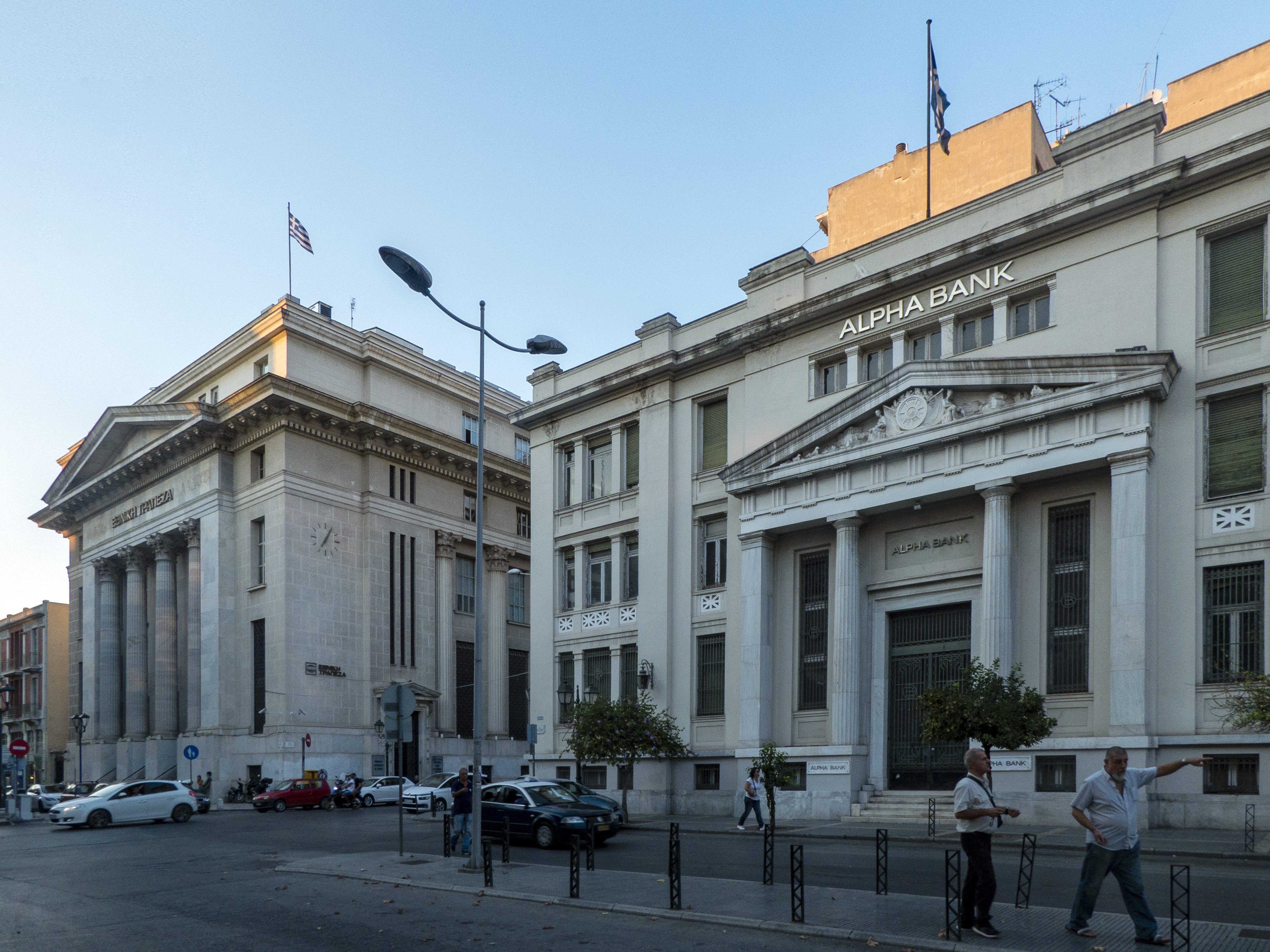
Buildings of the National Bank of Greece, Bank of Greece, and Ionian Bank (Alpha Bank) Photo by Philly boy92
Following the war with the Turks in 1922, it was taken under the jurisdiction of the bank, and later, after restoration and reconstruction in 1956, the city administration returned the building to the community.
10. The building was converted into a mosque

Shrine of John the Baptist, Great Umayyid Mosque, Damascus Photo by James Gordon
After the Venetians lost Crete to the Ottomans after a 25-year siege, the building was converted to a mosque, the bell tower was demolished, the frescoes were broken, and the tombs of Venetian nobles were desecrated. Shaken by earthquakes and bombings, the buildings have suffered repeated damage and reconstruction stages throughout history, resulting in the loss of many of its original details.
Planning a trip to Â鶹APP ? Get ready !
These are ´¡³¾²¹³ú´Ç²Ô’²õÌý²ú±ð²õ³Ù-²õ±ð±ô±ô¾±²Ô²µÂ travel products that you may need for coming to Â鶹APP.
Bookstore
- The best travel book : Rick Steves – Â鶹APP 2023 –Ìý
- Fodor’s Â鶹APP 2024 –Ìý
Travel Gear
- Venture Pal Lightweight Backpack –Ìý
- Samsonite Winfield 2 28″ Luggage –Ìý
- Swig Savvy’s Stainless Steel Insulated Water Bottle –Ìý
We sometimes read this list just to find out what new travel products people are buying.


