
 English


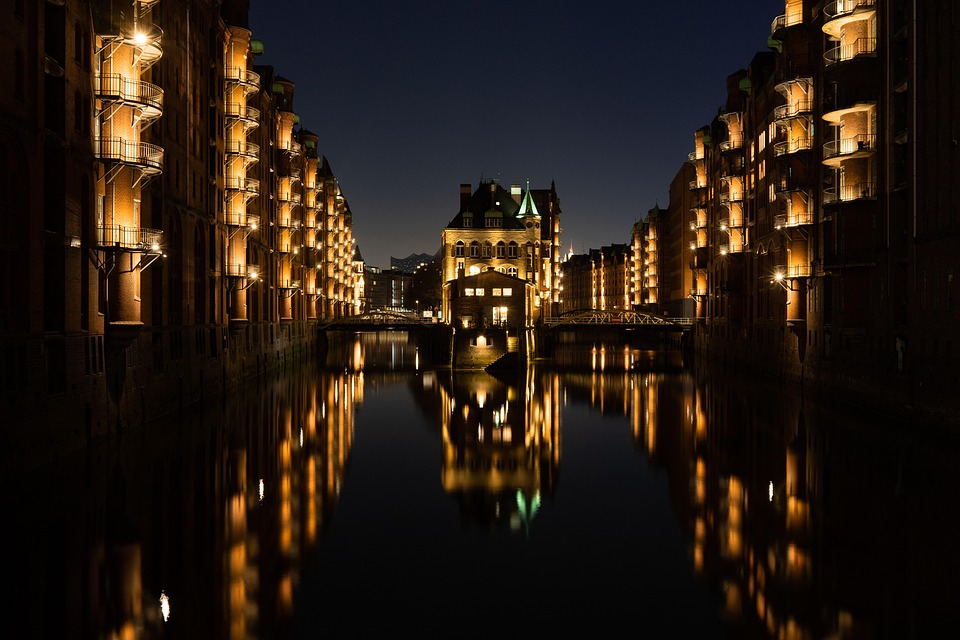
Image by from
Top 10 Sensational Facts about Speicherstadt and Kontorhaus district with Chilehaus
Speicherstadt and the adjacent Kontorhaus district are two densely built urban areas in the centre of the port city of Hamburg. Speicherstadt was originally developed on a group of narrow islands in the Elbe River between 1885 and 1927, it was partly rebuilt from 1949 to 1967.
It is a miniature city in itself, a collection of warehouses built on thousands of oak piles between 1885 and 1927 in the neo-Gothic brick style. Narrow streets, bridges and canals link together the world’s largest warehouse complex, which once provided over 300,000 square metres of storage space for all manner of goods at the heart of Hamburg’s port.
The Speicherstadt and Kontorhaus District with Chilehaus are two commercial quarters with offices and warehouses close to the port of Hamburg. The iconic Chilehaus is a ten-story office building. This is where the roots of the modern European city of Hamburg lie.
The historical Speicherstadt and Kontorhaus district with the famous Chilehaus are synonymous with Hamburg’s rise as a global trading power and are today a vibrant cultural quarter. Below are the top 10 sensational facts about Speicherstadt and Kontorhaus district with Chilehaus.
1. Speicherstadt and Kontorhaus District with Chilehaus is a World Heritage Site
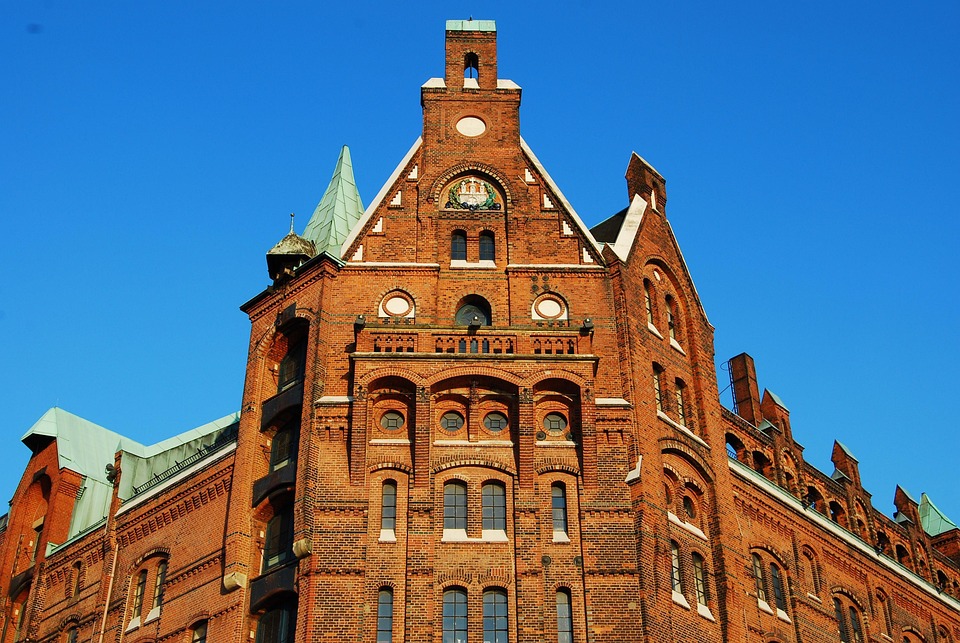
Image by from
UNESCO World Heritage since 2015 Speicherstadt and Kontorhaus District with Chilehaus contain outstanding examples of the types of buildings and ensembles that epitomize the consequences of the rapid growth in international trade in the late 19th and early 20th centuries. Their high-quality designs and functional construction, in the guise of historicism and Modernism, respectively, make them an exceptional ensemble of maritime warehouses and Modernist office buildings of the 1920s.
Having survived the years without damage or alteration, these historical buildings and areas deserved UNESCO status. You can almost smell the wafting aromas of tea and coffee, fine spices and all kinds of delicacies as you stroll through the district.
A World Heritage Site is a landmark or area with legal protection by an international convention administered by the United Nations Educational, Scientific and Cultural Organization. World Heritage Sites are designated by UNESCO for having cultural, historical, scientific or other forms of significance.
2. Chilehaus was Commissioned by Merchant Henry B. Sloman

Image by Fred Romero from
Henry B. Sloman emigrated to Chile with no money to his name. When he returned to his native city of Hamburg at the age of 60, now a rich man, he had the Chilehaus built by the architect Fritz Höger, who later also helped construct the Sprinkenhof. The building has an area of more than 64,000 sq. ft. and its powerful, patterned brick façade is impressive. The characteristic eastern peak is now and always has been a beloved photo motif
Merchants didn’t just need storage space, however, they also needed offices. And so they built the Kontorhäuser, the first purely administrative building in Europe, right next to the Speicherstadt. To this day the Kontorhäuser bears witness to the prosperity of the former trading dynasties.
The most famous of them is the Chilehaus, which was built using an incredible 4.8 million hand-layered bricks. Henry B. Sloman, who had made his fortune trading saltpetre from Chile, bankrolled the building of the beautiful tall building with angled facades to resemble the bow of a ship.
3. Speicherstadt and Kontorhaus District with Chilehaus Provide so much to See and Do

Image by from
Both quarters, the Speicherstadt and Kontorhaus district, hold great attractions for tourists in the area between the Elbe Philharmonic Hall and HafenCity. There’s so much to see and do, with museums such as the Hamburg Dungeon, Speicherstadt Museum and Miniatur Wunderland, old-established coffee roasting houses and traditional chocolate-makers, harbourside pubs and charming restaurants. It’s like its own little world!
There are more than 35 cafés and restaurants and over 700 companies fill this traditional merchants’ quarter with life. Thanks to a growing variety of specialist stores and many new and established galleries, the Kontorhaus district now attracts a wide range of visitors to the heart of Hamburg.
The Chilehaus is taken at different times of the day: in the morning at 7:00 am in the summer, in the afternoon around 2:00 pm and in the evening at nightfall. The light gives the building a completely different look.
4. Speicherstadt and Kontorhaus District with Chilehaus was Built in Three Phases
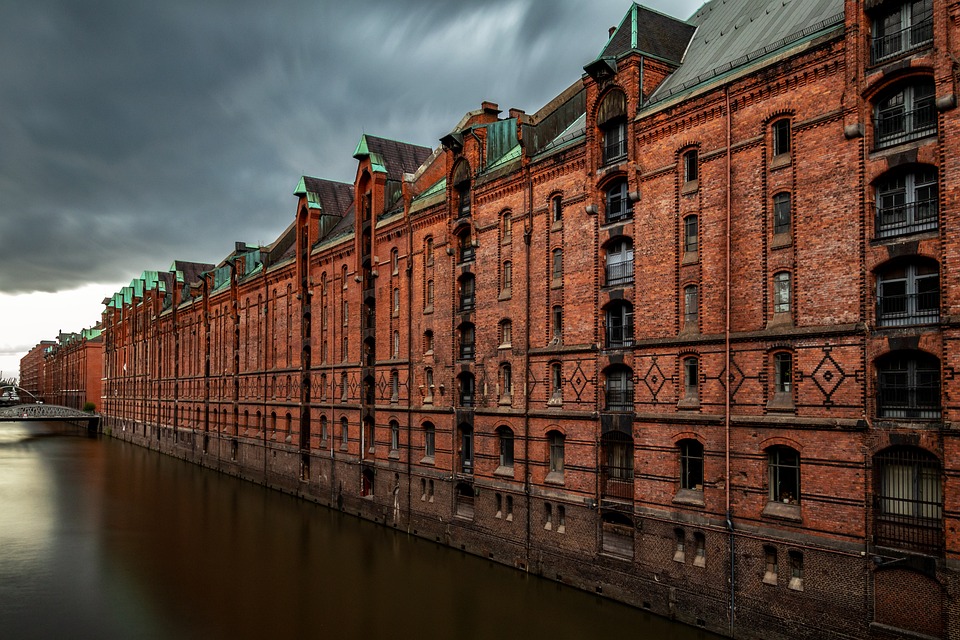
Image by from
construction period: 1885–1927, with three construction phases: 1885–1889 first phase (roads, canals, storage blocks A to O = 60 per cent of total storage area); 1891–1896 the second phase of construction (blocks P, Q, R); 1899-1927 third phase of construction (blocks S to X; interrupted by World War I and inflation); fourth phase of construction (blocks Y, Z) was scheduled but never implemented.
The skeleton construction was initially an iron girder structure which changed to a wooden beam structure with oak supports due to the danger of collapse in the event of a fire. Then concrete-encased iron pillars were used in the third phase of construction; reconstruction and new construction after World War II using reinforced concrete.
5. Speicherstadt is the world’s Largest Warehouse Complex

Image by from
Placed next to the port of Hamburg, Germany is an old city of warehouses called Speicherstadt. Filled with multi-storey tall and lean brick buildings, the city has preserved the ambience of 19th-century Germany within its streets and architecture. The gothic revival style can be seen in the gable roofs, brick walls, pinnacle buttresses, and large windows.
Speicherstadt is the world’s largest warehouse complex spread across an area of 260,000 square meters. It was named the 40th UNESCO World Heritage site of Germany back in 2015. Tourists from across the globe visit this heritage site with abundant human history. The winding road network and beautiful buildings along with canals and bridges showcase a carefully preserved chunk of the historic city.
6. Speicherstadt’s 3 Million Oak Pile foundation
The warehouse district, Speicherstadt has 6 manmade canals that acted as connections between warehouses. They surround the foundations of the structures. The foundation for the structures was made using oak wood piles.
The piles were placed 12m deep into the marshland of the city.3 million oak piles are used for the foundation which has proved to be very effective due to its natural conservation. The piles underwater have hardened over the years and are estimated to be in place to hold the structure intact. The oak wood is also fire resistant and serves to be highly utilitarian.
7. Concept of the “Kontorhaus was influenced by US commercial properties

Image by Uwe Rohwedder from
Leasable office building (influenced by US commercial properties and Berlin department store), small-scale usage, primarily port-based and port-related industries. In addition, flexible floorplans, flexible options for division, reinforced concrete or steel skeleton construction, stairs, lifts and toilets built around a compact core. It mimicked high technical standards around 1900 such as paternoster, central heating, electric lighting and telephone lines. The building hosts one of the few remaining working paternosters in the world.
A paternoster or paternoster lift is a passenger elevator which consists of a chain of open compartments that move slowly in a loop up and down inside a building without stopping. Passengers can step on or off on any floor they like.
8. The Warehouse City was the first to use Electricity for Industrial use
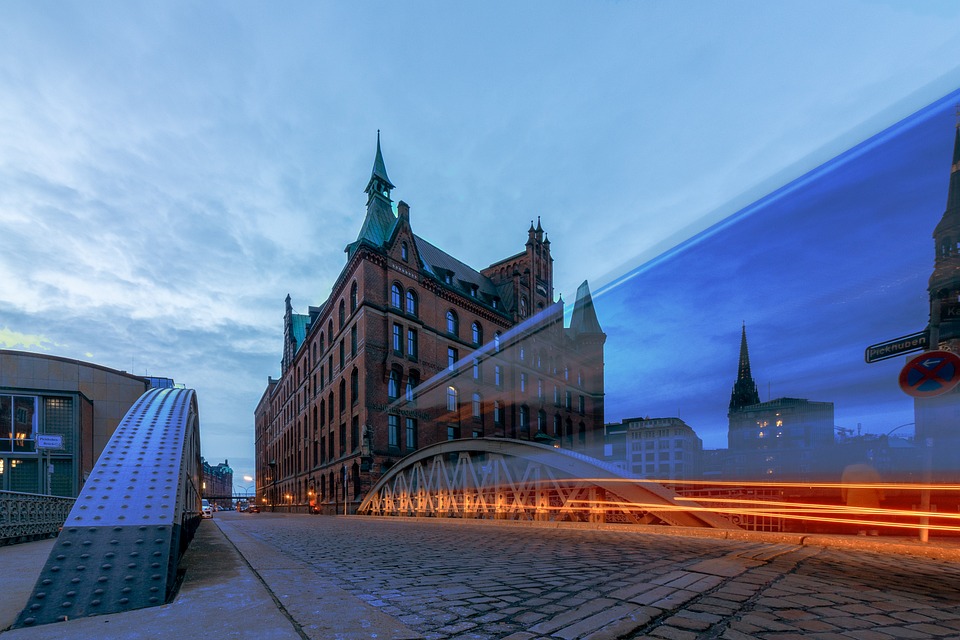
Image by from
The warehouse city is also among the first cities to have electricity for industrial use. It was generated from the ‘boiler house’ which was a power station back then. The water distribution system also originated from here and was distributed in close circles for the functioning of the cranes.
9. Chilehaus is a Magnificent Work and Play Space

Image by Esther Westerveld from
Completed in 1924, the Chilehaus quickly became a symbol of both Brick Expressionism architecture and the economic revival of post-World War I Hamburg Germany. In an attempt to completely fill Sloman’s irregularly-shaped plots of land located in the centre of Hamburg’s business district, Höger designed the Chilehaus to mimic the shape of a passenger ship.
Work and leisure come together in this unique urban quarter. The spacious courtyard on the ground floor is home to an attractive range of shops, restaurants and cafés which are popular with tenants of the building and passers-by alike. With 2,800 windows, the building’s visionary design provides plenty of stunning views.
10. Speicherstadt and Kontorhaus district with Chilehaus is a mixed bag of Architectural Styles

from
Chilehaus – a gift to the people of Hamburg and a symbol of the city’s economic revival. The architecture and history of this iconic building, which was constructed more than 90 years ago is worth learning.
The overall architectural style: Historicism (Hanover school of architecture), storehouses: Neo-Gothic, red-brick façades with hatches, lucarnes and winch booms; in the third phase of construction additional waterside stair towers (“Westfalen towers� as escape routes); HFLG administration (“town hall� of the Speicherstadt, 2 1902–1904): red-faced brickwork with sandstone structures evoking a Renaissance style.
Planning a trip to Â鶹APP ? Get ready !
These are ´¡³¾²¹³ú´Ç²Ô’²õÌý²ú±ð²õ³Ù-²õ±ð±ô±ô¾±²Ô²µÂ travel products that you may need for coming to Â鶹APP.
Bookstore
- The best travel book : Rick Steves – Â鶹APP 2023 –Ìý
- Fodor’s Â鶹APP 2024 –Ìý
Travel Gear
- Venture Pal Lightweight Backpack –Ìý
- Samsonite Winfield 2 28″ Luggage –Ìý
- Swig Savvy’s Stainless Steel Insulated Water Bottle –Ìý
We sometimes read this list just to find out what new travel products people are buying.


