
 English


Otto von Bismark. Photo by Hinnerk11.
Top 10 Sensational Facts about Otto von Bismark
Otto von Bismarck remains one of modern Germany’s most important political figures. From 1862 to 1890, he served as Prussian minister-president and imperial chancellor, contributing to the formation and shaping of the modern German state.
He was chancellor of the North German Confederation from 1867 to 1871, in addition to his duties in the Kingdom of Prussia. He worked with Prussian King Wilhelm I to unite the various German states, a partnership that lasted the rest of Wilhelm’s life. In 1865, the King bestowed upon Bismarck the titles of Count of Bismarck-Schönhausen and Prince of Bismarck in 1871.
Bismarck instigated three brief, decisive wars against Denmark, Austria, and France. Following his victory over Austria, he disbanded the supranational German Confederation and established the North German Confederation as the first German national state, uniting the smaller North German states behind Prussia while excluding Austria.
He formed the German Empire – which also excluded Austria – and united Germany after receiving the support of the independent South German states in the Confederation’s defeat of France.
1. Bismark was born on April fool’s
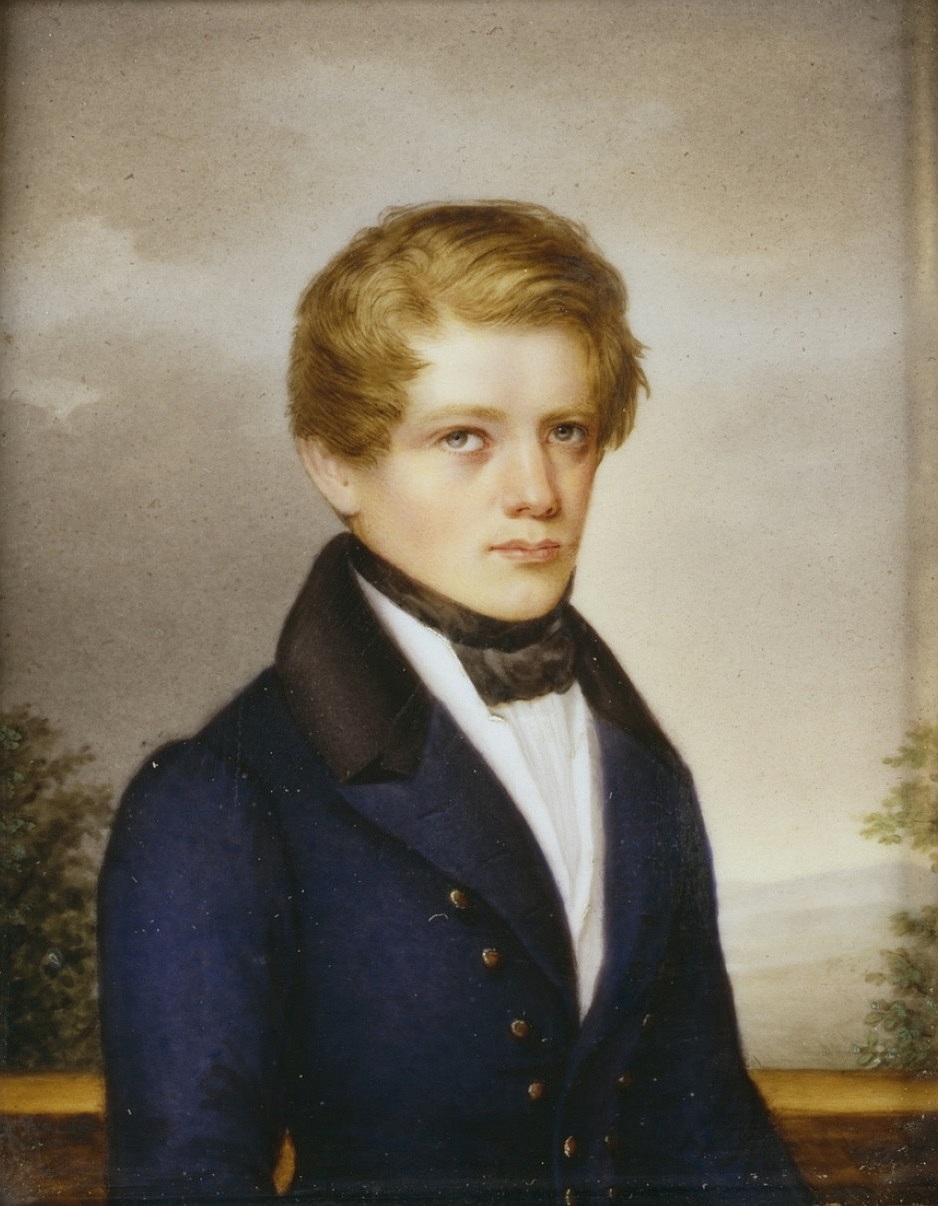
Otto von Bismarck as a Student, 1833. Photo by The Bridgeman Art Library, Object 308444.
This may appear to be an unconventional way to celebrate April Fools’, but it is not for history buffs and International Relations freaks. Bismarck was born on April 1st, 1815, which coincided with the modern celebration of April Fools’.
Bismarck was born in Schönhausen, a noble family estate in Prussian Saxony west of Berlin. He had two siblings: Bernhard, his older brother, and Malwine, his younger sister. The world saw Bismarck as a typical backwoods Prussian Junker, which he aided by dressing in military uniforms. He was, however, well-educated and cosmopolitan, with a talent for conversation. Bismarck was also fluent in German, French, Italian, Polish, and Russian.
2. He was sent to Berlin as a delegate to the Prussian parliament
Bismarck, then 32 years old, was appointed to the newly formed Prussian legislature, the Vereinigter Landtag, in 1847. There, he established a reputation as a royalist and reactionary politician with a gift for stinging rhetoric; he openly advocated the monarch’s divine right to rule.
3. Bismarck was elected to the Landtag in 1849
At this point in his career, he was opposed to German unification, arguing that Prussia would lose its independence as a result. He accepted his appointment as one of Prussia’s representatives at the Erfurt Parliament, a meeting of German states to discuss plans for union, but only to more effectively oppose that body’s proposals.
The parliament was unable to achieve unification because it lacked the support of the two most powerful German states, Prussia and Austria. In September 1850, following a dispute over the Electorate of Hesse, Austria (backed by Russia) humiliated and forced Prussia to back down; a plan for German unification under Prussian leadership, proposed by Prussia’s Minister-President Radowitz, was also abandoned.
4. Bismarck was appointed as ambassador to Russia and France
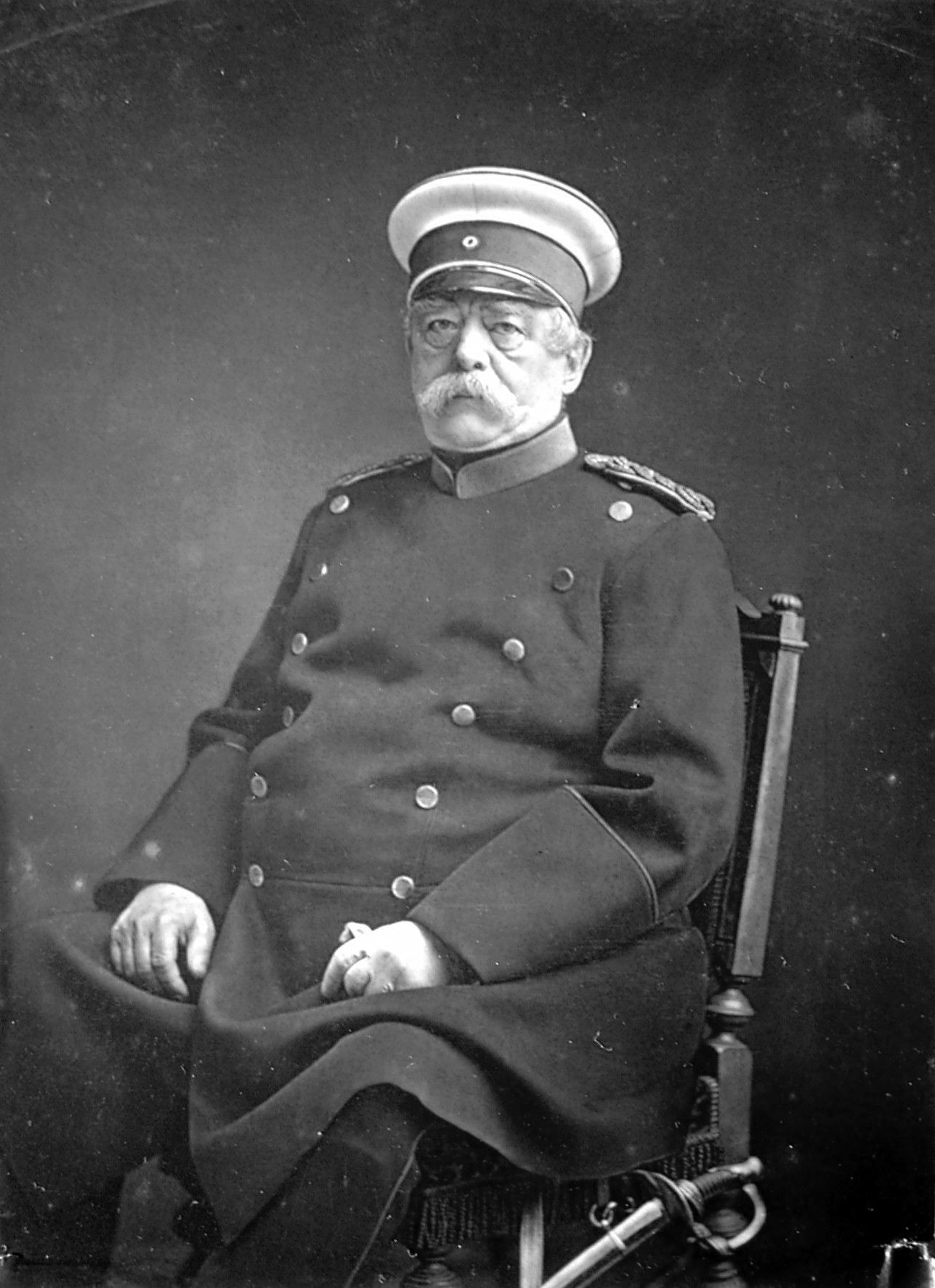
Otto von Bismark. Photo by AD.BRAUN & Cie Dornach.
Frederick William IV suffered a paralyzing stroke in October 1857, and his brother Wilhelm took over the Prussian government as Regent. Wilhelm appointed new ministers as part of his “New Course.” Bismarck was quickly replaced as envoy in Frankfurt by the Regent, who also appointed him as Prussia’s ambassador to the Russian Empire. This was a promotion in theory, because Russia was one of Prussia’s two most powerful neighbors.
However, Bismarck was isolated from German events and could only watch helplessly as France drove Austria out of Lombardy during the Italian War of 1859. Bismarck proposed that Prussia take advantage of Austria’s weakness by relocating her borders “as far south as Lake Constance” on the Swiss border; instead, Prussia mobilized troops in the Rhineland to deter further French advances into Venetia.
Bismarck stayed in St Petersburg for four years, nearly losing his leg due to poor medical care, and met his future adversary, Russian Prince Gorchakov, who had been the Russian representative in Frankfurt in the early 1850s. In addition, the Regent appointed Helmuth von Moltke as the new Chief of Staff of the Prussian Army, and Albrecht von Roon as Minister of War in charge of reorganizing the army. Bismarck, Moltke, and Roon transformed Prussia over the next twelve years.
Despite his long stay, Bismarck was not completely removed from German domestic affairs. Because of Roon, with whom Bismarck formed a lasting friendship and political alliance, he remained well-informed. He was sent to Â鶹APP in May 1862 to serve as ambassador to France, and he also visited England that summer. During these visits, he was able to meet and assess several adversaries.
5. Wilhelm was hesitant to appoint Bismarck as Prussian Minister-President
When Frederick Wilhelm IV died in 1861, Prince Wilhelm ascended to the throne of Prussia. The new monarch frequently clashed with the increasingly liberal Prussian Diet (Landtag). In 1862, a crisis arose when the Diet refused to authorize funding for a proposed army reorganization.
The King’s ministers were unable to persuade legislators to pass the budget, and the King refused to make concessions. Wilhelm threatened to abdicate in favor of his son, Crown Prince Frederick William, but Bismarck was the only politician capable of handling the crisis. Wilhelm, on the other hand, was hesitant to appoint someone who demanded total control over foreign affairs.
On the advice of Roon, Wilhelm was persuaded to recall Bismarck to Prussia in September 1862, after the House of Deputies overwhelmingly rejected the proposed budget. Wilhelm appointed Bismarck Minister-President and Foreign Minister on September 23, 1862.
6. Bismarck started war with Austria

Otto Von Bismarck. Photo by Mathew Benjamin Brady.
He used the accusations made by Austria of violating the Gastein Convention as an excuse to start a war with them. He dispatched Prussian troops to take over Holstein. Provoked, Austria sought the assistance of other German states, which quickly joined the Austro-Prussian War.
The Prussian army was nearly equal in size to the Austrian army thanks to Roon’s reorganization. The Prussian army fought battles it could win thanks to Moltke’s strategic genius. Bismarck had also formed an unspoken alliance with Italy, which coveted Austrian-controlled Veneto. With Italy’s entry into the war, the Austrians were forced to divide their forces.
The conflict lasted seven weeks. Austria possessed a seemingly powerful army that was allied with the majority of north German and all south German states. Nonetheless, Prussia triumphed in the decisive Battle of Königgrätz. The King and his generals wanted to march on to Vienna.
Bismarck was concerned that Prussian military fortunes might change or that France might intervene on Austria’s side, enlisted the help of Crown Prince Frederick Wilhelm, who had opposed the war but had commanded one of the Prussian armies at Königgrätz, to persuade his father after stormy arguments. Instead, he insisted on a “soft peace” with no annexations or victory parades so that friendly relations with Austria could be quickly restored.
7. Bismarck was injured after a failed assassination attempt

Bismarck Monument in Norden. Photo by Vitold Muratov.
A German radical named Ferdinand Cohen-Blind attempted to assassinate Bismarck in Berlin by shooting him five times at close range. Bismarck was only slightly hurt. Cohen-Blind later committed suicide in prison.
8. Otto von Bismark invented pensions
One of Bismarck’s most overlooked achievements was his idea to provide government assistance to the elderly; in other words, he invented the concept of the state pension. Despite being the consummate conservative, Bismarck was accused of being a socialist for even considering state-aided assistance to the elderly. But he was only concerned with keeping the country growing.
The German retirement system did not fully take effect until 1889, when it was extended to people over the age of 70. Of course, average life expectancy in that era was lower than it is now, so the German government did not pay nearly as much on state pensions as the average government does in the modern era. In fact, the choice of age was motivated by cynicism. It was the average life expectancy in Germany at the time, so the government clearly wanted to save money while appearing to capitulate to public opinion. In addition, the system provided disability and contributory retirement benefits.
Germany almost had the full set of social insurance programs when the retirement system was established; sickness insurance was established in 1883, and the worker’s compensation program followed suit in 1884. The unemployment insurance program completed the system in 1927.
9. He projected the image of a Prussian Junker by wearing military uniforms
Otto von Bismark. Photo by AD.BRAUN & Cie Dornach.
Wearing military uniforms was one way Bismarck tried to cultivate the image of belonging to the Prussian Junker class throughout his life. He did, however, only serve in the army for a short time before returning home and establishing a career as a diplomat. Despite his later negotiating skills, he began his career by launching a series of wars to expand the Prussian Empire.
10. Bismark jeopardized his law career trying to pursue two English girls
Although Bismarck aspired to be a diplomat, he began his practical training as a lawyer in Aachen and Potsdam, and resigned soon after, having first jeopardized his career by taking unauthorized leave to pursue two English girls: first Laura Russell, niece of the Duke of Cleveland, and then Isabella Loraine-Smith, daughter of a wealthy clergyman.
Planning a trip to Â鶹APP ? Get ready !
These are ´¡³¾²¹³ú´Ç²Ô’²õÌý²ú±ð²õ³Ù-²õ±ð±ô±ô¾±²Ô²µÂ travel products that you may need for coming to Â鶹APP.
Bookstore
- The best travel book : Rick Steves – Â鶹APP 2023 –Ìý
- Fodor’s Â鶹APP 2024 –Ìý
Travel Gear
- Venture Pal Lightweight Backpack –Ìý
- Samsonite Winfield 2 28″ Luggage –Ìý
- Swig Savvy’s Stainless Steel Insulated Water Bottle –Ìý
We sometimes read this list just to find out what new travel products people are buying.


