
 English


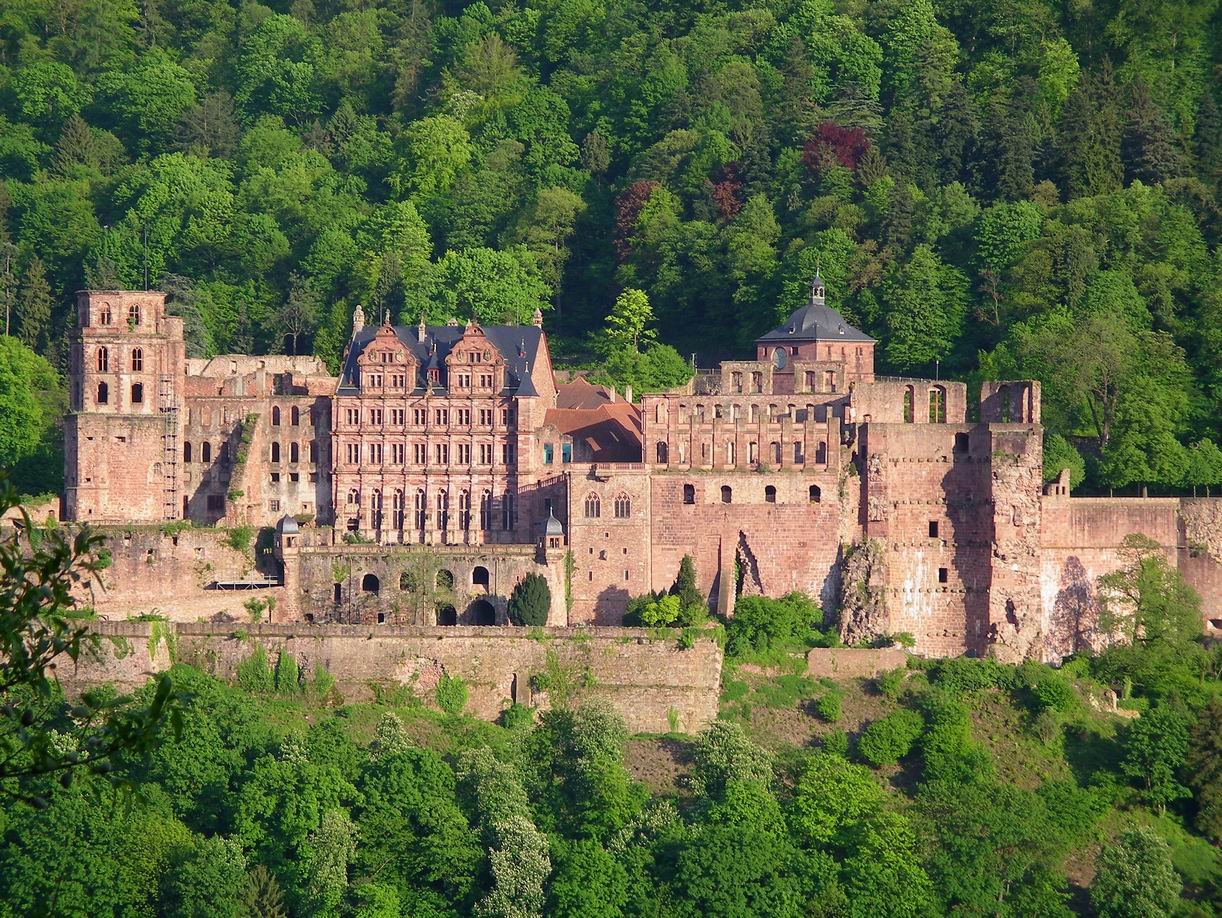
Heidelberg castle. Photo by Reinhard Wolf –
Top 10 Remarquable Facts about Heidelberg Castle
Heidelberg Castle, sometimes referred to as 5D Castle locally, is a landmark and ruin in the German city of Heidelberg. Among the most significant Renaissance buildings north of the Alps are the castle ruins.
Since it was destroyed in the seventeenth and eighteenth century, the castle has only been partially reconstructed. It dominates the perspective of the historic district because it is 80 meters (260 feet) up the northern slope of Königstuhl.
The Heidelberger Bergbahn funicular railway, which connects Heidelberg’s Kornmarkt with the Königstuhl’s peak, stops at an intermediate station near it. The first castle construction was constructed before 1214, and it was later enlarged into two castles around 1294.
However, the upper castle was destroyed by lightning in 1537. Here are the top ten fascinating facts about Heidelberg Castle;
1.The castle is situated in the same-named town
On a hilltop overlooking Heidelberg, a university town in the German state of Baden-Württemberg on the Neckar, stands the destroyed fortress known as Heidelberg Castle. This is located in the country’s southwest, around 50 kilometres (30 miles) north of Germany’s Black Forest, another well-liked tourist area. The enormous castle is situated on what is known as the “Königstuhl hillside,” making it a prominent landmark in the community.
2.A reference to the castle dates back to 1214
The history of the castle’s building is extensive. The first building was constructed before the year 1214, when it was first formally referred to as a “castrum” (castle, in Latin). It was constructed as the home of the “Count Palatine,” a representative of the Imperial Palace. As a result, the area surrounding the town came to be known as the “Electorate of the Palatinate,” and it was for this reason that a castle was built here.
3. At the beginning of the 14th century, it was converted into two fortresses
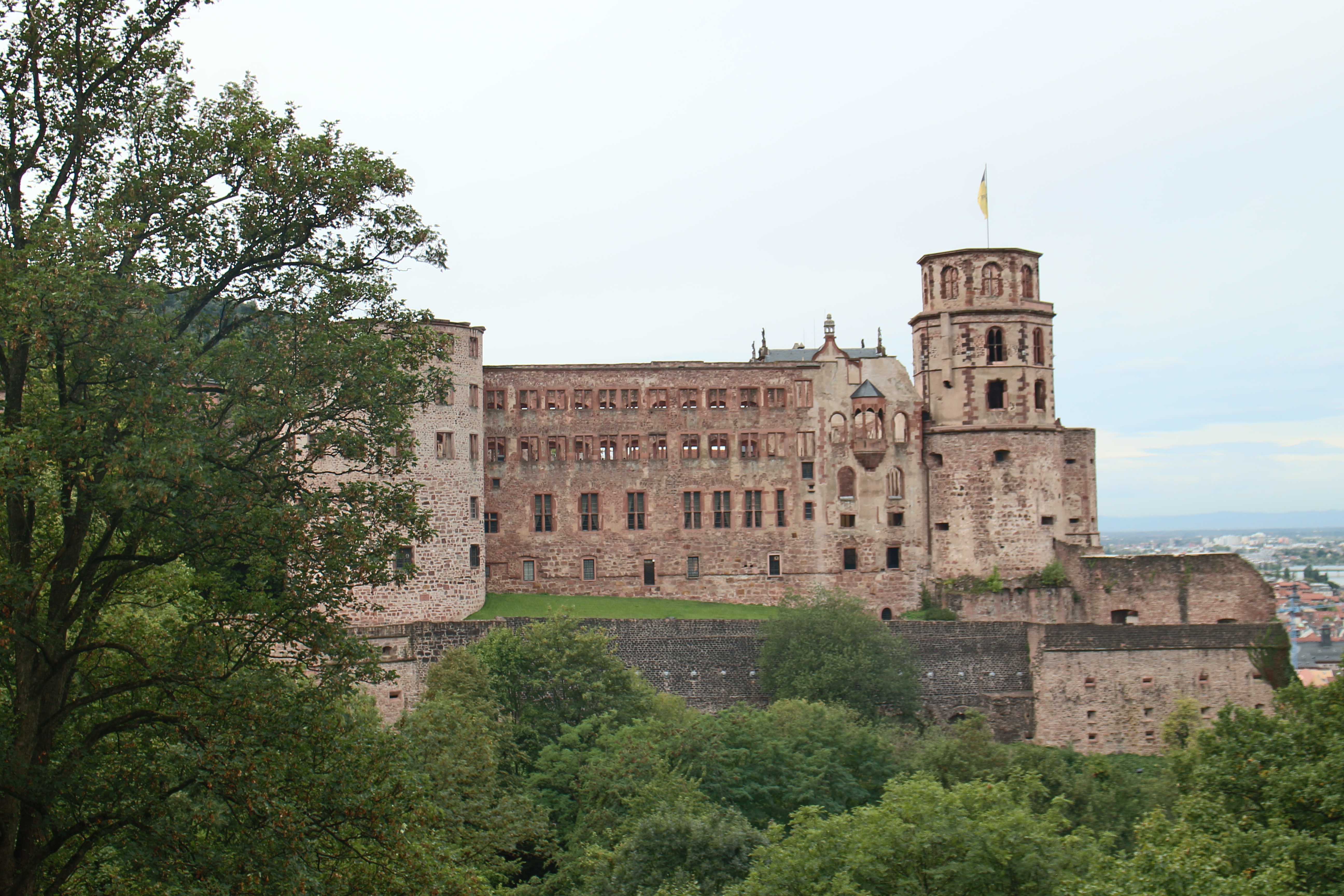
Heidelberg Castle. Photo by Suicasmo –
Heidelberg Castle was last referred to as a single castle in the year 1294. It was referred to as a double castle with both an upper and lower building when it was next recorded in 1303.
However, this does not imply that the castle was as large as it is today. In 1401, Rupert of the Palatine assumed the throne of Germany and thought the castle was far too small for him and his court.
However, at this time in the early 15th century, it was extended, and in the decades that followed, it developed into a strong fortified bastion.
4.Lightning and conflicts destroyed a large portion of the fortress
The fact that Heidelberg Castle was destroyed numerous times during its history is one of its most amazing historical details. The upper castle was completely destroyed by a lightning strike and subsequent fire in 1537, which was a terrible tragedy.
The fact that this occurred only 9 years after the construction of the main gate underlines how constantly the castle was growing. Frederick V, popularly known as the “Winter King,” introduced some of the most significant improvements in the early 17th century.
After all, he needed to win over his future wife, Elizabeth Stuart, the daughter of the English king.
5.The Eight Wonder of the World used to be right adjacent to the castle, and Frederik V didn’t mess about, that much is certain

Heidelberg Castle – Heidelberg – Germany. Photo by José Luiz –
In 1614, he gave the go-ahead to build the “Hortus Palatinus.” In the 17th century, this rose to fame as one of the most magnificent Renaissance gardens ever created, and it spread throughout all of Europe.
As it astounded everyone who saw it, this garden rose to such fame that it was dubbed the “Eighth Wonder of the World” at the time. But in 1619, a conflict erupted between Frederik V and Emperor Ferdinand II over the Bohemian monarchy.
After losing the Battle of White Mountain, he was forced to retreat to The Hague, abandoning his grand undertaking.
During the next Thirty Years War, the gardens were primarily damaged while being employed as an artillery position. Due to a three-decade-long battle, it was never reconstructed due to a lack of funding.
6.A court dwarf used to defend Heidelberg Castle
Before the Treaty of Ryswick, which ended the Nine Years’ War between France and the Grand Alliance in 1697, the French continued to demolish the castle in the late 17th century. During this time, Charles III Philip, Elector Palatine, was in command of the castle.
He even had intentions to restore it after the French destroyed it, but he delayed the project because it appeared to be too expensive.
However, he did keep a lot of wine at the castle, so someone had to keep an eye on it. He set up the local town idiot known as “Perkeo of Heidelberg” to keep an eye on it because of this. One of the funniest Heidelberg Castle trivia is that Perkeo, the renowned court jester and dwarf, eventually evolved into the unofficial mascot of Heidelberg.
7.Romantic artists got attracted to the castle

Heidelberg Castle. Photo by Roger-
Due to a theological dispute, the court—which was still located at Heidelberg Castle—moved to the city of Mannheim around 1720. This indicates that the castle was entirely abandoned, which led to the continued deterioration of the ruin.
The castle was rediscovered during the Romantic movement at the beginning of the 19th century, and possibly even a little earlier, and was thought to be the ideal subject for paintings and poetry.
During his repeated visits between 1817 and 1844, one of the most well-known Romantic painters by the name of J. M. W. Turner regularly depicted the picturesque and romantic ruin in his works.
8.Probably one man prevented the fortress from being destroyed
One of the most interesting facts about Heidelberg Castle is that without the efforts of one guy, who wasn’t even a local, the castle would have likely been completely destroyed. Count Charles de Graimberg (1774–1864), a French artist, was forced to leave his country during the French Revolution.
He spent some time in England and other parts of Europe before settling in Heidelberg. Even though the local government frequently considered dismantling the castle, he remained here for the rest of his life and actively battled for its preservation.
9.At the end of the 19th century, just one structure has been renovated
While the majority of the castle is still a ruin, you might have observed that one of the structures appears to be in reasonably good condition. This structure, known as the “Friedrich Building,” was severely damaged by fire but was unaffected by warfare or lightning.
In the end, only one structure underwent renovations, which took place between 1897 and 1900 and cost 525,000 marks—a sizable sum at the time! At this time, it was also decided to leave the remaining castle ruins, including those of the Renaissance garden, in their present state.
10.When Heidelberg became train accessible, tourism increased

Heidelberg castle. Photo by Malis-
One must concede that ruins can be charming in their own right. After visiting Heidelberg in the 19th century, famous American author Mark Twain succinctly expressed the same emotion in his travelogue “A Tramp Abroad” published in 1880: “For a ruin to be effective, it must be strategically placed. There was no place for this one better than this.
It has a dominating elevation, is covered in lush vegetation, and lacks any flat areas. Instead, there are wooded terraces upon terraces from which one can look down into vast chasms and abysses where twilight rules and the sun cannot shine. Nature is skilled at adding the right finishing touches to ruins.�
Described by Mark Tain is Heidelberg Castle. When the railway network expanded and connected Heidelberg to the rest of the region in 1840, Twain was one of the numerous tourists who benefited. Germany’s third-largest city, Heidelberg, has seen a steady increase in tourists, with many of those coming to see the castle being Americans and Japanese.
One of the most well-liked tourist spots in Germany, the area receives millions of visitors each year!
Planning a trip to Â鶹APP ? Get ready !
These are ´¡³¾²¹³ú´Ç²Ô’²õÌý²ú±ð²õ³Ù-²õ±ð±ô±ô¾±²Ô²µÂ travel products that you may need for coming to Â鶹APP.
Bookstore
- The best travel book : Rick Steves – Â鶹APP 2023 –Ìý
- Fodor’s Â鶹APP 2024 –Ìý
Travel Gear
- Venture Pal Lightweight Backpack –Ìý
- Samsonite Winfield 2 28″ Luggage –Ìý
- Swig Savvy’s Stainless Steel Insulated Water Bottle –Ìý
We sometimes read this list just to find out what new travel products people are buying.


