
 English


Image by from
Top 10 Remarkable Facts about Goslar, Germany
This small town of 46,000 was one of the most important places in Germany for centuries. The Rammelsberg mine was also the major source of copper for Europe during the Middle Ages.
Goslar city, Lower Saxony Land (state), north-central Germany. It lies at the northern foot of the Harz Mountains, south of Braunschweig. Founded in 922 and quickly became a favourite residence of the early Holy Roman emperors.
The town of Goslar sits on the northeast edge of the Harz Mountains. For hundreds of years, it was a prosperous mining town and wealth poured in from the silver mine of Rammelsberg just on the outskirts. It has streets of beautifully-carved, half-timbered houses. Goslar has the largest number of old houses in Germany, between 1500 to 1800 of them.
Today, the Rammelsberg mines have been depleted of all their wealth, but the town of Goslar and the Rammelsberg Mines are important tourist sites. The city serves as a reminder that it takes just one landmark discovery to shift the fortunes of an entire town, region and country. Here are the top 10 remarkable facts about Goslar, Germany.
1. Heinrich III is Central to Goslar’s History

Henry III, Holy Roman Emperor,. Image by Stefan Weinfurter et al from
After taking office in 1039, King Henry III started to build a Palatinate in Goslar as a seat of government. At the same time, he founded two large churches and promoted the urban development of Goslar. His master plan for Goslar was to subordinate the Saxon nobility and take over the mines in the Harz Mountains to secure his domination.
Because of the measures of Henry III, Goslar became one of the most important governmental centres of the ruling kings and emperors in the Middle Ages for two centuries. Furthermore, Heinrich III at the end of his days decreed that his heart and his bowels should be buried in Goslar, in the collegiate church of St. Simon and Judas which he had founded.
2. Imperial Palace of Goslar is the Best Preserved Secular Building of the 11th Century in Germany

Image by from
An outstanding example of medieval secular architecture is the Kaiserpfalz in Goslar, built in the Romanesque style. It is the largest, oldest and best preserved secular building of the 11th century in Germany.
Until the year 1219, the Great Imperial Hall housed 23 Reichstag. There you can admire the oversized mural paintings from the 19th century that tell the story of the Holy Roman Empire.
The large exhibition presents, in addition to many testimonies of the time, the famous, medieval Kaiserstuhl—the throne of the German emperors and kings, created from Rammelsberger ore.
3. Goslar is a UNESCO World Heritage Site

Image by from
The Rammelsberg mine and Goslar’s historic city centre were designated a UNESCO World Heritage site in 1992. The Old Town of Goslar and the Mines of Rammelsberg are UNESCO World Heritage Sites for their millennium-long testimony to the history of ore mining and their political importance for the Holy Roman Empire and the Hanseatic League.
Two-thirds of its buildings are historically listed. Their elaborate ornamentation testifies to the status and wealth of their former owners. The Old Town still has about 1500 half-timbered buildings crowded into an area a mere square kilometre in size.
4. Goslar’s Rolling Rulers
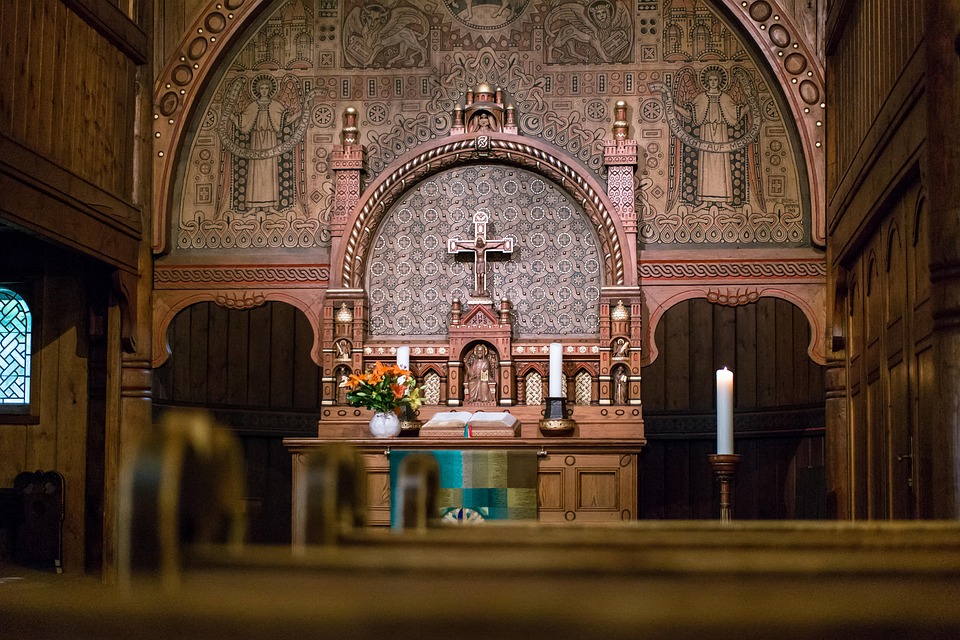
Image by from
When Otto’s descendant Henry II began to convene Imperial synods at the Goslar palace from 1009 onwards, Goslar gradually replaced the Royal palace of Werla as a central place of assembly in the Saxon lands. This development was reinforced by the Salian (“Franconian”) emperors. Conrad II once elected King of the Romans, celebrated Christmas 1024 in Goslar and had the foundations laid for the new Imperial Palace the next year.
The scene of frequent meetings of the Reichstag (legislative assembly) in the 11th and 12th centuries, it joined the Hanseatic League in the 13th century. After obtaining an imperial provostship in 1290, it was an imperial free city until annexed by Prussia in 1802. It passed to Westphalia in 1807, to Prussia in 1814, to Hanover in 1815, and, with the Hanoverian kingdom, back to Prussia in 1866.
5. Goslar was the Centre of Nazi Agriculture
The German chancellor Adolf Hitler made it the headquarters of the Nazi agricultural organization in 1936.
The Fourth Reich Farmers’ Rally 1936, held in Goslar, made it a designated Reich Farmers’ City. Thus the old imperial city of Goslar became the centre of agriculture and agricultural administration.
For the first time, the concept of Reich Farmers’ City Goslar as the centre of Nordic-German farming, of the state idea of blood and soil reached far beyond the Reich borders. This drew the attention of many states and peoples throughout the world. The Fourth Reich Farmers’ Rally was thus not only a German gathering in a narrow sense but rather its form and spiritual aims were an event of international significance.
6. Goslar hosted Internal Refugees During WWII

Image by Armenian refugees (LOC) from
When travelling through Europe, it is still very easy to see the trail of distraction left by World War II. The conflict wiped out centuries of art, treasures and history that time had been gathered across the old continent. Germany received its share and saw most of its urban centres reduced to piles of rubble. Undamaged during World War II, the Goslar city received many refugees from elsewhere in Germany.
The city survived the war without damage due in part to the presence of a POW hospital and is an amazingly well-preserved example of a town of the late middle ages. Goslar ended up in West Germany after the war, unlike most of the other Harz towns, so it was maintained better over the years compared to the places that found themselves east of the border.
7. Goslar is a Bustling Tourist Centre
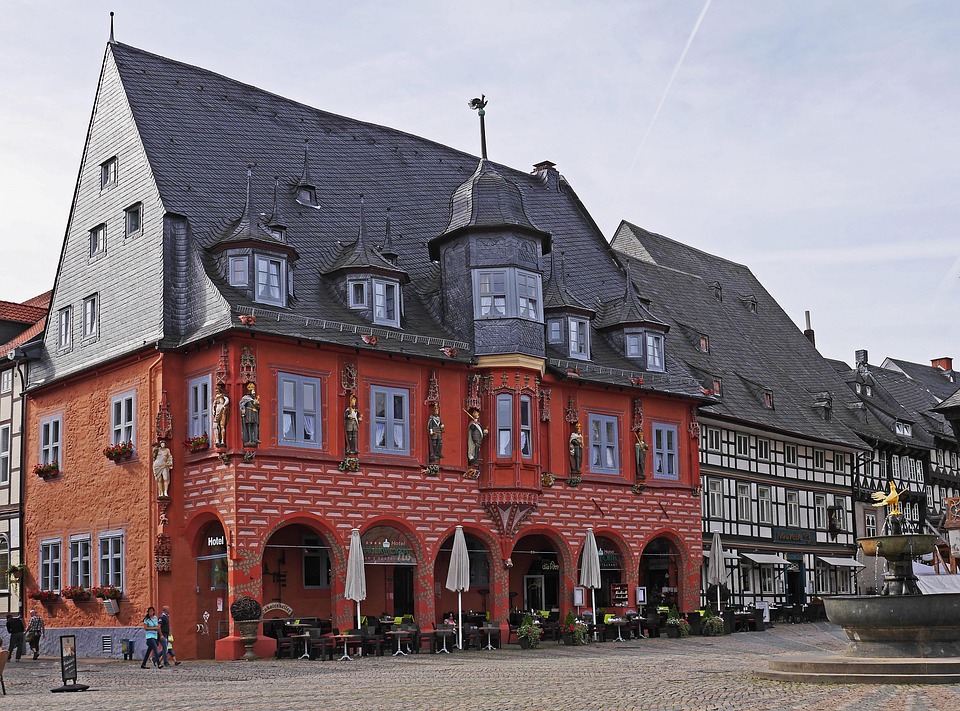
Image by from
Goslar is a tourist center, and it is an important gateway for tourists to the Harz Mountains. The 1,000-year-old town of Goslar is an exciting destination for a city trip as it is nestled in natural surroundings on the slopes of the Harz Mountains. Its special historic flair and cultural treasures attract visitors from far and wide to the Imperial City.
There are interesting stone and half-timbered buildings from the 13th–16th centuries and guild halls belonging to the bakers’ and cloth merchants’ guilds; the latter (1494) is now the Kaiserworth Hotel. The Imperial Palace (c. 1040, restored late 19th century) was built by Emperor Henry III, whose tomb is in St. Ulrich Chapel. The 12th-century town hall, later rebuilt, contains a unique homage chamber.
Its impressive tourist attractions also include museums and the remaining parts of the old city walls.
8. Goslar Cathedral used to be the Biggest Romanesque Style Church in the eastern part of the Rhine

Image by Natalia19 from
It was built between 1040 and 1050 as part of the Imperial Palace district. The church building was demolished in 1819–1822; today, only the porch of the north portal is preserved. It was a church of Benedictine canons. Surviving medieval monastery and parish churches include the Neuwerkkirche, St. James’s, the Market Church and the Frankenberg Church.
After it was built, Goslar Cathedral was the biggest Romanesque style church in the eastern part of Rhine. Goslar Cathedral’s architectural design and style served as an influence for several church buildings built during the Middle Ages.
Goslar Cathedral is also renowned for its ornate furnishings, especially the Imperial Throne of Goslar dating back to the 11th Century and the Krodo Altar made of bronze. Today, you can only the north portal’s porch remains.
Practical Information
Kaiserbleek 1-8, Georgenberg, Goslar, Germany, 38640
9. Goslar Museum

Image by from
In a monastery curia built in 1514, the Goslar Museum displays extensive collections on the history and art history of the city and on the geology and mineralogy of the region.
In addition to outstanding objects – such as the famous Krodo altar (early 12th century), the Goslar Gospel (13th century), a coin collection with well over 1000 Goslar imprints, the “mountain can� from 1477 and the original of the Goslar fountain eagle from the 14th century. The everyday life of the city bourgeois is also in the spotlight for 10 centuries. A fascinating journey through time.
Apart from the city of Goslar, the Goslar Museum is sponsored by the Goslar Natural Sciences Association and the Goslar Museum Association.
Practical Information
Phone: 05321-43394
Address: Goslar Museum Königsstraße 138640 Goslar
Opening hours: November to March 10:00 a.m. – 4:00 p.m.
April to October 10:00 a.m. – 5:00 p.m.
Closed on Mondays.
10. Goslar is an Industrial Town

Image by from
Goslar began as a sleepy town located on the northwestern slopes of the mountains in central Germany. It began to develop as a mining town during the 10th century.
Rammelsberg-Goslar is the largest and longest-lived mining and metallurgical complex in the central European metal-producing region whose role was paramount in the economy of Europe for many centuries. It is a very characteristic form of an urban-industrial ensemble which has its most complete and best-preserved expression in Europe at Rammelsberg-Goslar.
In addition, it produces chemicals, synthetic materials, building materials, paper, glass, metal products, textiles, foodstuffs, and electrical products.
Planning a trip to Â鶹APP ? Get ready !
These are ´¡³¾²¹³ú´Ç²Ô’²õÌý²ú±ð²õ³Ù-²õ±ð±ô±ô¾±²Ô²µÂ travel products that you may need for coming to Â鶹APP.
Bookstore
- The best travel book : Rick Steves – Â鶹APP 2023 –Ìý
- Fodor’s Â鶹APP 2024 –Ìý
Travel Gear
- Venture Pal Lightweight Backpack –Ìý
- Samsonite Winfield 2 28″ Luggage –Ìý
- Swig Savvy’s Stainless Steel Insulated Water Bottle –Ìý
We sometimes read this list just to find out what new travel products people are buying.


