
 English


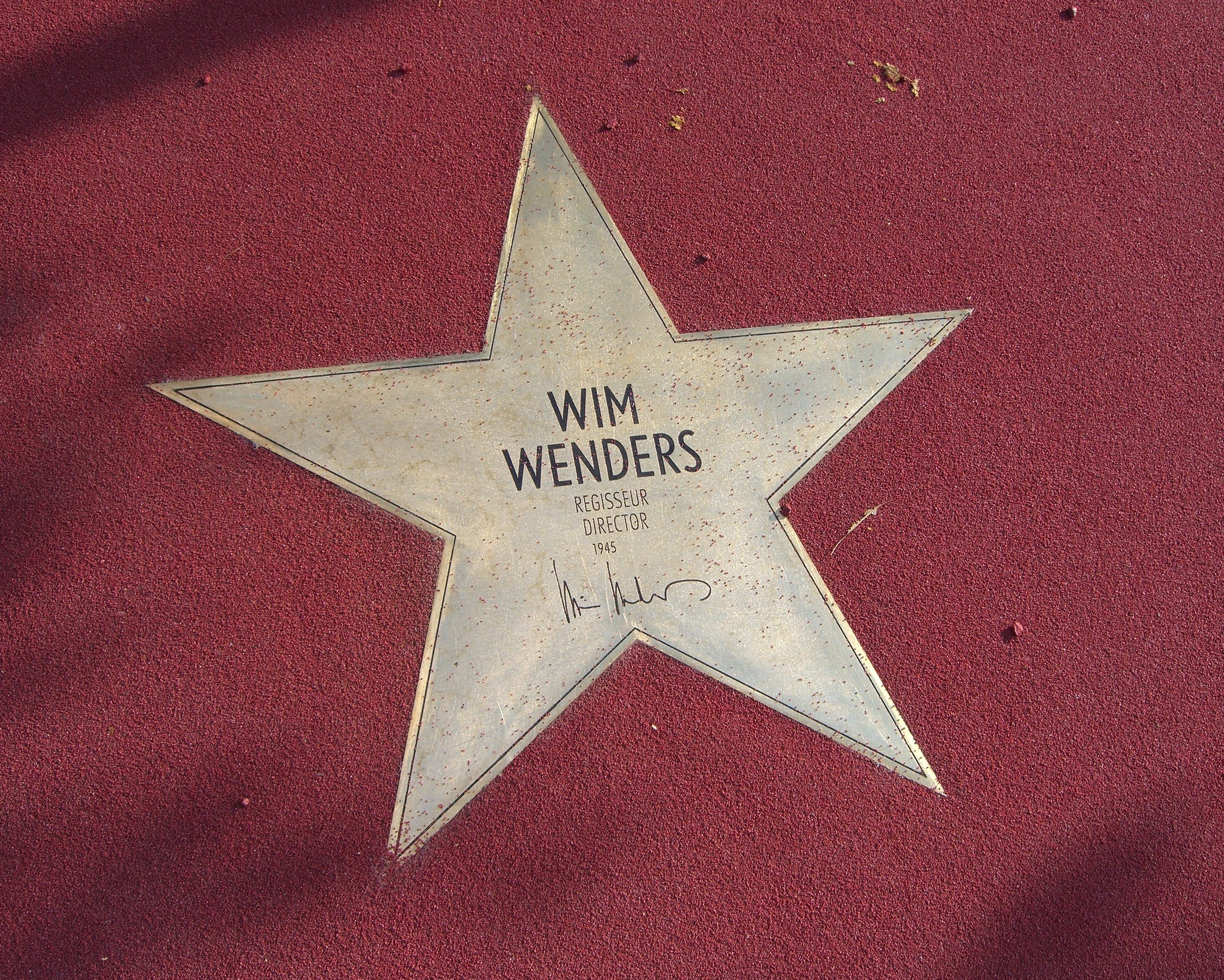
Star of Wim Wenders. Photo by Times.
Top 10 Little Known Facts about Wim Wenders
Wim Wenders is a product of post-war (West) Germany, having been born just a few months after the end of WWII. An obsession with the primarily American (but also British) pop culture of comic books, pinball machines, and, most importantly, rock and roll was a formative element in Wenders’ youth.
Wenders, the movement’s most commercially successful exponent, has become known as the most “American” member of the movement, both in terms of his filmic content and the measure of success he has achieved in carving his own niche as a European filmmaker in America. Wenders is also the only’member’ of the 1970s German film movement to have attended film school (the other being Rainer Werner, then a theatre director/playwright).
He and his wife, Donata Wenders, live and work in Berlin. Before moving to Â鶹APP in 1966 to study painting, Wim Wenders studied medicine and philosophy. He spent his afternoons and evenings at the Cinématèque Francaise, despite ostensibly pursuing an apprenticeship in the studio of graphic designer and engraver Johnny Friedlaender. This “crash course in film history” would prove to be the most important stage in Wenders’ education, as he soon began to see film as a “extension of painting by other means.”
1. Wenders dropped out of medical school
Wenders, the son of a chief doctor at a Catholic hospital, dropped out of a medicine degree program in Munich after two semesters four years before deciding to study filmmaking. He then went to Freiberg to study philosophy, then returned to Düsseldorf to study sociology before abandoning his university studies entirely. Wenders was more interested in watercolour painting at this point than in pursuing an academic career.
2. Wenders was rejeted from two of France’s most prestigious art schools
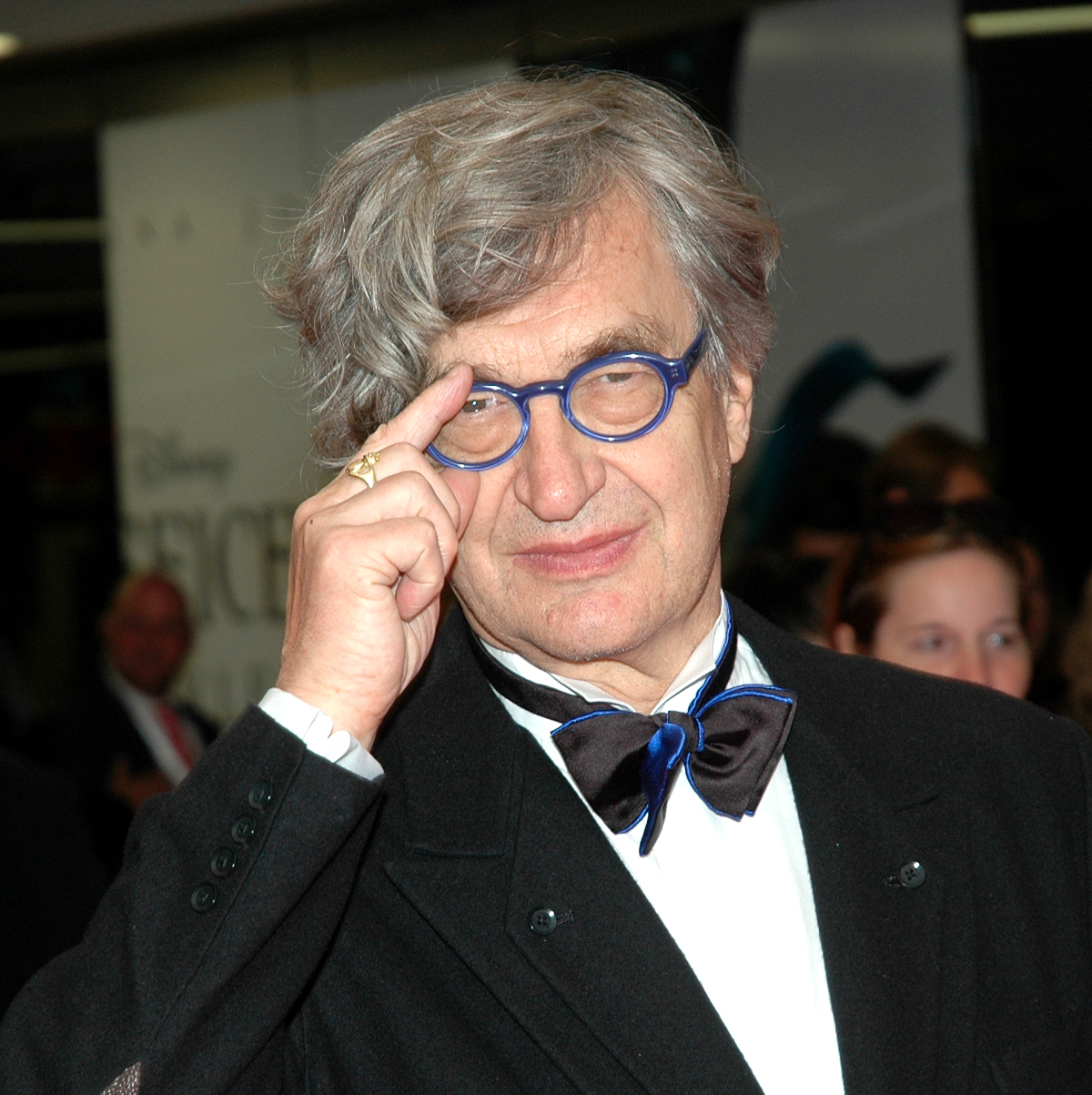
Wim Wenders. Photo by Harald Bischoff.
Wenders relocated to France to further his studies, this time with an artistic bent. He applied to the Ecole des Beaux-Arts and then to the prestigious Institut des Hautes Etudes Cinematographiques (IDHEC). After being rejected on both occasions, he eventually began an apprenticeship in copperplate engraving with Johnny Friedlander after being denied admission to the IDHEC.
He was extremely lonely at the time. The combination of isolation and a freezing Â鶹APPian apartment created the ideal conditions for him to study film more intensively than anywhere else in the world. Every evening, from the time Friedlander’s studio closed until midnight, Wenders could be found alone at Henri Langlois’ Cinémathèque, viewing some of the world’s most significant cinematic works. Wenders saw over a thousand films during his year in Â鶹APP.
3. He enrolled at the University of Television and Film in Munich

Wim Wenders. Photo by Harald Benutzer:Smalltown Boy.
Wenders returned to Munich to begin studies at the newly established Hochschule für Film und Fernsehen, but first he completed a three-month internship at United Artists’ Düsseldorf office. This unpleasant experience at United Artists was later recounted in 1969 in a short essay titled “Verachten was verkauft wird” (“Hate what is to be sold”)
After graduating from the academy in 1971, he co-founded the Filmverlag der Autoren with fifteen other directors and authors, a film distribution company for German auteur films that organized the production, rights administration, and distribution of their own independent films.
4. He was a key figure in the New German Cinema movement
Wenders’ career began in the late 1960s, during the era of New German Cinema. A long-term collaboration with Dutch cinematographer Robby Müller resulted in much of the distinctive cinematography in his films.
Collaborations with avant-garde authors Sam Shepard and Peter Handke resulted in Â鶹APP, Texas and Wings of Desire. Wenders’ second feature film, The Goalkeeper’s Fear of the Penalty, was based on Handke’s novel The Goalie’s Anxiety at the Penalty Kick. Wings of Desire was co-written by Handke.
5. Wim Wenders was on the verge of quitting production

Wim Wenders. Photo by Rulo.
Wenders relocated to New York City and began work on Alice. His project nearly died when he went to see a preview screening of Peter Bogdanovich’s Paper Moon (1973) and discovered, to his horror, that the film he was working on had an identical plot to Paper Moon.
In desperation, Wenders contacted maverick American director Sam Fuller at his home in Hollywood (the pair had met in Germany while Fuller was filming Dead Pigeon on Beethoven Street [1972], which was also produced by WDR). They reworked Alice’s story together, and Wenders, who had been contemplating retirement, was able to make the film that cemented his resolve to continue.
6. Wenders is a skilled photographer
Person holding DSLR camera. Photo by Brandon Erlinger-Ford.
He has traveled the world photographing desolate landscapes and abandoned urban areas. He’s done this to explore themes of memory, time, loss, nostalgia, and movement.
He began his long-running project “Pictures from the Earth’s Surface” in the early 1980s and worked on it for the next 20 years. The first photographic series, “Written in the West,” was created while Wenders was touring the American West in preparation for his film Â鶹APP, Texas (1984). It became the starting point for a nomadic journey around the world, stopping in Germany, Australia, Cuba, Israel, and Japan to capture the essence of a moment, place, or space.
7. The Vatican wrote to Wenders, asking him to make a film about Pope Francis
Wenders stated in a 2018 interview that his favorite film of all time was his film about Pope Francis, and that his entire career had been leading up to it. His admiration for Francis is deep. He believes Francis is doing his best in a world full of disasters. He also stated that, despite being raised Catholic, he had converted to Protestantism years before.
8. Wenders prefers using 3D to immerse audiences in his characters

Wim Wenders. Photo by Siebbi.
Wenders revealed in 2012, that as he was promoting his 3-D dance film Pina, he had begun work on a new 3-D documentary about architecture. He also stated that he would only work in 3-D from then on. Wenders had admired dance choreographer Pina Bausch since 1985, but it wasn’t until the advent of digital 3-D cinema that he realized he could adequately capture her work on screen.
9. He’s a founding member of Filmverlag der Autoren
Filmverlag der Autoren is a German film distributor founded in 1971 to assist in the financing and distribution of independent films by German Autorenfilm directors, or directors who are known for primarily adapting their own screenplays.
Many New German Cinema directors were associated with it, including Werner Herzog, Rainer Werner Fassbinder, Wim Wenders, Percy Adlon, and Alexander Kluge, whose films were produced and distributed by the Filmverlag and many of whom served on its board.
Efforts to establish the Filmverlag stemmed from the directors’ repeated frustrations in obtaining funding for their politically and aesthetically ambitious films. They felt that the established system, which was partly commercially oriented and partly state-funded, was too limiting, gave them little control over their own work, or simply did not allow for issues as challenging as they wished to address
They founded the Filmverlag as an independent association to have complete control over their projects, from funding to pre-production, production, and post-production. The Filmverlag’s founders modeled their organization after the Verlag der Autoren in Frankfurt, an independent association of stage writers publishing.
10. Wenders is a member of the European Film Academy since its outset
The European Film Academy was founded in November 1988 by a group of European filmmakers who gathered in Berlin for the first presentation of the European Film Awards.
The Academy was officially founded by its first President, Swedish director Ingmar Bergman, along with 40 filmmakers from all over Europe, including Bernardo Bertolucci, Claude Chabrol, Duan Makavejev, István Szabó, and Wim Wenders.
The European Film Academy bestows the European Film Awards on films and filmmakers each year. Every even year, the ceremony is held in a different European city, and every odd year, it is held in Berlin.
Planning a trip to Â鶹APP ? Get ready !
These are ´¡³¾²¹³ú´Ç²Ô’²õÌý²ú±ð²õ³Ù-²õ±ð±ô±ô¾±²Ô²µÂ travel products that you may need for coming to Â鶹APP.
Bookstore
- The best travel book : Rick Steves – Â鶹APP 2023 –Ìý
- Fodor’s Â鶹APP 2024 –Ìý
Travel Gear
- Venture Pal Lightweight Backpack –Ìý
- Samsonite Winfield 2 28″ Luggage –Ìý
- Swig Savvy’s Stainless Steel Insulated Water Bottle –Ìý
We sometimes read this list just to find out what new travel products people are buying.


