
 English


Image by from
Top 10 Intriguing Facts about Berlin’s Museum Island
The Museum Island is a museum complex in the northern part of Spree Island in the historic heart of Berlin. It is one of the most visited sights in Germany’s capital and one of the most important museum sites in Europe.
Berlin’s Museum Island is one of the most outstanding museum complexes in Europe. Five architects designed the impressive architectural ensemble in the heart of the city. Construction was finished in 1930. The museum buildings and the exhibits are equally worth seeing and attract over three million visitors annually.
Besides the museums, the island is also home to the renowned Berlin Cathedral and numerous wonderful park zones on the territory of the Island. Here are the top 10 intriguing facts about Berlin’s Museum Island.
1. Berlin’s Museum Island is a Complex of Museums

Image by broken Sphere from
Berlin’s Museum Island is one of the most outstanding museum complexes in Europe. Five architects designed the impressive architectural ensemble in the heart of the city. Construction was finished in 1930. The museum buildings and the exhibits are equally worth seeing and attract over three million visitors annually.
The Museum Island is so-called for hosting a complex of internationally significant museums, all part of the Berlin State Museums that occupy the island’s northern part.
2. Berlin’s Museum Island is a Unesco World Heritage Site

Photo by on
It’s a UNESCO heritage site and home to 6 popular museums in Berlin. The northern tip of Spree Island which is called Museum Island covers an area of about 8.5 hectares (21 acres). The completion of the first museum happened nearly 200 years ago in the year 1830.
This means that the area in the heart of Berlin has significant historical importance. This has also been recognized as it was dedicated as a UNESCO World Heritage Site in 1999. The island now features 6 amazing museums which are all part of the Berlin State Museums and which hold some of the greatest world treasures. These include:
- The Altes Museum – The “Old Museum� was completed in 1830.
- The Neues Museum – The “New Museum� was completed in 1859.
- The Alte Nationalgalerie – The “Old National Gallery� was completed in 1876.
- The Bode Museum – Situated on the northern tip and opened in 1904.
- The Pergamon Museum – A museum completed in the year 1930.
- The Humboldt Forum – Located inside the reconstructed Berlin Palace and opened in 2020.
3. The Museum Halls hold Exquisite Exhibits
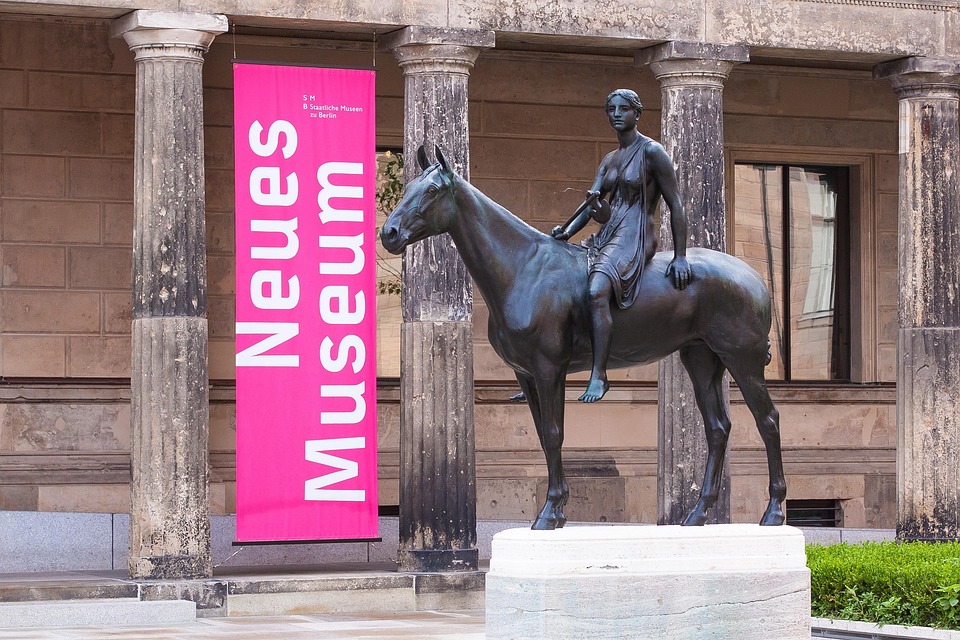
Image by from
A unique ensemble of buildings on Spreeinsel (Spree Island) in the heart of Berlin. It encompasses five large Berlin museums built under the Prussian rulers as well as a reception and exhibition building, the James Simon Gallery which opened in 2019.
In its magnificent halls, it houses a unique collection of sculptures, showcasing exhibits from the Middle Ages to the 19th century, including works from Donatello, Bernini and Canova. Other treasures are housed in the Museum of Byzantine Art and the Numismatic Collection. The museums on the island hold more than 6,000 years of human history.
4. Berlin’s Museum Island Original Name was Royal Museum

Image by from
It was originally called the Königliches Museum (Royal Museum) as it housed the royal art collections but was renamed Altes Museum (Old Museum) in 1945.
The Altes Museum ( Old Museum) is a listed building on Museum Island in the historic centre of Berlin. Built from 1825 to 1830 by the order of King Frederick William III of Prussia according to plans by Karl Friedrich Schinkel, it is considered a major work of German Neoclassical architecture.
It is surrounded by the Berlin Cathedral to the east, the Berlin Palace to the south and the Zeughaus to the west. Currently, the Altes Museum is home to the Antikensammlung and parts of the Münzkabinett. It is part of the Museum Island complex.
5. Berlin’s Museum Island is Located on Spree Island

Image by from
The Museum Island (German: Museumsinsel) is a museum complex on the northern part of the Spree Island in the historic heart of Berlin. It is one of the most visited sights in Germany’s capital and one of the most important museum sites in Europe.
As Museum Island includes all of Spree Island north of the Unter den Linden, the Berliner Dom is also located here, near the Lustgarten. The Museum Island is a museum complex on the northern part of the Spree Island in the historic heart of Berlin. It is one of the most visited sights in Germany’s capital and one of the most important museum sites in Europe.
6. Berlin’s Museum Island was Commissioned by Prussian Kings
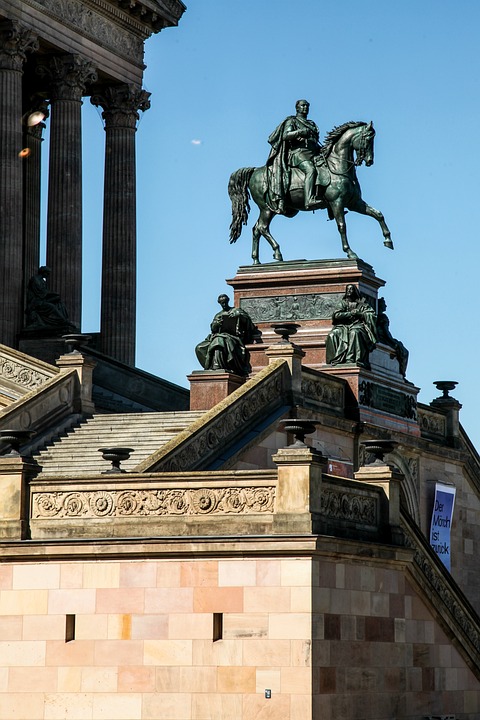
Image by from
Built from 1830 to 1930 by order of the Prussian Kings according to plans by five architects. The first exhibition hall was erected in 1797 at the suggestion of the archaeologist Aloys Hirt. In 1822, Schinkel designed the plans for the Altes Museum to house the royal Antikensammlung, the arrangement of the collection was overseen by Wilhelm von Humboldt.
The island originally a residential area, was dedicated to “art and science” by King Frederick William IV of Prussia in 1841. Further extended under succeeding Prussian kings, the museum’s collections of art and archaeology were turned into a public foundation after 1918. They are today maintained by the Berlin State Museums branch of the Prussian Cultural Heritage Foundation.
7. The Museums aren’t the only Attractions on Berlin Museum Island

Photo by on
Even though the northern section of Spree island is completely occupied with museums, just south of the major thoroughfare in the city we can find multiple other interesting tourist attractions and landmarks.
One of the most iconic churches in the city, Berlin Cathedral, is situated in the central part of the island. One of the most popular public parks in berlin is located right next to this magnificent structure and is called the “Lustgarten.�
This magnificent public space is covered with green lawns and elaborately decorated fountains, an amazing spot to relax in Berlin!
8. There is a Gallery that interconnects Multiple Museums
Right between the Neues Museum and the Spree River you can see a modern-looking building. This is one of the newest additions to the complex and is called the “James Simon Gallery.� It was named after James Simon (1851-1932), a German-Jewish art collector who donated numerous priceless works of art to the Berlin State Museum.
This structure is both an art gallery and visitor center and was only completed in the year 2019 to the design of English architect David Chipperfield at a cost of$ 157 million!
Before the year 1938, this area was occupied by the so-called “Packhof,â€� a building that was originally designed by the architect of the Altes Museum Karl Friedrich Schinkel. Today, it serves the same purpose as the Louvre Pyramid does for the Louvre Museum in Â鶹APP as it welcomes visitors to the museum complex.
9. Berlin Museum Island was Inspired by the Age of Enlightenment

Image by from
The museum as a social phenomenon owes its origins to the Age of Enlightenment in the 18th century. The five museums on the Museumsinsel in Berlin, built between 1824 and 1930, are the realization of a visionary project and show the evolution of approaches to museum design over the course of the 20th century.
Each museum was designed so as to establish an organic connection with the art it houses. The importance of the museum’s collections – which trace the development of civilizations throughout the ages – is enhanced by the urban and architectural quality of the buildings.
10. The Master Plan of the Museums was Completed in 1822

Image by from
The original idea to create a museum on Spree Island came about in the year 1797. It was proposed by Archaeologist Aloys Hirt (1759-1837) who specialized in ancient Greek and Roman architecture.
The masterplan of the museum complex, which has been continuously reconstructed accordingly following World War II, was completed in the year 1822, and the first building was constructed shortly after.
This original construction phase was overseen by Neoclassical architect Karl Friedrich Schinkel (1781-1841), the designer of the Altes Museum. Perhaps one of the most remarkable facts about Museum Island in Berlin is that this was originally a residential area. It wasn’t until the year 1841 that King Frederick William IV of Prussia turned it into an official area dedicated to “science and art.�
The Berlin Museum Island is a remarkable example of the urban and architectural realisation of an urban public forum which has the symbolic value of the Acropolis for the city. It is appropriate to emphasise its rare planning and architectural continuity and the consistency with which for more than a century a concept has been continuously implemented.
Planning a trip to Â鶹APP ? Get ready !
These are ´¡³¾²¹³ú´Ç²Ô’²õÌý²ú±ð²õ³Ù-²õ±ð±ô±ô¾±²Ô²µÂ travel products that you may need for coming to Â鶹APP.
Bookstore
- The best travel book : Rick Steves – Â鶹APP 2023 –Ìý
- Fodor’s Â鶹APP 2024 –Ìý
Travel Gear
- Venture Pal Lightweight Backpack –Ìý
- Samsonite Winfield 2 28″ Luggage –Ìý
- Swig Savvy’s Stainless Steel Insulated Water Bottle –Ìý
We sometimes read this list just to find out what new travel products people are buying.


