
 English


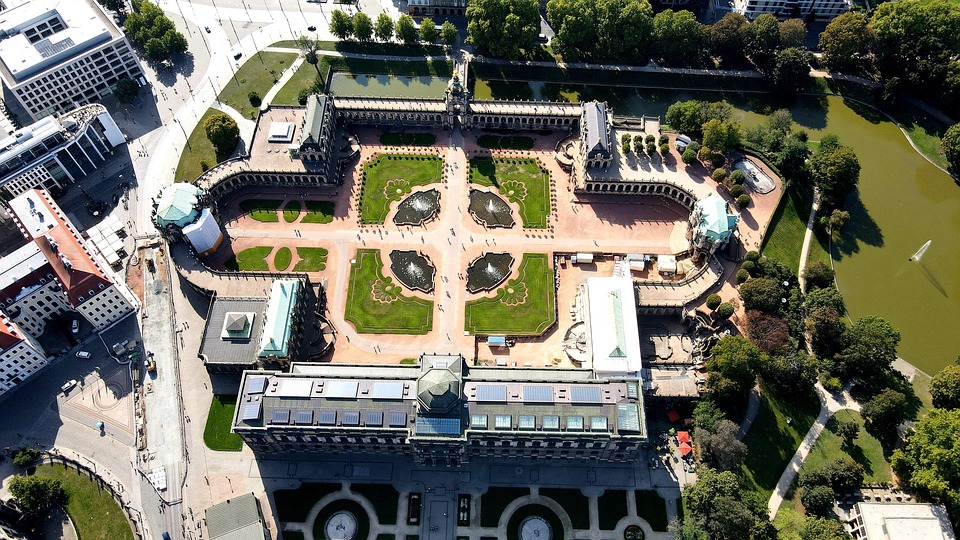
Image by from
Top 10 Interesting Facts about the Dresden Zwinger
Despite its age the Dresden Zwinger still shapes the city’s image to this day, reminding us of the glamorous baroque period like no other building. A courtly work of art was created between the city’s inner and outer fortifications at the behest of Augustus the Strong.
The Zwinger is a palatial complex with gardens in Dresden, Germany. Designed by architect Matthäus Daniel Pöppelmann, it is one of the most important buildings of the Baroque period in Germany. Along with the Frauenkirche, the Zwinger is the most famous architectural monument of Dresden.
The architectural project, favoured over a simple orangery, was carried out by Matthaeus Daniel Poeppelmann and Balthasar Permoser. The planned extension to the palace was replaced by the Picture Gallery and Semper Opera House. Here are the top 10 facts about Dresden Zwinger.
1. The Dresden Zwinger is Located on the Edge of the Old City
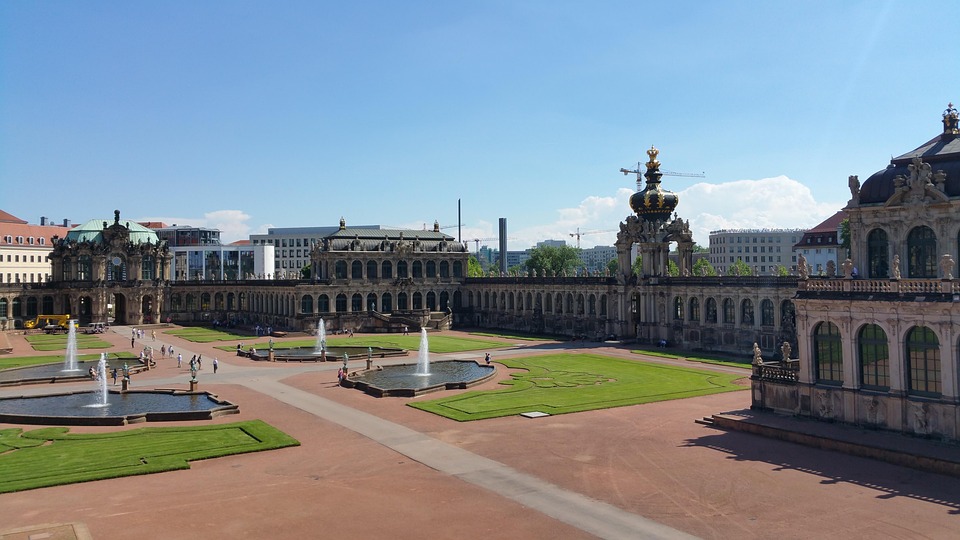
Image by from
The Zwinger is the name of an extensive palace complex in Dresden, the capital city of the German state of Saxony in the eastern part of the country. The city was established by the Sorbs, a West Slavic tribe, on the southern bank of the Elbe River. It grew from a small settlement to a metropolitan area that is home to over 1.3 million people today.
The palace is situated just south of the river and just northwest of where the initial settlement was established. This is the northwestern edge of the “Innere Altstadt� or “Old Inner City.� The complex is surrounded by other famous landmarks in Dresden such as the Dresden Castle to the east and the Semperoper to the north. The Dresden State Theatre is located just southwest of the palace.
2. Architect Matthäus Daniel Pöppelmann designed the Structure and Gardens

Image by from
Architect Matthäus Daniel Pöppelmann designed the gardens and the Baroque structure, working with the sculptor Balthasar Permoser. The Zwinger—whose name refers to the space between concentric rings of city fortifications—continued to be a work in progress through the 19th century, when the Zwinger Pond was installed in the interior garden.
Matthäus Daniel Pöppelmann was a German master builder and architect who helped to rebuild Dresden after the fire of 1685. His most famous work is the Zwinger Palace.
3. The Zwinger was a Centre of Learning

Image by from
In 1728 the Zwinger was established as a place for learning and began housing scientific collections, prints, drawings, and a library. In 1746 it became the home of the Mathematisch-Physikalischer Salon (Royal Cabinet of Mathematical and Physical Instruments).
In the mid-19th century, the Zwinger expanded to include a fourth wing along the Elbe River. This addition, originally designed as a separate museum, was known later as the Semperbau (Semper building), after its architect, Gottfried Semper.
The Semperbau is decorated with the carvings of Dresden sculptor Ernst Rietschel, and, at its completion, the Semperbau became the home of the Gemäldegalerie Alter Meister (Old Masters Picture Gallery), among other collections.
4. The Zwinger was Bombed during WWII
The Zwinger itself was almost completely destroyed during World War II. It was later rebuilt in its original style and its collections returned. In 1962 the Porzellansammlung (Porcelain Collection) was installed in the Zwinger, and in 2020 the Skulpturensammlung (Sculpture Collection) joined the Gemäldegalerie Alter Meister in the Semperbau. The latter move followed an extensive eight-year renovation of the building.
The city of Dresden was heavily targeted by allied forces at the end of World War II. Carpet bomb raids flattened the entire city and nothing was spared. Most of the original buildings of the Zwinger Palace were completely destroyed. Luckily, the art collection inside the museum was evacuated beforehand and completely preserved.
5. The Zwinger is Home to over 700 Old Masters Collection

Image by from
The Zwinger’s collection contains more than 700 Old Master paintings in the Gemäldegalerie Alter Meister; sculpture dating up to 1800 in the Skulpturensammlung; an assembly of some 20,000 pieces of Chinese, Japanese, and Meissen porcelain objects in the Porzellansammlung.
There are also various historical scientific appurtenances in the Mathematisch-Physikalischer Salon, including measuring and cartographic devices and optical equipment. Highlights of the art collection are a group of Italian Renaissance works by Raphael, Giorgione, and Titian and paintings by Dutch masters Rembrandt van Rijn and Johannes Vermeer.
6. The Palace got its Name following a 15th-century Expansion Phase
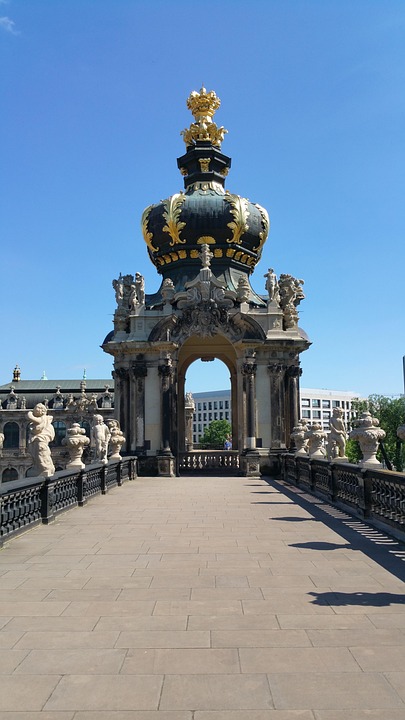
Image by from
Just like any other castle in Europe, the first fortification featured a defensive wall. The 15th century was a turbulent period in the region because of the Bohemian Wars. These wars were fought between the Hussites and a collection of armies from the Holy Roman Empire, the papacy, and various monarchs all around Europe.
Because of this Hussite Revolution, a second outer wall was constructed around the city of Dresden and the Zwinger. The moat had to be moved and an area in between the inner and outer walls was created. This outer wall was referred to as the Zwinger. Although the defensive nature of the fortification was completely redundant by the time that the palace complex was constructed, this name stuck.
7. The Baroque building was commissioned by Augustus II

Image by from
Augustus II, a man also known as Augustus the Strong (1670-1733) came to power in the late 17th century. He reigned as the Elector of Saxony and later the King of Poland until his death. Before he became the ruler of the area, he had visited France and Italy. He witnessed the splendor of the opulent Palace of Â鶹APP and aimed to replicate this grandeur in Dresden.
He never managed to commission a palace the size of Â鶹APP but did hire court architect Matthäus Daniel Pöppelmann (1662-1736) to complete the job. Baroque was the dominant style in Europe at the time. The Zwinger is considered to be one of the most prominent examples of Baroque architecture in Germany.
8. The palace was completely reconstructed by 1963
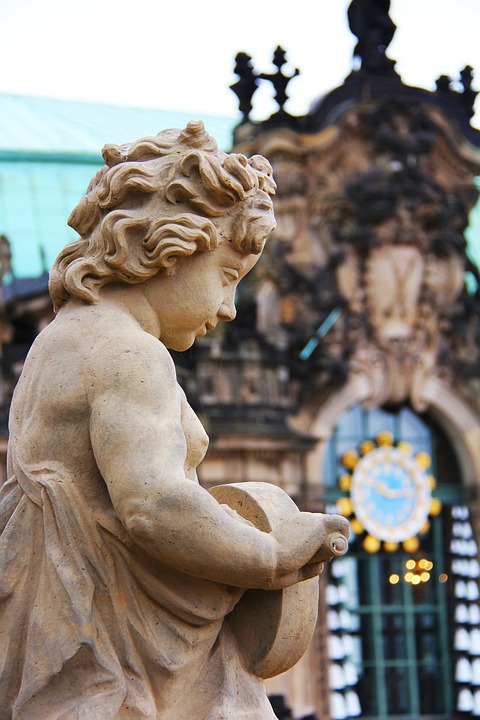
Image by from
The palace complex held an important position in the history of Dresden and was one of the first buildings to be reconstructed following the war.
The Soviet Army initiated the first phase as early as 1945 and the complex was accurately rebuilt in the following years.
The first buildings reopened to the public in 1951 and the palace was completely restored to its former glory by 1963. Yes, this includes the remrkable ornaments that decorate the Baroque buildings.
9. It Started out as a Greenhouse

Image by from
The history of the formation of Zwinger began with the construction of a greenhouse on the territory of the fortress in 1709: filled with exotic fruit trees and flowers.
It became an excellent place for the relaxation of the elector of Saxony Augustus II and his courtiers. Later, at the request of the monarch, in 1719, the palace complex was built for the ceremony of the marriage of his son to the daughter of Emperor Joseph I – Maria.
10. The Zwinger Was Inaugurated Before Completion

Image by from
The construction of the building started in 1710 and the building was officially inaugurated in 1719. This is remarkable because the palace complex wasn’t completed until 1728. In essence the building was inaugurated 9 years before its completion.
The reason was a special occasion because electoral prince Frederick August (1696-1763) married the Habsburg Archduchess Maria Josepha (1699-1757) that year. The exterior of the complex was mostly completed so they formed an amazing background for the event, even though the interior was still only roughly finished at the time.
Planning a trip to Â鶹APP ? Get ready !
These are ´¡³¾²¹³ú´Ç²Ô’²õÌý²ú±ð²õ³Ù-²õ±ð±ô±ô¾±²Ô²µÂ travel products that you may need for coming to Â鶹APP.
Bookstore
- The best travel book : Rick Steves – Â鶹APP 2023 –Ìý
- Fodor’s Â鶹APP 2024 –Ìý
Travel Gear
- Venture Pal Lightweight Backpack –Ìý
- Samsonite Winfield 2 28″ Luggage –Ìý
- Swig Savvy’s Stainless Steel Insulated Water Bottle –Ìý
We sometimes read this list just to find out what new travel products people are buying.


