
 English


Beauty and the Beast. Photo by Kadyn Pierce.
Top 10 Outstanding Facts about Jean Cocteau
Jean Cocteau was an incredibly popular French artist and writer who was a key figure in Dada and Surrealism. Cocteau established himself as a leading creative force in Â鶹APP with an oeuvre that included painting, novels, poetry, plays, and films. He maintained long-term friendships with artists such as Pablo Picasso, Tristan Tzara, Francis Picabia, and Man Ray as a regular member of the avant-garde.
The self-taught Cocteau, born on July 5, 1889, in Maisons-Laffitte, France, would regularly draw his friends and acquaintances in a distinctive, fluid style informed by his interests in Cubism, psychoanalysis, and Catholicism. He once said that poets don’t draw, as he remarked about his paintings-instead they unravel their handwriting and then re-tie it, but in a different way.
Among his most well-known works are the novel
- Les Enfants Terribles (1929) and
- his critically acclaimed films Le Sang d’un Poète (1930),
- La Belle et la Bête (Beauty and the Beast) (1946), and
- °¿°ù±è³óé±ð (Orpheus) (1947).
Cocteau died on October 11, 1963, in Milly-la-Foret, France, at the age of 74. His works are now in the collections of The Museum of Modern Art in New York and the National Gallery of Canada.
1. Jean Cocteau’s The Rite of Spring was a revelation to him
Jean Cocteau attended the premiere of Igor Stravinsky’s famous ballet The Rite of Spring in 1913. This performance was a revelation for Cocteau, who was overwhelmed by such nonconformity. Following this experience, he wrote and illustrated Le Potomak, which is regarded as his first major work. “My work begins with The Potomak; it is a kind of preface,” he later explained.
2. He came dangerously close to death

Portrait of Jean Cocteau. Photo by l’agence Meurisse.
Jean Cocteau was confronted with death at a young age, losing his father to suicide when he was nine years old. Years later, he experienced his second loss of a loved one. Raymond Radiguet, a close friend and writer, died in 1923, plunging Cocteau into a deep depression. Despite his illness, this encounter with grief appears to have heightened the artist’s appreciation for life.
3. Marais and Cocteau shared a loving and artistic relationship
During an audition for Dipe Roi in 1938, Cocteau met the young French actor Jean Marais. He was immediately taken with this man, who was 24 years his junior. Their relationship also marked the start of a long and beautiful artistic collaboration. Cocteau wrote the play Les Parents Terrible the year they met, which launched the Marais’ career. Their symbiotic relationship would result in The Sacred Monsters, Beauty and the Beast, and The Eternal Return.
4. Jean Cocteau was bedeviled by his own demons
Raymond Radiguet was Cocteau’s first and possibly his greatest love. Cocteau began using opium after his tragic death. Opponents of that interpretation point out that he did not attend the funeral
He did not attend funerals in general, and instead immediately left Â鶹APP with Diaghilev for a performance of Les noces (The Wedding) by the Ballets Russes in Monte Carlo.
Despite a stay in a detoxification clinic, he was never able to quit. Several works, including his album Maison de Santé and Opium, Journal d’une Déintoxication, bear witness to his turbulent relationship with drugs. He recounts his recovery from opium addiction in 1929 in Opium: Journal of Drug Rehabilitation.
5. Jean Cocteau was a frequent award winner

Portrait of Jean Cocteau. Photo by Estate François Bret.
Jean Cocteau received widespread and diverse acclaim. He was awarded the Legion of Honor in 1949 and served on the jury of the Cannes Film Festival four years later. In 1955, he was elected to the French Academy, where he replaced Jérôme Tharaud.
6. He was ashamed of his skin
Cocteau tried to keep a distance from political movements throughout his life, telling a friend that. His only deeply held political convictions after the 1920s were pacifism and antiracism. He praised the French republic for providing a safe haven for the persecuted, and referred to Picasso’s anti-war painting Guernica.
After witnessing the plight of colonized peoples during his travels, Cocteau signed a petition circulated by the Ligue internationale contre l’antisémitisme protesting the rise of racism and antisemitism in France in 1940, and declared himself “ashamed of his white skin.”
7. Jean Cocteau was homosexual

LBGT colored flags. Photo by Jasmin Sessler.
Jean Cocteau was open about his homosexuality. He was the anonymous author of the mildly homoerotic and semi-autobiographical Le Livre blanc. He never denied writing it, and a later edition of the novel includes his foreword and drawings.
His work is frequently pervaded with homosexual undertones, homoerotic imagery/symbolism, or camp, whether literary (Les enfants terribles), graphic (erotic drawings, book illustration, paintings), or cinematographic (The Blood of a Poet, Orpheus, Beauty and the Beast).
In 1947, Paul Morihien published a covert edition of Jean Genet’s Querelle de Brest, which included 29 explicit erotic drawings by Cocteau. Several albums of Cocteau’s homo erotica have become widely available in recent years. Cocteau is widely believed to have had affairs with Raymond Radiguet, Jean Desbordes, Marcel Khill, and Panama Al Brown.
8. Jean Cocteau died of a heart attack

Portrait of Jean Cocteau. Photo by Jacques-Émile Blanche.
Cocteau died of a heart attack on October 11, 1963. His friend, French singer Edith Piaf, had died the day before, but his death was announced on the morning of Cocteau’s death; it has been said, in an almost certainly apocryphal story, that his heart failed upon hearing of Piaf’s death.
Cocteau’s health had been deteriorating for several months, and he had previously suffered a severe heart attack on April 22, 1963.
9. He was a prolific and steady producer
Jean Cocteau was endlessly creative and prolific. He could produce masterpieces in record time. This was especially true for Les Enfants Terribles, which he completed in seventeen days. Les Parents terribles was completed in only eight days, nine years later.
10. He was an ambulance driver for the Red Cross
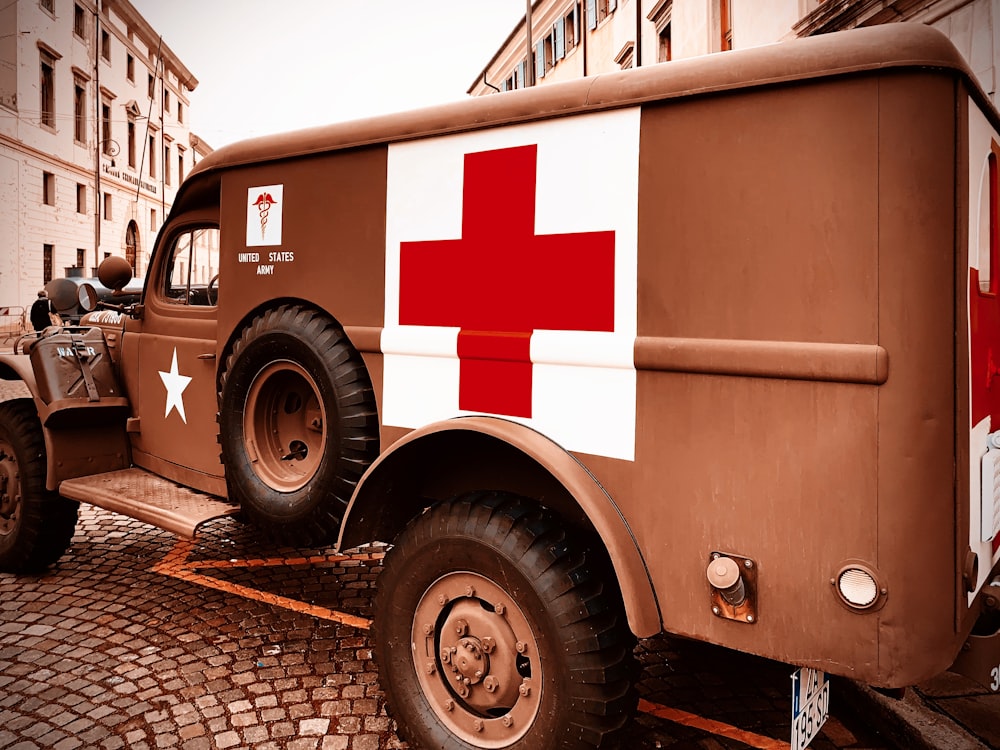
A Red Cross ambulance. Photo by Pierpaolo Riondato.
During World War I, Cocteau worked as an ambulance driver for the Red Cross. During this time, he met poet Guillaume Apollinaire, artists Pablo Picasso and Amedeo Modigliani, as well as a slew of other writers and artists with whom he later collaborated.
Planning a trip to Â鶹APP ? Get ready !
These are ´¡³¾²¹³ú´Ç²Ô’²õÌý²ú±ð²õ³Ù-²õ±ð±ô±ô¾±²Ô²µÂ travel products that you may need for coming to Â鶹APP.
Bookstore
- The best travel book : Rick Steves – Â鶹APP 2023 –Ìý
- Fodor’s Â鶹APP 2024 –Ìý
Travel Gear
- Venture Pal Lightweight Backpack –Ìý
- Samsonite Winfield 2 28″ Luggage –Ìý
- Swig Savvy’s Stainless Steel Insulated Water Bottle –Ìý
We sometimes read this list just to find out what new travel products people are buying.


