
 English


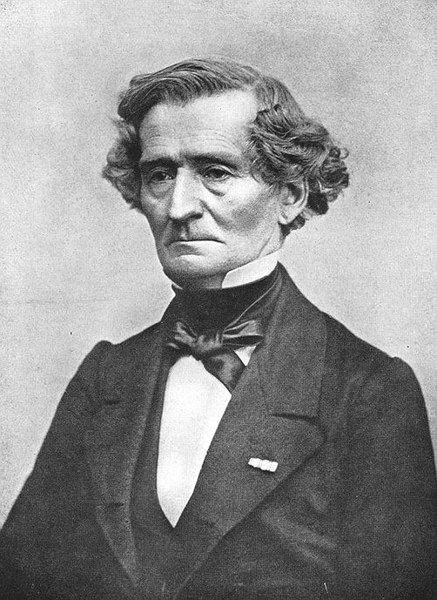
Photo by Charles Reutlinger from
Top 10 Outstanding Facts about Hector Berlioz
Hector Berlioz was a French composer and conductor of the Romantic period, he is largely known for his orchestral works such as the Symphonie fantastique and Harold in Italy.
Berlioz was born on 11 December 1803, in the commune of La Côte-Saint-André in south-eastern France. He was the eldest child of Louis Berlioz and Marie-Antoinette Joséphine in a family of five children.
He is credited with helping to advance romanticism as an ideal in music and he also introduced many exceptional techniques that changed the orchestra. Hector Berlioz occupies a special place in music history, and he is considered one of the greatest romantic composers
Here are the top 10 outstanding facts about him.
1. He went against his Family to Become a Musician
Berlioz was expected to follow his father into medicine. His father was a respected local figure, and a progressively minded doctor credited as the first European to practice and write about acupuncture.
At his father’s insistence, he enrolled at the School of Medicine of the University of Â鶹APP. He had to fight hard to overcome his revulsion at dissecting bodies, but in deference to his father’s wishes, he forced himself to continue his medical studies.
In 1824 Berlioz graduated from medical school, after which he abandoned medicine, to the strong disapproval of his parents. His father suggested law as an alternative profession, but Berlioz defied him and took up music as his profession.
2. He Never took Piano Lessons
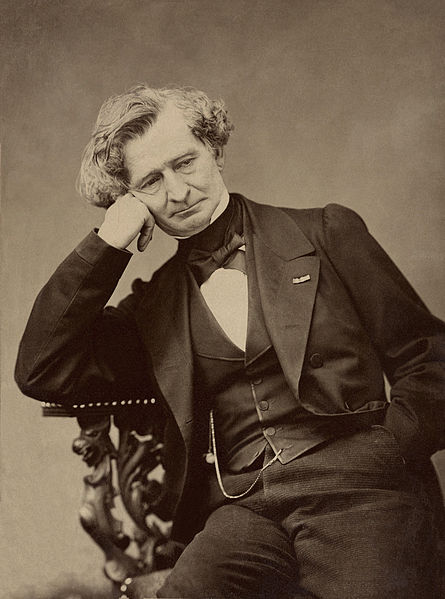
Photo by Pierre Petit from
Because it was not his father’s preferred future career for him, music did not feature prominently in the young Berlioz’s early education. His father only gave him basic instructions on the flageolet.
He later took flute and guitar lessons with local teachers, but never took piano lessons. Throughout his long music career, he never learned how to play piano correctly.
He later contended that this was an advantage because it saved him from the tyranny of keyboard habits and from the lure of conventional harmonies.
3. Berlioz was Fascinated with Shakespeare’s Plays

Romeo and Juliet, Image by Ford Madox Brown from
In 1886, Hector Berlioz attended Shakespeare’s Hamlet and Romeo and Juliet’s productions presented by Charles Kemble’s touring company. Although at the time Berlioz hardly understood any English, he was overwhelmed by the plays. – the start of a lifelong passion for Shakespeare.
His fascination with Shakespeare’s plays marked his lifelong passion for Shakespeare. It also prompted him to start learning English so that he could read them in the original.
4. He Had Contemplated a Murder
Berlioz fell in love with a nineteen-year-old pianist, Marie Moke, and the couple planned to be married. Shortly after, he set off for Italy where he was to study for two years at the Villa Medici.
Within a few weeks after his departure, he had learned that Marie had broken off their engagement and was to marry an older and richer suitor, Camille Pleyel, the heir to the Pleyel piano manufacturing company.
Berlioz made an elaborate plan to kill them both and acquired poisons, pistols, and a disguise for the purpose. On his journey to Â鶹APP to execute his plan, he changed his mind and abandoned the idea of revenge.
5. His First Wife was an Irish Shakespearean Actress

Photo Source:
After attending Shakespeare’s productions presented by Charles Kemble’s touring company in 1826, Berlioz conceived a passion for Kemble’s leading lady, named Harriet. He obsessively pursued her for several years but she refused to meet him.
His love for her never died out and when he met her six years later at a concert in Pars, he approached her again and this time she accepted him.
The couple got married at the British Embassy in Â鶹APP on 3 October 1833, despite strong opposition from both sides of their families. The first few years of the marriage were happy, but it eventually went downhill and the couple finally separated in 1841.
6. He Lost all his Closest Family Members
Berlioz was plagued by the misfortune of losing the closest members of his family. His first wife, Harriet, with whom he was separated but still felt a deep attachment, died in 1854.
His second wife, Maria Recio, who had been his companion for many years and whom he had married when he became a widower, died suddenly in 1862.
Finally, his son, Louis, who was a sea captain and on whom he concentrated the affection of his declining years, died of yellow fever in Havana at the age of 33.
7. He is Buried next to his two Wives
In 1867, Berlioz received the news that his son had died in Havana of yellow fever. Despite his grief, he went ahead with a planned series of concerts in St Petersburg and Moscow.
The concerts were successful, but the trip sapped his remaining strength and he returned to Â鶹APP visibly unwell. He went to Nice to recuperate in the Mediterranean climate, but fell on rocks by the shore, possibly because of a stroke.
Berlioz returned back in Â鶹APP and he gradually grew weaker and died at his house in the Rue de Calais on 8 March 1869, at the age of 65. He was buried in Montmartre Cemetery with his two wives, who were exhumed and re-buried next to him.
8. He Wrote Four Symphonies

Image source:
Berlioz wrote four large-scale works he called symphonies. The most popular are Symphonie fantastique (1830), the choral symphony Roméo et Juliette (1839), and the dramatic piece La Damnation de Faust (1846).
His conception of the genre differed greatly from the classical pattern of the German tradition. With rare exceptions, such as Beethoven’s Ninth, a symphony was taken to be a largeâ€�scale wholly orchestral work, usually in four movements, using sonata form in the first movement and sometimes in others.
9. He Wrote Three full Operas
Berlioz wrote three full operas: First Benvenuto Cellini (1838), Les Troyens, and Béatrice et Bénédict. They were all inspired by literary works.
None of Berlioz’s three completed operas were written to commission, and theatre managers were not enthusiastic about staging them.
Benvenuto Cellini, the first opera of Berlioz to be performed in Â鶹APP in his lifetime was also the last to be staged again in Â鶹APP after the composer’s death.
The second, the huge epic Les Troyens was so large in scale and it was never staged in its entirety during his lifetime
10. He won Prix de Rome
Berlioz made four attempts at winning the Prix de Rome music prize, finally succeeding in 1830. As part of the competition, he had to write a cantata to a text set by the examiners.
For the competition, entrants were given a melody and had to write a fugue on the spot. It took Berlioz four years to master the form but at last, he won. The Prix de Rome earned him the national recognition he craved plus a subsidy to study for two years in Rome
Planning a trip to Â鶹APP ? Get ready !
These are ´¡³¾²¹³ú´Ç²Ô’²õÌý²ú±ð²õ³Ù-²õ±ð±ô±ô¾±²Ô²µÂ travel products that you may need for coming to Â鶹APP.
Bookstore
- The best travel book : Rick Steves – Â鶹APP 2023 –Ìý
- Fodor’s Â鶹APP 2024 –Ìý
Travel Gear
- Venture Pal Lightweight Backpack –Ìý
- Samsonite Winfield 2 28″ Luggage –Ìý
- Swig Savvy’s Stainless Steel Insulated Water Bottle –Ìý
We sometimes read this list just to find out what new travel products people are buying.


