
 English


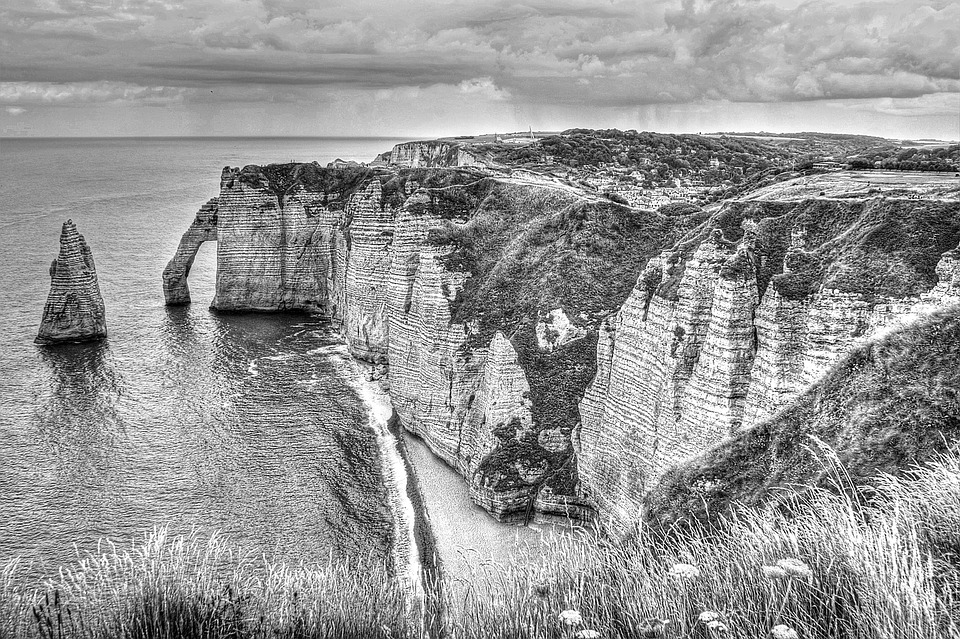
Image by from
Top 10 Intriguing Facts about Etretat Cliffs
Étretat is best known for its chalk cliffs, including three natural arches and a pointed formation called L’Aiguille or the Needle, which rises 70 metres (230 ft) above the sea. The Alabaster Coast owes its name to the 140 km of chalk cliffs between the Seine and Somme estuaries but the cliffs of Etretat are the most picturesque of them. They intimidate with their verticality and present a wild and somewhat austere beauty.
Nature has carved unusual shapes out of the white cliffs in Etretat, and as a result, this spot attracted many Impressionist painters, who sought to capture the cliffs on canvas. The pretty seaside town of Etretat is also the setting for Maurice Leblanc’s popular French children’s book about Arsène Lupin, the gentleman burglar.
Another reason to visit Etretat is the fantastic 18-hole golf course on one cliff and gardens on the other both of which afford stunning views of the cliffs and town. Continue reading to learn more top 10 intriguing facts about Etretat Cliffs.
1. There are Fantastic Rock Formations at Etretat Cliffs

Image by from
The three arches which formed over many thousands of years are known as Porte d’Aval, Porte Amont and Manneport. The latter can only be seen at low tide.
Porte d’Aval is a rock formation in the cliffs located in the surroundings of Etretat a town is in the coast of Normandy, in the North of France. This rock formation looks like a door or an arch or an elephant.
The Porte d’Aval has been carved by the waves beating the end of the Falaise d’Aval. The 51-metre-high needle bears witness to the geological past of the cliffs of Etretat. It has become famous, gained a universal reputation and inspired many painters and writers.
Is it hollow and did it shelter the treasure of the Kings of France discovered by Arsène Lupin, as recounted in Maurice Leblanc’s novel, L’aiguille Creuse? You can find out more about this enigma by visiting Le Clos Lupin, the property acquired by the novelist in 1919.
2. Etretat Cliffs White Colour
The cliffs of Étretat mostly contain chalk and limestone, as well as flint, with the chalk giving the cliffs their vivid white colour. The white cliffs of Dover are mirrored by these similar looking cliffs in upper Normandy, France. Along this 130 kilometer stretch of the so called Alabaster coast lies the small town of Étretat.
The sedimentary remains of various marine microorganisms became accumulated over time and created these spectacular coastlines. In between the chalk are bands of flint which were derived from siliceous organisms.
The soft chalk is highly sensitive to erosion and under the effect of swell, frost, water seepage, wind and waves the cliffs are eroded about twenty centimeters a year.
The chalk is rapidly dissolved in the sea whereas the flint forms the pebbles along the shore. The pebbles act as a natural barrier protecting the bottom of the cliffs against the waves. Furthermore, they are a valuable industrial resource which can be used in many ways.
3. The Room of the Young Ladies at Etretat Cliffs

Image by from
The room of the young ladies is a crevasse nestled at the top of the cliff of Aval. According to legend, 3 sisters would have taken refuge there in order to flee the advances of the lord of Fréfossé. Furious, the latter would have condemned the entrance to the crevasse where the young ladies succumbed after 72 hours. Today, their ghosts are said to still haunt the place.
4. Lupin The hollow needle of Etretat
The hollow needle of Etretat is a rock formation culminating at 55 meters. Located away from the cliffs, the needle remains a mystery to this day and according to the novel by Maurice Leblanc, the needle would be hollow, which would have allowed his famous fictional character Arsène Lupin to hide there in order to to evade pursuers.
During your stay in Etretat, don’t forget to visit Maurice Leblanc’s house “le clos Lupin�, a museum dedicated to the famous gentleman burglar. You will discover photos, paintings and objects that belonged to his fictional hero Arsène Lupin.
5. Etretat Cliffs are a Magnet for Airgliding
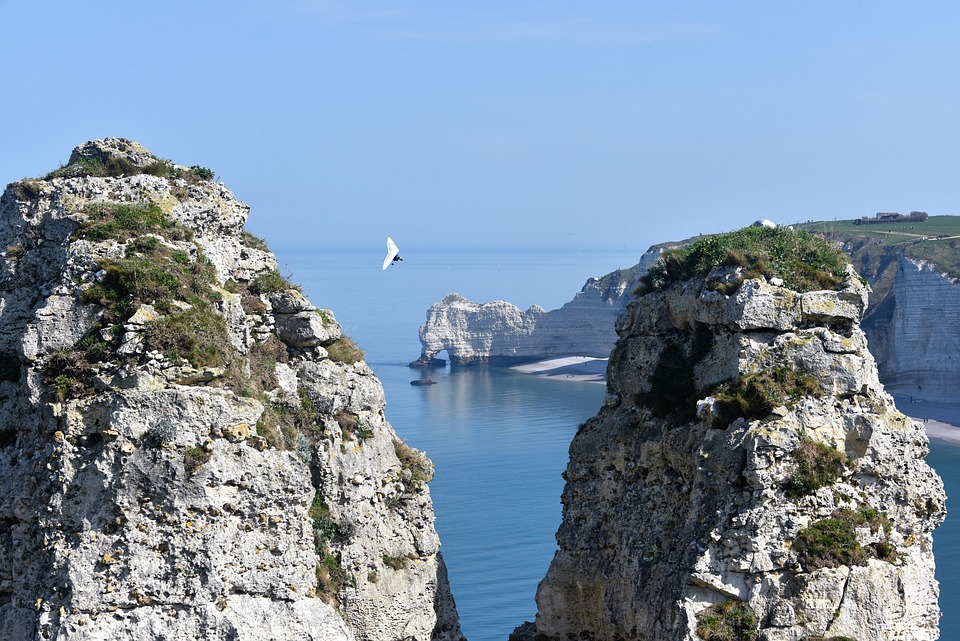
Image by from
The Etretat Chalk Complex, as it is known, consists of a complex stratigraphy of Turonian and Coniacian chalks. Some of the cliffs are as high as 90m 300ft. Two of the three famous arches are visible from the town, the Porte d`Aval, and the Porte d`Amont. The Manneporte is the third and the biggest one, and cannot be seen from the town.
Water sports are popular at the cliffs of Étretat, and due to strong winds atop the cliffs, air gliding is a common sport performed in the area.
Hang gliding is an air sport or recreational activity in which a pilot flies a light, non-motorised foot-launched heavier-than-air aircraft called a hang glider. Most modern hang gliders are made of an aluminium alloy or composite frame covered with synthetic sailcloth to form a wing.
6. Etretat Cliffs Serve as Inspiration to Painters and Writers Inspiration
Etretat has also been a source of inspiration for famous painters and writers, such as Claude Monet and Maurice Leblanc. The natural beauty of Étretat has long attracted artists such as Claude Monet and Gustave Courbet, whose paintings entice even more visitors to this special place. (Monet painted a series of canvases depicting les falaises à Étretat, the dramatic coastal cliffs.)
Oscar-Claude Monet is one of the most famous Western painters of all time. The founder of Impressionist painting, creator of the iconic Water Lilies series, and a symbol of French painting, Monet is a household name.
Guy de Maupassant wrote “The Englishman of Étretat� (L’Anglais d’Étretat) after spending much of his childhood in the area. So in love with the views was he that in later life he built a house in Etretat in what is now rue Guy-de-Maupassant.
7. Etretat Cliffs Oyster Farming

Image by from
, and the ocean area was once a prime fishing spot and was also used for oyster farming. Evidenece of the activity can only be seen at low tide when you’ll also be able to see the emergence of the 18th century oyster beds for which the town was famous.
In the 18th century, the commune of Etretat cultivated oysters for Marie-Antoinette, which she had delivered overnight to the Palace of Â鶹APP to preserve their freshness.
Apparently Queen Marie Antoinette was much enamoured of the Etretat oysters which were not natural to the area and had to be transferred by ship from their birthplace in Brittany to mature in the Etretat coastal waters. The natural springs in the area plus the salt water were said to give the oysters a delicate and unique taste.
The remains of an oyster farm cultivated in Etretat are now visible at the bottom of the Aval cliff. From 1850, the number of fishing boats moored in Etretat decreased sharply to reach only one unit, gradually replaced by canoes practicing coastal fishing as far as the town of Dieppe.
8. Mother Nature is the main Sculptor of Etretat Cliffs
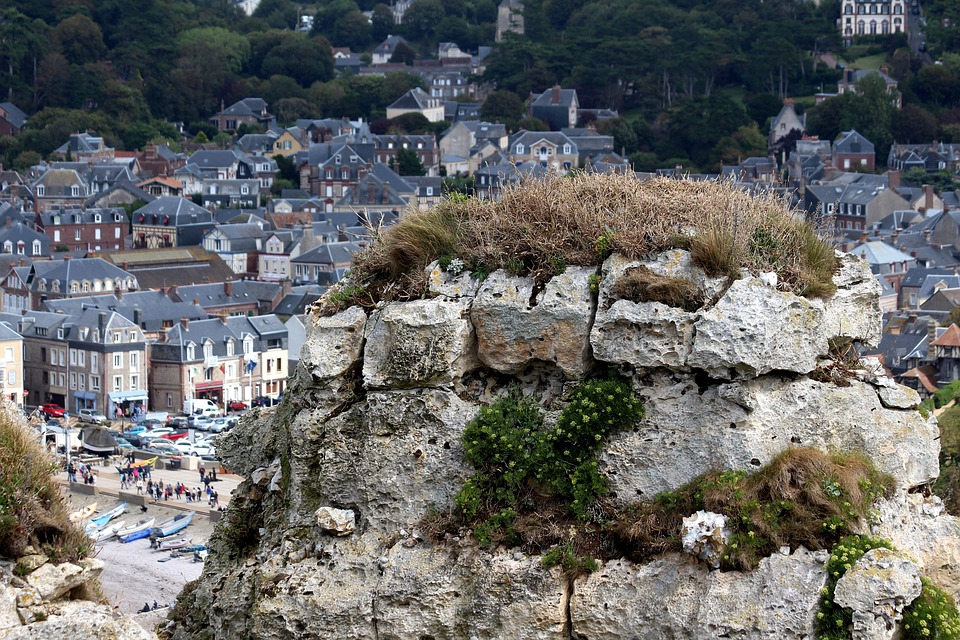
Image by from
Formed underwater several million years ago, the cliffs are made up of deposits of light-coloured calcareous marine organisms and skeletons of siliceous organisms. They then rose up to become these limestone giants streaked with flint.
Particularly hard-wearing, they seem eternal but are nonetheless fragile and constantly changing: wind, tides, rainwater infiltration, freezing and then thawing weaken them: erosion causes regular landslides and the cliff to retreat.
The flint which has fallen down onto the shore takes on its rounded shape in just a few months thanks to the sea, becoming pebbles that protect the cliffs and the town of Etretat, which is built below sea level.
9. Etretat Cliffs Tourism is the Mainstay of the area

Image by from
The cliffs of Étretat are situated next to the fishing village of Étretat, which has become a popular tourist destination and tourism has become one of the main sources of income in the area. Etretat’s population totals 1,200 permanent and 5,000 part-time residents but the town of 4.4 square kilometres receives upwards of 1.2 million visitors per year or around 3,500 per day.
The local tourist office recorded a 21% rise in the number of visitors coming through their doors in the first seven months of 2021 compared to the same period in 2020 – likely to be in part due to Lupin, released in the first half of 2021.
Etretat’s biggest selling point is of course its magnificent white chalk cliffs, which afford dizzying views along the footpath which stretches all the way across the top of the jagged rock face for a staggering 80 miles (also called the Chemin des douaniers, which used to be the route taken by customs officers on horseback). It gets quite windy up there, so make sure to wear layers and a wind-breaker
10. The Gardens of Etretat Perched on the Cliff make a Sight for Sore Eyes
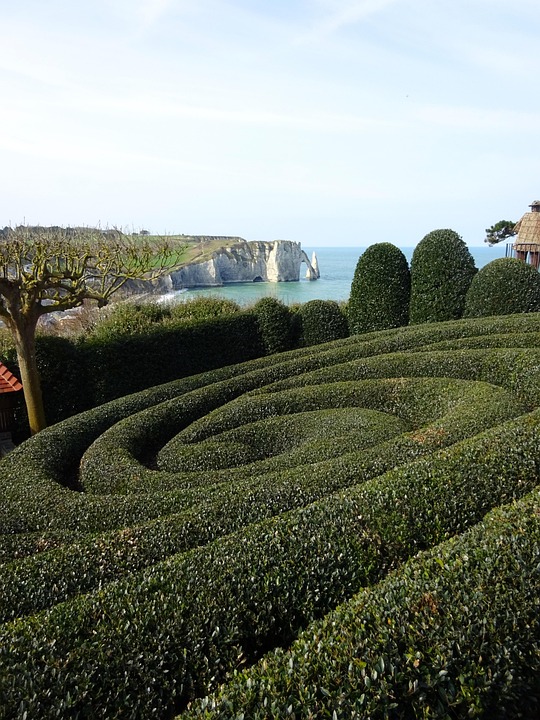
Image by from
Perched atop the white cliffs, just under the scenic Notre-Dame-de-la-Garde church, is the meditative Jardins d’Etretat. Skilfully revived by landscape architect Russian-born Alexandre Grivko, they have morphed into an avant-garde open-air gallery of compelling artworks blending art, technology and ethical values steeped in nature.
Jardins d’Etretat, is a beautiful Asian-inspired garden affording stunning views over Etretat and its bay across to the Aval arch famously immortalised by Claude Monet and Eugène Boudin.
In 1905, Madame Thébault, owner of the Roxelane villa, created the first wooded area on the Amont cliff. Renovated in 2016 by the landscape architect Alexandre Grivko, the gardens of the villa extend over an area of slightly less than one hectare and are mainly adorned with plant sculptures spread over 7 themes.
The Gardens of Etretat also house an important collection of contemporary art and offer a breathtaking view of the sea, the beach and the cliffs. These gardens made up of 150,000 plants are classified among the largest gardens in the world and also display a star in the Michelin green guide.
However, there is more to Etretat than the cliff formations and pebble beach. The small town beyond is picturesque and full of pretty restaurants and shops, while the remarkable wooden covered market and 19th-century villa Le Clos Lupin are both worth a visit.
Planning a trip to Â鶹APP ? Get ready !
These are ´¡³¾²¹³ú´Ç²Ô’²õÌý²ú±ð²õ³Ù-²õ±ð±ô±ô¾±²Ô²µÂ travel products that you may need for coming to Â鶹APP.
Bookstore
- The best travel book : Rick Steves – Â鶹APP 2023 –Ìý
- Fodor’s Â鶹APP 2024 –Ìý
Travel Gear
- Venture Pal Lightweight Backpack –Ìý
- Samsonite Winfield 2 28″ Luggage –Ìý
- Swig Savvy’s Stainless Steel Insulated Water Bottle –Ìý
We sometimes read this list just to find out what new travel products people are buying.


