
 English


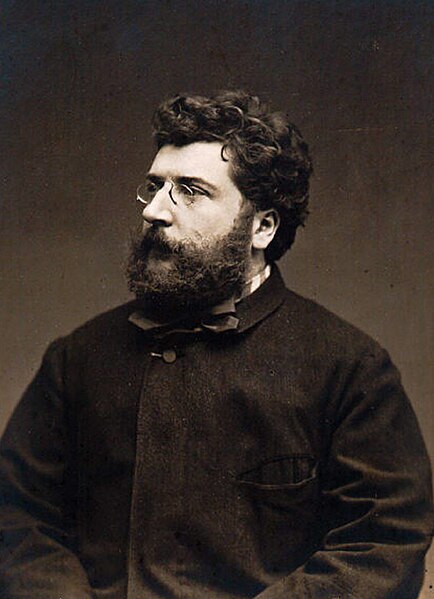
Photo by Etienne Carjat from
Top 10 Interesting Facts about Georges Bizet
Best known for his operas in a career cut short by his early death, Georges Bizet was a French composer of the Romantic era. He was born in Â鶹APP on 25 October 1838, to Adolphe Bizet and Aimée Delsarte and was registered as Alexandre César Léopold, but baptised as “Georges” on 16 March 1840, and was known by this name for the rest of his life.
Although he was a great pianist, he hardly ever performed in public and spent his time and energy on composing marvelous pieces. Unfortunately, very few of them received attention during his lifetime and many of the manuscripts were lost in the intervening years.
It was only from the end of the nineteenth century that his works started being rediscovered or revived. However, their true worth started being recognized only from the early twentieth century. Today he has been acclaimed as a brilliant composer, whose early death was a tremendous loss to French music.
Here are the Top 10 Interesting Facts about Georges Bizet.
1. He came from a family of Musicians
Georges Bizet had a musical background; his father was music teacher while his mother a gifted amateur pianist. His musical talents became apparent in his early age, the reason he was admitted to the Â鶹APP Conservatoire two weeks before his 10th birthday.
His father, Adolphe Bizet, had been a hairdresser and wigmaker before becoming a singing teacher despite his lack of formal training. He also composed a few works, including at least one published song.
Adolphe Bizet married Aimée Delsarte, against the wishes of her family who considered him a poor prospect; the Delsartes, though impoverished, were a cultured and highly musical family.
2. He first learned Music from his Parents

Photo by Etienne Carjat from
Georges Bizet showed early interest for music and quickly learned the basics of musical notation from his mother, who gave him his first piano lessons. He also learned to sing difficult songs accurately from memory and developed an ability to identify and analyse complex chordal structures by listening his father conduct music lessons.
This precocity convinced his ambitious parents that he was ready to begin studying at the Conservatoire even though he was still only nine years old. Georges was interviewed by Joseph Meifred, the horn virtuoso who was a member of the Conservatoire’s Committee of Studies.
Although the minimum age for admission at the Conservatoire was 10 years, Meifred was so impressed by the boy’s music skills, that he waived the age rule and offered to take him as soon as a place became available.
3. He was admitted to the Â鶹APP Conservatoire at the age of 9
Bizet was admitted to the Conservatoire on 9 October 1848, two weeks before his 10th birthday. He made an early impression; within six months he had won first prize in solfège, a feat that impressed Pierre-Joseph-Guillaume Zimmerman, the Conservatoire’s former professor of piano.
Zimmerman gave Bizet private lessons in counterpoint and fugue, which continued until the old man’s death in 1853. Through these classes, Bizet met Zimmerman’s son-in-law, the composer Charles Gounod, who became a lasting influence on the young pupil’s musical style—although their relationship was often strained in later years.
4. He Served in the French National Guard

Photo by Charles Sellier from
When the Franco-Prussian war erupted in 1870, Georges, along with other composers and artists, joined the National Guard and began training. During his time in the French national guard, he is said to have bitterly complained about the state of the types of equipment they were using which he termed as obsolete.
The national mood was soon depressed by news of successive reverses; at Sedan on 2 September, the French armies suffered an overwhelming defeat; Napoleon was captured and deposed, and the war came to a sudden end.
5. He once fled from Â鶹APP
Even after the Prussian Army surrounded the city of Â鶹APP, Georges first refused to leave the city arguing that leaving would amount to an act of cowardice. Life in the city became frugal and harsh for him, although he made efforts to re-establish normality by resuming his regular Sunday concerts.
However, after an armistice was signed, and Prussian troops departed from Â鶹APP, a period of confusion and civil disturbance engulfed the city. This made Bizet conclude that he was no longer safe in the city, and he escaped to Compiègne.
He later moved to Le Vésinet where he stayed for two month although within hearing distance of the gunfire that resounded as government troops gradually restored the order in the city.
6. He died at the age of 36

Georges Bizet Tomb – Photo Source:
For most of his life, Bizet had suffered from a recurrent throat complaint which was probably due to his heavy smoking. His love for cigarettes had even put his face on Will’s Cigarettes as an endorsement.
He became very ill with abscesses in the windpipe in 1868. He recovered but became ill again in 1871, and in 1874, by severe bouts of what he described as “throat angina”, and suffered a further attack in late March 1875.
At that time, he was also depressed by the evident failure of Carmen which made his condition deteriorate further in the months that followed. On 1 June 1875, he was afflicted by high fever and pain, which was followed by a fatal heart attack on 3 June 875 when he died at the age of 36 years old.
7. He died a broken Man
George’s most famous work was also his biggest heartbreak. Carmen was a revolutionary piece, a four-act opera that he based on a novel of the same title, by Prosper Merimee. The libretto was written by Ludovic Halevy and Henri Meilhac.
Carmen premiered in Â鶹APP on 3rd March 1875. The opera had a mixed reception as the audience was used to comic operas, and Carmen was something new. The opera performed for 48 nights without ever having seen a full house.
Georges was teaching the piano when working on Carmen, perhaps the reason he felt so disappointed when the opera was not well received. Seeing it as a fiasco, Bizet sunk into depression and died 3 months later. Carmen was to be later recognized as one of the finest works of the romantic period. It still pulls crowds to this day.
8. “Carmen� was his Greatest Work
Bizet is best remembered for his last opera, ‘Carmen’ which opened on 3 March 1875, on which morning, by chance, Bizet’s appointment as a Chevalier of the Legion of Honour was announced.
However, after its first presentations, much of the press comment was negative, expressing consternation that the heroine was an amoral seductress rather than a woman of virtue. Galli-Marié’s performance was described by one critic as “the very incarnation of vice”.
In spite of its initial failure, it achieved international acclaim within ten years. Today, it has become one of the most popular and frequently performed operas in the western canon, bridging the gap between the tradition of opéra comique and the verismo of the late nineteenth century.
9. He was married to Geneviève Halévy
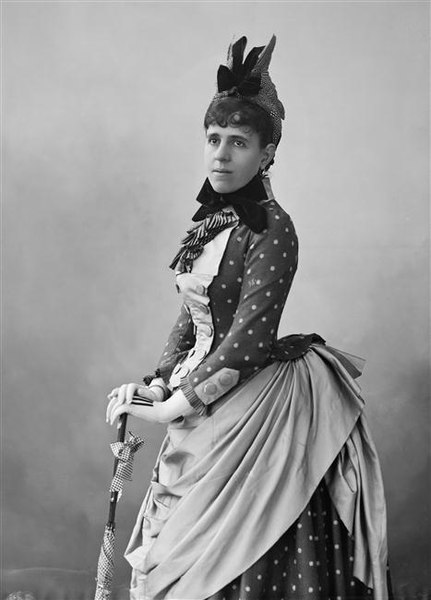
Genevieve Halevy – Photo by Paul Nadar from
In June 1869, Bizet married Geneviève Halévy, the nervously unstable daughter of the composer Fromental Halévy. Her family initially opposed the match, considering him an unsuitable catch: ‘penniless, left-wing, anti-religious, and Bohemian’. The marriage was intermittently happy and produced a son, Jacques.
In 1886 few years after Bizet’s death, Geneviève married Émile Straus, a rich lawyer; she became a famous Â鶹APPian society hostess. However, she showed little interest in her first husband’s musical legacy, made no effort to catalog Bizet’s manuscripts, and gave many away as souvenirs.
She died in 1926; in her will, she established a fund for a Georges Bizet prize, to be awarded annually to a composer under 40 who had “produced a remarkable work within the previous five years”.
10. He had little Success during his Lifetime
Despite his brilliant composing skills, Bizet had relatively little success during his life. It was said that his compositions were largely ignored because of the main opera theatres preferring the classical repertoire to that of the works of the romantic era.
Nonetheless, Bizet’s works would garner massive popularity towards the end of his life, especially after his death. Two of his opera’s, “Les pecheurs de perles� and “La jolie fille de Perth� were slow in gaining appreciation; however, they would go on to become extremely popular.
Planning a trip to Â鶹APP ? Get ready !
These are ´¡³¾²¹³ú´Ç²Ô’²õÌý²ú±ð²õ³Ù-²õ±ð±ô±ô¾±²Ô²µÂ travel products that you may need for coming to Â鶹APP.
Bookstore
- The best travel book : Rick Steves – Â鶹APP 2023 –Ìý
- Fodor’s Â鶹APP 2024 –Ìý
Travel Gear
- Venture Pal Lightweight Backpack –Ìý
- Samsonite Winfield 2 28″ Luggage –Ìý
- Swig Savvy’s Stainless Steel Insulated Water Bottle –Ìý
We sometimes read this list just to find out what new travel products people are buying.


