
 English


Image by A. V. Astin from
Top 10 Interesting Facts about Tsung-Dao Lee
Tsung Dao Lee (published under T.D. Lee) is a Chinese-American physicist and a Nobel Prize Laureate.
He was born in 1926. The war of resistance against Japan negatively affected T.D. Lee’s education.
T.D. Lee acquired basic knowledge of science through self-study and from great teachers he luckily encountered on a lonely and tough journey from his home town, the Japanese-occupied Shanghai, to Southwest China.
After the war, the China government awarded T.D. Lee a scholarship to train as a nuclear scientist in the US.
He entered the graduate school of the University of Chicago and became a PhD student of Professor Fermi known as the Pope of Physics. T.D. Lee received his PhD degree in 1950 and became a physics professor at Columbia University.
The unusual collaboration between T.D. Lee and C. N. Yang led the two young scientists to the Nobel Prize.
For 10 more interesting facts about Tsung-Dao Lee, read on.
1. Tsung-Dao Lee was Awarded a Scholarship without an Undergraduate Degree
From 1943 to 1944, he attended the National Chekiang University in Kweichow.
Professor Ta-You Wu discovered his talent for physics while at the National Southwest Associated University in Kunming.
Lee was awarded a graduate fellowship to study physics in the United States while still a second-year student at South-west Associated University.
Enrico Fermi selected him as a doctoral student even though he had no undergraduate degree.
Four years later, Lee completed his thesis on “Hydrogen Content of White Dwarf Stars� and gained his PhD in 1950.
Lee worked at the University of Chicago’s Yerkes Astronomical Observatory in Wisconsin, the University of California at Berkeley and at the Institute for Advanced Study, Princeton, New Jersey.
Columbia University appointed him an assistant professor of physics in 1953.
2. Tsung-Dao Lee made a Major Breakthrough in Particle Physics Theory while in his 20s

Image by from
Fortunately, in his late 20’s, Tsung Dao (T.D.) Lee broke “a most puzzling deadlock in the field of elementary particle physics�.
Tsung-Dao Lee and his colleague physicist Chen Ning Yang developed the revolutionary theory that the unusual behaviour of the K-meson (a subatomic particle) is a result of its violating a supposedly inviolable law of nature, conservation of parity, which defines the basic symmetry of nature.
A few months after their theory had been announced, fellow physicist Chien-Shiung Wu obtained experimental confirmation of their remarkable discovery.
His work in particle physics ranges from the ethereal, almost insubstantial world of the weakly interacting neutrinos to the rich, dense soup of the strongly interacting quark-gluon plasma.
3. T.D Lee is the Third Youngest Nobel Prize Winner
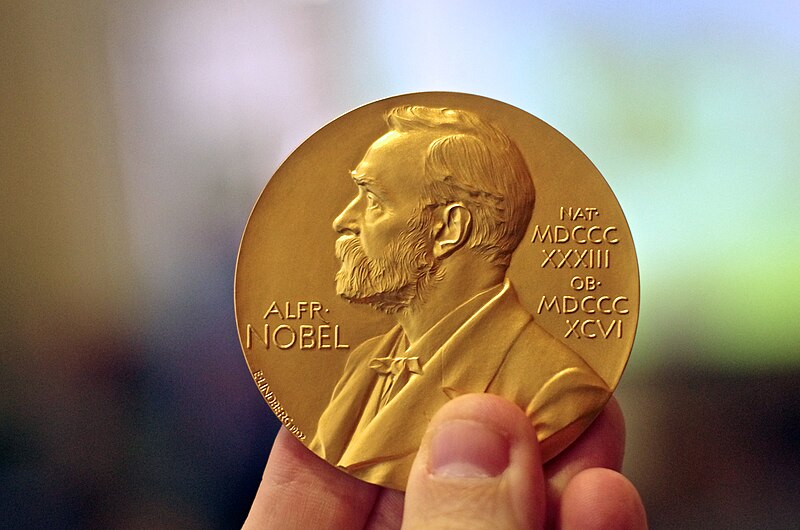
Image by Adam Baker from
An enthusiast of physics, Lee started his science career in Chemical Engineering, but later switched to physics.
Becoming a Nobel Laureate at the age of 31, Lee was the third youngest in history, after W. L. Bragg (at age 25 with his father W. H. Bragg in 1915) and Werner Heisenberg (at age 30 in 1932).
Lee and Yang are the first Chinese Nobel laureates. Since Lee became a naturalized American citizen in 1962, he is the youngest American ever to have won a Nobel Prize.
Tsung-Dao Lee with Chen Ning Yang, received the Nobel Prize for Physics in 1957 for work in discovering violations of the principle of parity conservation (the quality of space reflection symmetry of subatomic particle interactions), thus bringing about major refinements in particle physics theory.
4. Tsung- Dao Lee is a Highly Awarded and Recognized Global Scholar
Lee is University Professor Emeritus at Columbia University and has published over 300 scientific papers and several books.
Among Lee’s many prizes and awards are the Albert Einstein Award in Science, Galileo Galilei Medal, G. Bude Medal, Science For Peace Prize, China National-International Cooperation Award, New York City Science Award, New York Academy of Science award, Order of Merit Grande Ufficiale from Italy and the Order of the Rising Sun, Gold and Silver Star from Japan.
He has received honorary doctorates, professorships, lectureships and trusteeships from over thirty universities worldwide.
He is a member of the National Academy of Sciences, the American Academy of Arts and Sciences, Academia Sinica, Academia Nazional dei Lincei, the Chinese Academy of Sciences, the Third World Academy of Sciences and the Pontifical Academy of Sciences.
5. Tsung-Dao Lee Initiated China-US Scientific Exchange-CUSPEA

CUSPEA Beneficiaries courtesy Iubmb.onlinelibrary
Initiated by Tsung-Dao Lee, the Chinese-American 1957 Physics Nobel Prize Laureate and the University Professor Emeritus of the Columbia University, the ‘China-US Physics Examination and Application’ (CUSPEA Programme) sent 915 talented Chinese students to top institutions in the United States between 1979 and 1988.
CUSPEA (China-U.S. Physics Examination and Application) was an examination and admission system used by the physics departments of some American and Canadian universities for graduate school admission in the People’s Republic of China between 1979 and 1989.
200 of its alumni gathered in November 2019 to Commemorate CUSPEA’s 40th anniversary and develop a strategy for international exchange.
Along with their other planned initiatives, they aimed to promote a scientific collective, While giving back to the world as science belongs to all humankind.
6. Tsung-Dao Lee was the youngest full Professor at Columbia University then

Image by Smithsonian Institution Archives from
Lee in the 50s was then fast becoming a widely known scientist, especially for his work in elementary particles, statistical mechanics, field theory, astrophysics, condensed matter physics and turbulence, having solved several problems of long-standing and great complexity.
Dr. J. Robert Oppenheimer praised him as one of the most brilliant theoretical physicists then known, whose work was characterized by “a remarkable freshness, versatility, and style”.
In 1953, Lee joined Columbia University as an Assistant Professor. His first work was on the renormalizable field theory model, better known as the Lee Model.
At age 29, Lee was then the youngest-ever full professor in Columbia University’s faculty history.
In 1957, when awarded the Nobel Prize at barely 31 years of age, Lee became the second-youngest scientist ever to receive this distinction.
7. Tsung-Dao Lee Participated in Activism for Scientific Research Funding

Image by user:smartneddy from
Lee is one of the 20 American recipients of the Nobel Prize in Physics to sign a letter addressed to President George W. Bush in May 2008, urging him to “reverse the damage done to basic science research in the Fiscal Year 2008 Omnibus Appropriations Bill” by requesting additional emergency funding for the Department of Energy’s Office of Science, the National Science Foundation, and the National Institute of Standards and Technology.
8. Tsung-Dao Lee is a Naturalised American

Image by from
Lee became a naturalized American citizen in 1962, Lee is also the youngest American ever to have won a Nobel Prize.
Naturalization is the process through which an immigrant to the United States can become a U.S. citizen.
Only certain immigrants are eligible: those who either have been green card holders (permanent residents) for 3–5 years or meet various military service requirements.
He is a 2009 Great Immigrants Recipient. Every Fourth of July, Carnegie Corporation of New York celebrates the exemplary contributions of immigrants to American life.
The Great Immigrants initiative was founded in 2006 by Vartan Gregorian, the Corporation’s 12th president.
An Armenian born and raised in Iran, Gregorian arrived in America in 1956 to study at Stanford University.
He became a naturalized U.S. citizen in 1979 and proceeded to rise to the highest levels of higher education and philanthropy.
9. “Chun-Tsung Scholars”
In 1998, Lee established the Chun-Tsung Endowment in memory of his wife, who had died 3 years earlier.
Hui-Chun Jeannette Chin and Lee were married in 1950 and have two sons: James and Stephen.
The Chun-Tsung scholarships, supervised by the United Board for Christian Higher Education in Asia (New York), are awarded to undergraduates, usually in their 2nd or 3rd year, at six universities, which are Shanghai Jiaotong University, Fudan University, Lanzhou University, Soochow University, Peking University and National Tsing Hua University.
Students selected for such scholarships are named “Chun-Tsung Scholars”
10. His Son Stephen Lee is a Formidable Chemistry Scholar
Stephen Lee (born 25 October 1955) is an American chemist. In 1993, Lee received the MacArthur Award for his work in the field of physics and chemistry.
In addition, he has received an award from the Alfred P. Sloan Foundation for his continued research.
The MacArthur Fellows Program, also known as the MacArthur Fellowship and commonly but unofficially known as the “Genius Grant”, is a prize awarded annually by the John D. and Catherine T.
According to the foundation’s website, “the fellowship is not a reward for past accomplishment, but rather an investment in a person’s originality, insight, and potential,” but it also says such potential is “based on a track record of significant accomplishments.” The current prize is $625,000 paid over five years in quarterly instalments.
Lee joined Cornell University as a professor of solid-state chemistry in the chemistry and chemical biology department.
He has devoted his summer to help for free incoming freshmen learn basic chemistry to prepare them for the academic year.
Lee has made significant contributions to a wide range of research areas, including particle physics, relativistic heavy ion physics, non-topological solitons, astronomy, statistical mechanics and condensed matter.
Planning a trip to Â鶹APP ? Get ready !
These are ´¡³¾²¹³ú´Ç²Ô’²õÌý²ú±ð²õ³Ù-²õ±ð±ô±ô¾±²Ô²µÂ travel products that you may need for coming to Â鶹APP.
Bookstore
- The best travel book : Rick Steves – Â鶹APP 2023 –Ìý
- Fodor’s Â鶹APP 2024 –Ìý
Travel Gear
- Venture Pal Lightweight Backpack –Ìý
- Samsonite Winfield 2 28″ Luggage –Ìý
- Swig Savvy’s Stainless Steel Insulated Water Bottle –Ìý
We sometimes read this list just to find out what new travel products people are buying.


