
 English


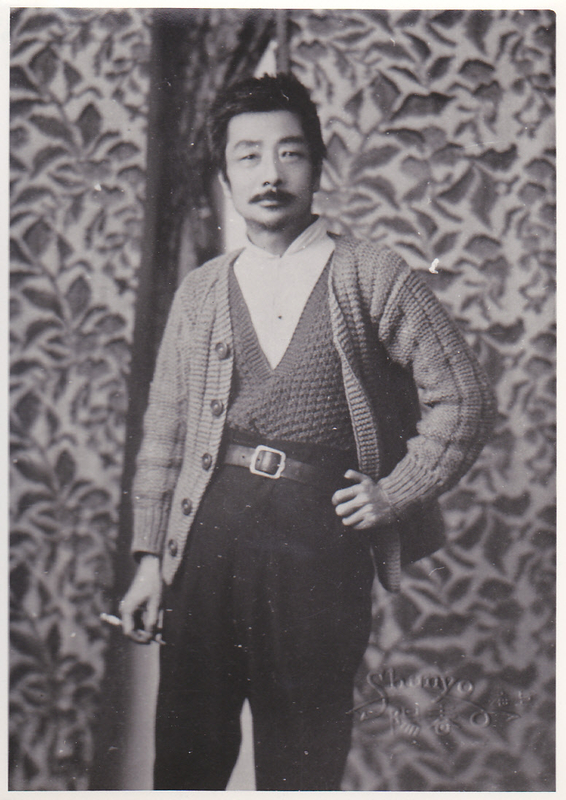
Image by Lu Xun from
Top 10 Interesting Facts about Lu Xun
Zhou Shuren (1881-1936) pen name Lu Xun was an influential Chinese writer, essayist and translator who is commonly considered the ‘father of modern Chinese literature.’
His grandfather served as a high official in Peking (Beijing) and his father was also a scholar. But Lu Xun’s childhood was full of hardship.
The family pawned their belongings to buy medicine for their father suffering from a chronic illness.
Moreover, when Lu Xun was thirteen, his grandfather in Peking was accused of complicity in a bribery case and was detained in custody for seven years.
This overt corruption certainly influenced Lu Xun’s contempt for the traditional system of government.
He is a pioneer of modern vernacular Chinese literature and was one of the most important thinkers of his time.
Lu Xun argued that for China to become a modern country free of the Confucian authoritarianism, a new language and literary culture were essential.
Ten years earlier, Hu Shi, a young graduate scholar who had studied philosophy under John Dewey at Columbia University, published a manifesto advocating the literary use of vernacular Chinese.
Read on for the top 10 interesting facts about Lu Xun.
1. Lu Xun was a Master Writer

A Madman’s Diary, published in the La Jeunesse (New Youth) magazine Volume 4, Issue 5, is now in the collection of the Beijing Lu Xun Museum. Image by Shizhao from
Mao Zedong regarded Lu Xun as the most influential Chinese writer associated with the May Fourth Movement.
He produced harsh criticism of social problems in China, particularly in his analysis of the “Chinese national character”. He is a “champion of common humanity.”
Lu Xun was a versatile writer, he wrote using both traditional Chinese conventions and 19th-century European literary forms.
His style conveys both “sympathetic engagement” and “ironic detachment” at different moments.
His essays are incisive on societal commentary and his mastery of the vernacular language and tone make some of his literary works (like “The True Story of Ah Q”) hard to convey through translation.
In them, he frequently treads a fine line between criticizing the follies of his characters and sympathizing with those very follies.
A master of irony and satire (as can be seen in “The True Story of Ah Q”) who could write in simple engagement (“My Old Home”, “A Little Incident”).
2. Lu Xun was Born in a Prominent Family
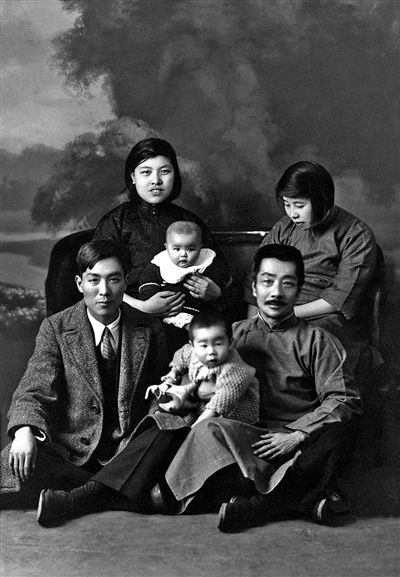
The Fengs and the Lu-s, photographed in Shanghai on April 20, 1931. Image from
Lu Xun is the pen name of the writer born as Zhou Shuren (Chou Shu-jen) to a family with a strong Confucian background.
Like so many other troublesome intellectuals of the past and present Lu Xun’s family was a prominent family that was in the stage of decline.
His clan genealogy traced its origins back to the Song dynasty (A.D. 960-1279).
Driven south from Henan by barbarian invasions, it settled in Shaoxing, a sizeable town in Zhejiang province, situated on a plain intersected by rivers and canals, not very far from the provincial capital of Hangzhou.
The surrounding countryside produced an abundance of ‘fish and rice’, and the town itself was a centre for handicrafts, pottery, textiles and distilleries.
3. Lu Xun was a Pen Name

Image by from
Lu Xun was the pen name of Zhou Shuren, one of China’s most famous fiction authors, poets, and essayists.
It was common in pre-modern China, for the Chinese to have many names and different names at different stages of their life.
The famous writer Lu Xun was born “Zhou Zhangshou”. His courtesy name was “Yushan” but he later changed that to “Yucai”.
In 1898, before he went to the Jiangnan Naval Academy, he took the given name “Shuren” —which means “to be an educated man”.
He chose “Lu Xun” as his literary pseudonym when his fiction novel “A Madman’s Diary” was first published, in 1918.
4. Lu Xun is the Father of Modern Chinese Literature

Complete Works, Part 1 – Lu Xun’s. Image by tango tango book collection from
Lu Xun was part of the New Culture Movement of the 1910s, which essentially tried to pull China out of imperial times and into the modern age.
He is the father of modern Chinese literature because he was the first serious author to write using modern colloquial language.
He was one of the first popular authors to write in everyday language instead of literary Chinese, which helped increase literacy rates.
Lu Xun argued that for China to become a modern country free of the deadening legacy of Confucian authoritarianism, a new language and literary culture were essential.
Ten years earlier, Hu Shi studied philosophy under John Dewey at Columbia University and published a manifesto advocating the literary use of vernacular Chinese.
Inspired by Hu Shi’s call, Lu Xun helped lay the foundations of modern Chinese literature in a series of stories and tales written in the evolving vernacular.
5. A Lu Xun Letter Fetched More than $1 Million in an Auction

Image by from
In November 2013, a 220-character Lu Xun letter sold for more than $1 million, about three times its asking price at the China Guardian fall auctions in Beijing.
The letter, dated June 8, 1934, and on the subject of learning Japanese, was written to Tao Kangde, a magazine publisher who, like Lu Xun was active in the intellectual scene in pre-Communist, Republican China.
In the letter, Lu Xun is responding to Mr. Tao, who had asked him if he should study Japanese.
Lu Xun advises him to learn a European language instead, saying there were more important literary works there than in Japan.
The price was due to the fact that artefacts related to Lu Xun are rare and also because this letter is in his published collections, so it was very reliable.
It is like each character by the modern Chinese writer Lu Xun could fetch almost $5,000.
6. A Madman’s Diary, is his Seminal Work

Photo Courtesy of
After working for several years as a teacher in his hometown and then as a low-level government official in Beijing, Lu Xun returned to writing.
He became associated with the nascent Chinese literary movement in 1918.
That year, at the urging of friends, he published his now-famous short story “Kuangren riji� (“Diary of a Madman�).
Modelled on the Russian realist Nikolay Gogol’s tale of the same title, the story is a condemnation of traditional Confucian culture, which the madman narrator sees as a “man-eating� society.
His first short story, “A Madman’s Diary�, made a huge splash in China’s literary world.
The story also turned heads for its extremely critical take on China’s dependence on tradition, which Lu Xun uses metaphors to compare to cannibalism.
The first published Western-style story written wholly in vernacular Chinese was a tour de force that attracted immediate attention and helped gain acceptance for the short-story form as an effective literary vehicle.
7. Lu Xun Abandoned the Study of Medicine for Literature

Group photo of Lu Xun with Xu Shoushang and Jiang Yixi in Tokyo, Japan. Image by Huang Kinhejo from
When traditional Chinese remedies failed to save his father’s life from an illness, most likely tuberculosis, Lu Xun vowed to study Western medicine and become a doctor.
He went to study in Japan. One day after class he saw a slide of Japanese soldiers exciting a Chinese prisoner.
He was disturbed that Chinese people were gathered around happily taking in the spectacle.
Appalled at his countrymen’s apparent callousness, Lu Xun abandoned his study of medicine.
He vowed to take up writing with the idea that was no point in curing diseases in Chinese people’s bodies if there was a more fundamental problem in their minds that needed curing.
With the realization that China needed “spiritual medicine” even more than treatment for physical ills, Lu Xun returned to Tokyo in 1906.
He decided to devote himself to education and literature rather than medicine, thus expressing his lifelong dedication to teaching and encouraging young people as the major hope for China’s future.
8. Lu Xun’s Grandfather was Nearly Executed for Bribery
His grandfather was accused of complicity in a bribery case and was detained in custody for seven years.
The Ministry of Punishment expected money from the family every fall so as not to execute the grandfather.
His grandfather’s debacle sent his family tumbling down the social ladder.
This fall from grace and the way once-friendly neighbors treated his family after they had lost their status had a profound effect on the young Lu Xun.
9. Lu Xun was the Head of Chinese Left-Wing Writers
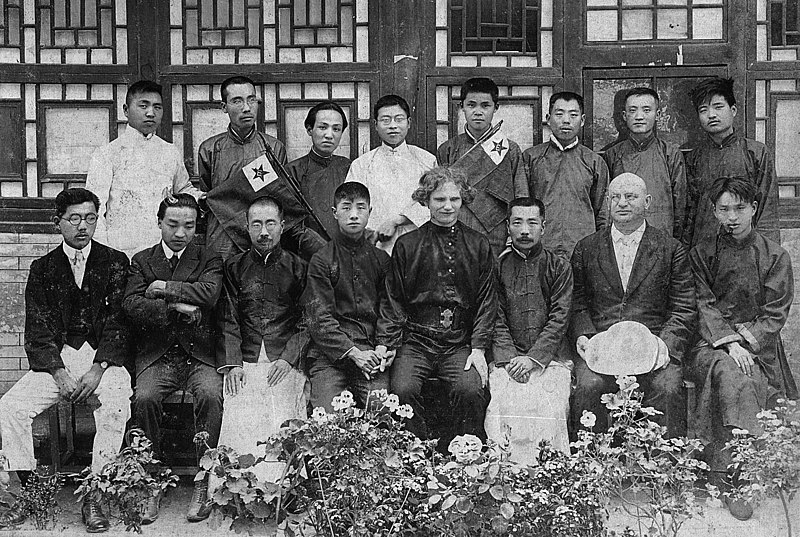
Source: Bildarchiv Austria from
Lu Xun Started Political Activism as a College Student.
In 1902 he travelled to Japan to study Japanese and medical science, and while there he became a supporter of the Chinese revolutionaries who gathered there.
In 1903 he began to write articles for radical magazines edited by Chinese students in Japan.
Lu Xun protested the killing of students in a 1926 demonstration and had to flee. He went to Amoy (Xiamen), then Canton (Guangzhou), then Shanghai and continued to aid leftist students.
From this time until his death in 1936, Lu Xun supported political change through overt action and “pen warfare”:
He was a prolific writer of short, biting essays attacking social injustice and political corruption.
He avidly encouraged young writers, translators, and artists, and was a particularly enthusiastic supporter of woodblock prints which depicted the intense sufferings of the Chinese people to show the desperate need for a revolution.
In the 1930s, he became the titular head of the League of Left-Wing Writers in Shanghai and is regarded as the pioneer of modern leftist Chinese literature.
10. Parents Protested the Removal of Lu Xun From School Textbook

Image by NEYC from
In 2013, an essay by Lu Xun was removed from middle school textbooks, setting off an outcry among parents and intellectuals, who say the author is essential to understanding the national psyche.
He Huifeng wrote in the South China Morning Post: “The People’s Education Press, a government-backed publisher that supplies most of the mainland’s textbooks, removed Lu’s essay The Kite as part of revisions to its seventh-grade textbooks for Chinese and literature.
For years, pupils and teachers have long complained Lu’s works are too difficult for young people to understand and that his insights into Chinese culture, written almost 100 years ago, are losing their relevance.
The decision may please them, but others feel it is a step in the wrong direction. “Tens of thousands of people posted comments online overnight after a newspaper in Henan reported the editing decision.
In two surveys conducted on Sina’s Weibo, the mainland’s most popular microblog site, more than 85% of respondents disagreed with removing Lu’s essay.
He was an author who also studied medicine and was known for his in-depth thinking. Xun came from a poor in wealth family, but was rich in intellectual talents.
He did not choose to accept the Chinese traditions without critically addressing some aspects of his culture a review in thought.
Lu Xun’s articles play an important role in modern Chinese Literature.
Planning a trip to Â鶹APP ? Get ready !
These are ´¡³¾²¹³ú´Ç²Ô’²õÌý²ú±ð²õ³Ù-²õ±ð±ô±ô¾±²Ô²µÂ travel products that you may need for coming to Â鶹APP.
Bookstore
- The best travel book : Rick Steves – Â鶹APP 2023 –Ìý
- Fodor’s Â鶹APP 2024 –Ìý
Travel Gear
- Venture Pal Lightweight Backpack –Ìý
- Samsonite Winfield 2 28″ Luggage –Ìý
- Swig Savvy’s Stainless Steel Insulated Water Bottle –Ìý
We sometimes read this list just to find out what new travel products people are buying.


