
 English


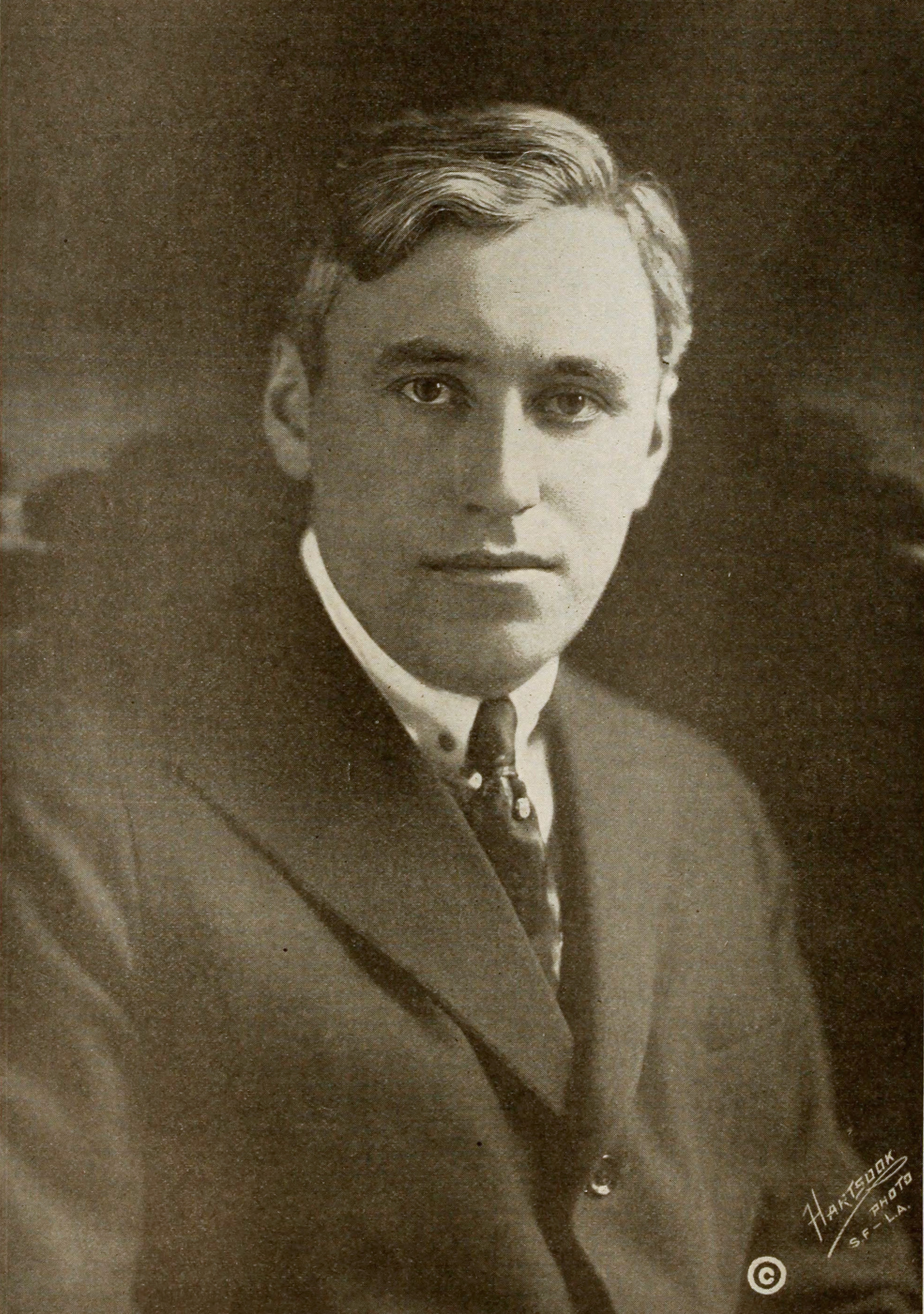
Mack Sennett’s advertisement in The Moving Picture World. Photo by: Fred Hartsook-
Top 10 Fascinating Facts about Mack Sennett
Mack Sennett (1884-1960), an American silent-film producer and director, is widely regarded as the father of film comedy. In his “Keystone” series, he perfected the art of silent-screen slapstick.
On January 17, 1884, in Quebec, Canada, Michael Sinnott was born. He moved to New York at the turn of the century to work in D. W. Griffith films. Sennett switched to film directing after his first two films, Comrade (1911) and One-round O’Brien (1912), were so effective that sequels were instantly demanded.
With financial backing secured, he formed his own organization, the Keystone Company, and relocated to Hollywood, California.
1. Mack’s journey to building his company
Sennett’s company made the first American feature-length comedy, Tillie’s Punctured Romance, in 1914, but he is best known for over 1,000 one- and two-reel comedy shorts. Initially, he directed and acted in his short comedies, many of which were improvised on the spot to take full advantage of parades, fires, and other events that were too expensive to stage.
His name is commonly associated with the bathing beauties who graced his comedies, as well as the antics of the Keystone Kops, a group of exceptionally talented actors who became internationally popular comedians.
2. Mack’s brief family history
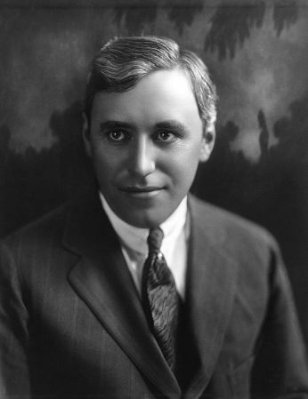
This image of Mr Sennett was published before 1923. Taken 1910- Wikimedia.
Mack Sennett was born to immigrant Irish parents. Mack was 17 when his family relocated to East Berlin, Connecticut, and later to Northampton, Massachusetts, where he started working as a workman.
Sennett moved to New York to pursue a career on the stage after a chance meeting with actress Marie Dressler in 1902. He began acting in films as a chorus boy in 1908, appearing alongside a number of Hollywood stars, including fellow Canadian Mary Pickford.
3. Why Mack’s fame died down fast
Sennett was dubbed “The King of Comedy.” His work engagement secured him a large business empire, but his life began to decline after he was financially ruined by the 1929 stock-market crash, severely injured in a 1934 car crash, and forced to close his studio in 1935.
4. What Mack accomplished throughout his career
Mack Sennett’s advertisement in The Moving Picture World. Photo by: Fred Hartsook- Wikimedia.
The place’s brilliant man was Irish-Canadian Mack Sennett, born Michael Sinnott. As an actor, he had the good fortune to arrive at the Biograph Film Studios in New York just as DW Griffith, a pioneer genius of telling stories with moving pictures, was exploring and clarifying the fundamentals of modern film strategy.
Sennett added what appears to be his special genius for instinctively knowing who and what was funny to Griffith’s lessons.
From 1912 to 1933, he made over 1,000 films and initiated a succession of stars, including Charlie Chaplin, Fatty Arbuckle, and Harry Langdon, as well as the less funny Bing Crosby, only until the depression, changing economies, and changing tastes (some accused the arrival of Disney cartoons) condemned this most energetic of men to a torment of idleness for the next three decades.
5. Mack got an award before he died
Sennett earned a special Academy Award in 1937 for his “enduring participation to the comedy technique of the screen, the basic principles of which are as important today as they were when they were first put into practice.”
Mack Sennett, the self-proclaimed King of Comedy, published his autobiography under that title in 1954 and passed away on November 5, 1960 in Woodland Hills, California.
6. Mack later represented himself
This image of Mr Sennett was published before 1923. Taken 1910- Wikimedia.
Sennett relinquished the Keystone trademark and formed his own company, Mack Sennett Comedies Corporation, in 1917. Sennett’s bosses kept the Keystone trademark and produced a cheap series of comedy shorts that were only “Keystones” in name: they were a flop, and Sennett had nothing to do with them.
Sennett went on to make more ambitious comedy short films as well as a few feature films. During the 1920s, he was in high demand for his short subjects, which included stars such as Louise Fazenda, Billy Bevan, Andy Clyde, Harry Gribbon, Vernon Dent, Alice Day, Ralph Graves, Charlie Murray, and Harry Langdon.
He made several films with his brightest stars, including Ben Turpin and Mabel Normand.
7. Mack started collaborating with Warner’s brothers
Most of Sennett’s early 1920s films were acquired by Warner Bros. Studio. After Warner Bros. merged with the original distributor, First National, several of these short subjects received music and commentary.
Unfortunately, due to insufficient storage, many of the films from this era physically deteriorated to the point of destruction. As a result, many of Sennett’s films from his most productive and creative period are no longer in production.
8. Mack’s transfer to Pathé Exchange
Mack Sennett’s advertisement in The Moving Picture World. Photo by: Fred Hartsook- Wikimedia.
Sennett switched to Pathé Exchange distribution in the mid-1920s. Pathé dominated the market, but made poor business decisions, such as attempting to sell too many comedies at once, including those of Sennett’s main competitor, Hal Roach.
In 1927, the profits made by smaller companies such as Pathé Exchange and Educational Pictures were noticed by Hollywood’s two most successful studios, Metro-Goldwyn-Mayer and Paramount Pictures. MGM and Paramount resumed producing and distributing short films.
Hal Roach signed with MGM, but Mack Sennett stayed with Pathé Exchange even when times were tough due to competition. Hundreds of other independent vendors and movie theaters transitioned from Pathé to new MGM or Paramount films and short subjects during this time frame.
9. Projects Mack was meant to be involved in the future
Rumors circulated that Sennett would return to film production (a 1938 publicity release stated that he would be working with Stan Laurel of Laurel and Hardy), but nothing came of it, aside from Sennett reissuing a couple of his Bing Crosby two-reelers to theaters.
Sennett did, however, appear in Hollywood Cavalcade (1939), a thinly disguised version of the Mack Sennett-Mabel Normand romance. He contributed film footage to and appeared in the first full-length comedy compilation, Down Memory Lane (1949), written and narrated by Steve Allen.
In 1954, Sennett was featured on the television show This is Your Life and he guest appearance (for $1,000) in Abbott and Costello Meet the Keystone Kops (1955). His final notable contribution was to the NBC radio program Biography in Sound, which aired on February 28, 1956, and related memories of working with W.C. Fields.
10. Where did Mack pass away?
Sennett died on November 5, 1960, at the age of 80, in Woodland Hills, California. He was laid to rest in Culver City’s Holy Cross Cemetery.
Planning a trip to Â鶹APP ? Get ready !
These are ´¡³¾²¹³ú´Ç²Ô’²õÌý²ú±ð²õ³Ù-²õ±ð±ô±ô¾±²Ô²µÂ travel products that you may need for coming to Â鶹APP.
Bookstore
- The best travel book : Rick Steves – Â鶹APP 2023 –Ìý
- Fodor’s Â鶹APP 2024 –Ìý
Travel Gear
- Venture Pal Lightweight Backpack –Ìý
- Samsonite Winfield 2 28″ Luggage –Ìý
- Swig Savvy’s Stainless Steel Insulated Water Bottle –Ìý
We sometimes read this list just to find out what new travel products people are buying.


