
 English


Top 10 Fascinating Facts about Max Planck
Max Karl Ernst Ludwig Planck was born in Kiel, Germany, on April 23, 1858, the son of Julius Wilhelm and Emma (née Patzig) Planck. His father was a Professor of Constitutional Law at the University of Kiel, and later in Göttingen.
Max Planck was a German theoretical physicist who discovered the quantum of action, now known as Planck’s constant, h, in 1900. This work laid the foundation for quantum theory, which won him the Nobel Prize for Physics in 1918.
Max Planck changed physics and our understanding of the world forever when he discovered that hot objects do not radiate a smooth, continuous range of energies as had been assumed in classical physics.
Instead, he found that the energies radiated by hot objects have distinct values, with all other values forbidden. This discovery was the beginning of quantum theory – an entirely new type of physics – which replaced classical physics for atomic-scale events.
Quantum theory revolutionized our understanding of atomic and subatomic processes. Just as Albert Einstein’s theories of relativity revolutionized our understanding of gravity, space and time. Together these theories constitute the most spectacular breakthroughs in twentieth-century physics.
Find out more 10 fascinating facts about Max Planck.
1. Max Planck got a PhD at age of 21

Max Planck image on a 1958 coin. Photo by 5snake5 from
Planck started his studies at the University of Berlin in October 1877 from the University of Munich. His teachers included Weierstrass, Helmholtz and Kirchhoff.
One important part of his education in Berlin came through independent study. He read Rudolf Clausius’s articles on thermodynamics. The absolute nature of the second law of thermodynamics impressed him.
Planck returned to Munich and received his doctorate in July 1879 at the age of 21 with a thesis on the second law of thermodynamics entitled On the Second Law of Mechanical Theory of Heat. The award of the doctorate was made “summa cum laude” in 1879.
Following this Planck continued to work for his habilitation which was awarded on 14 June 1880, after he had submitted his thesis on entropy and the mechanical theory of heat and he became a Privatdozent at Munich University.
2. E= hv (Quantum theory)

Image by from
In order to match theory with observations, Planck made a revolutionary proposal. Planck’s idea was that energy is emitted in a similar manner. He proposed that only certain amounts of energy could be emitted – i.e. quanta. Classical physics held that all values of energy were possible.
This was the birth of quantum theory. Planck found that his new theory, based on quanta of energy, accurately predicted the wavelengths of light radiated by a black body.
Planck found the energy carried by electromagnetic radiation must be divisible by a number now called Planck’s constant, represented by the letter h. Energy could then be calculated from the equation:
E = hν
Where E is energy, h is Planck’s constant, and ν is the frequency of the electromagnetic radiation. Planck’s constant is a very, very small quantity indeed. Its small size explains why the experimentalists of the time had not realized that electromagnetic energy is quantized. To four significant figures, Planck’s constant is 6.626 x 10⁻³⁴ J s.
3. Max Planck Created one of the Pillars of Modern Physics
There are two theories that modern physics uses to explain the universe. There is relativity—Einstein’s work—and there is quantum theory, invented by Planck. In the late 1890s, he began his work studying thermal radiation and found a formula for black-body radiation, it became Planck’s Law.
To explain why his formula worked, he introduced the idea of packets of energy he called “quanta,� giving rise to the branch of quantum physics.
He himself was surprised at the radical nature of his own discoveries, writing, “My futile attempts to put the elementary quantum of action into the classical theory continued for a number of years and they cost me a great deal of effort.�
By the time he died, though, Planck was a legend in the scientific world. “Max Planck was one of the intellectual giants of the 20th century and one of the outstanding intellects of all time,� The New York Times wrote upon his death in October 1947, ranking “with the immortals of science, such as Archimedes, Galileo, Newton, and Einstein.�
4. Max Planck was enrolled in a School for Gifted Children
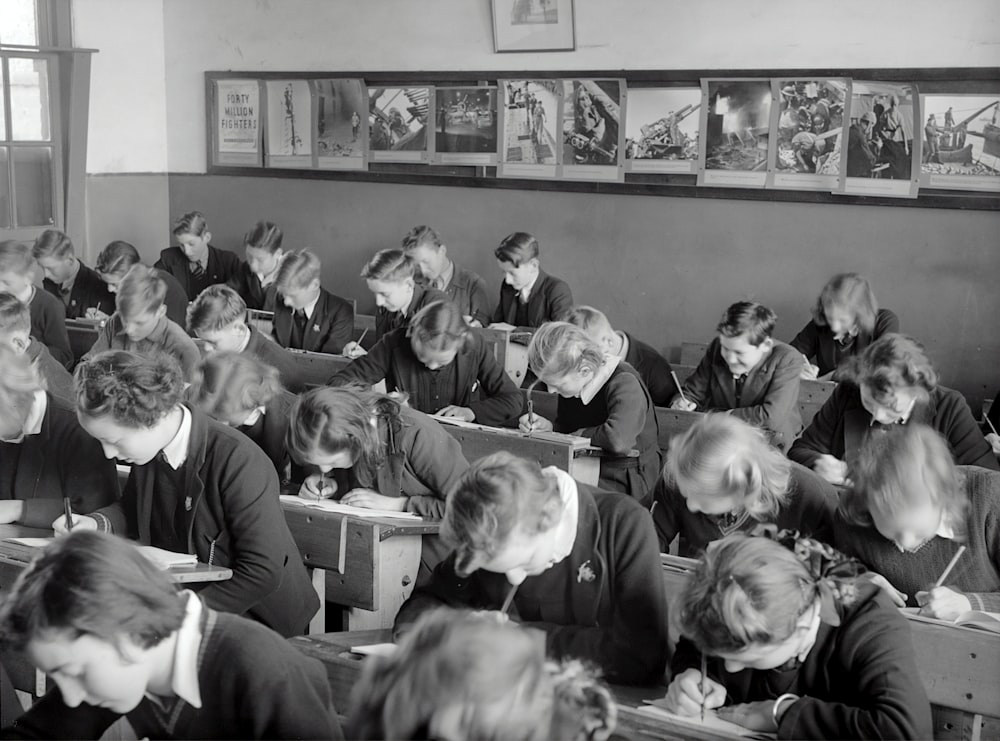
Photo by on
His father, Johann Planck, was a law professor who came from an academic family. Max’s mother’s name was Emma Patzig. Her father was an accountant. Emma was lively and well-liked in the academic circles.
Max attended elementary school in Kiel. In 1867, when he was 9 years old, his family relocated over 500 miles to Munich in southern Germany, where his father had been offered a tempting professorship.
Max enrolled at the Maximilians Gymnasium – a school for academically able children. His mathematics teacher Hermann Müller noticed Max was rather gifted mathematically, so he offered him extra lessons in astronomy and mechanics.
Max accepted the offer enthusiastically and Müller taught his receptive young student how to visualize the laws of physics in his mind – a vital weapon in the armoury of the great physicists
5. Planck is a Nobel Laurette

image by Rudiger Stehn from
Planck was a highly respected academic in his lifetime. As a science writer, Barbara Lovett Cline explains, “In Germany, at this time only princes and barons were accorded more respect than professors,� and Planck was no exception.
He was honoured with several awards in his academic career before finally winning the Nobel Prize in Physics at the age of 60. Planck received more nominations for the Nobel from a wider range of physicists than any other candidate at the time.
He finally received the prize for 1918 “in recognition of [his] epoch-making investigations into the quantum theory,� as the president of the Royal Swedish Academy of Sciences said upon presenting the award.
6. Max Planck was a Talented Musician

Frequently it happens that students who are talented mathematically are also talented musically and this was the case with Max Planck. He composed classical music, had perfect pitch and played the cello and piano expertly. As if that were not enough, he also had a beautiful singing voice. He sang in the university choir and composed a mini-opera.
Before he left high school, Planck decided he would pursue science as a vocation while music would remain an enjoyable hobby.
Planck was a gifted pianist and almost dedicated his career to music instead of physics. He hosted musical salons at his home, inviting other physicists and academics as well as professional musicians. Albert Einstein attended, sometimes picking up the violin to play in quartets or trios with Planck.
According to Heilbron, “Planck’s sense of pitch was so perfect that he could scarcely enjoy a concert,� lest it be ruined by an off-key note.
7. Max Planck Lectures were Very Popular
Though he was described as a bit dry in front of a classroom, Planck’s students loved him. English chemist James Partington said he was “the best lecturer [he] ever heard,� describing Planck’s lectures as crowded, popular affairs.
His lectures were standing-room-only.
“There were always many standing around the room,� according to Partington. “As the lecture room was well heated and rather close, some of the listeners would from time to time drop to the floor, but this did not disturb the lecture.�
8. Planck saw the Importance of the Theory of Relativity Early on

Image by from
In 1905 the Annals of Physics published three of Albert Einstein’s papers on special relativity.
Planck immediately recognized their significance and worked to extend and publicize the special theory.
Planck recognized the importance of Einstein’s work on relativity early and was one of the first important boosters of his theories. “Einstein may be considered Planck’s second great discovery in physics,� J.L. Heilbron writes in his book The Dilemmas of an Upright Man: Max Planck as a Spokesman for German Science, “and his support, in Einstein’s judgment, was instrumental in securing the swift acceptance of new ideas among physicists.�
At the time, Einstein didn’t have a PhD or work at a university, and the support of an established, famous scientist like Planck helped usher him into the mainstream.
Planck was appointed Dean of Berlin University and in 1914 created a professorship for Einstein there.
9. There are Many things Named after him

max Planck Institute, Florida. Image by Mpfi-wikki from
Several discoveries by Planck were eventually named after him, including Planck’s law, Planck’s constant (h, or 6.62607004 × 10^-34 joule-seconds), and Planck units.
There is the Planck era (the first stage of the Big Bang), the Planck particle (a tiny black hole), the lunar crater Planck and the European Space Agency spacecraft Planck, among others. Not to mention the Max Planck Society and its 83 Max Planck Institutes.
The Max Planck Society for the Advancement of Science is a formally independent non-governmental and non-profit association of German research institutes.
Founded in 1911 as the Kaiser Wilhelm Society, it was renamed to the Max Planck Society in 1948 in honor of its former president, theoretical physicist Max Planck.
10. His Son Was Linked to a Plot to Assassinate Hitler

Photo by on
Erwin Planck was a high-ranking government official before the Nazis came to power, and although he resigned from political life in 1933, he secretly helped craft a constitution for a post-Nazi government.
In 1944, he was arrested and accused of taking part in Claus Stauffenberg’s assassination attempt on Adolf Hitler, in which the Nazi leader was wounded by an exploding briefcase.
While it seems that Erwin didn’t directly take part in the bombing plot, he did recruit supporters for the conspirators, and he was sentenced to death for treason.
Trying to save his favourite son’s life, the 87-year-old Max Planck wrote personal letters begging for clemency to both Hitler and the head of the SS, Heinrich Himmler. Erwin was executed in 1945.
Tragically, Planck would live to see the death of his wife and all their children. His wife, Marie, died in 1909 from tuberculosis. Karl was killed in battle in 1916 during World War 1. Grete died in childbirth in 1917 and then Emma died also in childbirth in 1919. (Their babies survived.) Erwin was executed by the Nazis in 1945 for his suspected part in a plot to kill Adolf Hitler.
He was revered by his colleagues not only for the importance of his discoveries but for his great personal qualities.
Planning a trip to Â鶹APP ? Get ready !
These are ´¡³¾²¹³ú´Ç²Ô’²õÌý²ú±ð²õ³Ù-²õ±ð±ô±ô¾±²Ô²µÂ travel products that you may need for coming to Â鶹APP.
Bookstore
- The best travel book : Rick Steves – Â鶹APP 2023 –Ìý
- Fodor’s Â鶹APP 2024 –Ìý
Travel Gear
- Venture Pal Lightweight Backpack –Ìý
- Samsonite Winfield 2 28″ Luggage –Ìý
- Swig Savvy’s Stainless Steel Insulated Water Bottle –Ìý
We sometimes read this list just to find out what new travel products people are buying.


