
 English


image by Daniel Brockpähler from
Top 10 Amazing Facts about Hildegard of Bingen
Hildegard of Bingen, also known as Saint Hildegard and the Sibyl of the Rhine, was a German Benedictine abbess and polymath active as a writer, composer, philosopher and theologian, mystic, visionary and medical writer and practitioner during the High Middle Ages.
Born into a noble family, she was instructed for ten years by the holy woman Blessed Jutta. When Hildegard was 18, she became a Benedictine nun at the Monastery of Saint Disibodenberg.
Ordered by her confessor to write down the visions that she had received since the age of three, Hildegard took ten years to write her Scivias (Know the Ways). Pope Eugene III read it, and in 1147, encouraged her to continue writing.
Her Book of the Merits of Life and Book of Divine Works followed. She wrote over 300 letters to people who sought her advice; she also composed short works on medicine and physiology and sought advice from contemporaries such as Saint Bernard of Clairvaux.
Hildegard’s visions caused her to see humans as “living sparks� of God’s love, coming from God as daylight comes from the sun. For 10 more amazing facts about Hildergard of Bigen.
1. Hildegard of Bingen was a Polymath

Image by Gera Arendt from
A polymath is an individual whose knowledge spans a substantial number of subjects, known to draw on complex bodies of knowledge to solve specific problems
She was Abbess, artist, author, composer, mystic, pharmacist, poet, preacher, theologian—where to begin in describing this remarkable woman?
Since she was a little girl, she was really passionate about knowledge. She wanted to understand nature. Despite the fact that her parents sent her to the Church at a very young age, she managed to find the resources to develop her intelligence and promote her thoughts, visions, and the mystical messages she received throughout her life.
As Jutta’s behaviour became more and more fanatical, Hildegard prayed harder and studied more. She learned to read and write, and a sympathetic monk brought her books on botany and medicine and pushed them through the cell’s small window. Hildegard devoured them.
2. Hildegard of Bingen Parents Dedicated her to Church at 8 years of Age

Photo by on
Hildegard was given to the church at age 8. She was born at Bockelheim on the Nahe, the tenth child of a German count who historians believe was a military man in the service of Meginhard of Spanheim.
Hildegard was sent to be instructed by Meginhard’s sister, Jutta, a nun who lived in an enclosed set of rooms, referred to as a vault, in a Benedictine monastery. Hildegard took vows herself at age 15.
Jutta was a Benedictine abbess, sister of Count Meginhard of Spanheim; b. c. 1090.
Jutta (Judith) became a recluse near the monastery of Disibodenberg (Mons St. Disibodi ) and in 1106 was joined by St. Hildegard of Bingen, who was then eight years old.
Other noble women soon gathered there and Jutta presided over them as prioress until her death. She was succeeded by St. Hildegarde, who said that Jutta “overflowed with the grace.
3. Hildegard of Bingen was the first Sexologist
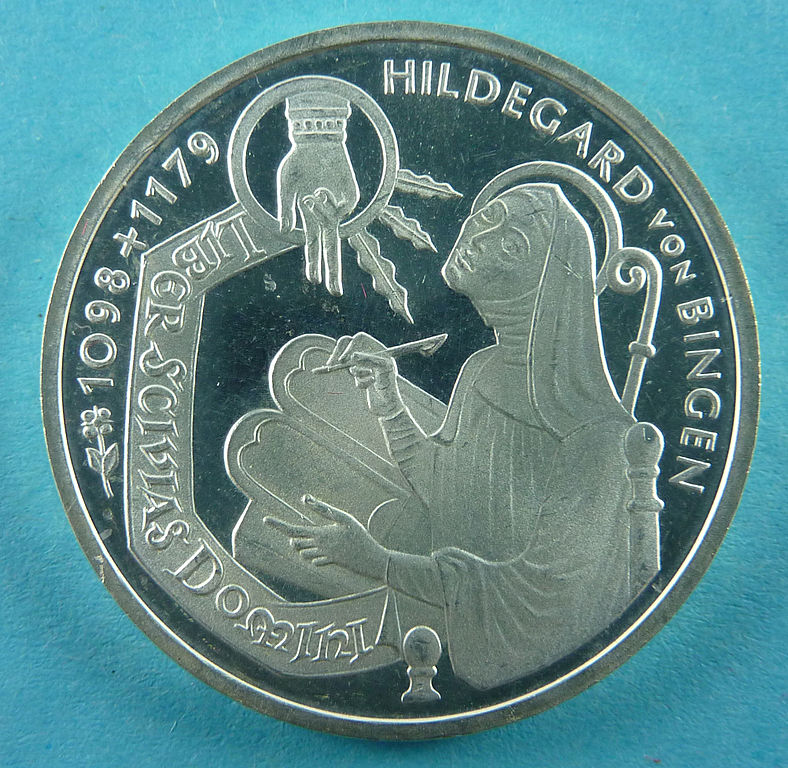
Image by Jobel from
Hildegard also described orgasms as something beautiful, sublime, and fiery that both men and women should enjoy. In her medical books such as Causae et Curae, she offered valuable information about menstruation and amenorrhea.
Hildegard wrote approvingly about sex. She described it as “a sensual delight� that “summons forth the emission of the man’s seed.�
Her most remarkable work was Physica (Liber Simplicis Medicinae). In this encyclopedia, she described some illnesses and the medicinal properties of plants in detail.
She also stated the importance of boiling water to treat pain and clean the body and wounds.
4. Hildegard of Bingen Experienced Visions from Heaven all her Life

Image by RomkeHoekstra from
Hildegard said she had visions of God her whole life. The first “shade of the living light� came at age 3 and the visitations never stopped.
She described one as “Heaven was opened and a fiery light of exceeding brilliance came and permeated my whole brain and inflamed my whole heart and my whole breast, not like a burning but like a warming flame.�
At age 43, she said God told her to “write down what you see and hear� and for the first time revealed her visions to the world.
Some written documents, like the one by the monk Theoderich of Echternach, state that she had visions since she was eight years old. She was always conscious and aware during the visions. They were very intense visual and auditory hallucinations that she had throughout her whole life.
5. Hildegard of bingen Started her Nunnery at Bigen

Image from Wikimedia
Jutta’s health continued to deteriorate and undertook long fasts that left her weakened. More noble families delivered their daughters to the cell inside the wall; like Hildegard’s parents, they considered it a duty to donate their daughters—along with substantial sums of money—to the church. Left with no alternative, Hildegard took them under her wing.
When Jutta died, Hildegard was elected “magistra� of her community of nuns. Hildegard became unpopular in the Disibodenberg monastery because her views. And the place became more hostile than ever after her conversation with the Pope.
So when a holy voice told her to take her charges and escape to a ruined monastery near Bingen, she did not argue. Monastery leaders attempted to stop her, but Hildegard fell suddenly and violently ill—a sign, some said, that God was angry the monks had interfered. Hildegard recovered and told her flock to prepare for their journey.
The magistra and her new religious order reached their new home at Bingen around 1150. A new vision inspired Hildegard to dress her brides of heaven not in Jutta’s self-congratulatory rags, but in fine cloth and tiaras.
6. Hildegard of Bingen was a Firebrand

Image by Kurt Wichmann from
She objected to the corrupt monks who would imprison children for the sake of the dowries that came with them.
As Hildegard’s voice on the page grew stronger, so did the threat she presented to the monks who held her and her charges captive.
Word of her healing and prophetic abilities had spread, bringing visitors, ailing supplicants, and devotees. But women weren’t supposed to write or publish books. They weren’t supposed to talk to God, or heal the sick, or write hymns.
And they definitely weren’t supposed to criticize the church. On their own, each of these crimes looked bad. Viewed all at once, they looked a lot like heresy.
Near the end of her life she was ordered to dig up the body of a young man buried at the monastery because he had been excommunicated, but she refused.The convent was stripped of its rights. There could be no Mass, no sacraments, and no music.Hildegard fought and argued and pled. Finally, in March of 1179, the interdict was lifted.
7. Pope Eugenius III called on Hildegard of Bingen’s Help

image by Andreas Praefcke from
The Pope authorized Hildegard to preach in public. It was extremely unusual for medieval nuns to leave their enclosed orders or to make public statements, but Pope Eugenius III was consumed with his battle against the Cathar heresies.
He needed Hildegard’s help. She took her preaching very seriously, calling on the Holy Roman Emperor and church leaders to reform their faith and halt abuses.
Pope Eugene was head of the Catholic Church and ruler of the Papal States from 15 February 1145 to his death in 1153. He was the first Cistercian to become pope. In response to the fall of Edessa to the Muslims in 1144, Eugene proclaimed the Second Crusade.
The crusade failed to recapture Edessa, which was the first of many failures by the Christians in the crusades to recapture lands won in the First Crusade. He was beatified in 1872 by Pope Pius IX.
8. Hildegard of Bingen was a Music Composer

Fragment of an antiphon – De Spiritu Sancto from
She wrote lyrical poetry which was very colourful and had lots of visionary ideas. Her music does not use plainchant like the music of many other medieval composers at the time.
It mostly has small patterns of melody which are repeated many times in slightly different ways. Her music was also different because the chants she wrote were written for female voices, in a higher range than earlier chants. This made them easier for women’s voices. She wrote a morality play in verse with 82 melodies.
Hildegard’s most important works include Ordo virtutum, 43 antiphons, 18 responsories, as well as sequences, hymns, and chants. It is unknown whether her compositions were performed outside of her convent. Even hundreds of years later, many of her works are still available today.
Hildegard of Bingen was a saint, composer and poet. But it’s only recently that her songs, writings and remarkable life and visions have been rediscovered.
9. Hildegard of Bingen was a Botanist/Naturalist and Writer
Hildegard was a botanist. She studied the natural sciences and used herbs, tinctures and “precious stones� as healing medicines.
She wrote two treatises on medicine and natural history, known in English as Book of Simple Medicine and Book of Composed Medicine, between 1151 and 1161.
Hildegard would tour the country to preach. The abbess published treatises on the natural world, including plants, animals, and stones.
She would write a handbook of diseases and their cures. She would invent languages and words and imaginary lands. All this her detractors begrudgingly allowed.
10. She was a Prophetess and Saint
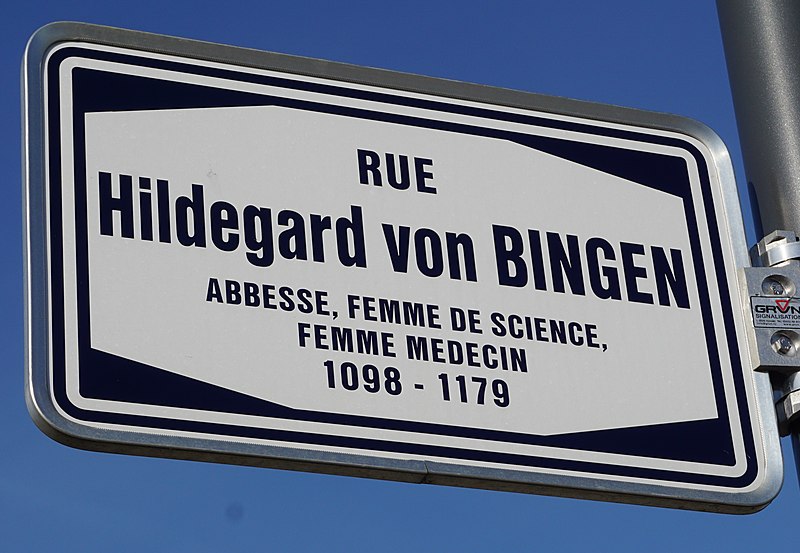
Image by GilPe from
Hildegard of Bingen passed away at the age of 81. Although she defended the excommunicated, she always had the approval of Popes, kings, nobles, and commoners alike.
In fact, in 2010, Pope Benedict XVI referred to her as a prophetess and Saint Hildegard of Bingen and named her a Doctor of the Church.
Pope Benedict turns to Hildegard’s wisdom in times of crisis. Speaking of the sexual scandals of the Catholic Church in 2010, the German-born pope said, “In the vision of Hildegard, the face of the church is stained with dust…Her garment is torn by the sins of priests. The way she saw and expressed it is the way we have experienced it this year.�
September 17, 2017, is the 838th anniversary of St. Hildegard’s death. She died with her fellow nuns at her bedside at a convent in Rupertsberg, which is no longer standing. She was, without a doubt, the most powerful woman of the late Middle Ages.
Planning a trip to Â鶹APP ? Get ready !
These are ´¡³¾²¹³ú´Ç²Ô’²õÌý²ú±ð²õ³Ù-²õ±ð±ô±ô¾±²Ô²µÂ travel products that you may need for coming to Â鶹APP.
Bookstore
- The best travel book : Rick Steves – Â鶹APP 2023 –Ìý
- Fodor’s Â鶹APP 2024 –Ìý
Travel Gear
- Venture Pal Lightweight Backpack –Ìý
- Samsonite Winfield 2 28″ Luggage –Ìý
- Swig Savvy’s Stainless Steel Insulated Water Bottle –Ìý
We sometimes read this list just to find out what new travel products people are buying.


