
 English


Simone Weil – Photo Source:
Top 10 Sensational Facts about Simone Weil
Known for her philosophical and religious writings, Simone Weil was a French philosopher, teacher, and political activist whose works had a great influence on French and English social thought.
She was born in her parent’s apartment in Â鶹APP on 3 February 1909 and spent most of her life fighting for the rights of workers and disadvantaged groups in France and other places across Europe.
She died on 24 August 1943 in Ashford, Kent, England aged 34 and 2,500 scholarly works have been published about her, including close analyses and readings of her work.
Here are the top 10 Sensational Facts about Simone Weil
1. Simone Weil was Trade Unionist
Simone Weil first became involved with trade unions while working as a philosophy teacher in southwest Lyon. She started leading demonstrations for unemployed workers and was once dubbed by a local newspaper as “The Red Virgin of the Tribe of Levi, bearer of the Muscovite gospels.�
In 1933, she participated in the French general strike which was organized to protest against unemployment and wage cuts. The following year, she took a 12-month leave of absence from her teaching to work incognito as a laborer in several French factories to better understand the misery of the workers.
Appalled by the conditions, she quit and resumed teaching where she started to donate most of her income to political causes and charitable endeavors.
2. She was a Political Activist
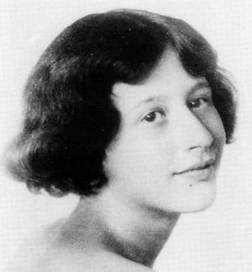
Simone Weil in 1921 – Photo Source:
Throughout her life, Simone Weil was deeply involved in political activism. She first participated in political action at the age of six years, when she refused sugar in solidarity with the troops entrenched along the Western Front.
Weil declared herself a Bolshevik, a Marxist, a pacifist, and a trade unionist at the age of 10. she also started writing political tracts, marched in demonstrations, and advocated for workers’ rights in her teenage years
While working as a teacher in her Twenties, she became very much involved in local political activities, supporting the unemployed and striking workers despite criticism. Although she never formally joined the French Communist Party, she also became increasingly critical of Marxism.
3. Weil was Christian Mystic
Photo Source:
Weil was born into a secular household and raised in “complete agnosticism”. As a teenager, she considered the existence of God for herself and decided nothing could be known either way.
However, her thinking became increasingly mystical as grew older due to her personal experiences in the classroom, in factories, and on the war front. In 1937 Weil made a pilgrimage to Assisi in a chapel where St. Francis used to pray. And although she never converted she later wrote that “something stronger than I compelled me for the first time in my life to go down on my knees,�
Weil did not limit her curiosity to Christianity but was also interested in other religious traditions—especially the Greek and Egyptian mysteries; Hinduism and Mahayana Buddhism. She believed that all these and other traditions contained elements of genuine revelation.
4. She was a Brilliant Student
Weil was a brilliant student and a quick learner from an early age. At the age of 12, she was already proficient in Ancient Greek and later learned Sanskrit so that she could read the Bhagavad Gita in the original.
As a teenager, Weil studied at the Lycée Henri IV under the guidance of her admired teacher Émile Chartier, more commonly known as “Alain”. Her first attempt at the entrance examination for the École Normale Supérieure ended in failure, but she successfully gained admission a year later where she finished first in her class for the certificate of “General Philosophy and Logic.
She later studied philosophy and earned an equivalent of today’s Master’s degree in 1931 with a thesis under the title (Science and Perfection in Descartes). She was also admitted as a professor that same year.
5. She was of Jewish Ancestry
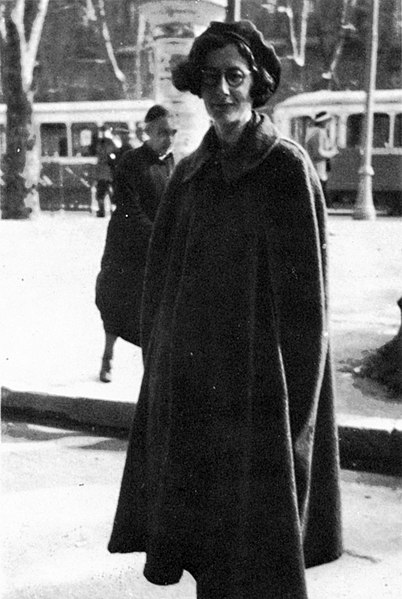
Photo Source:
Weil was born in her parent’s apartment in Â鶹APP on 3 February 1909, the daughter of Bernard Weil (1872–1955), a medical doctor from an agnostic Alsatian Jewish background who moved to Â鶹APP after the German annexation of Alsace- Lorraine.
Her mother, Salomea Reinherz came from a wealthy family of Jewish businessmen who had prospered in the import-export trade in many countries. Selma spent her first few years in Russia, which her parents left in the wake of the 1880s pogroms to move to Belgium.
Her father came from a family of Jewish merchants that had been settled for generations in Strasbourg. His politics were mildly left of center, and he was an extreme secularist. He disliked talking about his Jewishness.
6. She had Poor Health throughout her Life
After her birth, Weil was a healthy baby for her first six months, but then suffered a severe attack of appendicitis and began to lose a great deal of weight, and grew very ill. In the following months, she became so ill that several doctors gave up on her ever-making into adulthood.
However, her condition improved as she grew older although she took several breaks due to poor health while she was working as a teacher. Weil struggled with poor health throughout her life.
7. She died at the age of 34

Photo Source:
In 1943, Weil was diagnosed with tuberculosis and instructed to rest and eat well. However, she refused special treatment because of her long-standing political idealism and her detachment from material things.
Instead, she limited her food intake to what she believed residents of German-occupied France ate. She most likely ate even less, as she refused food on most occasions.
Her condition quickly deteriorated, and she died in August 1943 from cardiac failure at the age of 34. The coroner’s report said that “the deceased did kill and slay herself by refusing to eat whilst the balance of her mind was disturbed”.
8. She took part in the Spanish Civil War
In 1936, Weil traveled to the Spanish Civil War to join the Republican faction. She identified as an anarchist and asked to be sent on a mission as a covert agent, to rescue the prisoner, but she was denied.
Instead, she joined the anarchist Durruti Column of the French-speaking Sébastien Faure Century, which specialized in high-risk “commando”-style engagements. As she was extremely short-sighted, her comrades tried to avoid taking her on missions, though she sometimes insisted.
Her only direct participation in combat was to shoot with her rifle at a bomber during an air raid. She also tried to man the group’s heavy machine gun, but her comrades prevented her, as they thought it would be best for someone less clumsy and near-sighted to use the weapon.
9. She became Famous long after her Death
During her lifetime, Weil was only known to relatively narrow circles and even in France, her essays were mostly read only by those interested in radical politics. During the first decade after her death, Weil rapidly became famous, attracting attention throughout the West.
For the third quarter of the 20th century, she was widely regarded as the most influential person in the world on new work concerning religious and spiritual matters. Her philosophical, social, and political thought also became popular, although not to the same degree as her religious work.
10. She Hardly used Makeup
Even though she was considered to be highly physically attractive, Weil almost always avoided any form of physical contact, even with female friends.
According to her biographer, Weil decided early in life that she would need to adopt masculine qualities and sacrifice opportunities for love affairs in order to fully pursue her vocation to improve social conditions for the disadvantaged.
From her late teenage years, Weil would generally disguise her “fragile beauty” by adopting a masculine appearance, hardly ever using makeup and often wearing men’s clothes.
Planning a trip to Â鶹APP ? Get ready !
These are ´¡³¾²¹³ú´Ç²Ô’²õÌý²ú±ð²õ³Ù-²õ±ð±ô±ô¾±²Ô²µÂ travel products that you may need for coming to Â鶹APP.
Bookstore
- The best travel book : Rick Steves – Â鶹APP 2023 –Ìý
- Fodor’s Â鶹APP 2024 –Ìý
Travel Gear
- Venture Pal Lightweight Backpack –Ìý
- Samsonite Winfield 2 28″ Luggage –Ìý
- Swig Savvy’s Stainless Steel Insulated Water Bottle –Ìý
We sometimes read this list just to find out what new travel products people are buying.


